
Mordecai Bromberg: A Lifetime of Meaningful Work
50 Years / 50 Voices: Learning law and changing lives is a commemorative volume marking the 50th anniversary of the ongoing Monash Law Clinical Program, a pioneering initiative in clinical legal education undertaken by the Faculty of Law at Monash University. 50 alumni of the Monash Law Clinical Program shared their story with 50 current students of the same program. This is an excerpt from the book.
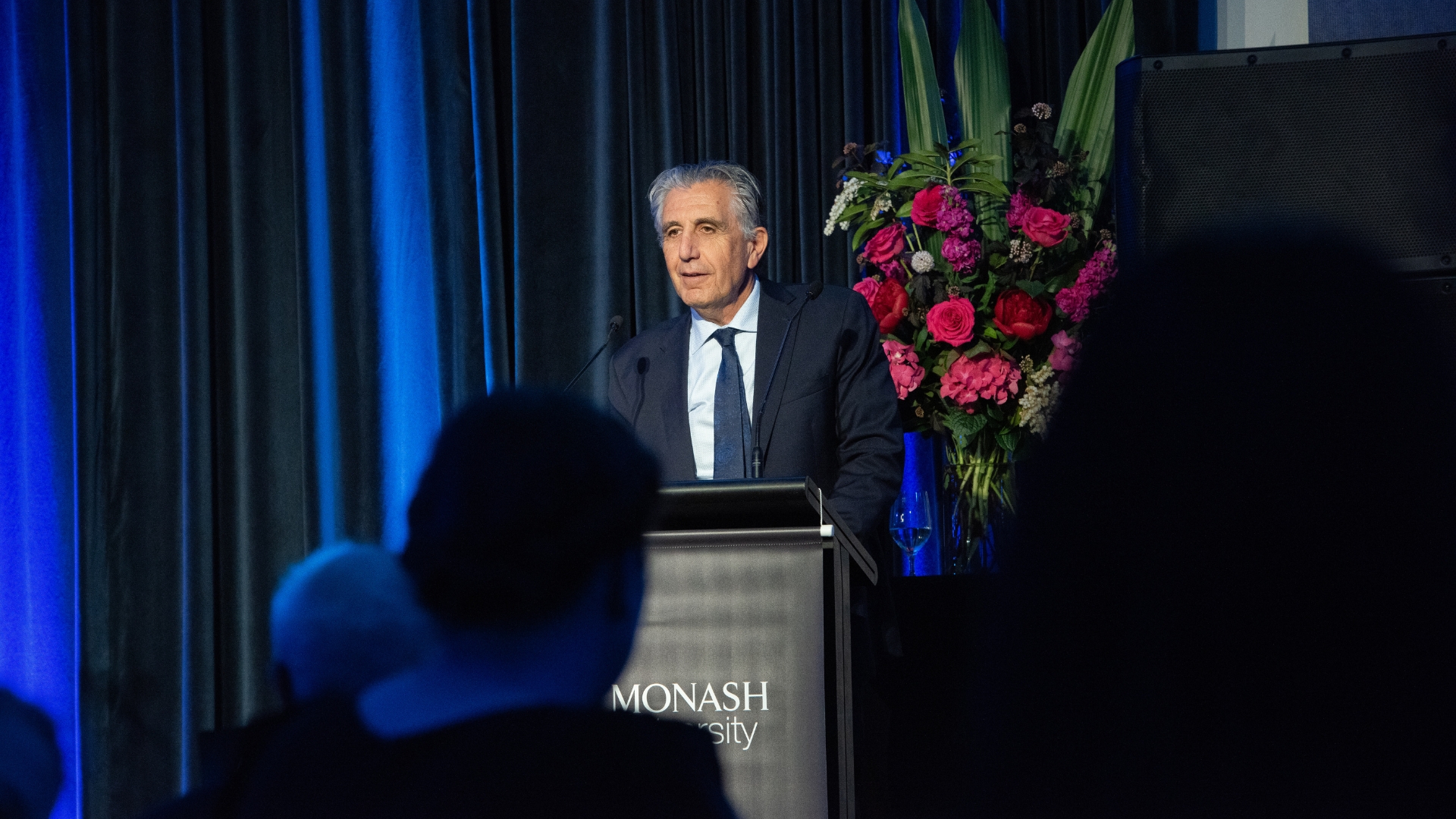
Justice Mordecai Bromberg, from his early days as a solicitor to his current role as a judge of the Federal Court and President of the Australian Law Reform Commission (ALRC), has maintained a deep commitment to justice and public service. That journey began at Monash University.
Justice Bromberg spent four years in practice as a solicitor before being called to the Victorian Bar. There, his work focused heavily on industrial and employment law, discrimination law and public law. His time at the Federal Court featured a similar focus on industrial, employment and discrimination matters, as well as native title, environmental law and immigration cases, including high-profile cases. After 14 years on the bench, he moved into law reform, now serving as President of the ALRC.
‘I’ve had a long and rewarding career in the law,’ Justice Bromberg says.
Reflecting on his time at Monash, Justice Bromberg speaks warmly of the clinical legal education program, which he undertook at Springvale Legal Service when it was headed up by Simon Smith.
The work was varied and practical, encompassing family law, civil disputes and contractual issues.
‘It was the kind of work that would come to any community legal service – quite diverse,’ he says. ‘Mainly disputation that would take you to the Magistrates’ Court rather than the Federal Court.’
For Justice Bromberg, this was his first experience working in a legal setting outside the lecture hall.
‘It was influential on me and my career,’ he says. ‘It was the first time that I had the opportunity to apply what I was learning at university in a practical way. What to that point had been purely theoretical and abstract became real and significant.’
That experience helped shape his understanding of the law’s role in society and the kind of lawyer he wanted to become. The impact of working with real people and real problems was profound, he says.
‘My passion in the law is fundamentally for what I call people law: law that involves the interests of ordinary people.’
Read more about 50 years of Monash Law Clinics and buy 50 Years / 50 Voices here
His time at Springvale opened his eyes to the full extent of the law’s capacity to serve the community. He describes Simon Smith as an early mentor and an inspiration.
‘ He’s legendary. I loved working with Simon. I would regard him as an early mentor. I really enjoyed working with him.’ He adds: ‘I still see him occasionally.’
The experience was so meaningful that he stayed on after completing the clinical course, serving as secretary of the service.
‘I believe in community legal services,’ he says. ‘I think the services they provide are worthwhile and valuable.’
Throughout his career, Justice Bromberg has remained committed to improving the law. He was the founding president of the Australian Institute of Employment Rights, a think tank that brought together voices from unions, employers and government to help reform laws dealing with employment and industrial rights.
‘ The Institute has published at least three books including the first, called The Charter of Employment Rights, which set out the rights and legitimate expectations of both employers and employees,’ he says.
He also worked as a consultant to the International Labour Organization, drafting labour laws for Nepal – though he notes with humility that those laws may still be sitting on a shelf, awaiting implementation.
Justice Bromberg’s current role at the ALRC allows him to engage with legal questions from a broader perspective.
‘It’s a very different kind of job from being a judge,’ he says. ‘I paint on a broader canvas. I’m not limited to deciding what the law is. I’m able to think about what the law should be.’
He describes the work as intellectually stimulating and socially meaningful, citing the ALRC’s current inquiries into surrogacy law, human-tissue law and native title as key priority areas.
Read more about 50 years of Monash Law Clinics and buy 50 Years / 50 Voices here
‘ In the human-tissue law inquiry that we’re doing at the moment, we’re considering whether there needs to be a different definition of death, not only in relation to organ transplants, but generally,’ he says, highlighting the philosophical depth of the ALRC’s work.
Justice Bromberg is also pleased to welcome the return of Monash’s clinical program into his professional life. ‘At the ALRC, we take part in the clinical program run by Monash. Interns come to us and do law reform. So, for me, it’s all come full circle’.
He speaks highly of the interns and the value they bring to the ALRC’s work, expressing hope that they find the experience rewarding. When asked whether he would recommend Monash Law Clinics to current students, Justice Bromberg speaks with clear conviction.
‘I would highly recommend it,’ he says.
‘I’ve often complimented Monash for its clinical program. I’ve said to many deans of the law school over the years what a great experience it was for me and how proud I am of Monash for not only providing clinical education, but actually giving it the focus and priority that Monash does.’
He emphasises that clinical legal education is not just a valuable academic experience, but a formative one that shapes lawyers and people alike.
Read more about 50 years of Monash Law Clinics and buy 50 Years / 50 Voices here
Get involved with Monash Law Clinics
Monash Law Clinics combine legal education with real-world impact, supporting access to justice while equipping students with practical, ethical and professional skills.
If you are a student interested in undertaking a clinical unit as part of your studies, explore the available clinical placements and elective options.
Whether you’re an alum, practitioner or organisation keen to support the clinics through hosting placements, partnerships, volunteering or funding, there’s a way to be involved. To learn more, contact Emily Collard, Industry & Alumni Engagement Manager, at emily.collard@monash.edu.