
Centre for Commercial Law and Regulatory Studies in Malaysia
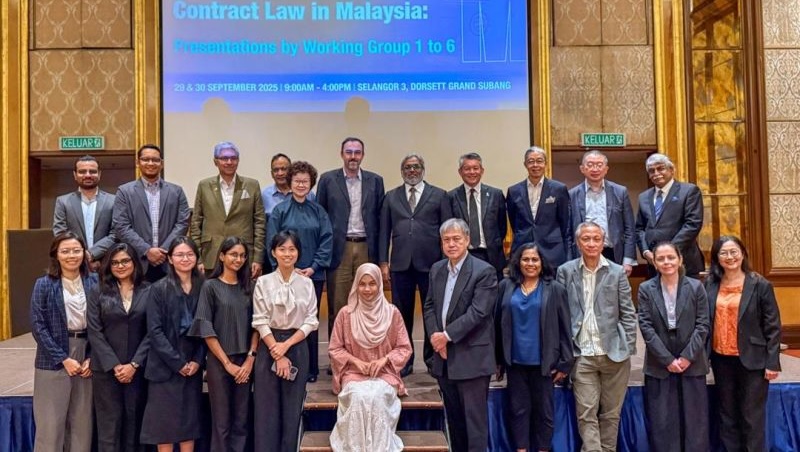
Faculty of Law colleagues have been involved in a major contract law reform project being undertaken by Centre for Commercial Law and Regulatory Studies (CLARS) in Malaysia.
Monash Law academic staff Karen Abidi, Lisa Di Marco, Emmanuel Laryea and Tanjina Sharmin are members of specialised working groups and are participating in legal research and analysis, the provision of comparative law perspectives, and involvement in reform recommendations based on their expertise in contract law.
The law reform project involves the review, modernisation and reform of the Malaysian Contract Act 1950 in line with international best practices. The project is coordinated by the Director of the CLARS Malaysia hub, Associate Professor Adnan Trakic from the Department of Business Law and Taxation at Monash University Malaysia, in collaboration with the Legal Affairs Division of the Malaysian Prime Minister’s Department, and the National University of Malaysia (UKM). The review is being undertaken by members of the judiciary, academia and legal practice.
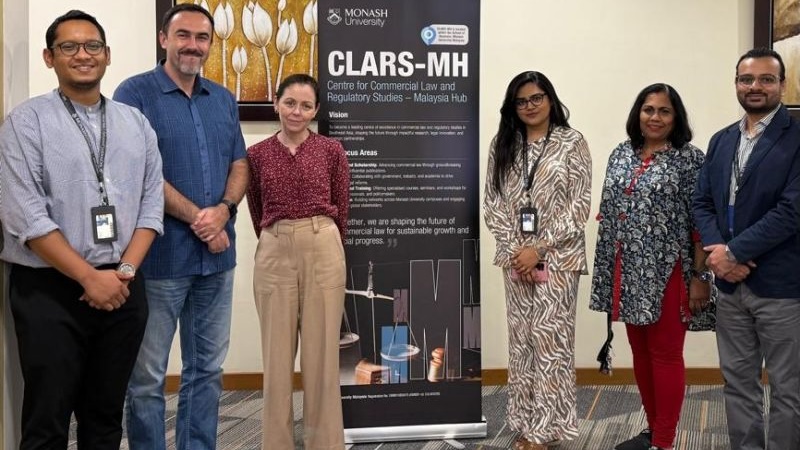
Karen Abidi attended the Contract Law Reform Committee meeting in Malaysia in September to present her research and reform analysis in relation to the doctrine of consideration and contract variations to the Committee and participating in reform discussions. Karen also visited the CLARS hub at the Malaysia campus and met Monash colleagues from the CLARS hub and Department of Business Law and Taxation.
Karen also had the honour of a private tour of the Palace of Justice in Putrajaya, the home of Malaysia’s Federal Court and Court of Appeal, which was arranged through the generous hospitality of Justice Vazeer of the Malaysia’s apex court. Highlights including pouring over an original version of Malaysian Contracts Act in the judges’ private library and touring the fascinating Justice Museum and learning about Malaysia’s legal history.
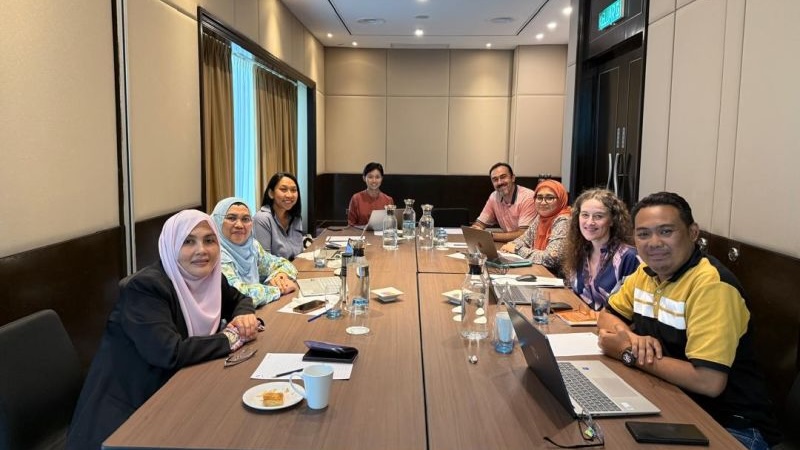
Lisa Di Marco has contributed to the policy direction and legislative approach to good faith in contractual performance and unfair contract terms. Drawing on comparative research informed by her experience in advising on commercial and digital procurement, she delivered two presentations to the full project team in April and July 2025, outlining international fairness frameworks and noting contract fairness challenges that can arise in practice. Lisa travelled to Malaysia in July 2025, to participate in Working Group 3 reform discussions and subsequently prepared draft legislative provisions, recommending: (1) a statutory duty of good faith reflecting Canadian common law principles; and (2) unfair contract terms framework adapted from aspects of the UK Unfair Contract Terms Act 1977, accompanied by supporting explanatory notes.
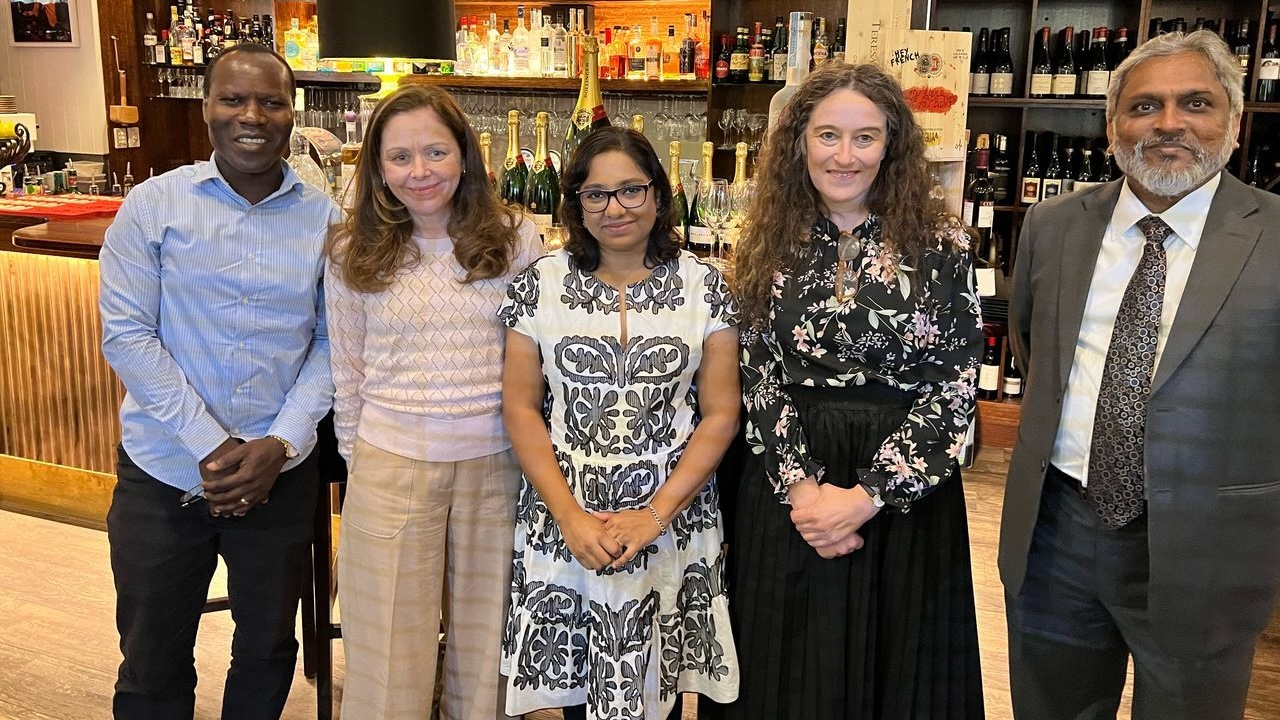
Associate Professor Emmanuel Laryea is a member of the working group on privity of contract and third party rights, which has given rise to the drafting of a new Contracts (Rights of Third Parties) Bill. Dr Tanjina Sharmin is a member of the working group addressing matters in relation to Definitions, Formation, and Voidable Contracts.
Early in the year Karen, Lisa, Emmanuel and Tanjina had the pleasure of meeting The Hon. Justice Datuk Vazeer Alam bin Mydin Meera for lunch in Melbourne, with CLARS Director Professor Jennifer Hill. Justice Vazeer is a judge of Malaysia’s Federal Court, the head of the Contract Law Reform Committee, and an Adjunct Professor at Monash University Malaysia's Department of Business Law and Taxation.

Following the lunch, Justice Vazeer gave a special guest lecture at Monash Chambers to students in Lisa Di Marco’s Australia Legal Process and Research unit, with the involvement of Rachel Kessel, Gina Bekker and Claire Carroll. This unit supports international lawyers at the start of their LLM. Many are from civil law jurisdictions, and the visit offered a rare opportunity to engage directly with a judge. Justice Vazeer's insights sparked some great questions and discussion in class, covering comparative legal systems and the role of AI and technology and the future role of lawyers. Students in this unit had the option of researching a contemporary contract law issue with the potential to contribute to the Malaysian reform project.
It has been a privilege to be involved with this impactful international law reform work, to make connections with Monash Malaysia colleagues and members of Malaysia’s judiciary, academia and legal practitioners.