
New interfaculty research initiatives in migration, mobility and justice
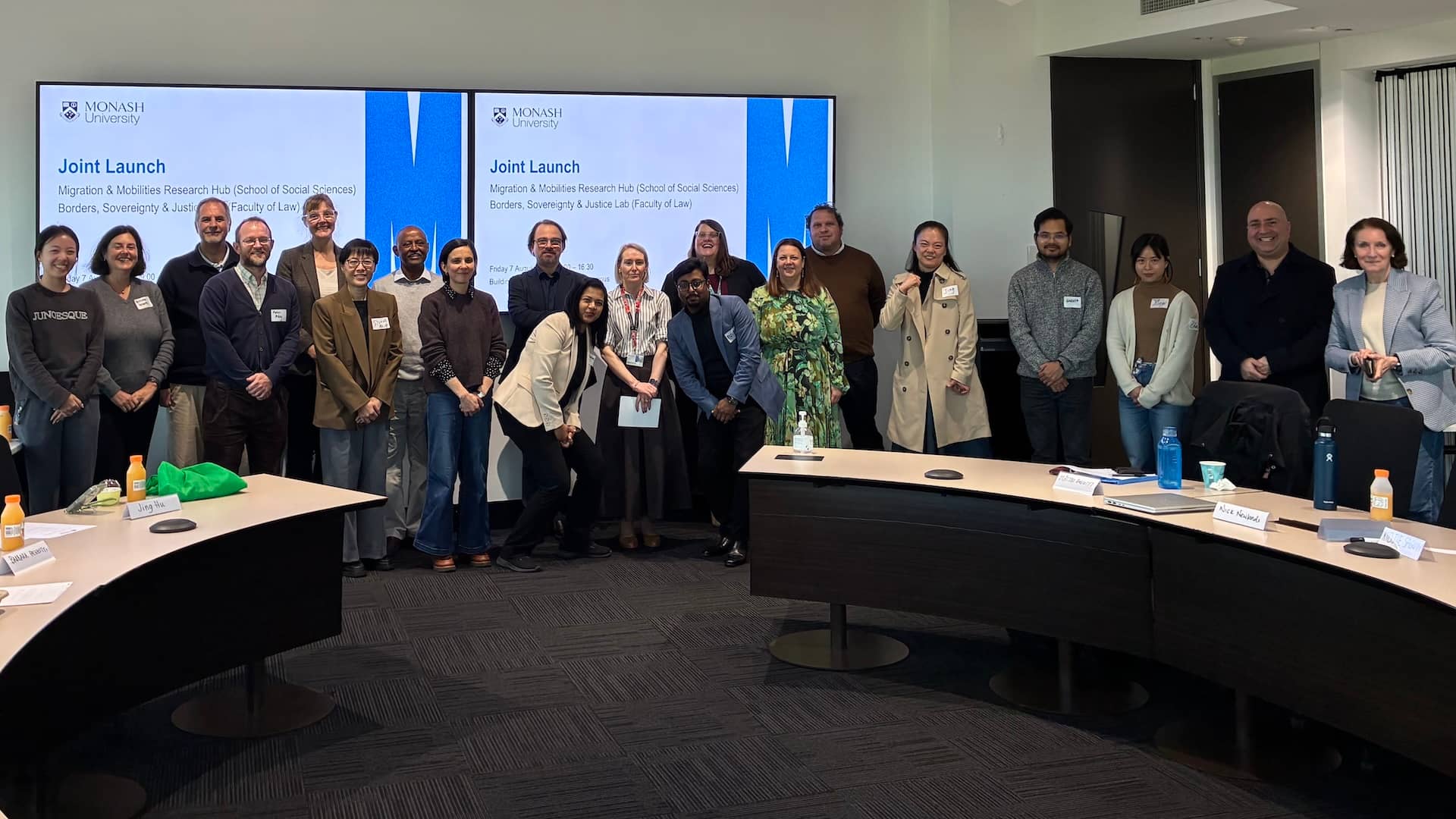
Monash University has marked the launch of two new interdisciplinary research initiatives that will bring together scholars, students and external partners working across questions of migration, mobility, borders and justice.
The recent joint launch of the Migration & Mobilities Research Hub and the Borders, Sovereignty & Justice Lab brought together researchers from across the University alongside representatives from community organisations, legal services, research institutes and advocacy groups.
Hosted by the School of Social Sciences, Faculty of Arts and the Faculty of Law, the launch highlighted Monash's growing strength in interdisciplinary research addressing some of the most pressing social, legal and political issues of our time. The event featured research panels, stakeholder discussions, the launch of a new HDR network, and a roundtable conversation on future collaborations.
Interfaculty research: Building new connections across disciplines
The Borders, Sovereignty & Justice Lab in the Faculty of Law will examine how state power operates at and beyond borders, with a particular focus on questions of justice, rights, governance and inequality. The Lab seeks to strengthen collaboration across the Faculty of Law, expand opportunities for students to engage in clinical and placement work, and support new research initiatives and funding opportunities.
The Migration & Mobilities Research Hub in the School of Social Sciences, Faculty of Arts, brings together researchers from sociology, anthropology, geography, politics and related disciplines to explore how migration and mobility shape contemporary societies. The Hub aims to foster collaboration across Monash and internationally while supporting interdisciplinary projects, postgraduate training and partnerships with government, non-government organisations and community groups.
Together, these two initiatives create a platform for scholars from different disciplinary backgrounds to engage with shared questions concerning migration, mobility, sovereignty, displacement, belonging and human rights. Throughout the launch event, speakers emphasised the importance of crossing traditional disciplinary boundaries and building stronger partnerships between researchers, practitioners and communities.
Researching movement, borders and belonging
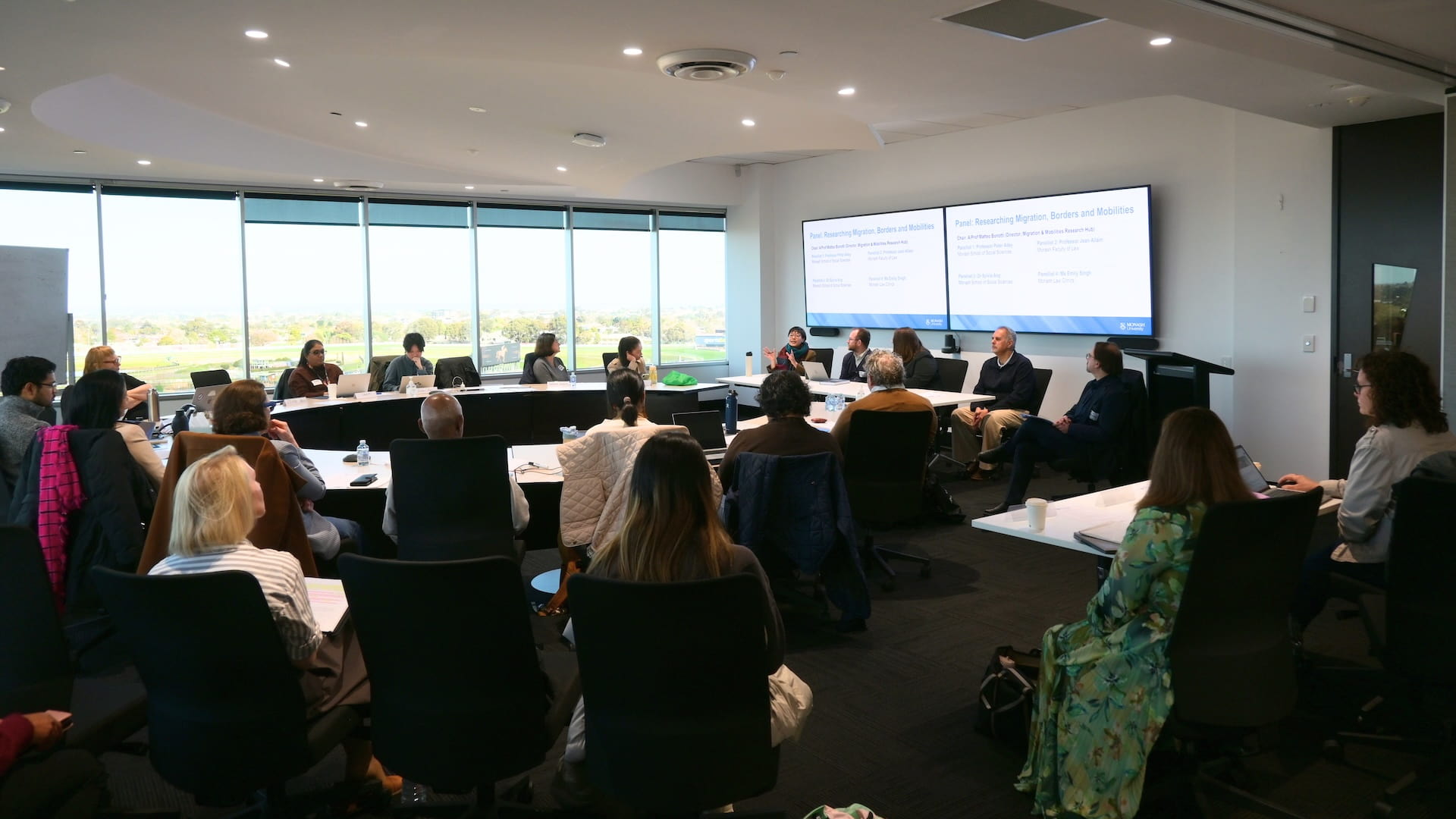
The launch's first research panel ‘Researching Migration, Borders and Mobilities’ was chaired by Associate Professor Matteo Bonotti, Director, Migration & Mobilities Research Hub. It showcased the breadth of expertise represented within the Hub and Lab. Researchers discussed issues ranging from mobilities theory and displacement to labour precarity, social inclusion, refugee law and human trafficking.
Professor Peter Adey, Faculty of Arts, highlighted research that examines movement as a social and political process, including projects investigating evacuation during crises and the experiences of renters facing housing displacement. His work explores how mobility can shape opportunities and life chances while also revealing broader structures of power and inequality.
Professor Jean Allain, Faculty of Law, discussed ongoing research examining forced migration, exploitation and international anti-trafficking frameworks. His work explores the historical development of anti-trafficking approaches and the relationship between migration governance, labour exploitation and border control.
Dr Sylvia Ang, Faculty of Arts, reflected on research investigating migration, belonging and social relations, including projects focused on migrant and refugee women's inclusion, labour precarity and changing understandings of identity and ethnicity in a rapidly shifting geopolitical environment.
Emily Singh, Faculty of Law, highlighted the practical realities faced by migrants navigating complex legal systems, drawing on experience in community legal practice and clinical legal education. Discussions included the intersection of migration status, family violence and social security, as well as plans to develop a dedicated migration law clinic at Monash.
While the projects differed in focus and methodology, common themes emerged throughout the conversation, including the lived experiences of migration, the consequences of policy decisions, and the need to connect research more directly with community needs and legal practice.
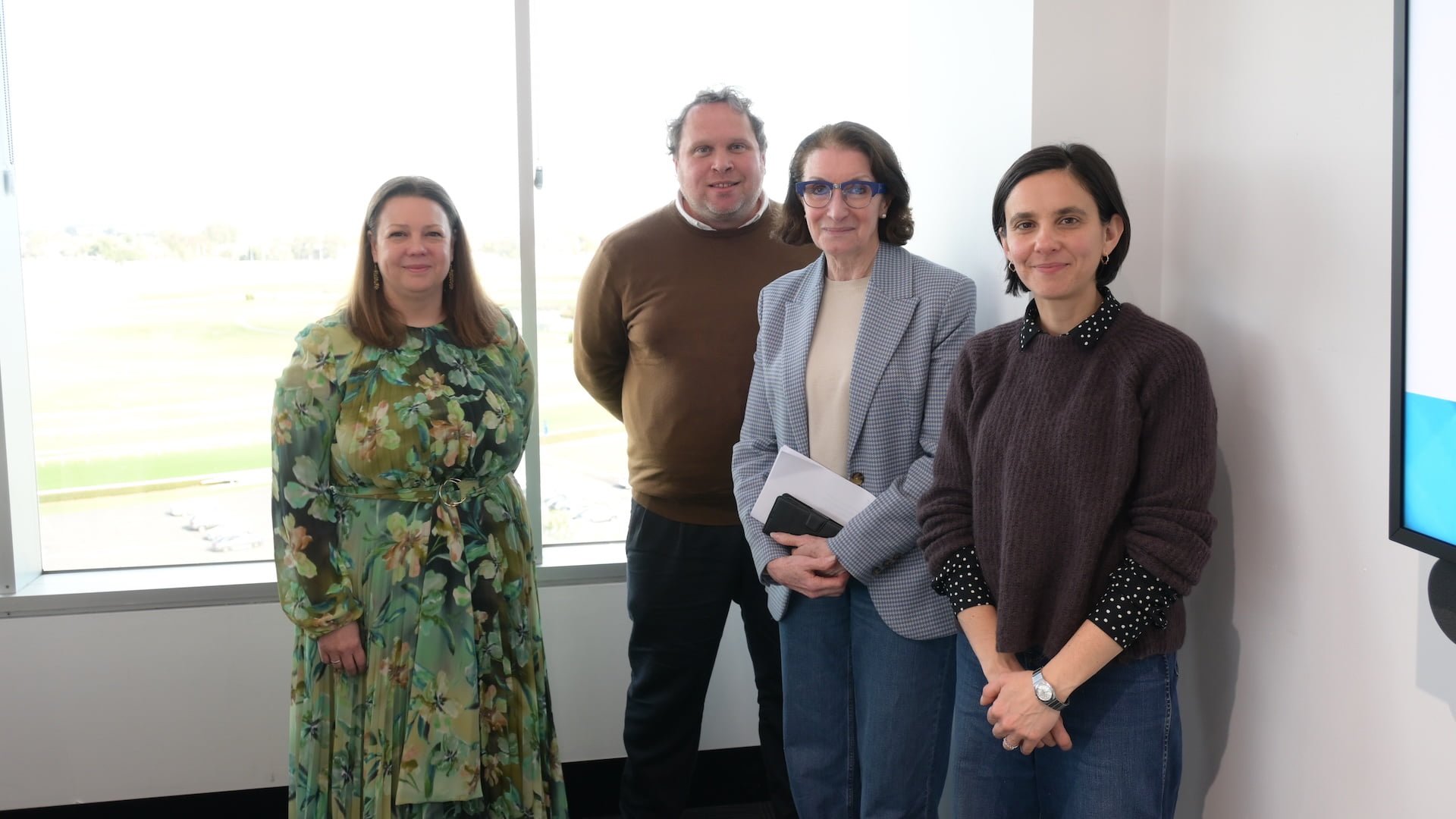
Cassandra Benjamin (Managing Solicitor, Refugee Legal), Nick Newlands (Deputy Principal Solicitor, Asylum Seeker Resource Centre), Anthea Hancocks (Chief Executive Officer, Scanlon Foundation Research Institute), and Sara Bavato (NAATI Certified Translator & Interpreter) shared insights into the challenges facing migrants and refugees across Australia.
Bringing research and practice together
The second panel ‘Migration, Borders & Mobilities: A Stakeholder Perspective’ was chaired by Associate Professor Samantha Currie, Director, Borders, Sovereignty & Justice Lab. This panel brought together stakeholders working directly with migrant, refugee and asylum-seeking communities.
Representatives from legal services, translation and interpreting, social research and community organisations shared insights into the challenges facing migrants and refugees across Australia.
Discussions explored language access, social cohesion, legal precarity, family reunification processes and barriers to accessing essential services.
Participants emphasised the value of community-informed research and the importance of ensuring that migrant communities are included as active partners in knowledge creation.
Several speakers highlighted opportunities for closer collaboration between universities and community organisations, particularly through student internships, legal clinics and co-designed research projects.
The panel also underscored the changing nature of migration-related legal work, including growing concerns around family violence, labour exploitation and evolving protection claims.
These discussions reinforced the role universities can play in producing evidence that informs public conversation, legal advocacy and policy development.
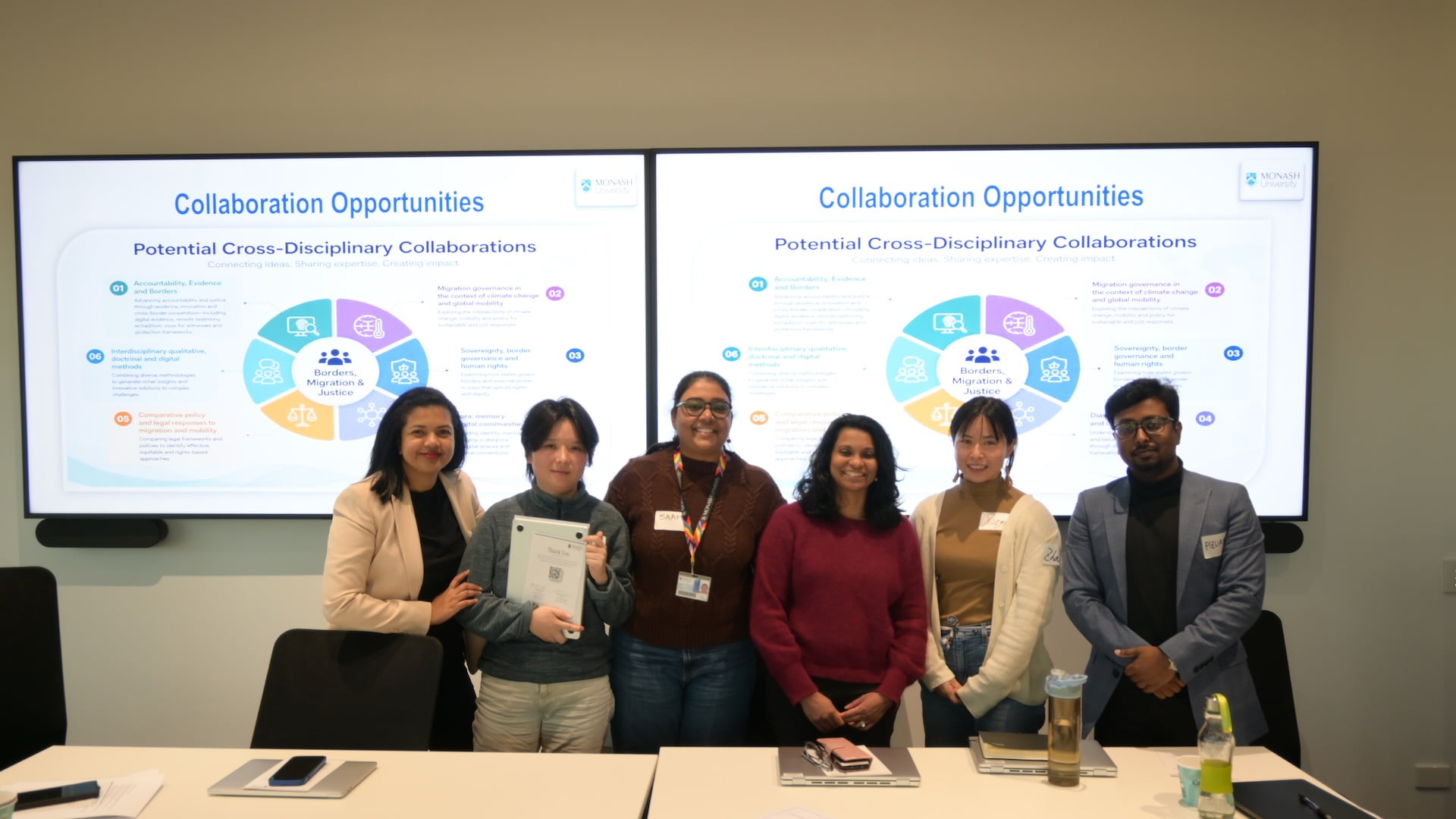
Higher Degree by Research candidates Ronnate Asirwatham, Beibei Wu, Saam Sivaji, Swapna Verma, Xinyi Zhao and M Pizuar Hossain collaborated to launch a new HDR research network.
Launching a new HDR research network
A major milestone of the day was the launch of the Monash Cross-Faculty Higher Degree by Research (HDR) Network on Borders, Migration and Justice. The network has been established to support student-led collaboration across faculties and provide opportunities for research exchange, mentoring and professional development.
HDR candidates from law, social sciences, arts, business and design presented research spanning topics including international criminal law, climate resilience, taxation and global mobility, diaspora memory, digital governance and war crimes accountability.
The presentations highlighted the diverse ways migration and mobility intersect with contemporary legal, political and social challenges. They also demonstrated the value of creating spaces where researchers from different disciplines can learn from one another's methods, theories and lived areas of expertise.
Discussions that followed identified a range of shared research interests, including climate-related displacement, diaspora communities, digital borders, evidence gathering across jurisdictions, sovereignty, accountability and comparative approaches to migration governance.
Next steps for the Hub, Lab and HDR Network
The Launch day concluded with a roundtable discussion focused on future priorities for the Hub, Lab and HDR Network.
Participants identified strong opportunities for collaboration across law, social sciences, education, the creative arts and community practice. Particular attention was given to the role of creative methods such as photography, film and visual storytelling in communicating migration experiences and broadening public understanding.
Researchers also reflected on the need to think beyond traditional understandings of borders, recognising the significance of digital technologies, online communities and transnational forms of belonging. Discussions explored how migration research can engage with questions of solidarity, memory, linguistic justice and climate change while remaining responsive to contemporary social and policy debates.
These new initiatives will support seminars, a writing retreat, mentoring programs, research collaborations and engagement with national and international networks. Planned activities include partnerships with community organisations, connections with international migration research networks, and opportunities for HDR students to develop their research profiles and professional networks.
The next major collaboration will be a two day conference - The Law and Politics of Migration in Australia - at the Monash University Law Chambers on Thursday 3 and Friday 4 December. If you work on migration, law, or politics, this conference will give you a chance to engage with current debates shaping Australia. You’ll hear new research, test ideas, and meet others working across related fields.
By bringing together expertise from across disciplines and sectors, the Migration & Mobilities Research Hub and Borders, Sovereignty & Justice Lab aim to strengthen Monash's contribution to research that engages with questions of movement, belonging, justice and social change, while creating new opportunities for collaboration across the University and beyond.