
Annual Castan Centre Conference explores the future of human rights law
The Annual Castan Centre for Human Rights Law Conference, held at Monash College on 23 July 2026, brought together leading voices across law, government, advocacy and First Nations leadership for a day framed by a common challenge: how to move from recognition and reform to meaningful action.
Read more about the Castan Centre for Human Rights Law
The conference also marked an important moment in the Centre's history, with Vice Chancellor's Distinguished Professor Melissa Castan formally handing over leadership to Associate Professor Ronli Sifris, who becomes the next Director of the Centre.
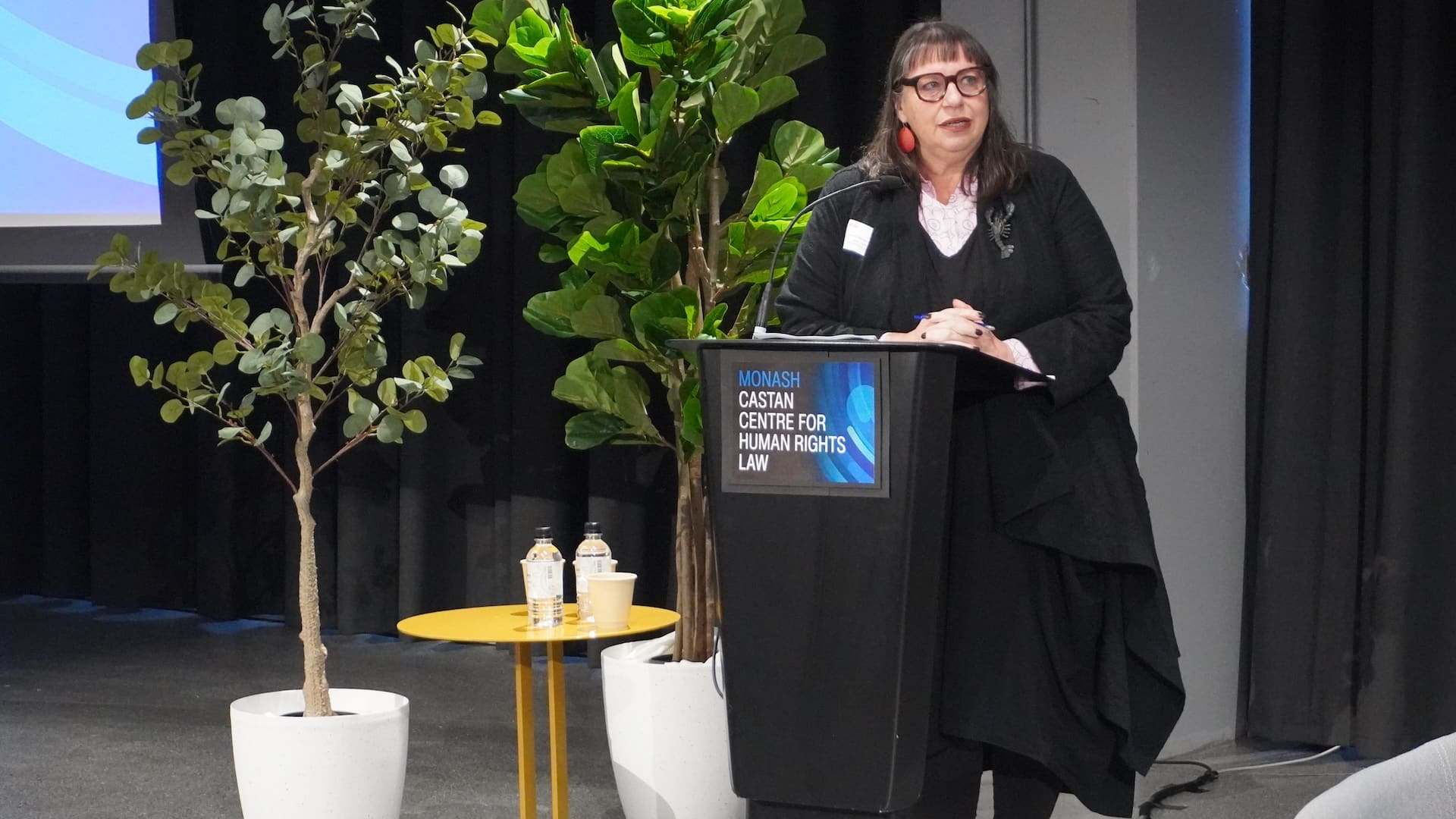
Vice Chancellor’s Distinguished Professor Melissa Castan welcomes attendees to the Annual Castan Centre for Human Rights Law Conference.
A new chapter for the Castan Centre
Opening the day, Professor Steven Vaughan, Dean of Monash Law, reflected on the Centre's role within the Faculty and the broader legal community.
"The Castan Centre is one of the hearts of the faculty. It plays an incredibly important role in what we do, in who we are. It transforms society through research, through education, through public debate. It is a trusted voice in the Australian, and international human rights firmament. It has shaped so many lives, including so many of you who are here," Vaughan said.
Read more about the Castan Centre for Human Rights Law
He paid tribute to Professor Castan for her leadership over the past five years and welcomed Associate Professor Ronli Sifris as incoming Director.

Professor Steven Vaughan declares the Annual Castan Centre for Human Rights Law Conference open.
Associate Professor Ronli Sifris described her appointment as "an absolute privilege" and thanked Melissa Castan for her mentorship and leadership.
"It’s an honour to be trusted to lead the Castan Centre and to continue its tradition of rigorous scholarship, meaningful engagement, and commitment to advancing human rights," Sifris said.
" I want to take this opportunity to thank Distinguished Professor Melissa Castan for her leadership as director of the Castan Centre and for the enormous contribution that she has made to the center since its inception over 20 years ago. I have benefited immensely from Melissa's wisdom and mentorship, and her kind and generous model of leadership."

Associate Professor Ronli Sifris welcomes attendees to the Annual Castan Centre for Human Rights Law Conference.
How does Australia move from truth to transformation
The conference keynote was delivered by Sue-Anne Hunter, Australia's inaugural National Commissioner for Aboriginal and Torres Strait Islander Children and Young People. Drawing on her experience as Deputy Chair and Commissioner of the Yoorrook Justice Commission, Hunter challenged attendees to confront the gap between truth-telling and structural change.
For Hunter, the evidence gathered through truth-telling processes leaves little room for ambiguity.
"What we found was the over-representation of children in child protection and youth justice is not accidental. It is a direct legacy of colonisation, dispossession, and ongoing structural inequality," Hunter said.
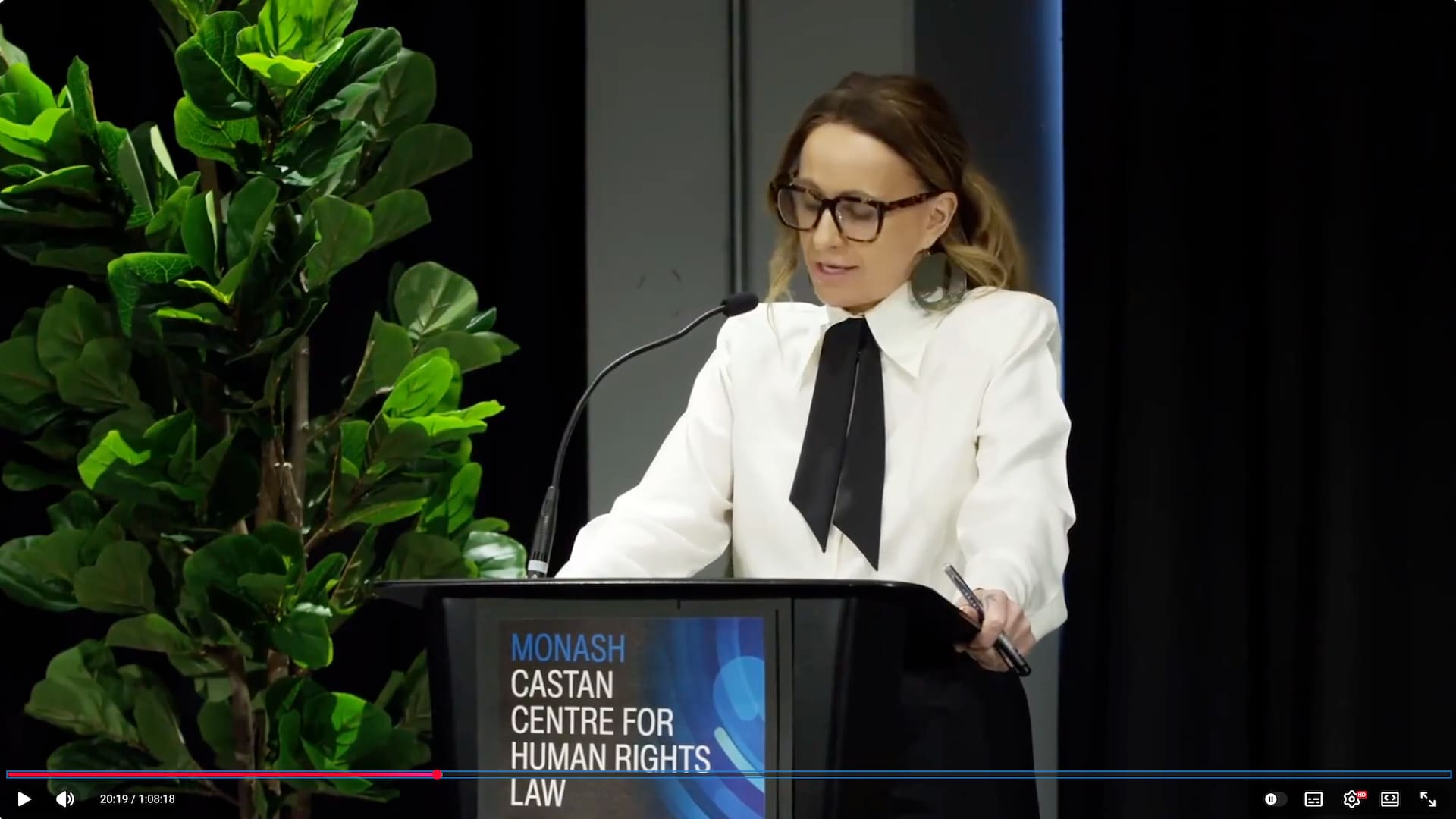
Watch the opening, official welcome and keynote address
She argued that Victoria and Australia possess the evidence, legal frameworks and policy recommendations needed to drive reform.
“ When it comes to human rights in Victoria, the Victorian Charter is a 20-year example of drawing from International Covenant and Civil Political Rights,” Hunter said.
“Section 19(2) of the charter protects the cultural rights of Aboriginal Victorians, the right to enjoy identity and culture, to maintain kinship ties, to maintain distinctive spiritual, material, and economic relationship with the land and waters. Section 17 says every child has the right to the protection that is in their best interests."
Read more about the Castan Centre for Human Rights Law
“Now, these are not aspirations. They have been statutory rights in this state for 20 years, and in those 20 years, more of our children have been taken from their families, not fewer. So I want to put a question to this room, and it is your question more than it is mine. What is a right worth if a system can breach it for 20 years and nothing follows?”
She reflected on the work of the Yoorrook Justice Commission, which was conducted over four years and resulted in 100 recommendations.
"Truth-telling did not fail. Truth-telling did exactly what it was asked to do. The truth is now on the record, and it cannot be taken back," Hunter said.
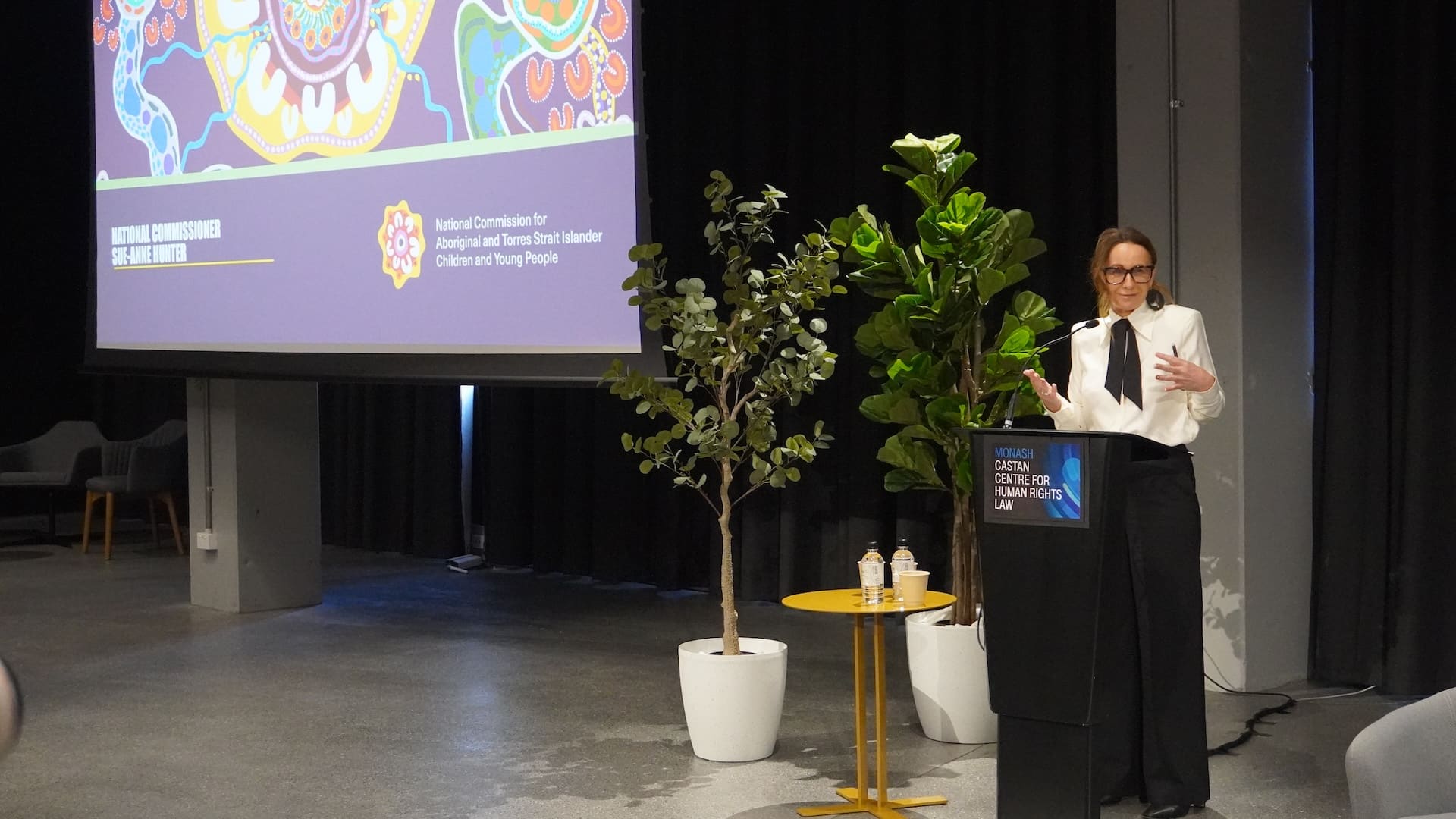
Sue-Anne Hunter, Australia's inaugural National Commissioner for Aboriginal and Torres Strait Islander Children and Young People presents the keynote address.
Throughout her address, Hunter repeatedly emphasised the importance of culture and connection as foundations for wellbeing and safety.
" Culture is protective and stabilising, and culture is what grounds children in identity, belonging, and strength. It connects our children to history, it connects them to their community, and it connects them to their future, where they know who they are and where they stand. When culture is strong, children are stronger. When community is respected, safety is strengthened, not weakened."
Speaking quietly, but deliberately, she urged participants to take responsibility for acting on what is already known.
“ My responsibility as National Commissioner is to make sure our children and young people understand their rights, and it’s all our responsibility to ensure that it is embedded in every decision that is made about their lives.”
“Truth, we have. We did that. It is on the record. It is under oath, and it cost our elders something to put it there. Transformation is the part we are still owed because every child deserves to grow up safe, supported, and connected. And I want to tell you, we cannot fail them.”
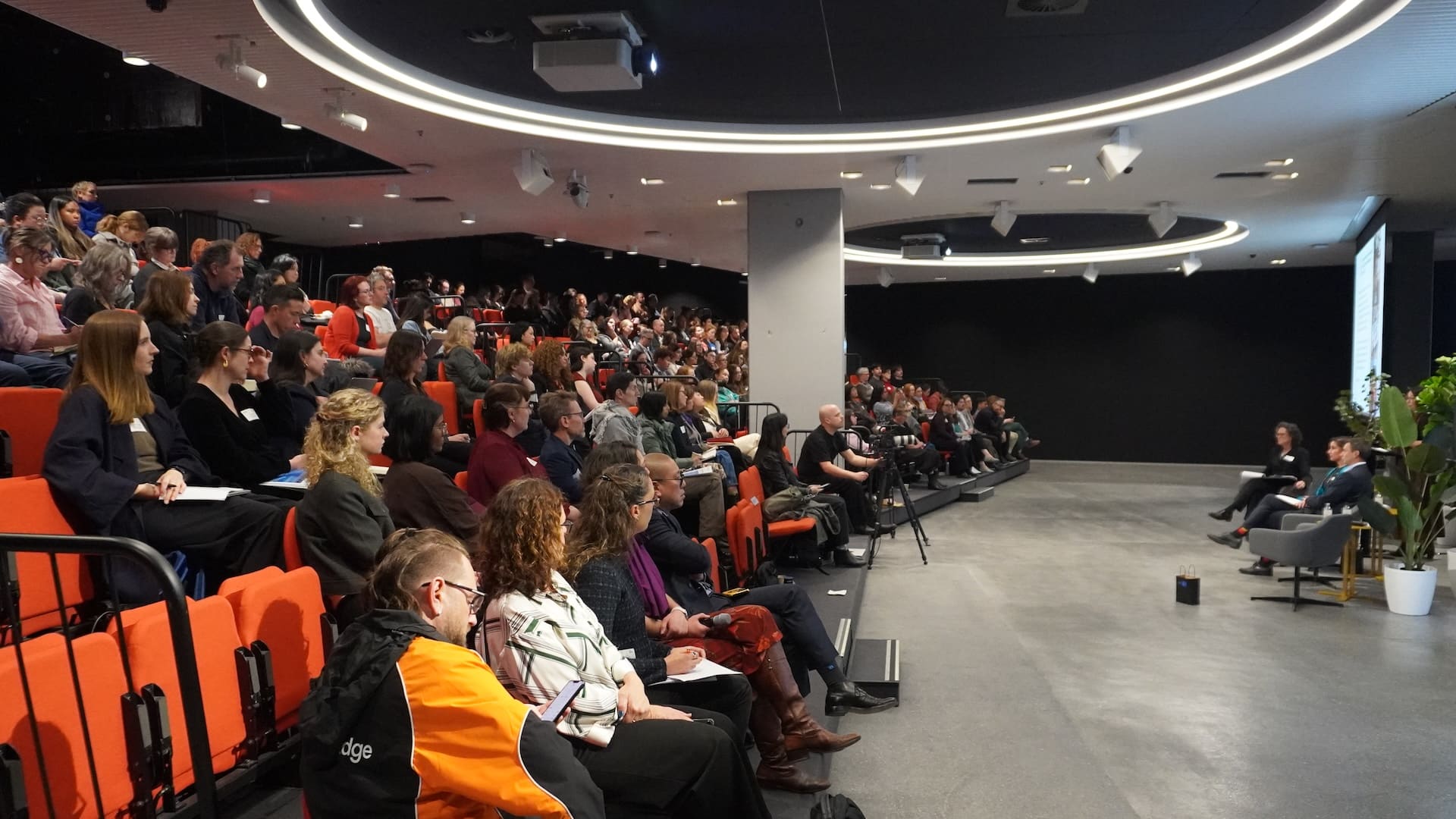
Twenty years of Victoria's Charter
The morning panel marked the twentieth anniversary of Victoria's Charter of Human Rights and Responsibilities, bringing together voices from the Victorian Equal Opportunity and Human Rights Commission, the Victorian Ombudsman's Office and the Human Rights Law Centre.
Reflecting on the Charter's impact, Dr Farinaz Zamani from the Victorian Equal Opportunity &
Human Rights Commission argued that its greatest contribution may be the way it influences public decision-making long before matters reach a courtroom.
“At the Commission, our charter education work builds the capability of the Victorian public sector to understand and apply the charter. We've stood in front of thousands of public servants since 2008 and we can tell you exactly how the charter walks into the room. It walks in with mixed reviews,” Zamani said.
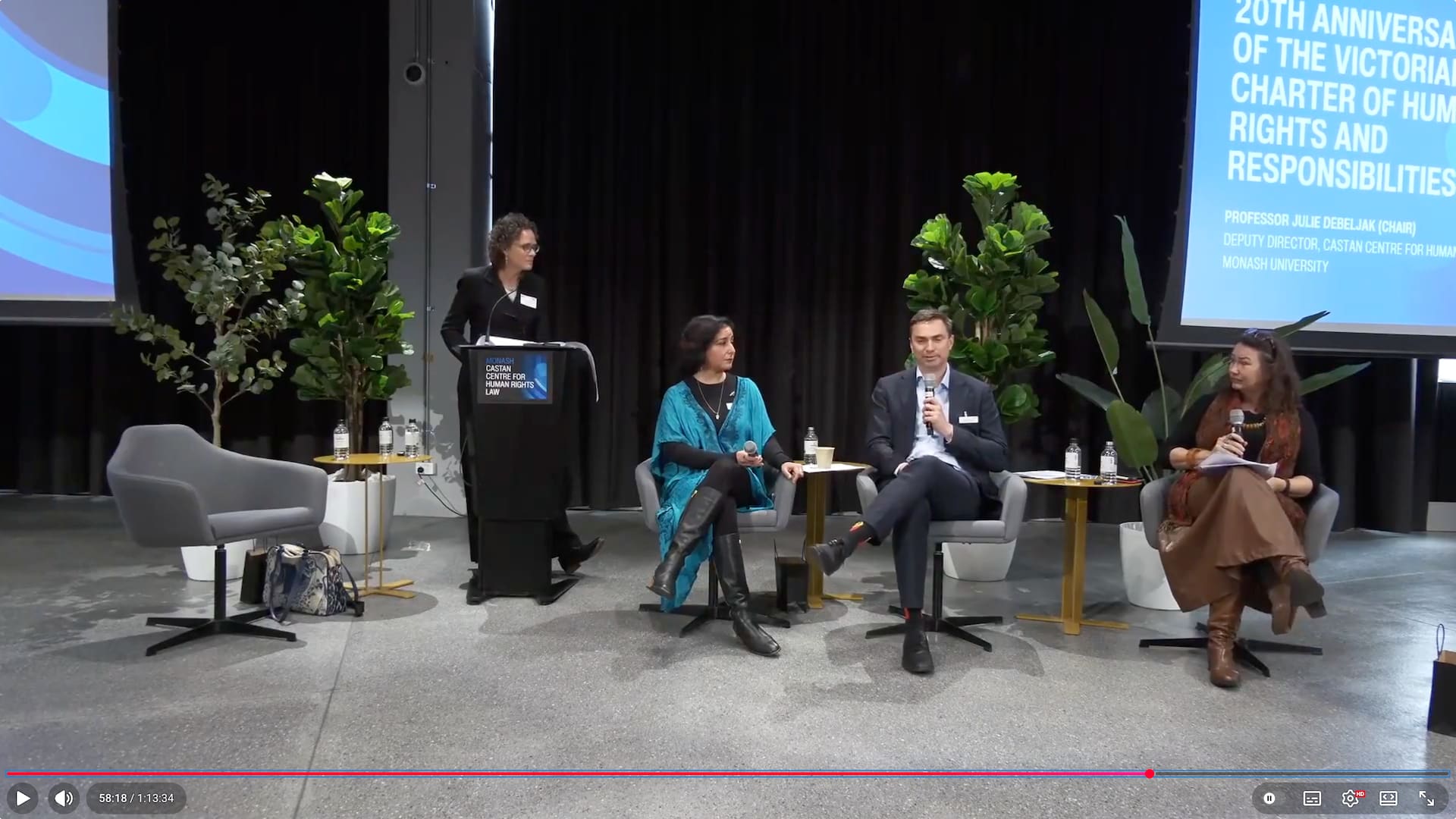
Watch the 20th Anniversary of the Victorian Charter of Human Rights and Responsibilities Panel
“For some, there's inquiry and genuine interest. For others, weariness. But they all walk out understanding that the charter does not tell them what to decide, it guides them with a framework on how to decide. It teaches them how to make a proper decision. It is a set of guardrails that supports them to make values-based, defensible, humane decisions and to stand behind them.”
She described Charter education as a practical process of embedding human rights into everyday government work.
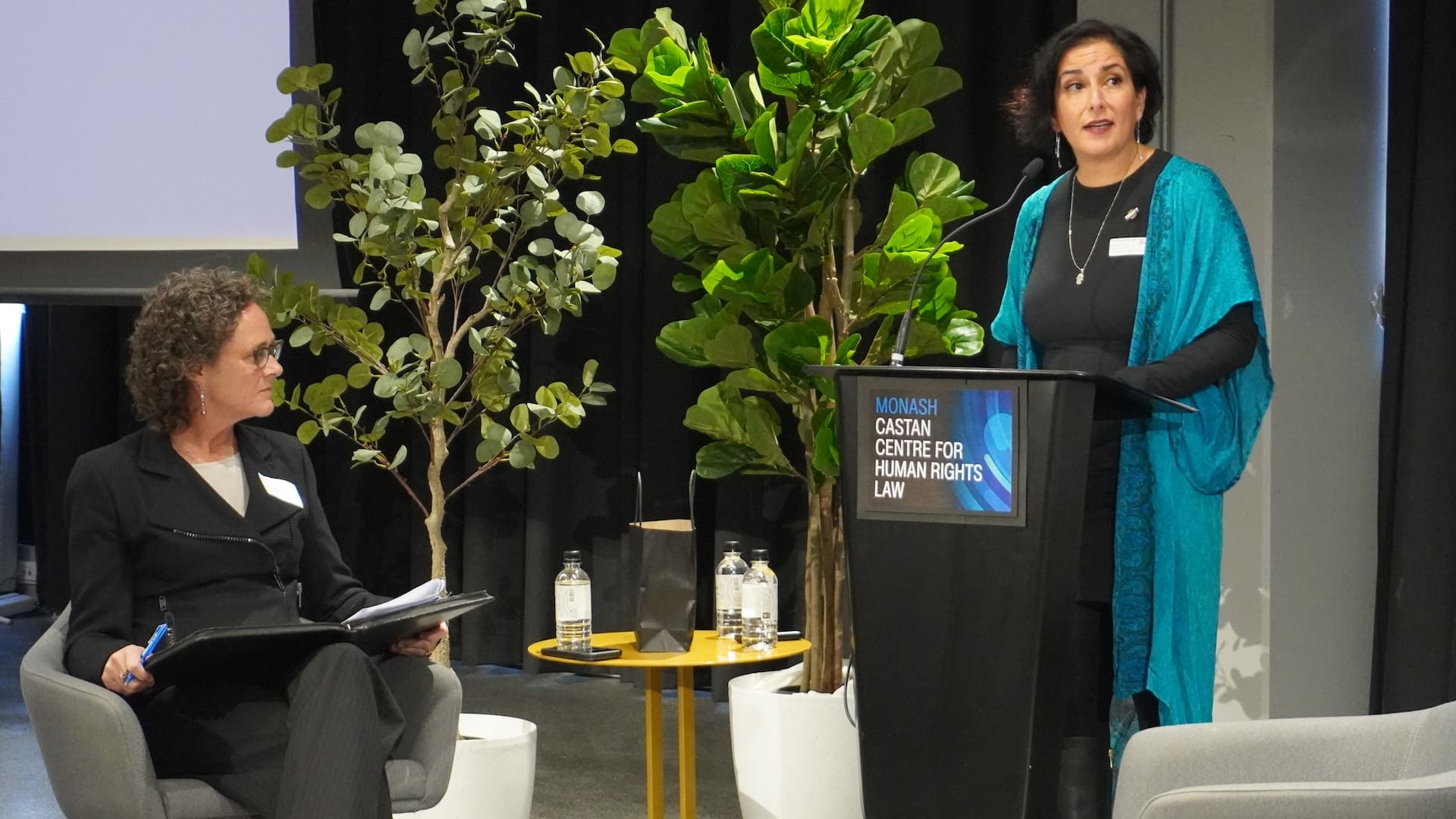
Dr Farinaz Zamani from the Victorian Equal Opportunity & Human Rights Commission
" So when we teach the charter, we're not teaching local rules. We're carrying the best human rights thinking in the world into the daily work of the Victorian public sector,” Zamani said.
Despite the successful implementation of Victoria's Charter of Human Rights and Responsibilities, Zamani argued that reform is overdue.
“ Twenty years on, much has changed. The charter has transformed how rights are protected and how decisions are made across the Victorian public sector,” Zamani said.
“But the instrument itself hasn't changed. It hasn't strengthened, not one right added. The practice has evolved, the community has changed, the law has stood still, and the time has come for the law to catch up.”
Read more about the Castan Centre for Human Rights Law
Human Rights Law Centre CEO Caitlin Reiger described several case studies to highlight the challenge of enforcement of human rights law.
“ I've worked with human rights lawyers in over a dozen countries and there is a common tenacity, fierceness and commitment to using the concept of human rights and the legal categories and the responsibilities that rest with state authorities and governments. But we have a challenge here that there is a level of legal acrobatics that is sometimes required because we have not had, across the country, clear embedding of human rights standards,” Reiger said.
“Victoria, after the ACT, was the exception to that, and then Queensland has followed, but that's still not covering significant parts of the country. That legal creativity has also meant barriers to how human rights have been effectively embedded as a legal construct.”
She argued that stronger remedies and broader rights protections are needed if the Charter is to realise its full potential.
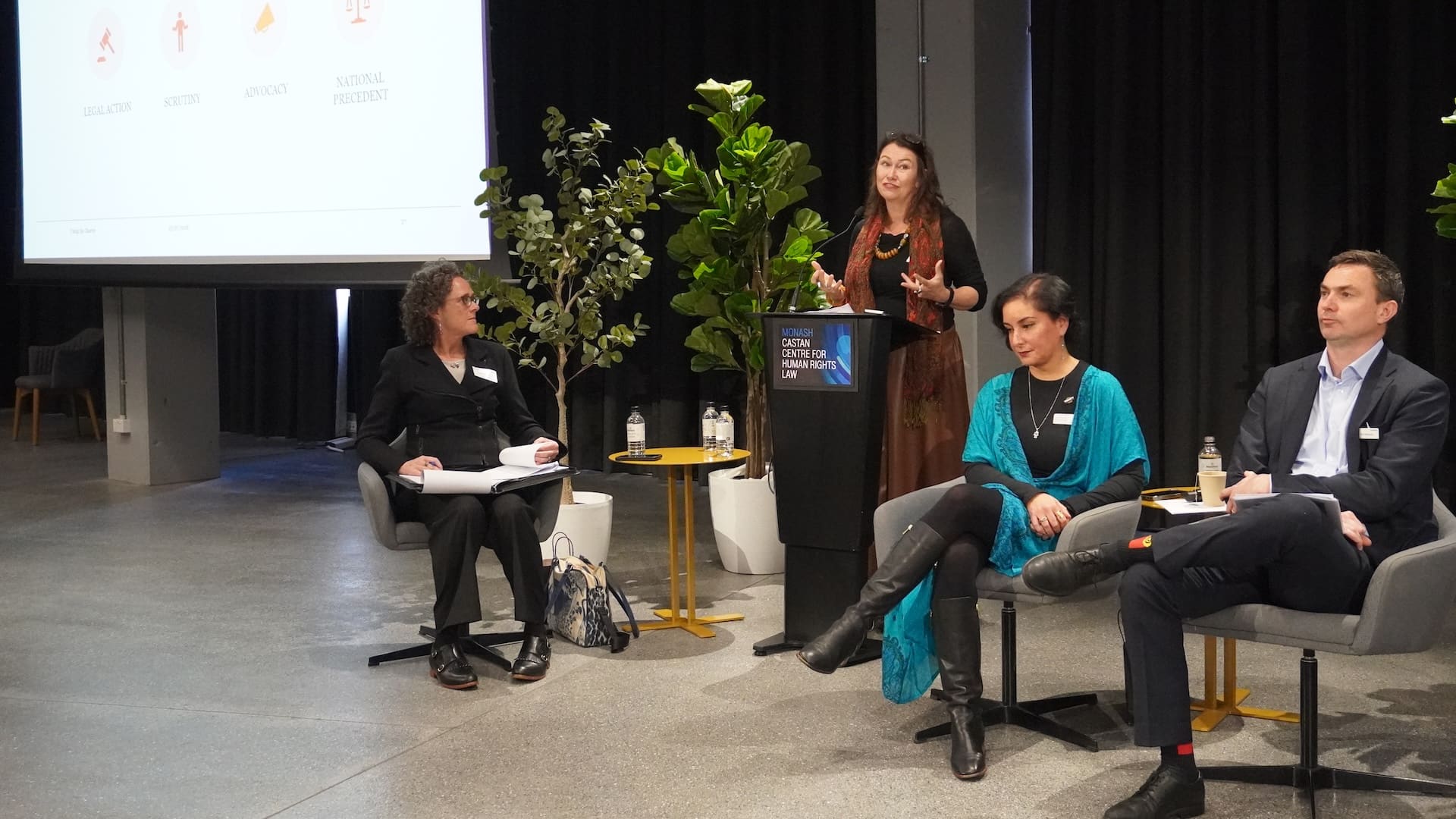
Human Rights Law Centre CEO Caitlin Reiger.
Dan Nicholson, from the Victorian Ombudsman’s office, reflected on what his office sees across thousands of complaints involving government decision-making.
“ I would say that looking at the complaints that come to our office, and the consideration of the charter that we see through our inquiries and investigations, meaningfully considering human rights is still not a matter of course in the public service,” Nicholson said.
“There's lots of good practice, but also we often see that considering rights is seen as an inconvenience or an impediment instead of a safeguard.”
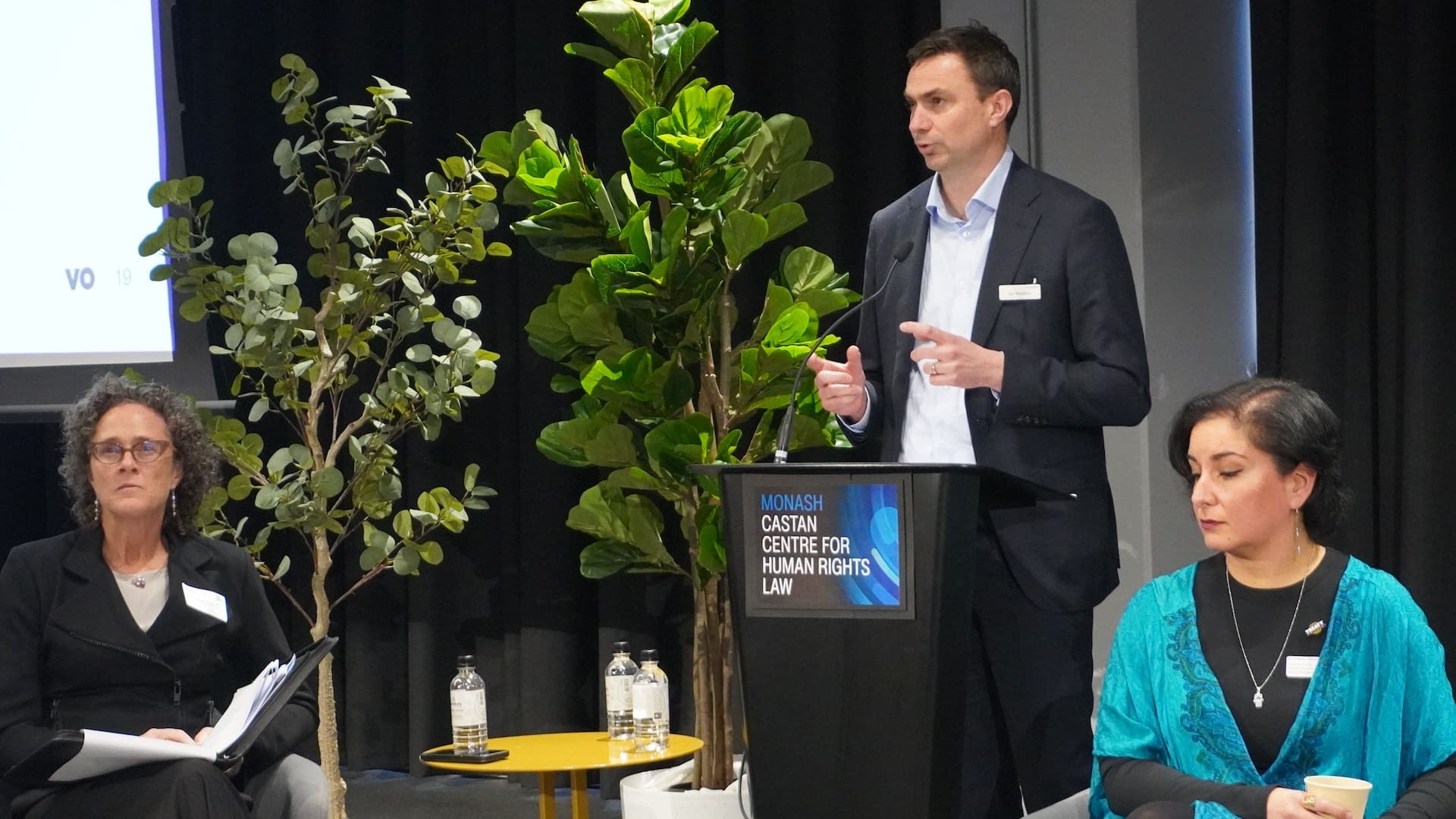
Dan Nicholson, from the Victorian Ombudsman’s office.
Australian judges, international courts and difficult questions
The afternoon began with a panel examining Australian judges serving on international courts. Moderated by Sara Kowal, Deputy Director of the Castan Centre for Human Rights Law and Director of Eleos Justice, the session explored the ethical obligations, opportunities and tensions created when Australian judges accept appointments in other jurisdictions.
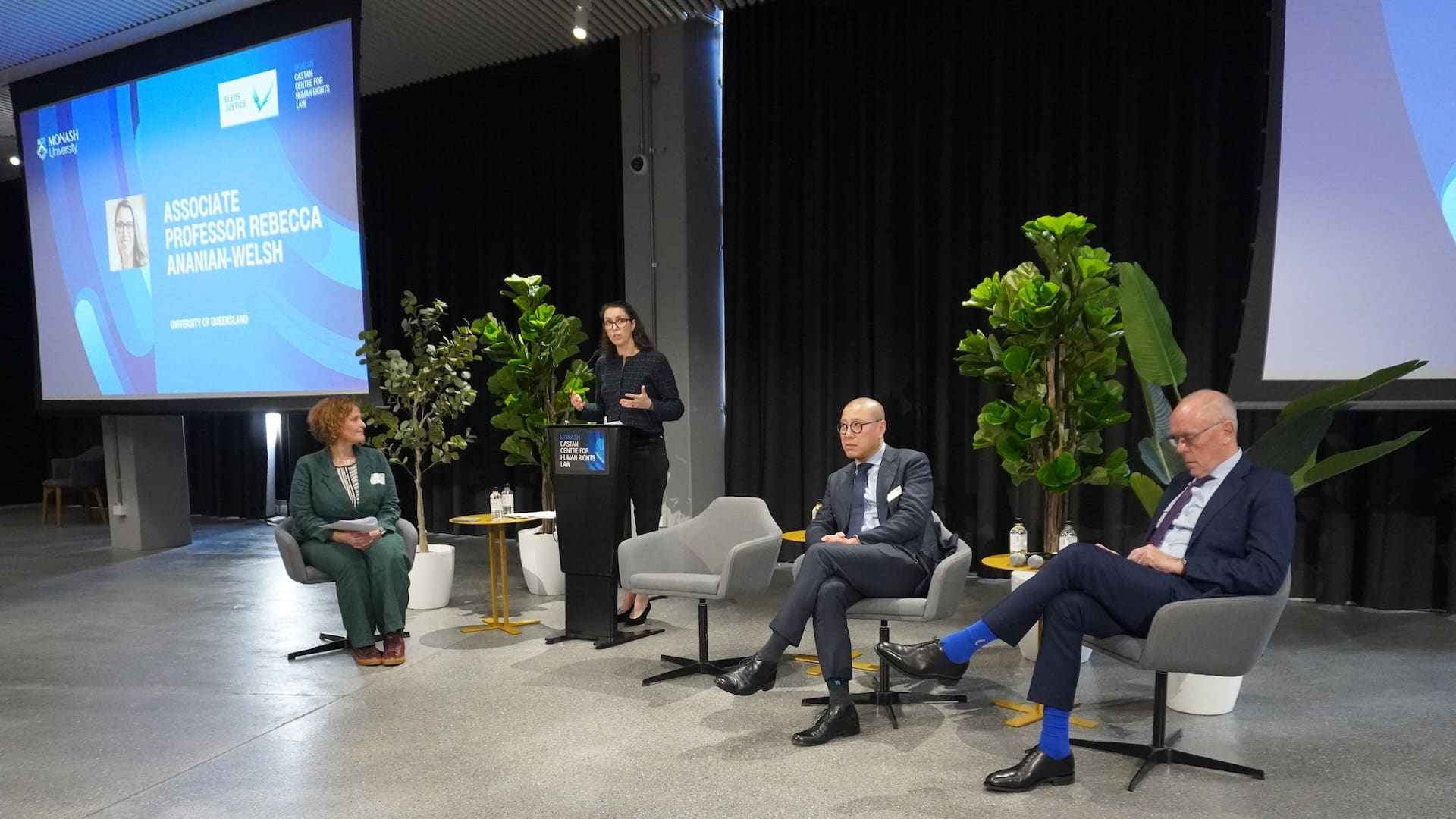
Associate Professor Rebecca Ananian-Welsh, from the University of Queensland.
Associate Professor Rebecca Ananian-Welsh, from the University of Queensland, outlined the fundamental principles in the rule of law that should guide judicial conduct wherever judges serve.
"They're there to apply the law and do so competently, but with independence, impartiality, and integrity and those things should be actual and perceived, personal and institutional," Ananian-Welsh said.
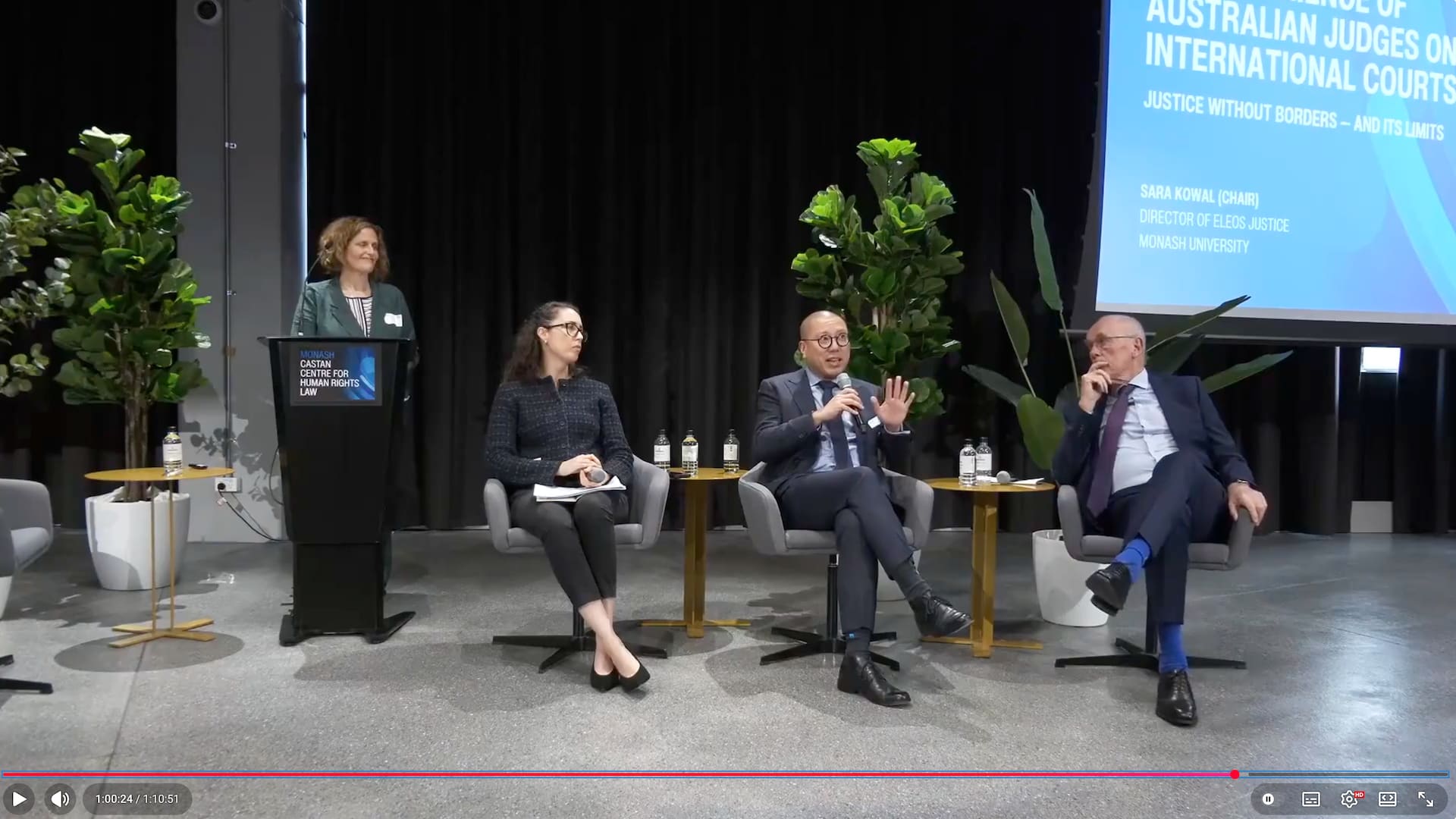
Watch The Experience of Australian Judges on International Courts Panel
Former Hong Kong lawyer Kevin Yam provided a detailed critique of foreign judges remaining on Hong Kong's Court of Final Appeal following the introduction of the National Security Law.
Yam argued that the presence of respected international judges can be used by governments seeking legitimacy. He laid out a powerful case for why Australian judges should resign from Hong Kong's Court of Final Appeal (CFA).
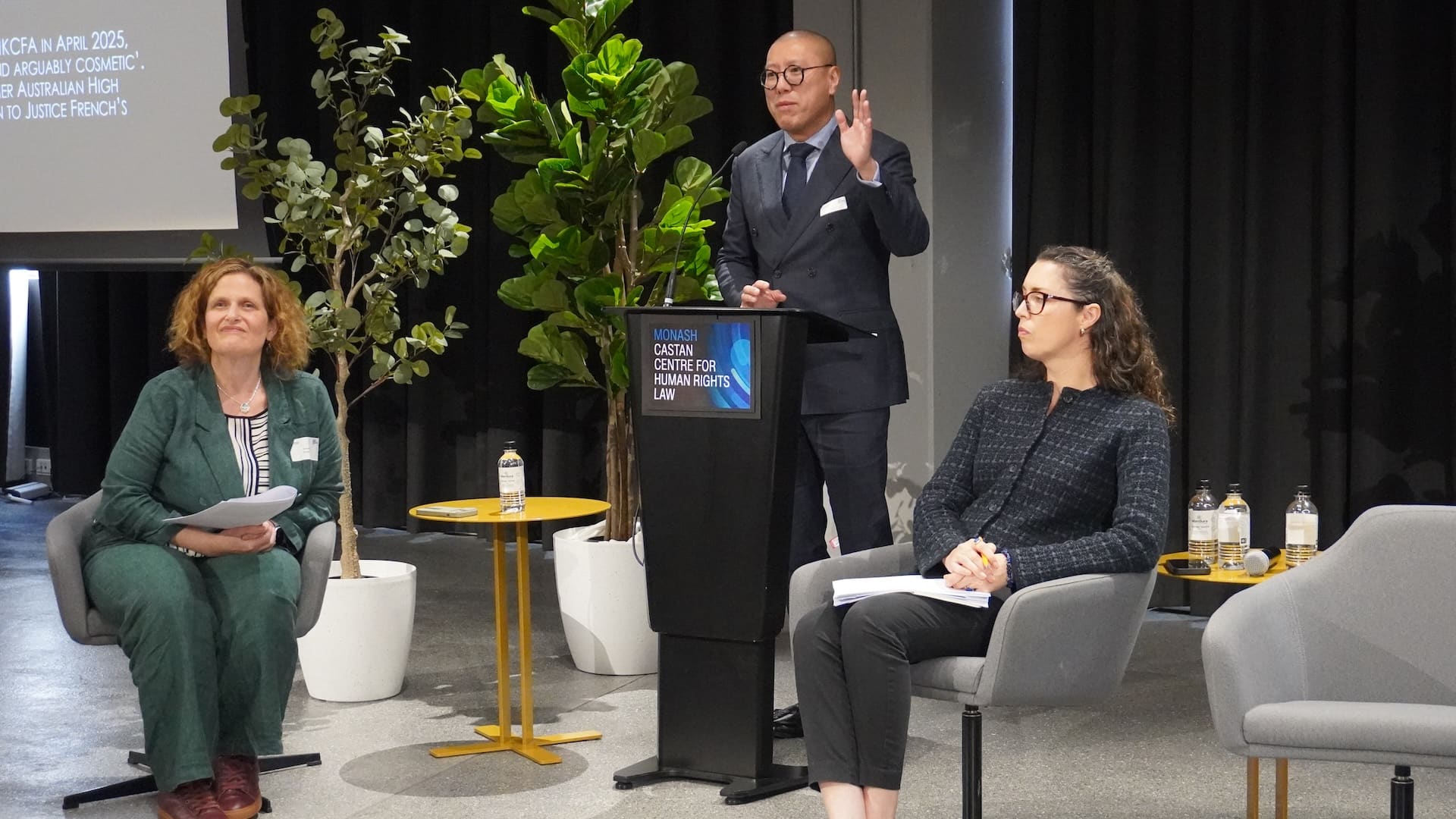
Former Hong Kong lawyer Kevin Yam.
At the heart of his argument was Justice Keane's ‘red line’. Keane said in 2024 that the Hong Kong government disregarding CFA judgments would be his breaking point.
"Justice Keane's own judgement was disrespected — and he's signed up for a three-year extension,” Yam said.
Moving the conversation to focus on Singapore, former Victorian Supreme Court judge, the Hon. Lex Lasry AM KC offered a strong critique of Australian judges serving on courts that form part of a system that imposes capital punishment.
Read more about the Castan Centre for Human Rights Law
“ A judicial system that performs barbaric executions is, I say, morally compromised in its entirety. If the institution kills people in a cruel manner, then in my view, every judge who joins in as a member of that institution, at a minimum, is lending prestige to a system that engages in cruelty. This is not about participation. It's about contamination,” Lasry said.
Leaving the conference in no doubt whatsoever, Lasry concluded this panel with a direct challenge to Australian judges in Singapore’s courts.
"They should not be members of any aspect of the Singapore Supreme Court, and in my opinion, they should resign."
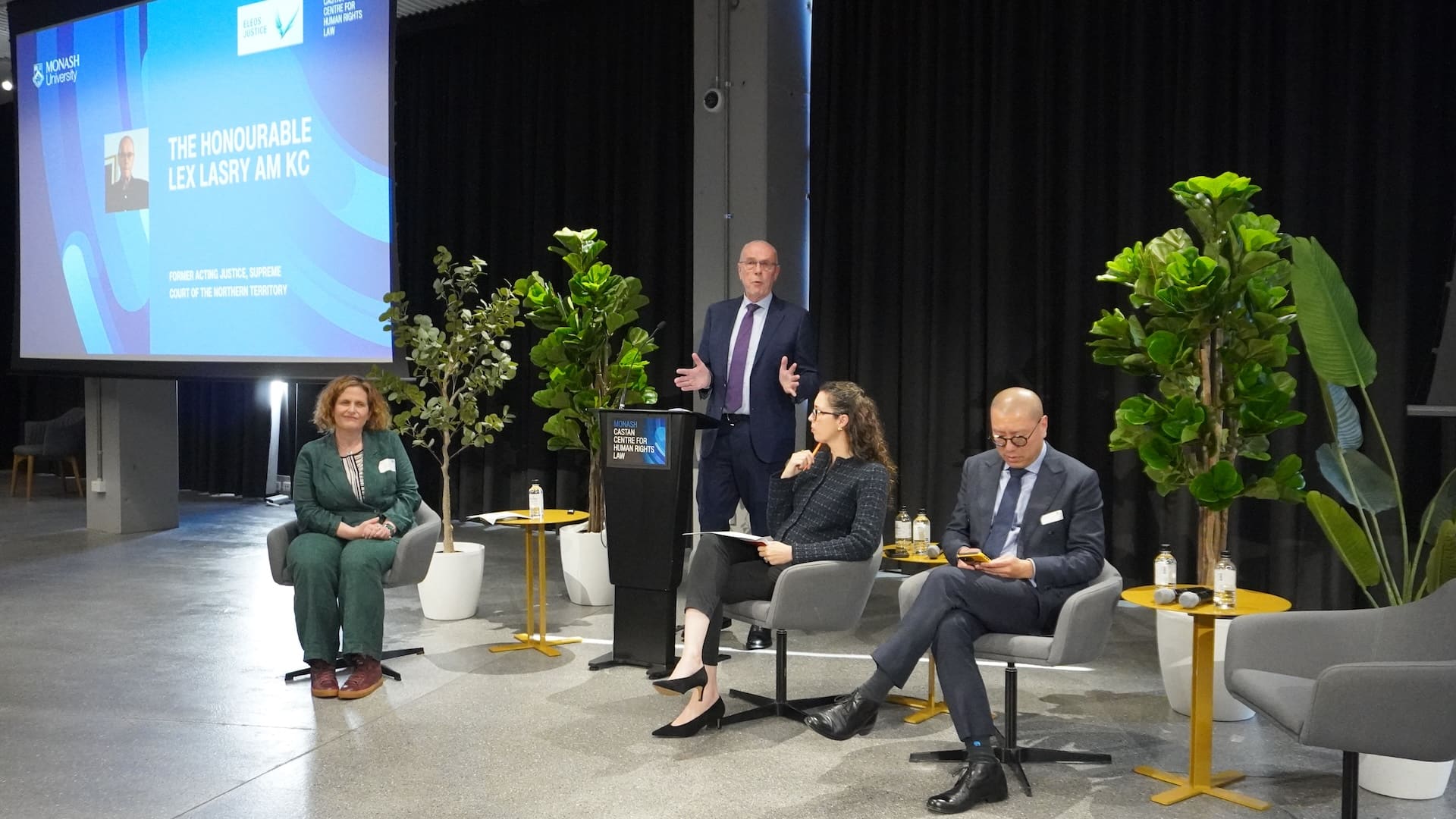
The Hon. Lex Lasry AM KC.
Treaty, truth and Victoria's legal future
The conference’s exceptionally strong program continued into the final panel with an exploration of Victoria's statewide Treaty process and the emergence of new legal and political structures through Australia's first statewide Treaty.
Gellung Warl Co-Chair Meriki Onus situated Treaty within a much longer struggle for self-determination.
“The statewide Treaty journey formally started in 2016, when community, at self-determination forums called for Treaty and the Andrews government answered. Since then, we have had many milestones to celebrate,” Onus said.
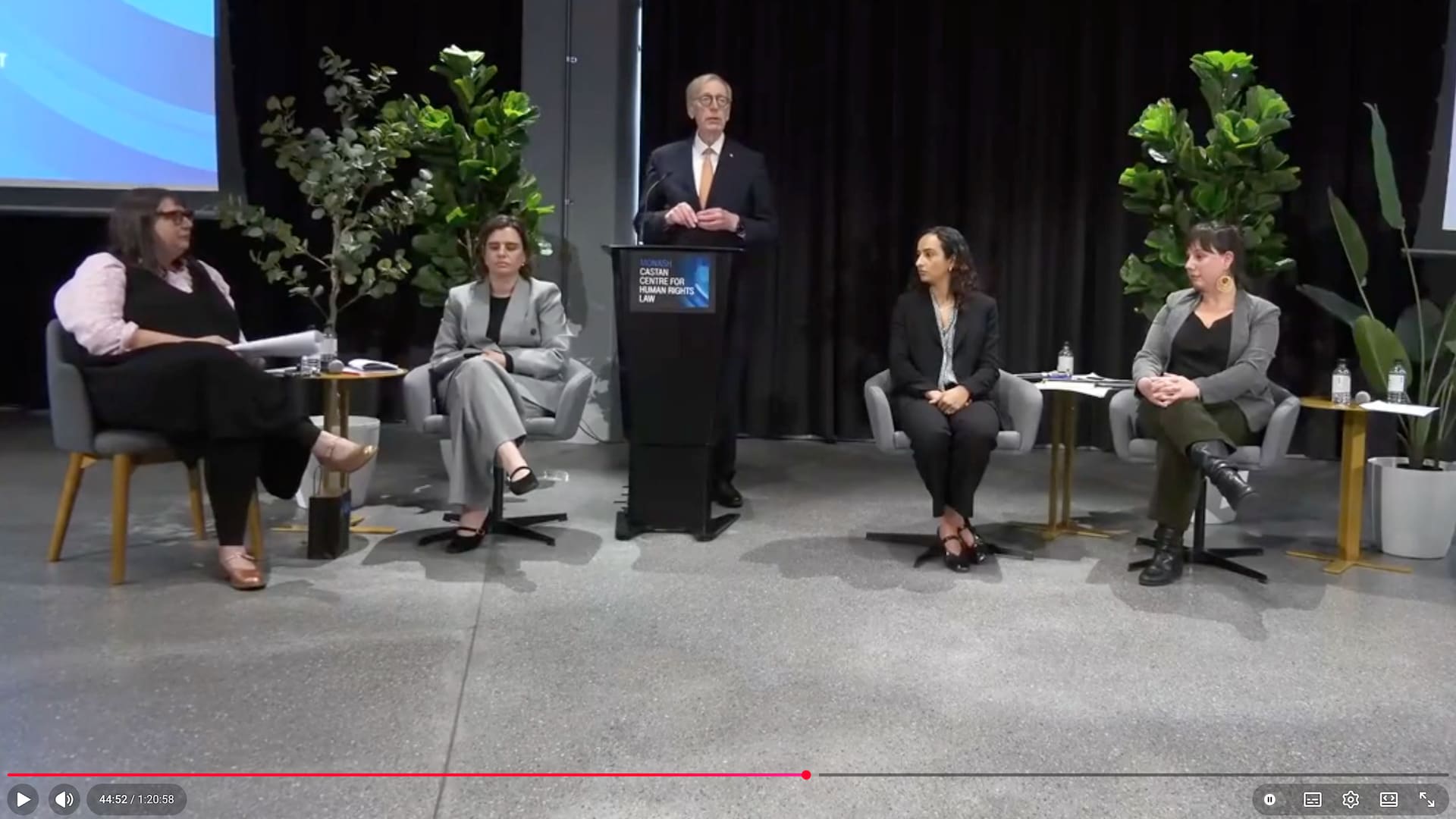
Watch Emerging Treaty Law in Victoria Panel
“We've had three assembly elections. We passed the Advancing Treaty Act in 2018. We established the Yoorrook Justice Commission for Truth-Telling in 2021. We got our Treaty Authority and Other Treaty Elements Act in 2022. We commenced Treaty negotiations in 2024, and we passed the historic Statewide Treaty Act in December 2025.”
“More recently, one of my biggest milestones is the establishment of Gellung Warl in May this year. As you can see, for over a decade, we have walked the path of Treaty, and now Australia's first Treaty is here. This was an inspiration that came from our community, and is the result of generations of activism and resistance from our people.”
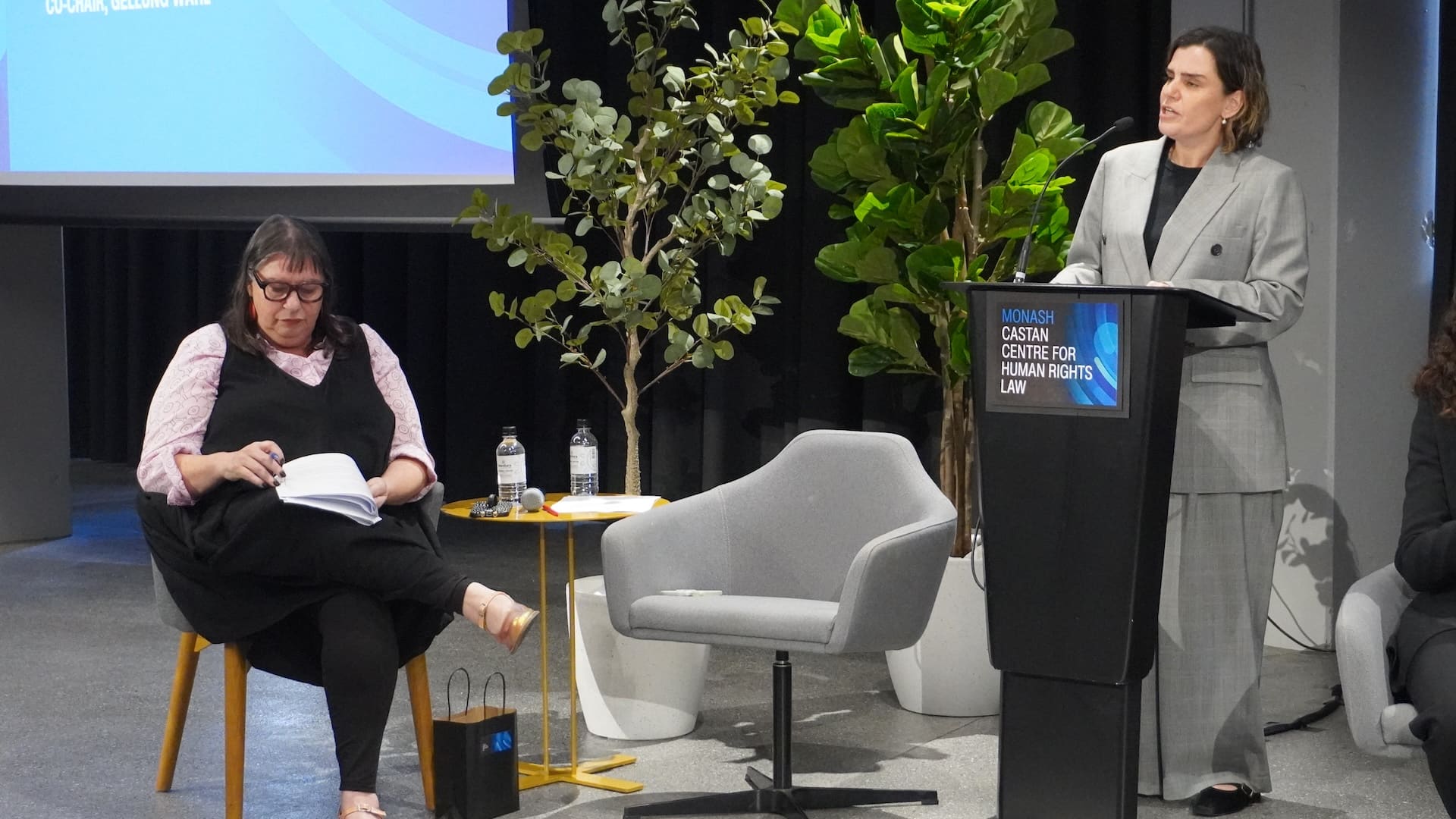
Gellung Warl Co-Chair Meriki Onus.
Looking toward the future, Onus described an expansive vision of the possibilities that Treaty creates.
" This Treaty represents a dream of the future, where our mothers will have safe homes to live in, and our brothers are on country, teaching culture and language to our kids,” Onus said.
“This dream is where our grandparents are laughing around the campfire with their grannies, where our descendants are making law in their language. Where we have a Black university, where our mob are producing knowledge on our ways of knowing, doing, and being. These possibilities are within our reach with this new renewed relationship.”
Read more about the Castan Centre for Human Rights Law
Karri Walker, Principal Lawyer - Treaty for Gellung Warl, examined the legal architecture underpinning Treaty and the recognition of First Peoples authority.
" This statewide Treaty does more than recognise the authority of First Peoples. It provides the capacity for that authority to be exercised and practiced through Gellung Warl. In doing so, this Treaty demonstrates how Aboriginal law and Western law may interact and meet, not in hierarchy, but in relationship with one another,” Walker said.
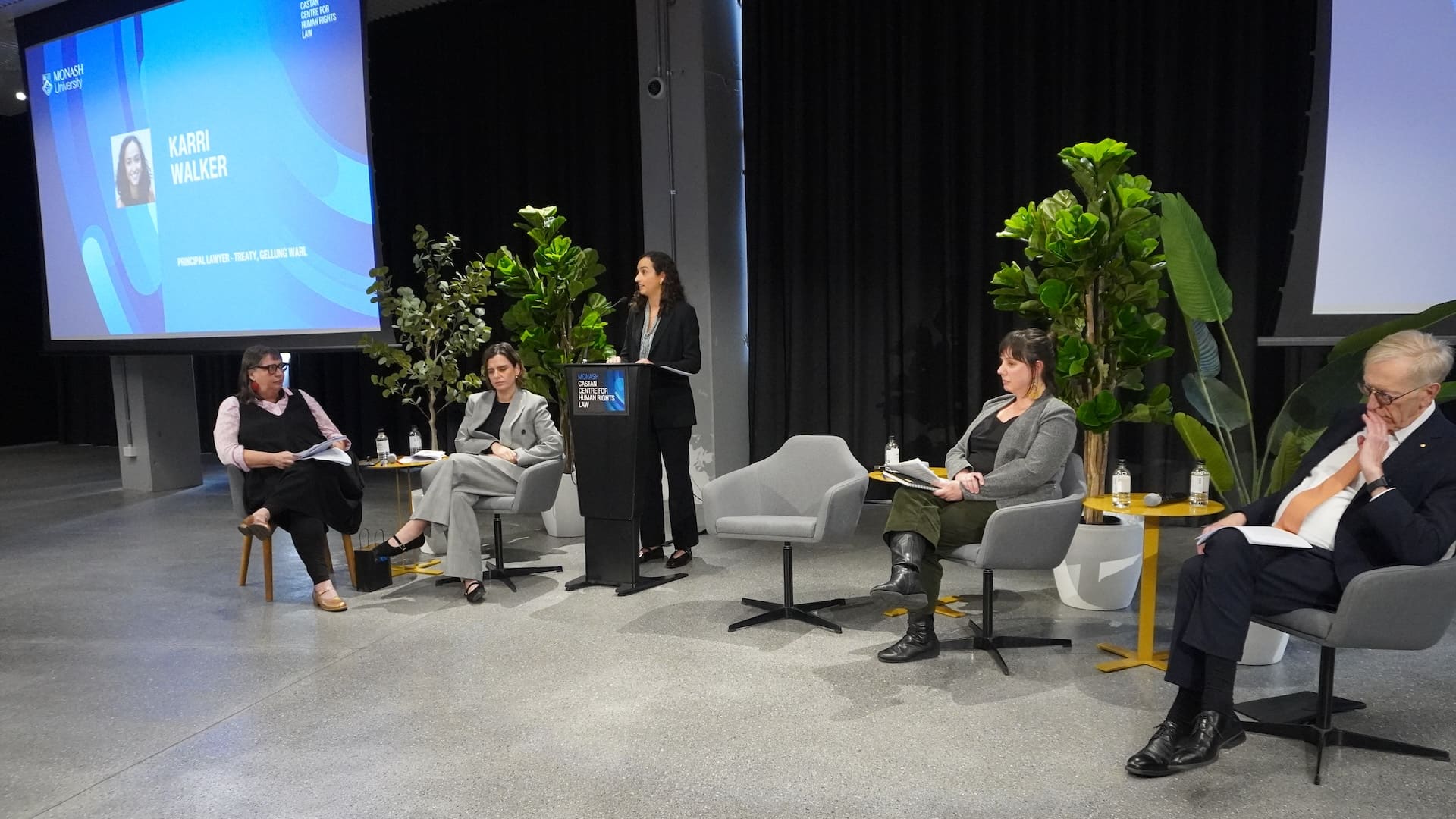
Karri Walker, Principal Lawyer - Treaty for Gellung Warl.
Despite the recent arrival of Treaty in Victoria, legal pluralism in Australia has existed since before Federation. Treaty provides new opportunities for state law and Indigenous law to coexist and operate within the same society.
“ The question is not whether Aboriginal law exists, it does. The real question is whether the state and the legal profession are prepared to live with legal pluralism in a way that genuinely respects the authority and nationhood of First Peoples. As we enter this Treaty era and institutions such as Gellung Warl step into their power, the legal profession will need lawyers who are willing to engage with First Peoples authority, not as an abstract concept, but as a lived reality,” Walker said.
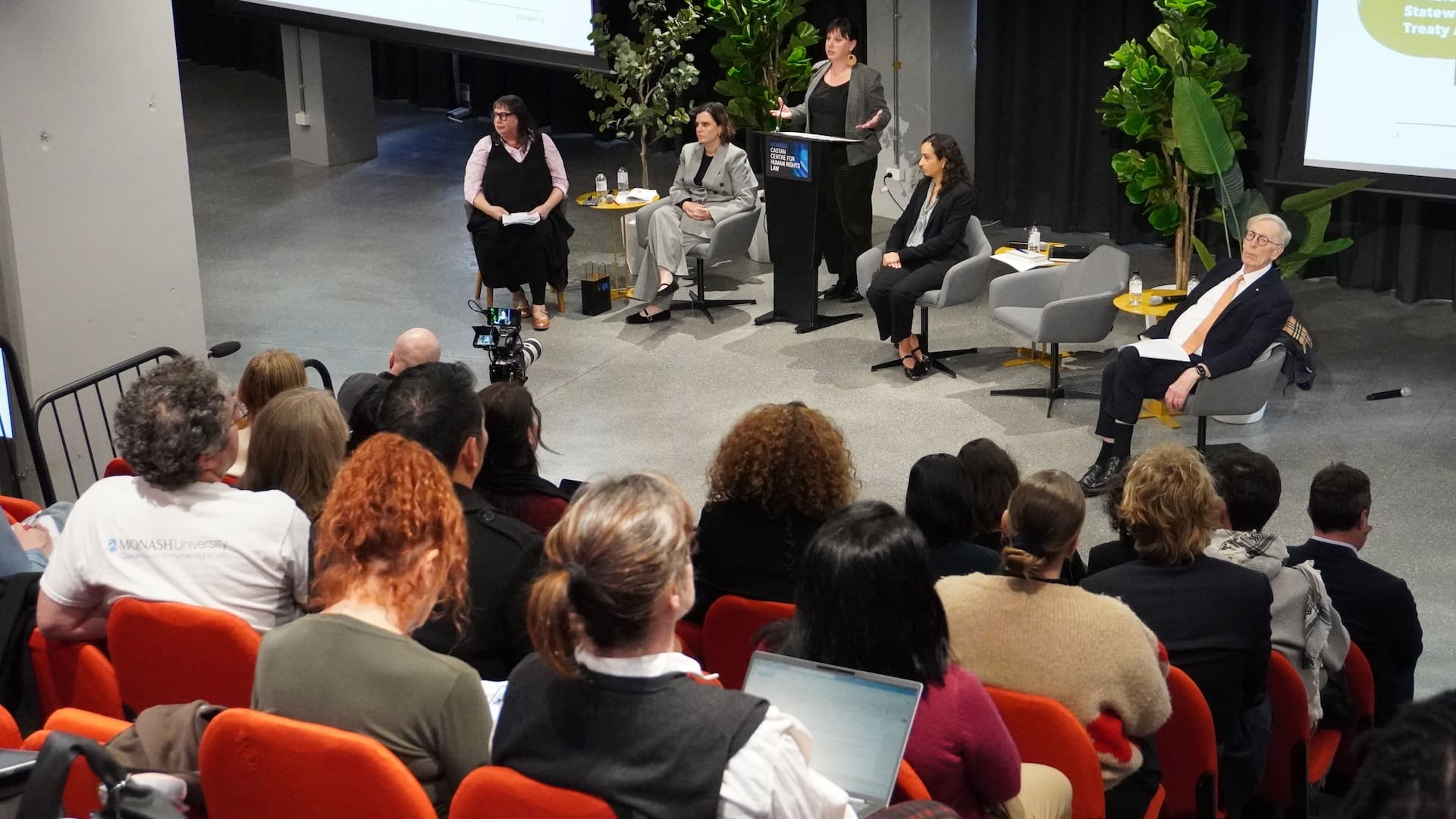
Bridgid Cowling Special Counsel, Gellung Warl.
Former High Court Justice, the Hon. Kenneth Hayne AC KC closed the panel with a powerful reflection on equality, sovereignty and the continuing consequences of colonisation.
“ Now the argument that there should be no Indigenous voice to the federal parliament because making that provision would breach a principle of equality said to lie in the Constitution either denied both history and the present-day consequences of that history, or at the very least, treated them as irrelevant,” Hayne said.
Read more about the Castan Centre for Human Rights Law
“ Describing the applicable principle as "equality" treats equality as demanding identical treatment regardless of difference. That is, it seeks to say that under the Constitution, there can be no different treatment of a group which has been the subject of discrimination on account of their membership of that group because equality somehow demands identical treatment of all. That is simply the antithesis of equality.”
“Equality demands the treating of like cases alike and different cases differently. Now references to equality, or as it was sometimes phrased as the Constitution being “colourblind” were and are no more than rhetorical devices intended to hide two undeniable facts - that the First Peoples of Australia have been systematically marginalised and discriminated against since Europeans first came to this country, and as a result, First Peoples have faced and still face entrenched disadvantage.”
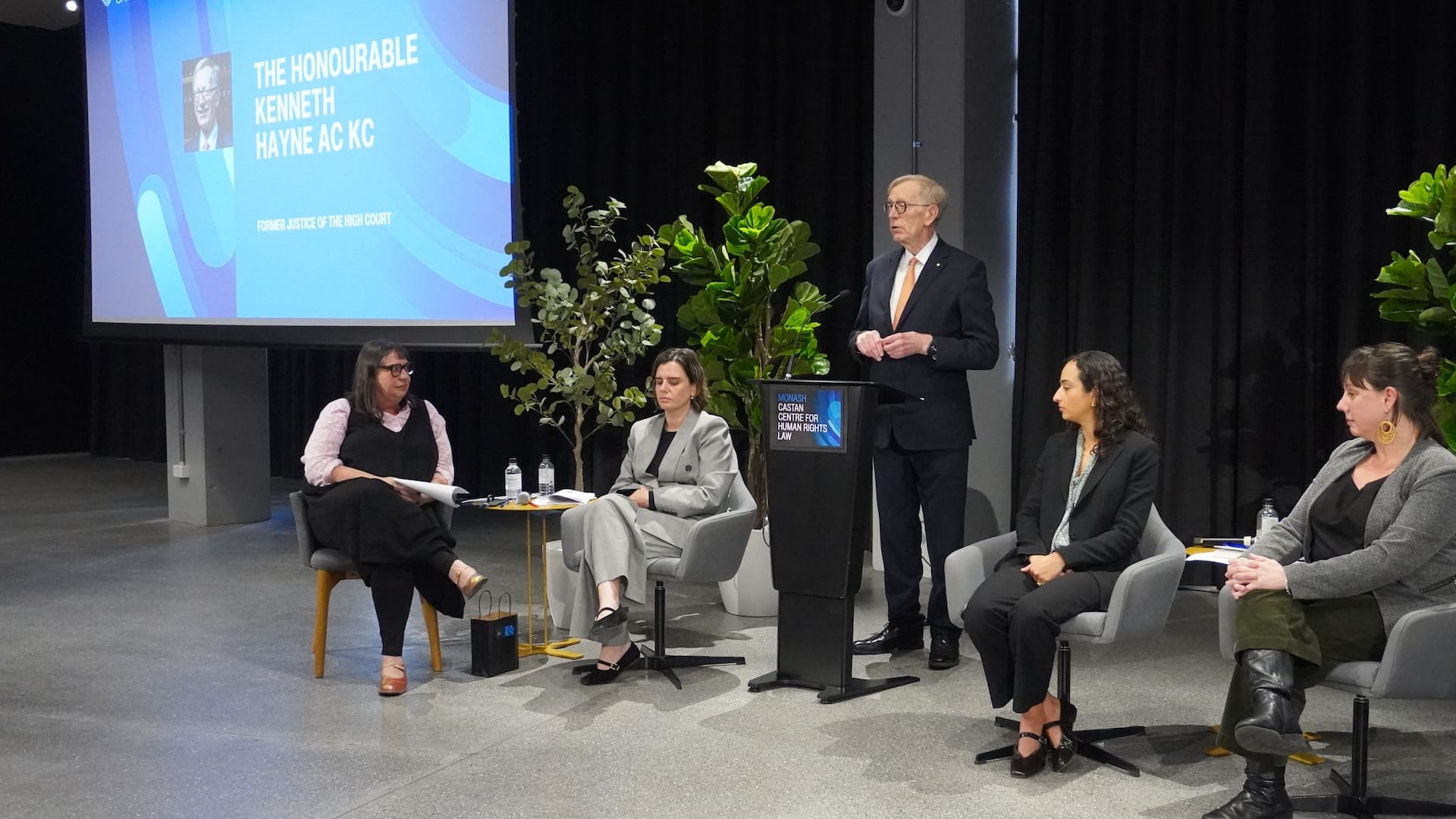
The Hon. Kenneth Hayne AC KC.
He argued that attempts to oppose recognition of First Peoples rights through appeals to equality misunderstand both history and law.
“ This was no mere ministerial or executive act. This was something ratified by the Parliament of Victoria. The making of Treaty is a fact that cannot now be undone. Now, some may seek to ignore the fact that Treaty has been made. But the more they seek to ignore what has happened, the more they are driven to deny the past, to ignore the present consequences of that past, and to rail blindly against a shared future,” Hayne said.
“Neither speaking of equality nor speaking of being colorblind provides any legitimate basis for ignoring what has happened. Rather, both of those terms, equality and colorblindness, are mere verbal devices by which those who use the terms seek to deny or to ignore history and seek to return to the discredited idea that this land was terra nullius. It was not.”
The impact of the Annual Castan Centre for Human Rights Law Conference
Across four sessions, the conference returned repeatedly to questions of accountability, implementation, truth-telling and institutional responsibility. Whether discussing children's rights, human rights enforcement, judicial independence or Treaty, speakers focused less on identifying problems than on how legal institutions respond once those problems are known.
Closing the conference, Vice Chancellor’s Distinguished Professor Melissa Castan reflected on the enduring community that has formed around the Centre over more than 25 years.
" One thing that is most special about being in the role of director, and that you don't see until you've done it for an arc of time, is the unbelievably wonderful relationships with academic and professional colleagues, with the students as they're going through their degrees, and the alumni who I get to see at the other end of the process working in fantastic organisations around Victoria and around Australia,” Castan said.
“It's the alumni, where the students go and what they become, which is such a fabulous highlight.”
As the Castan Centre for Human Rights Law enters a new chapter under Associate Professor Ronli Sifris, the conference demonstrated the continuing importance of human rights law as a forum for confronting difficult questions, amplifying diverse voices and imagining fairer futures.
Don’t miss the Annual Castan Centre for Human Rights Law conference in 2027.