
Law Academic Influences Compensation for Gay Convictions
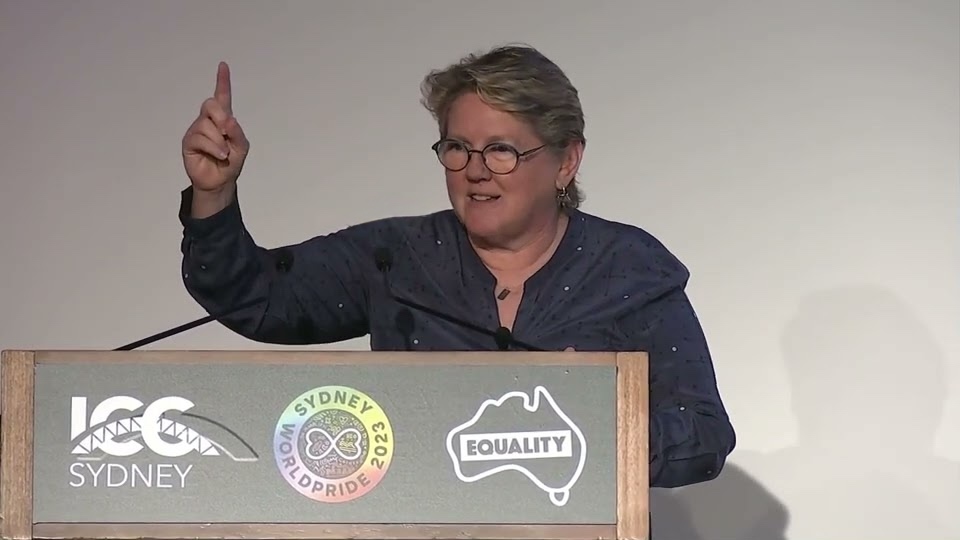
Professor Paula Gerber speaking at Worldpride 2023
Monash Law academic Professor Paula Gerber has contributed towards plans to introduce financial redress of up to $75,000 for Tasmanians with historic homosexuality convictions.
Professor Gerber made a significant submission to the Tasmanian Gender and Equality Committee regarding the payment of compensation to men who were charged or convicted of 'offences' during the era when homosexuality was criminalised. Tasmania was the last state in Australia to decriminalise same-sex sexual conduct, doing so in 1997. Her contributions were instrumental in shaping the recommendations of the Joint Sessional Committee on Gender and Equality Inquiry into The Expungement of Historical Offences Amendment Bill 2024.
Register to receive the quarterly Monash Law Research Newsletter
The Inquiry and its recommendations
The Committee was asked to make recommendations to the Tasmanian Parliament about the level of compensation that should be paid to individuals who had been charged or convicted under the historic laws criminalising homosexuality, after the Government’s initial proposal of an ex gratia payment of $5,000 was considered manifestly inadequate.
Notably, the Committee cited Professor Paula Gerber’s submission 31 times, and their recommendations closely mirror her proposals, which were annexed to the final report.
Professor Paula Gerber’s Recommendations
Professor Gerber’s detailed recommendations to the committee were as follows:
- Persons who were charged but not convicted of offences relating to cross-dressing and/or consensual same-sex sexual conduct and did not serve time in jail should receive compensation of $15,000.
- Persons who were convicted of offences relating to cross-dressing and/or consensual same-sex sexual conduct and did not serve any time in jail should receive compensation of $45,000.
- Persons who were convicted of offences relating to cross-dressing and/or consensual same-sex sexual conduct and served time in jail or were subjected to other forms of punishment, such as conversion practices, should receive compensation of $75,000.
Impact of Professor Gerber’s Work
Professor Gerber, who specialises in international human rights law, has long been an advocate for the rights of the LGBTQ+ community. Her research and activism have focused on addressing historical injustices and ensuring that those who suffered under discriminatory laws receive the recognition and compensation they deserve.
In her submission, Professor Gerber emphasised the principle that ‘there should be no wrong without a remedy.’ She argued that the tiered amounts of compensation she proposed reflected the degree of harm suffered by individuals subjected to these unjust laws. Her comprehensive research and commitment to righting these wrongs played a pivotal role in the Committee's decision-making process.
Support and Future Implications
The Tasmanian Labor party has expressed strong support for the recommendations of the Parliamentary Committee on Gender and Equality. Labor MP Ella Haddad, Tasmania’s shadow Attorney General and shadow minister for equality, highlighted the importance of addressing this dark period in Tasmania’s history. She noted that many individuals who still have these wrongful convictions on their records are now of advanced age and have suffered significant personal and professional losses.
Equality Tasmania spokesperson Rodney Croome also praised the Committee for its compassionate approach and urged the government to implement the recommendations swiftly. He emphasised that the financial redress would provide some recompense for those who suffered under the former laws and help them heal.
Real-world impact from academic research
Professor Paula Gerber’s contributions to the Inquiry has helped ensure that the men who were victims of these past wrongs will finally receive justice.
Equally importantly, Tasmania, as the first jurisdiction in Australia to tackle the question of compensation for those subjected to these historical laws, has set a precedent for how other states and territories can move forward in remedying these wrongs. Professor Gerber will continue to advocate for similar compensation schemes to be set up around the country.
Register to receive the quarterly Monash Law Research Newsletter