
Digital Law Symposium showcases cross‑disciplinary expertise

Digital Law Symposium showcases cross‑disciplinary expertise
The Second Annual Digital Law Symposium brought scholars, practitioners and policymakers together at Monash Law for a day that focused on rigorous research and debate, and collaborative discussion drawing on participants’ expertise in digital law. Co-hosted by Monash Law School and Deakin Law School, it was a day of discussions and insights on all things digital law.
Setting the tone for the day, co‑host Professor Chris Marsden from Monash Law emphasised the community and interdisciplinarity of the symposium, with a good dash of playfulness and fun.
“Welcome to the second annual Digital Law Symposium, We're going to subtitle this one, the one where everyone's heard of it in advance, which is nice,” Professor Marsden said, noting it was the Second annual symposium and word had spread across Australia.
He highlighted the organising team consisting of co-host Associate Professor Maria O’Sullivan, and the organising committee of Dr Paul Burgess (Monash), Professor Jeanie Patterson (Melbourne), Dr Rob Nicholls (Sydney) and Dr Neerav Srivastava (Deakin). Together they created a deliberately interactive format, inviting networking, friendship breaks, a poster session and a book launch.
Find out more about the Digital Law Group
Co‑host Associate Professor Maria O’Sullivan from Deakin University shared her passion for the symposium’s ethos.
“I love coming to AI and tech law things in Melbourne. I find this community really welcoming, maybe because we come from different disciplines,” Associate Professor O’Sullivan said.
That human spirit carried through the day’s panels, book launches and lively Q&A. Still, in the interest of testing digital law, we asked AI to summarise the day’s events in this longform article, which we then had to edit for accuracy.
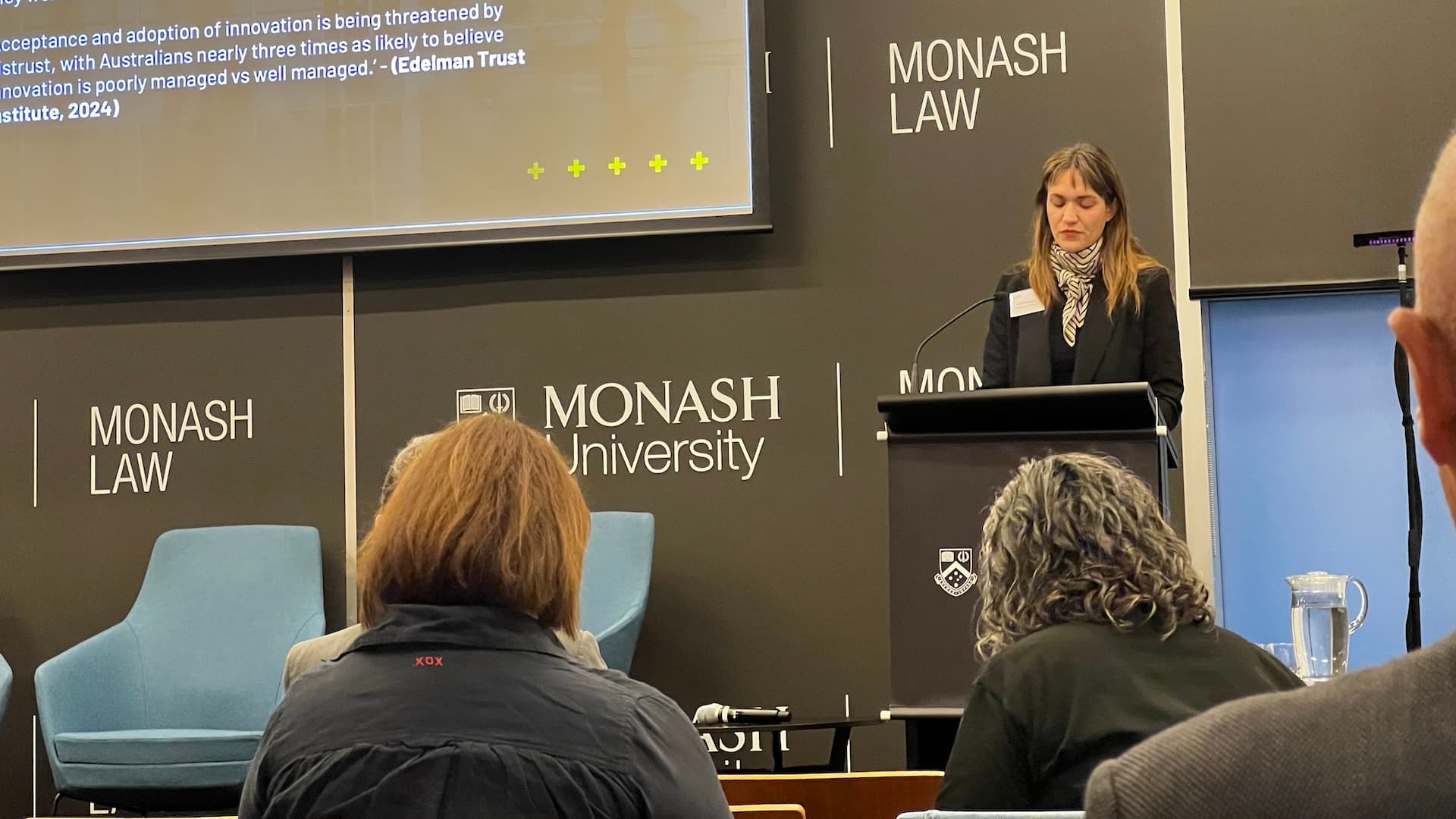
Trust, reliance, and the shape of AI governance
The first speaker on the first panel, Dr Lina Przhedetsky (Melbourne Law School) challenged the prevailing policy rhetoric of “building trust” in AI, arguing for reliance benchmarks instead. People are reticent to trust. That said, 83% of us are willing to trust AI if assurances are in place and over three quarters want to see AI specific regulation. Yet, she cautioned that trust is being pursued as a necessary and urgent precondition for AI adoption in service of AI boosterism.
Her key proposal was to separate trust from reliance, and focus on measurable safeguards. That means promoting confidence in AI that is proportionate and justified. Unlike trust, appropriate reliance can be more readily measured and contrasted against benchmarks. One of the advantages is that it’s more likely to come with some sort of remedy when reliance is breached. Clear benchmarks can be codified in law and addressed through appropriate remedies when breached.
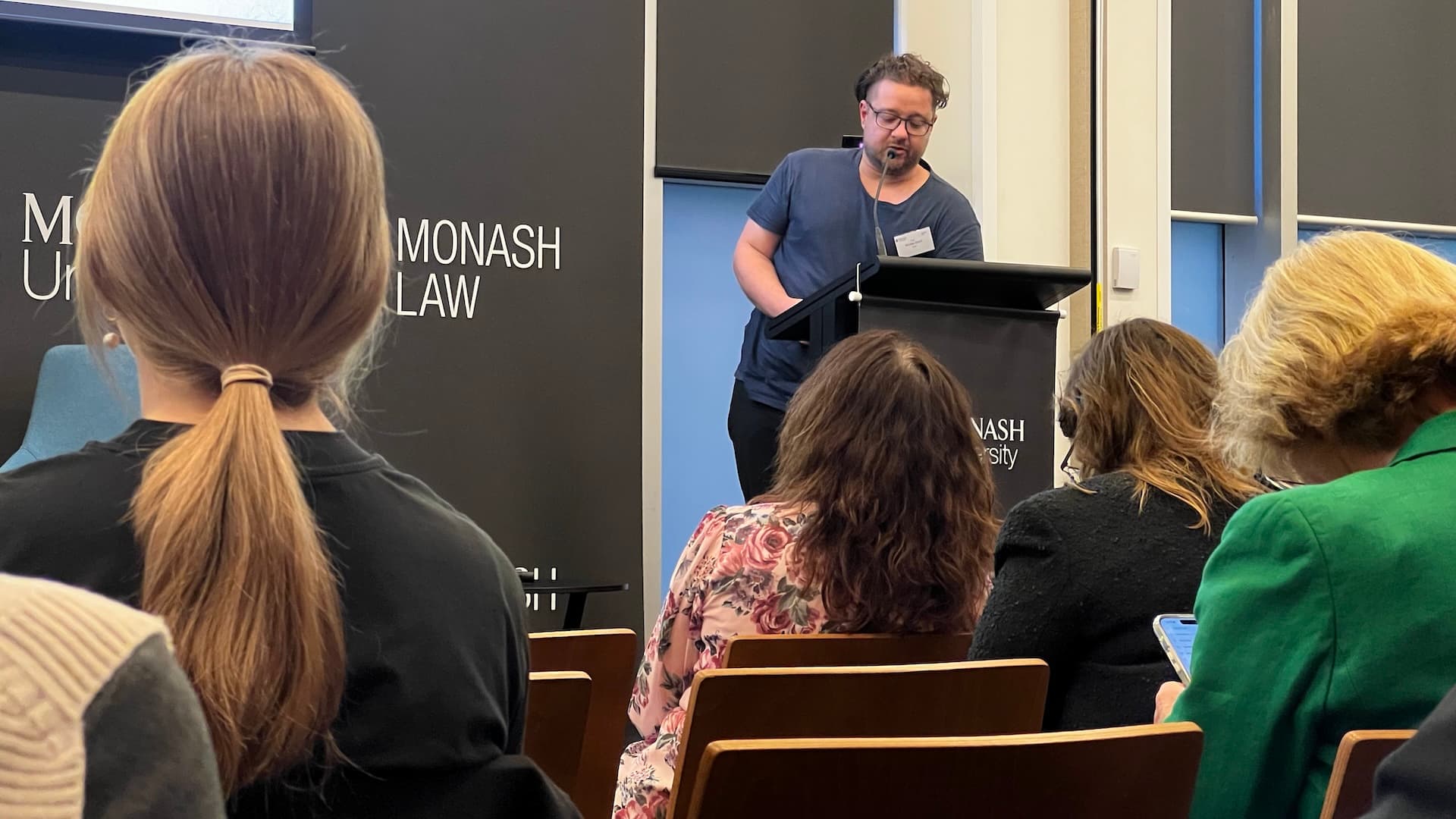
Representation, alignment and the ‘woke AI’ culture wars
Professor Nic Suzor (QUT Law) offered a provocation on AI alignment and political polarisation, while sharing images that illustrated how image models can perpetuate caricature and stereotyping. There are no neutral outputs. The more moderate answers to this tend to fall back to some sort of a process answer that treats it as an alignment problem. At its best, alignment means some sort of deliberative democratic process where you get people in the room to see what they think that the answers should be. At its worst, it's just a kind of voting system, a really ugly majoritarian system that gives you really ugly majoritarian results.
Find out more about the Digital Law Group
His challenge to the field was to develop a positive, values‑led approach rather than retreating to false balance. At what point can we expect a tech company to explicitly try an anti‑racist, a decolonial iteration of a generative AI LLM chatbot? Failing to engage is a losing strategy. Turning to process is also a losing strategy.
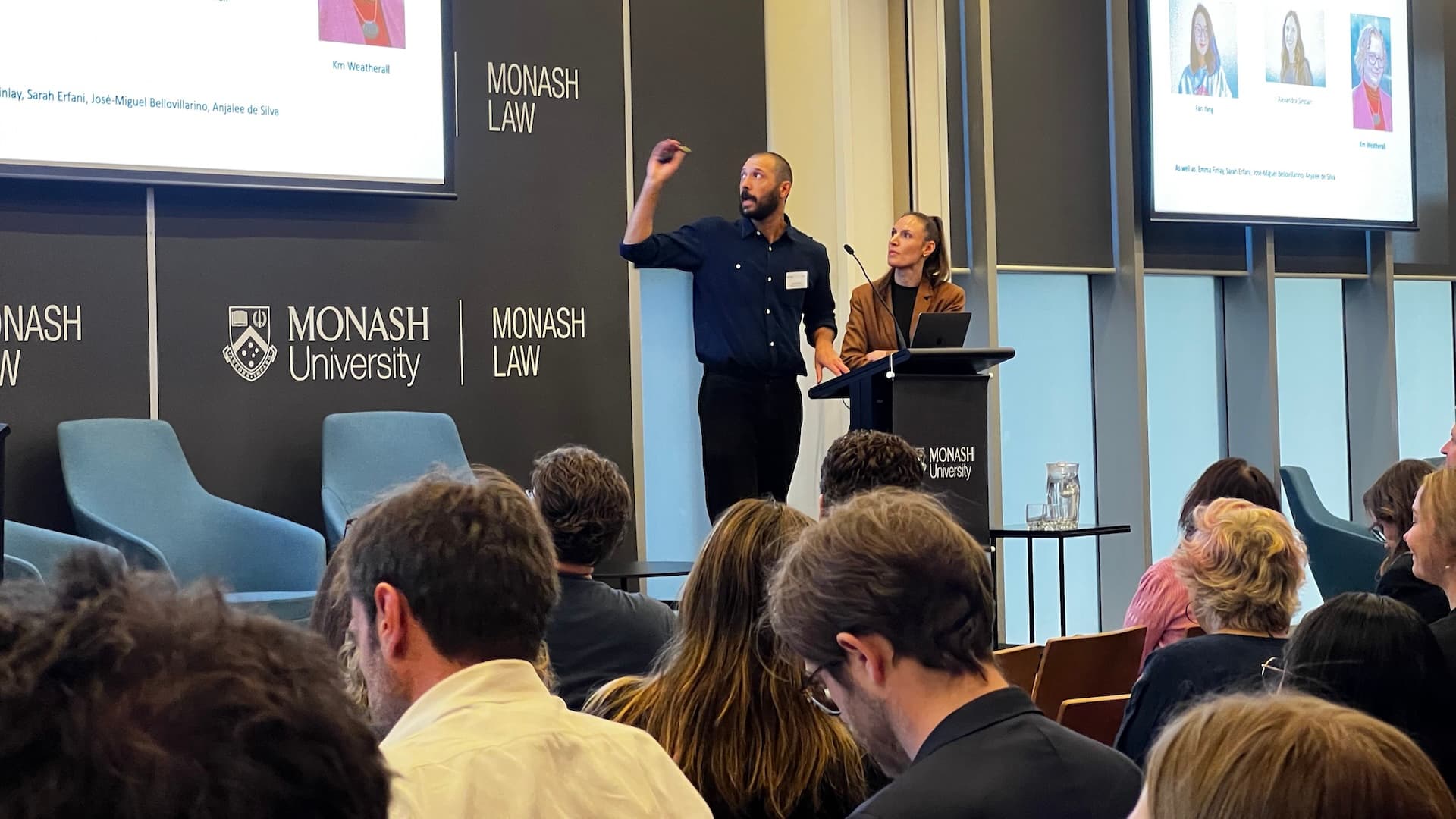
Public sector AI: Risk management, contracts, black boxes
Dr Jake Goldenfein and Alexandra Sinclair (University of Melbourne/ARC ADM+S Centre of Excellence) shared empirical findings from interviews with senior bureaucrats, vendors and outsourcers. AI governance in the public sector is a risk management problem, and the risk comes from workers. Often they acknowledge their inability to negotiate contractual terms in their favour. They decided whether or not to contract with AI was a risk question - whether they could run the risk of acquiring that product when entering into those contractual obligations.
On transparency, Goldenfein was bluntly insightful. There is no transparency into these systems. There's a lot of promise transparency, but nothing is actually verifiable. Everyone is just relying on contractual attestations from vendors in the supply chain, that the product that they're supplying is compliant. That reality is shaping procurement and creating a monopoly. The tender documents that are going out for building this system are pre-specifying that the people who are going to bid for the tenders have familiarity with either AWS or Microsoft environments. That means that our current regulatory paradigm is really pushing us towards this very concentrated monopoly over the technology infrastructure of government.
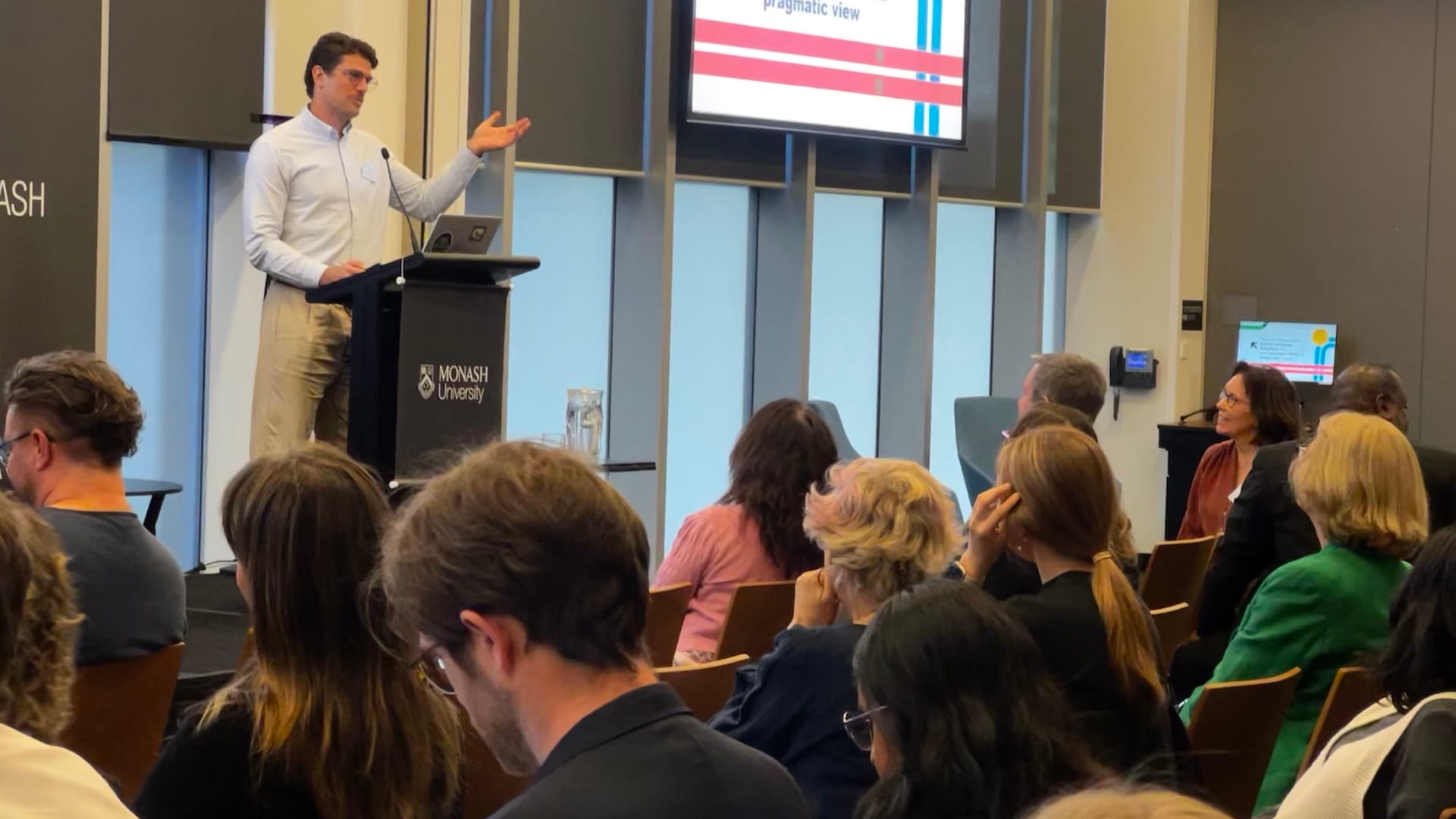
Strategic Litigation as Governance
Dr Henry Fraser (QUT Law) presented research on the role of public interest litigation in AI governance. He noted that change often comes when systems got sued for a huge amount of money, and described retrofitting existing causes of action to new harms. We don't have an Australian bill of rights, we don't have this foundational level. We rely on remedies and we rely on working backwards from the remedy.
Find out more about the Digital Law Group
Fraser outlined tactical choices in litigation to achieve positive outcomes, such as negligence, unjust enrichment, breach of confidence, and then “bolting on” more progressive claims to build doctrine over time.
Sovereignty, Extraterritoriality and Global Takedown Orders
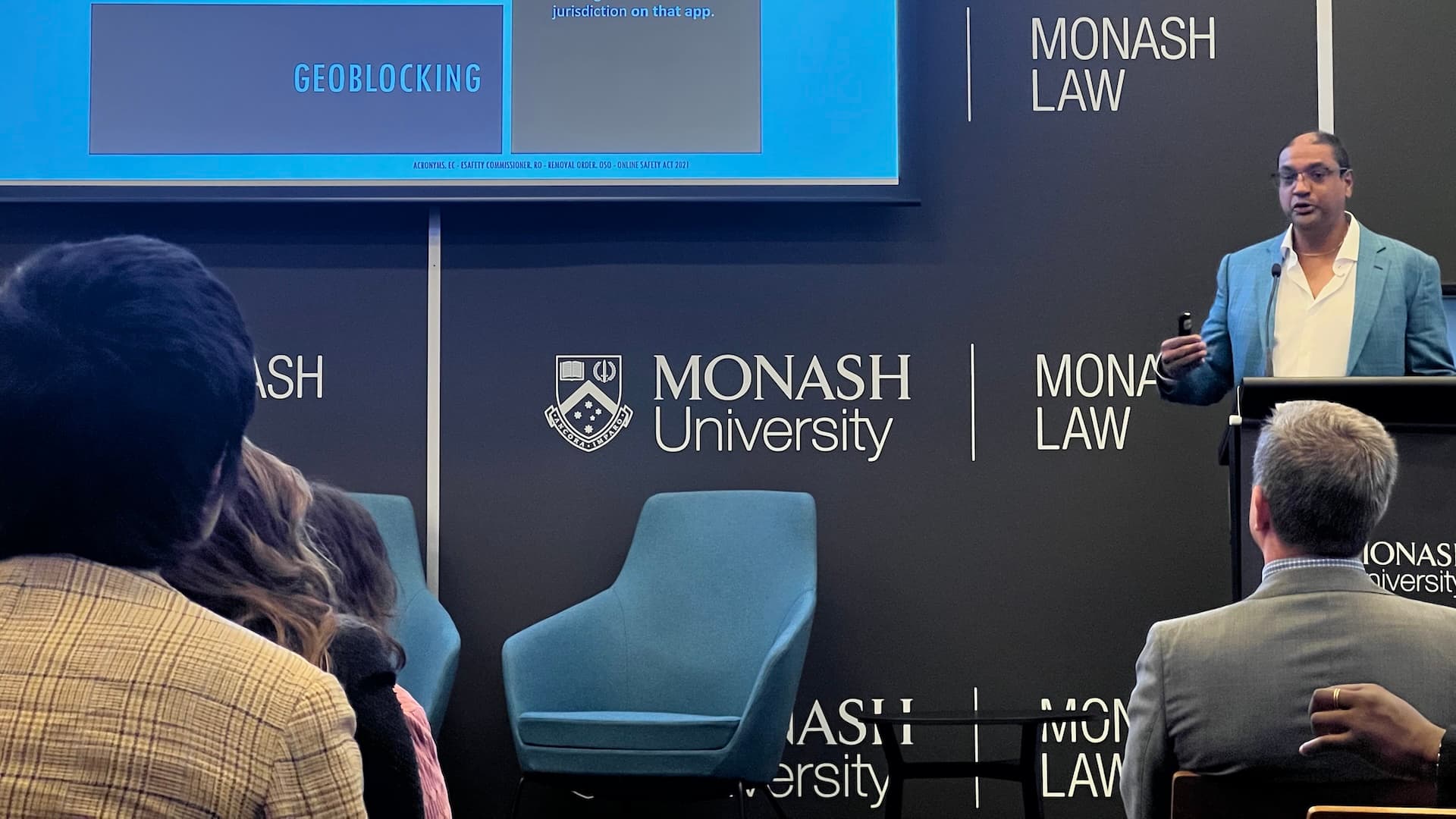
Dr Neerav Srivastava (Deakin Law) examined the infamous 2024 X takedown order by the eSafety Commissioner through the lens of statutory scope and private international law. The question is whether X had taken reasonable steps - specifically whether geoblocking constituted reasonable steps. That's where the dispute arose and the eSafety commissioner first took the position that that is not sufficient and then withdrew that claim.Geoblocking might constitute reasonable steps. It is possible to circumvent, but one of the articles described it as considerable friction, which means we don’t really know. On worldwide orders, he underscored sovereignty limits. If you think about the implications of a worldwide order, in theory, then Australia is essentially dictating which content is not permissible to the rest of the world. That doesn't make any sense if we think of it because content that is acceptable in one jurisdiction may not be acceptable in another, and vice versa.
Privacy, Proportionality and Trustworthy Data Flows
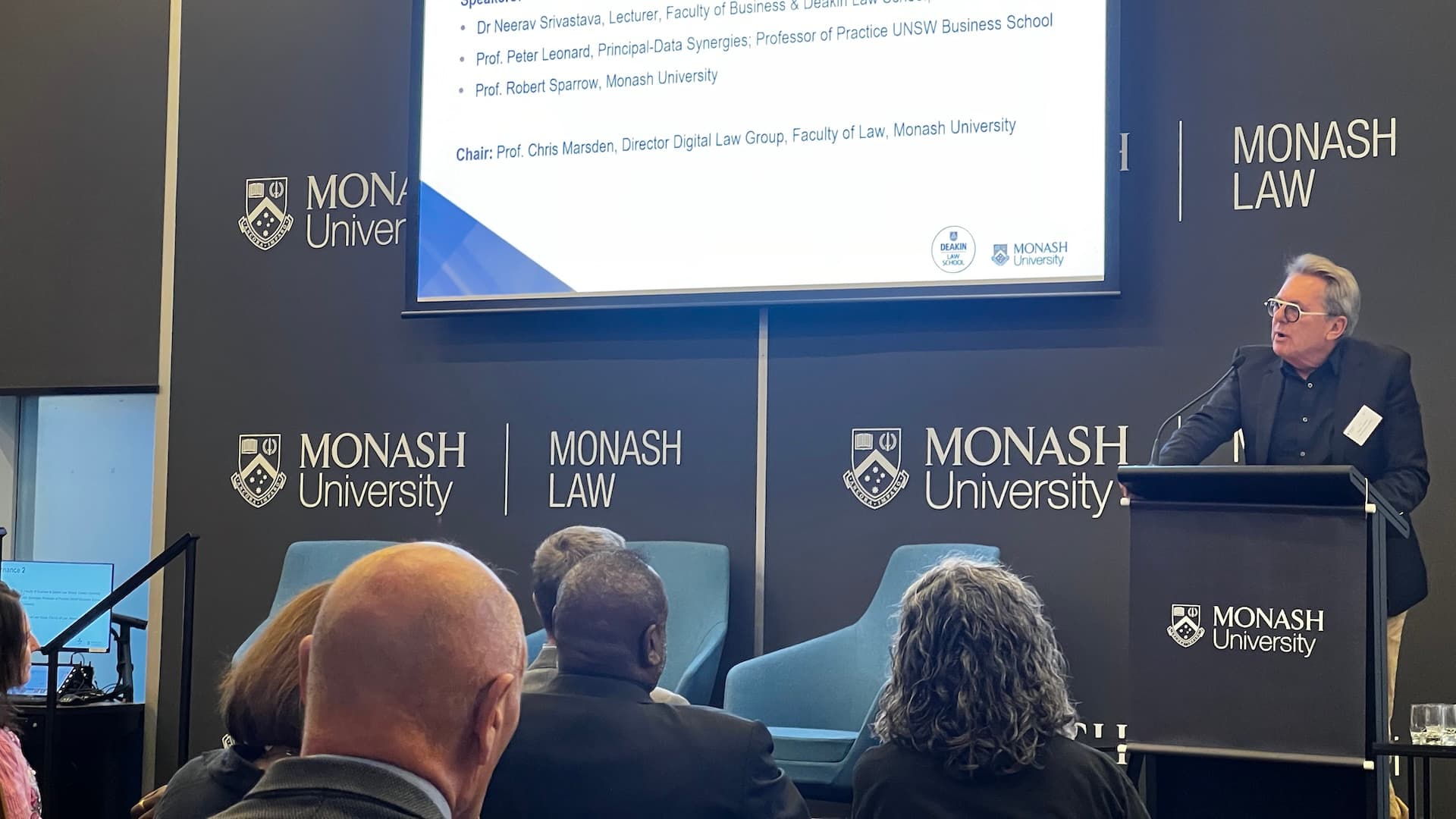
Professor Peter Leonard (UNSW Business School) critiqued proposals to treat privacy compliance as a “dead weight cost,” insisting on the productivity benefits of trustworthy data flows. The argument is that in a modern digital economy there is a productivity benefit to the economy of trustworthy data flows. You can't have trustworthy data flows in a world where people's personal information is being used in ways that firstly are not explained, are not transparent, but secondly and equally important that are not appropriately constrained to legitimate purpose.
He emphasised necessity and proportionality embedded in the Act and the practical force of transparency. If transparency provisions are appropriately interpreted and applied, they are going to create very real problems for organisations in respect of many of their current profiling activities. Transparency, although it doesn't include prescription and restriction, can have a practical effect of leading to prescription and restriction, changing what people do.

Evidence, Testimony and the Limits of Machine Speech
Professor Rob Sparrow (Monash Philosophy) set out to present quite an ambitious philosophical argument about how we should understand the outputs of AI systems. He put forward the idea that large language models’ outputs lack testimony in a moral sense. Machines are not moral agents. There’s a lot of debate about whether they might be legal agents, but they're not moral agents. Almost nobody out there thinks that you can hold machines morally responsible for what they say. People have to go a long way out on a limb to say that they hold machines morally responsible. In part, that's because we don't know what it means to hold machines morally responsible. How do you punish the computer if it gets something wrong?.
Find out more about the Digital Law Group
He suggested their outputs may be “meaningless” without human responsibility. What we think needs to happen is someone needs to accept responsibility for them. So the machine says something, it can't serve as testimony, it might serve as evidence. So the question then becomes - when are we justified in speaking for the machines?
Lunchtime Poster Session
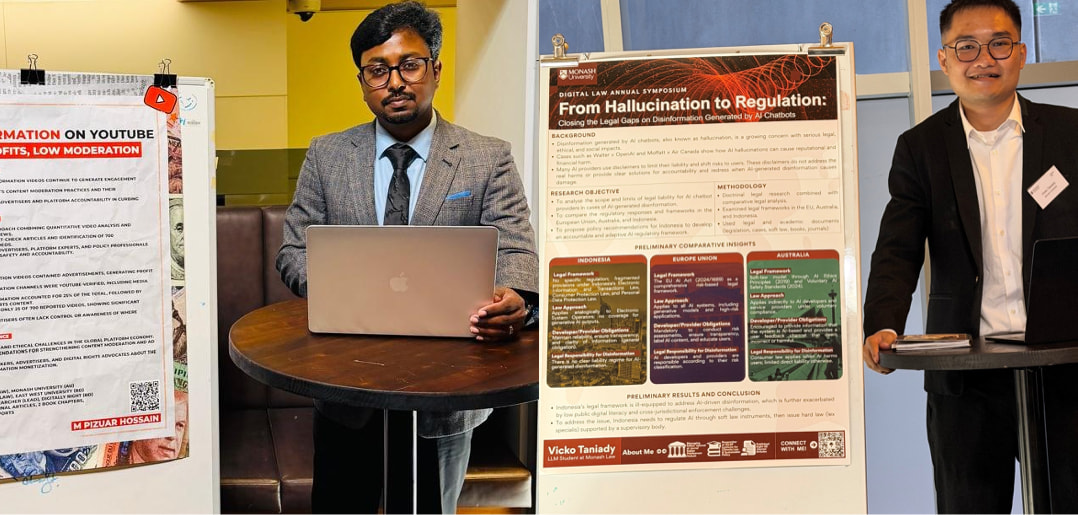
Organised by Neerav Srivastava (Deakin) for a second year, the posters were from Vicko Taniady (Monash LLM), Mohammad Pizuar Hossain (Monash PhD Law Candidate).
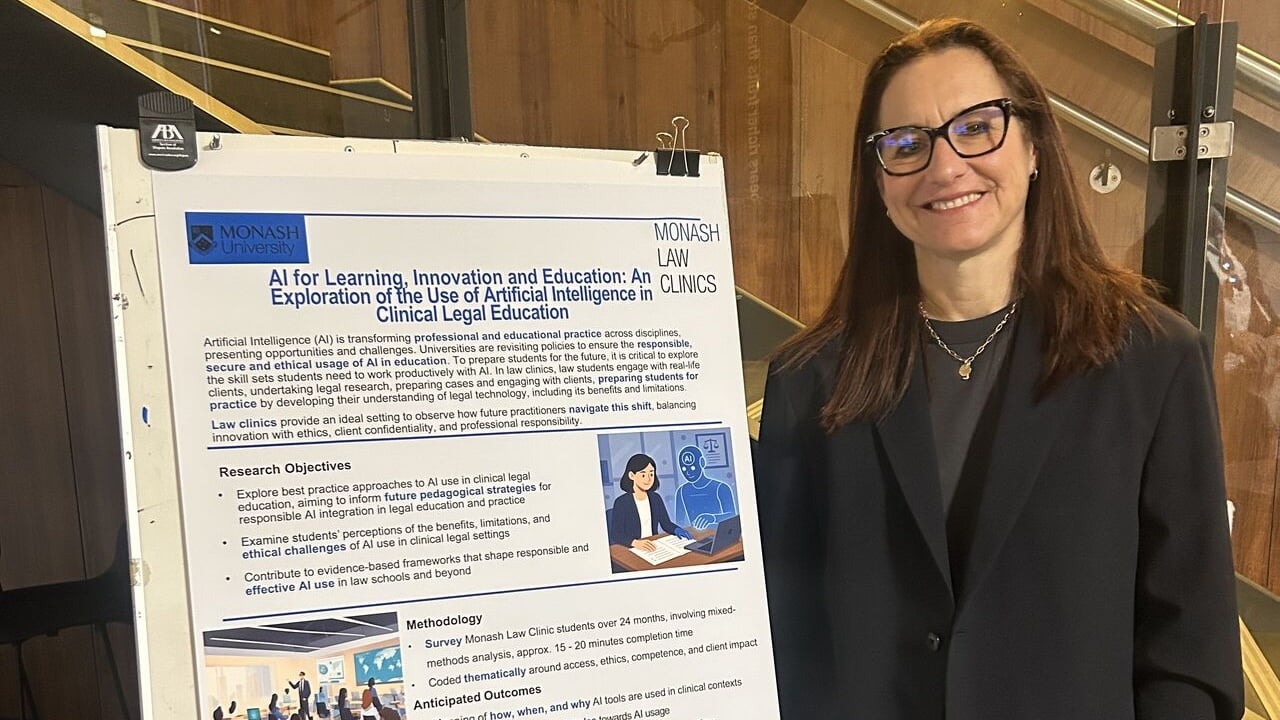
Jacqueline Weinberg (Monash Clinics) also presented a poster, rounding out the year of 50th anniversary celebrations for the Clinics!
Book Launch: Advancing the AI Law Discourse
Jeannie Patterson and Chris Marsden presented the Oxford Handbook of the Foundations and Regulation of Generative AI, a critical teaching resource as well as a 38 chapter research intensive tour de force by ‘Who’s Who’ of global AI regulation experts. It has not yet been published in paper, but was fully available online from May, meaning Chris Marsden could teach LAW4542 in 2025 using it as his chief resource…
Privacy, Surveillance and Human Rights
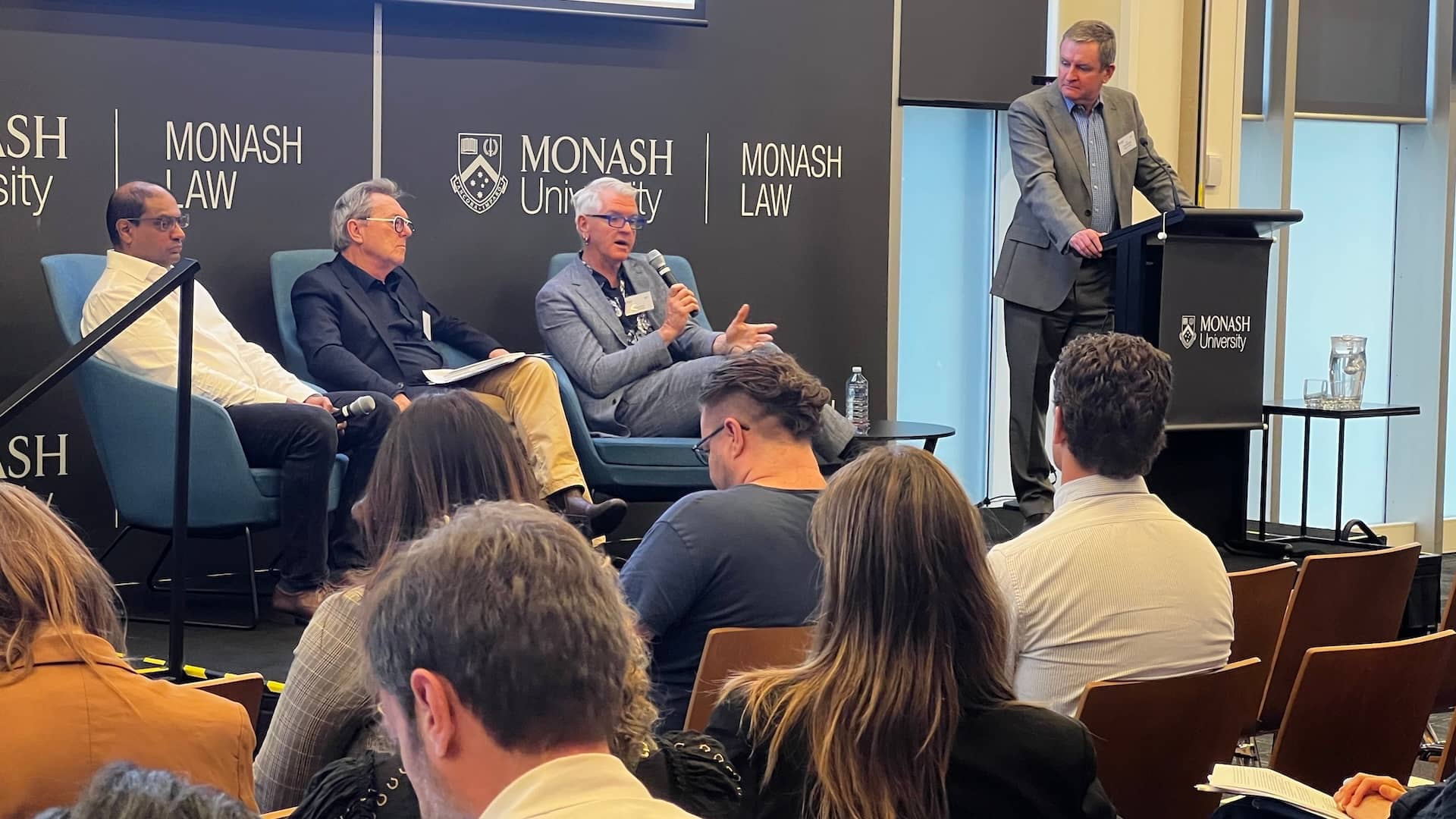
Professor Shiri Krebs (Deakin Law) detailed Australia’s surveillance law complexity. As we started looking at Australian regulation, we came up with a different critique to the one that we've heard before, which is that we don't have enough regulation or that the government doesn't want to regulate in regard to surveillance tools and surveillance powers. We actually have so much legislation, but the problem is that it's completely inconsistent across different jurisdictions, across different agencies, across different technologies.
She highlighted indirect surveillance powers and the need to scrutinise how data is collected, shared and authorised. Not only do we have a lot of laws outside the direct electronic surveillance laws that include surveillance powers, but we also allow surveillance powers to take place by omission, by exclusion, by exemptions, by creating immunities. These are surveillance powers that are not directly in the laws, but are there by the fact that they're excluded from review or excluded from prohibitions, excluded from penalties.
Professor Christine Parker (UniMelb Law) advanced a human‑rights‑based approach to platform responsibility for algorithmic determinants of health. Digital platforms like Facebook, YouTube, and TikTok make unhealthy advertising ubiquitous and intimate, thereby increasing its effectiveness. They also enable personalisation and targeting, for which we think they should be held at least partly responsible, even if that's an intentional strategy by the industry. But above and beyond anything that the industry is doing, they also create particular flows of advertising made up of ads from different brands and different products that may or may not reflect the intention of any particular advertiser.
Find out more about the Digital Law Group
Platforms should be thought of as responsible in their own right for flows of unhealthy ads, with regulators requiring risk identification and mitigation consistent with consumer protection and public health. We think the human rights based approach would create a strong case for both government regulation of platforms and for platforms to do things that they should be doing in the absence of government and platform action, public health and consumer.
Lucinda Nelson (QUT Law, PhD candidate) examined everyday online misogyny as cumulative harm that atomistic moderation cannot address. What this means is that you can't just separate out different forms of misogyny discreetly, because they all feed into each other and they all function to enforce patriarchal norms and expectations. She called for theory‑driven expert evaluations at scale. We need ways to measure how well they're doing. We need ways to measure how well they're doing in creating less misogynistic cultures.
Nicole Foo (Monash Law, PhD candidate) assessed the metadata retention regime through ICCPR Article 17 and ECHR Article 8 proportionality tests. Article 17 requires that an interference with the right to privacy must not be unlawful, and it must not be arbitrary. So with the first requirement, it means that an interference must have a basis in domestic law. The domestic law must be drafted with precision and define its parameters to indicate when an interference with privacy can take place.
In commentary, special guest Kate Bower, Director, Privacy Reform Implementation Director at the Office of the Australian Information Commissioner, connected these threads to systemic harms and reform. A regulator can take individual complaints, take action against individual entities. But so much more of the harms are based on the cumulative or the aggregate, or the combination of different types of personal information, different parts of data. She pointed to data minimisation and the proposed fair and reasonable use test as crucial for modernising privacy.
Generative AI and legal education
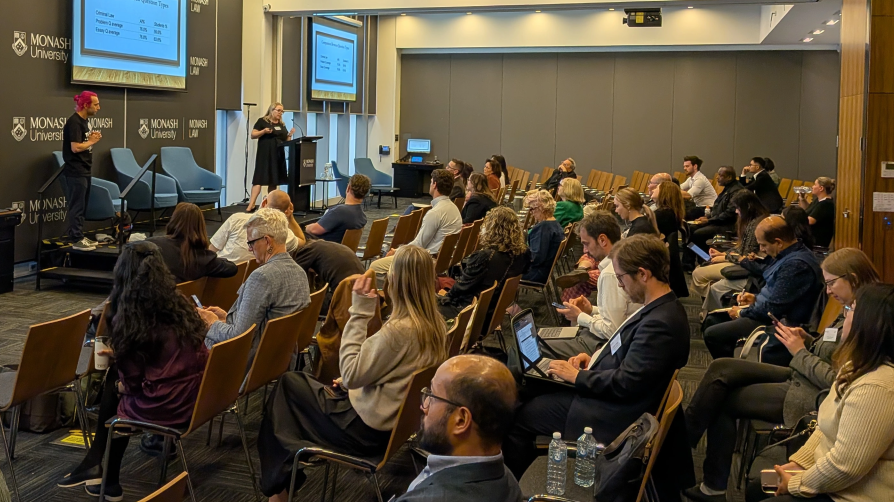
Dr Armin Alimardani (Western Sydney Law) and Dr Melissa Porter (Wollongong Law) presented a repeated exam study comparing human and AI‑generated answers. Alimardani reported significant model improvement. In two years, models clearly have improved significantly. Even if they generated nonsense, some of them generated nonsense of the quality that is better than 99% of students, without any hallucinations. Porter’s analysis showed varied hallucination profiles. Some models with “no hallucinations” scored strongly and she stressed the need for assessment redesign.
Dr Peng Guo (Swinburne Law) outlined a progressive approach to AI literacy through flashcards, problem‑solving and critical analysis, which are aimed at building judgement and reducing over‑reliance. We want students to be aware of the advantages and disadvantages when they use AI. She designed a progressive approach, asked them to learn the basics from torts and problem solving and then critical thinking in equity and trust. She let them know that in the future, in their job, law firms may expect them to understand AI, to use AI, but they need to check the citations, check everything generated by AI. That may be more time consuming.
Professor Jeannie Patterson (UniMelb Law) offered a pragmatic note: legal education must teach what lawyers do, not just facts that generative tools retrieve. Asking students facts of cases and outcomes is precisely what generative AI is very good at. That is not disastrous to legal education because legal education is not about telling people the facts of a case. Telling people the facts of the case and outcome is actually not what lawyers do. Her call was for AI literacy that enables informed but skeptical users of the technology.
Disinformation, Elections and Democratic Resilience
Mairead Doyle (Victorian Electoral Commission) shared global insights from her Churchill Fellowship global research project on electoral disinformation and AI, and the final report that she had just launched. AI offers opportunities to strengthen democracy. But there is limited evidence so far that it directly changed any 2024 election results. However, it's already impacted voter behaviors and voter beliefs, political discourse, societal polarisation, and institutional trust levels across many jurisdictions.
Her recommendations centred on radical transparency, targeted resilience for vulnerable groups, and face‑to‑face community engagement. Grassroots engagement through trusted community organisations is one of the most effective counters to algorithm driven polarisation. There is substantial evidence that face-to-face conversations about democratic trust are way more effective than digital corrections after the fact, that local trusted relationships create resilience against disinformation and that community networks can spread accurate information faster than institutional messaging. This is not just feel good, this is evidence-based. Technology that threatens democracy must be countered with the human connections that sustain democracy.
Closing the session, Chris Marsden underscored the urgency of comparative AI disinformation regulatory study. “Mandatory voting and the fact that we have different systems of voting for the Senate and the House of Representatives will not save us. And so we need a comparative study of AI disinformation law.”
Robbie Fordyce, on his behalf with team members Fan Yang and Luke Heemsbergen, presented ReCapture Lab research on Critical disinformation in practice during the 2025 Australian Federal Election. This team has produced an extraordinarily insightful and impactful series of academic and policy papers in a very short time, showing what potential there is for interdisciplinary disinformation policy research.
Research Expertise at Monash Law and Across Australia: A Clear Signal
Across panels, launches and debates, the Symposium showcased Monash Law’s depth in digital law. It bridged doctrinal innovation (liability, remedies, human rights), empirical inquiry (procurement, governance, disinformation), and educational leadership (AI literacy, assessment reform). In the week after the Symposium, The Australian ‘Research 2026’ journal declared both Professor Marsden and Monash Law School as the top technology law researcher and institution of the year.
From Wallingford’s liability frameworks and Parker’s rights‑based platform governance, to Goldenfein & Sinclair’s public‑sector evidence base, the day placed research quality and interdisciplinary expertise at the forefront. As O’Sullivan noted at the outset, it’s a community that “brings people together” and one that is steadily shaping the national and global conversation on digital law. The community was then brought together for an evening reception up the road at ‘The Mint’.
Here’s to the even bigger and better Third Annual Australian Digital Law Symposium!