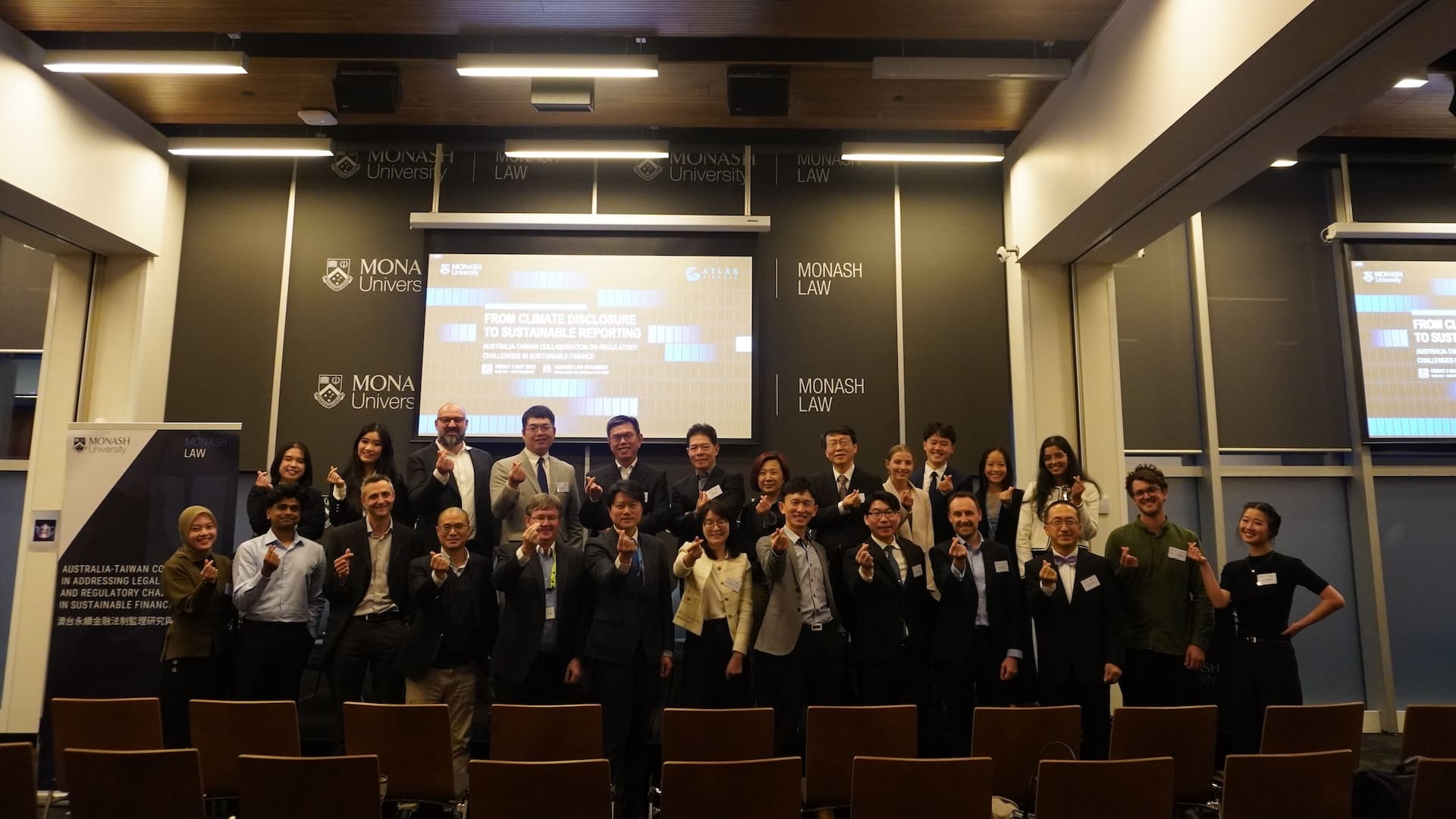
Australia-Taiwan Collaboration on Regulatory Challenges in Sustainable Finance Workshop
Funded by the Department of Foreign Affairs and Trade (DFAT) through the National Foundation for Australia-China Relations (NFACR), the first workshop of the Monash Law collaborative research project with the Taiwan Sustainable Finance and Impact Investing Academy (SFIIA) and a number of Taiwanese leading universities, titled “From Climate Disclosure to Sustainable Reporting,” marked a significant milestone in international cooperation on sustainable finance. Held at Monash University Law Chambers, the event brought together leading experts from the Taiwan Stock Exchange, the Joint Credit Information Center (Credit Bureau of Taiwan), E.SUN Bank, Australian Sustainable Finance Institute, ANZ, CAANZ, Deloitte Australia, and more top academics and industry experts from both Australia and Taiwan to address the legal and regulatory challenges in climate-related financial disclosures.
Read more about Australia-Taiwan Legal and Sustainability in Finance
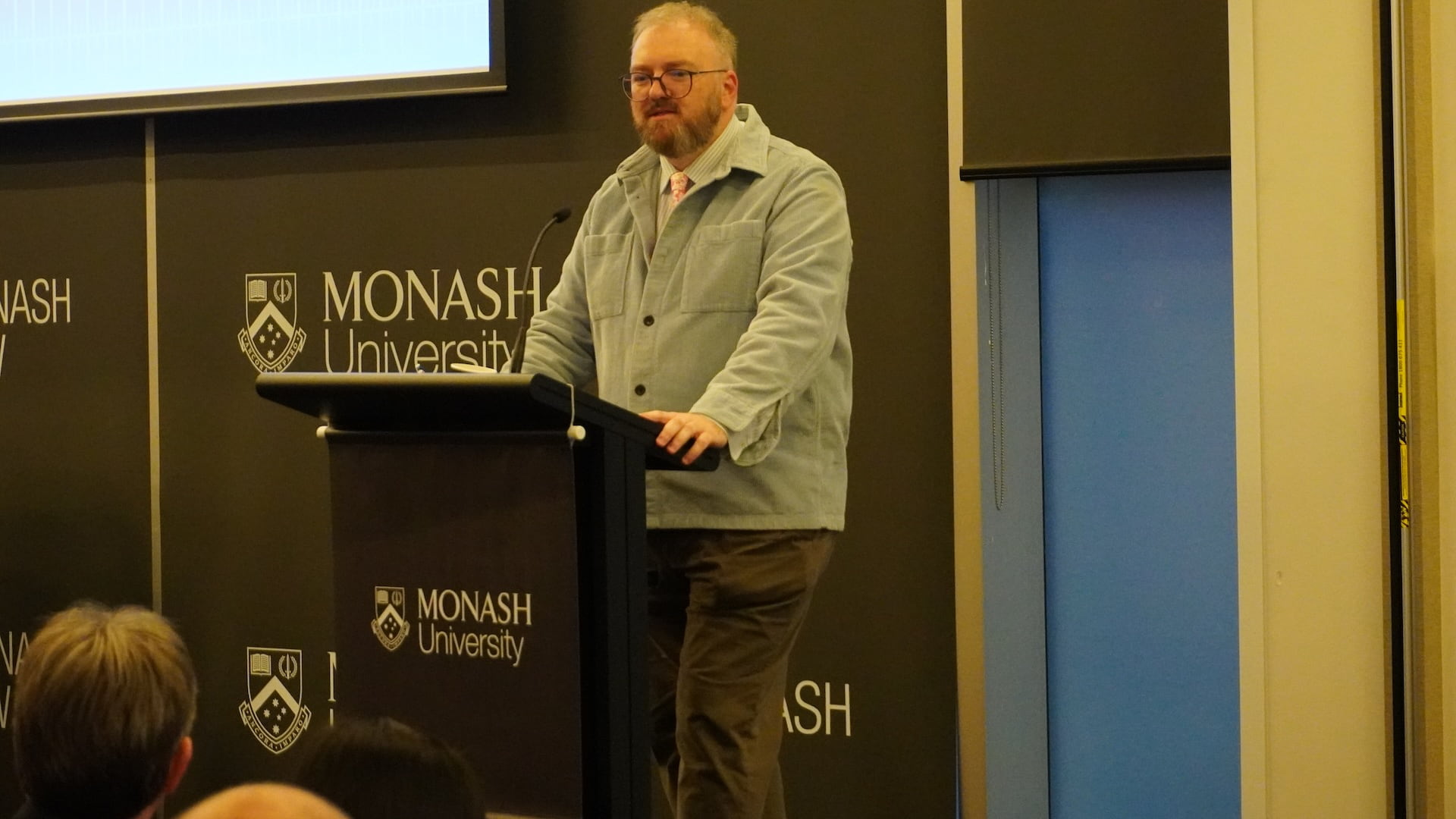
Professor Steven Vaughan, Dean of the Faculty of Law.
Opening Remarks: A Shared Commitment to Sustainability
Professor Steven Vaughan, Dean of the Faculty of Law at Monash University, opened the workshop by acknowledging the traditional owners of the land and emphasising the importance of environmental stewardship.
“We recognise that no single group, no single country, can address these super-wicked problems, like climate change, alone,” he said.
“ Law is too critical to society and the challenges we are facing to be left to the lawyers. So today, when I look at the companies, community groups, interest groups, and academics who are involved in this project, it is more than law and more than lawyers. That is so important for these very difficult issues that we are trying to address.”
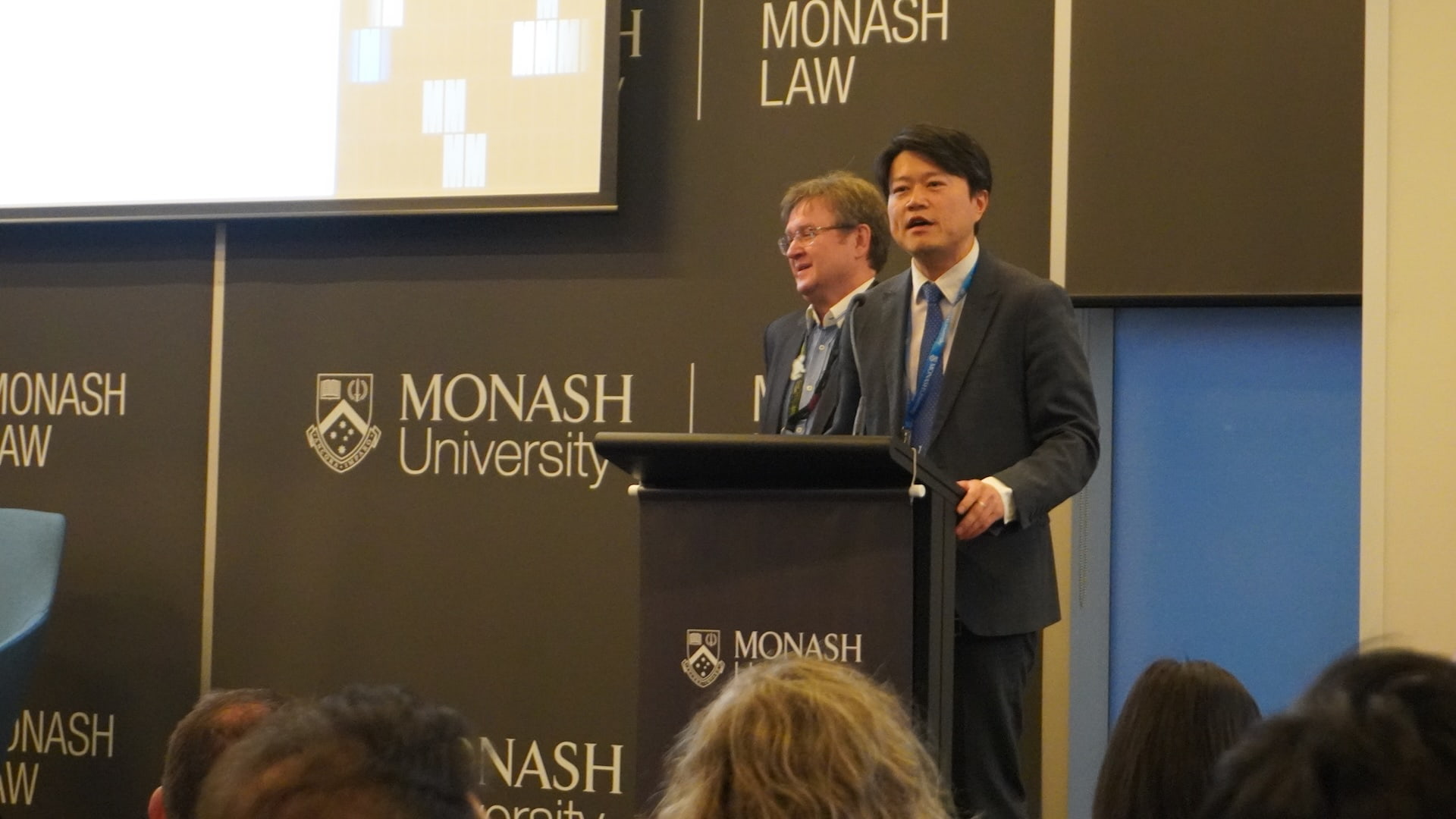
Associate Professor Cheng-Yun Tsang and Professor Gerry Nagtzaam.
Project Overview: Building Bilateral Bridges
Associate Professor Cheng-Yun Tsang and Professor Gerry Nagtzaam outlined the goals of the Australia-Taiwan collaboration, which include fostering bilateral dialogue, identifying common regulatory challenges, and forming an alumni platform for sustainable finance experts.
“This is a project to advance Australia-Taiwan bilateral dialogue in sustainable finance from a legal and regulatory perspective,” said Tsang.
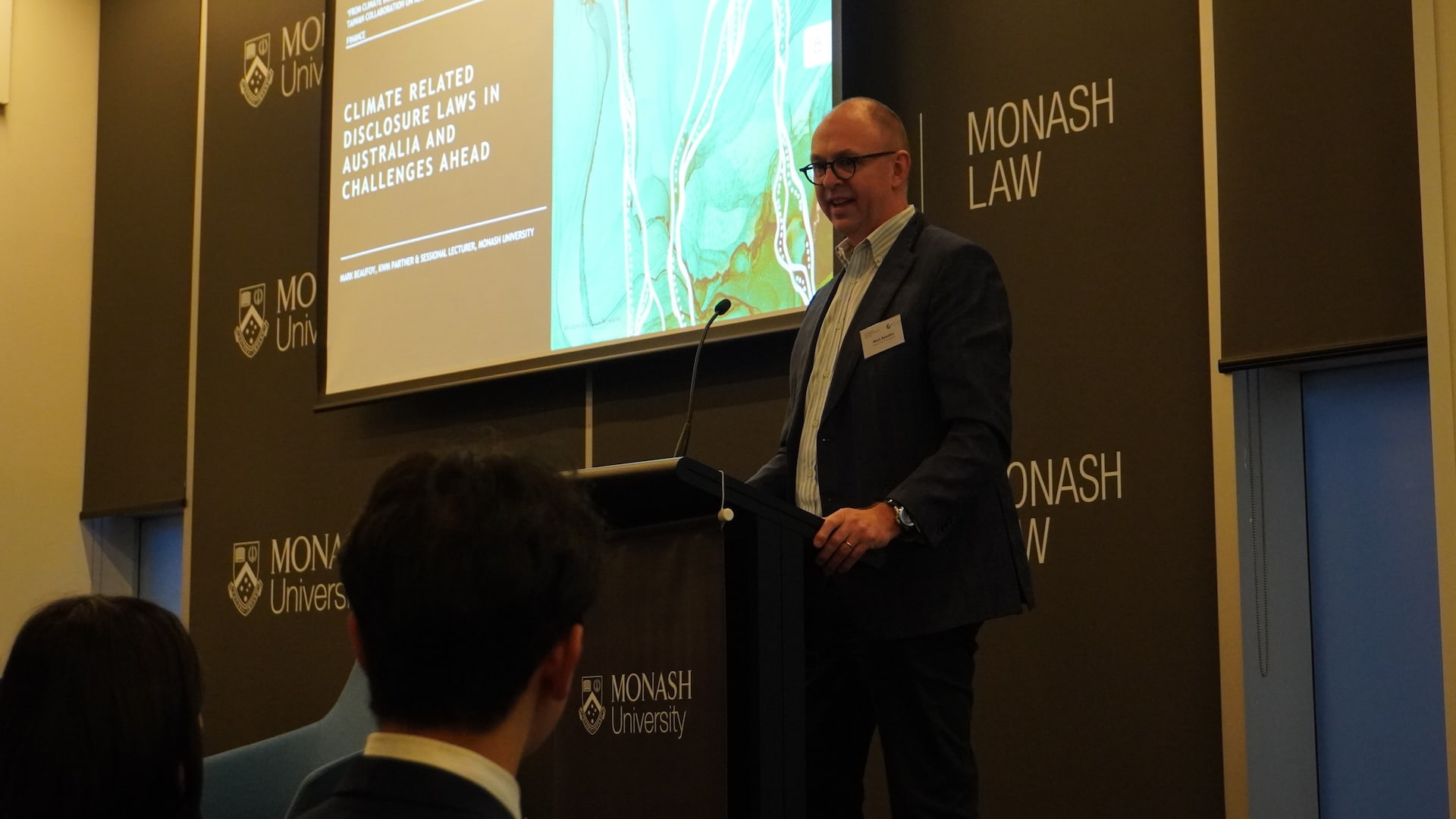
Mark Beaufoy, partner at King & Wood Mallesons
Climate Disclosure in Australia: Legal Frameworks and Corporate Accountability
Mark Beaufoy, partner at King & Wood Mallesons, provided a comprehensive overview of Australia’s climate disclosure landscape.
Climate disclosure is described as having a broad and far-reaching impact and reflecting on Australia’s ongoing journey toward improving environmental data to support better decision-making. Such a process is one that all stakeholders are collectively undertaking.
Beaufoy also addressed the challenges businesses in Australia face in adapting to mandatory sustainability reporting, which commenced in January 2025 with the first reports due in 2026.
The cost of producing a sustainability report in Australia is estimated to exceed AUD $1.2 million, with potentially higher expenses depending on an organisation’s complexity.
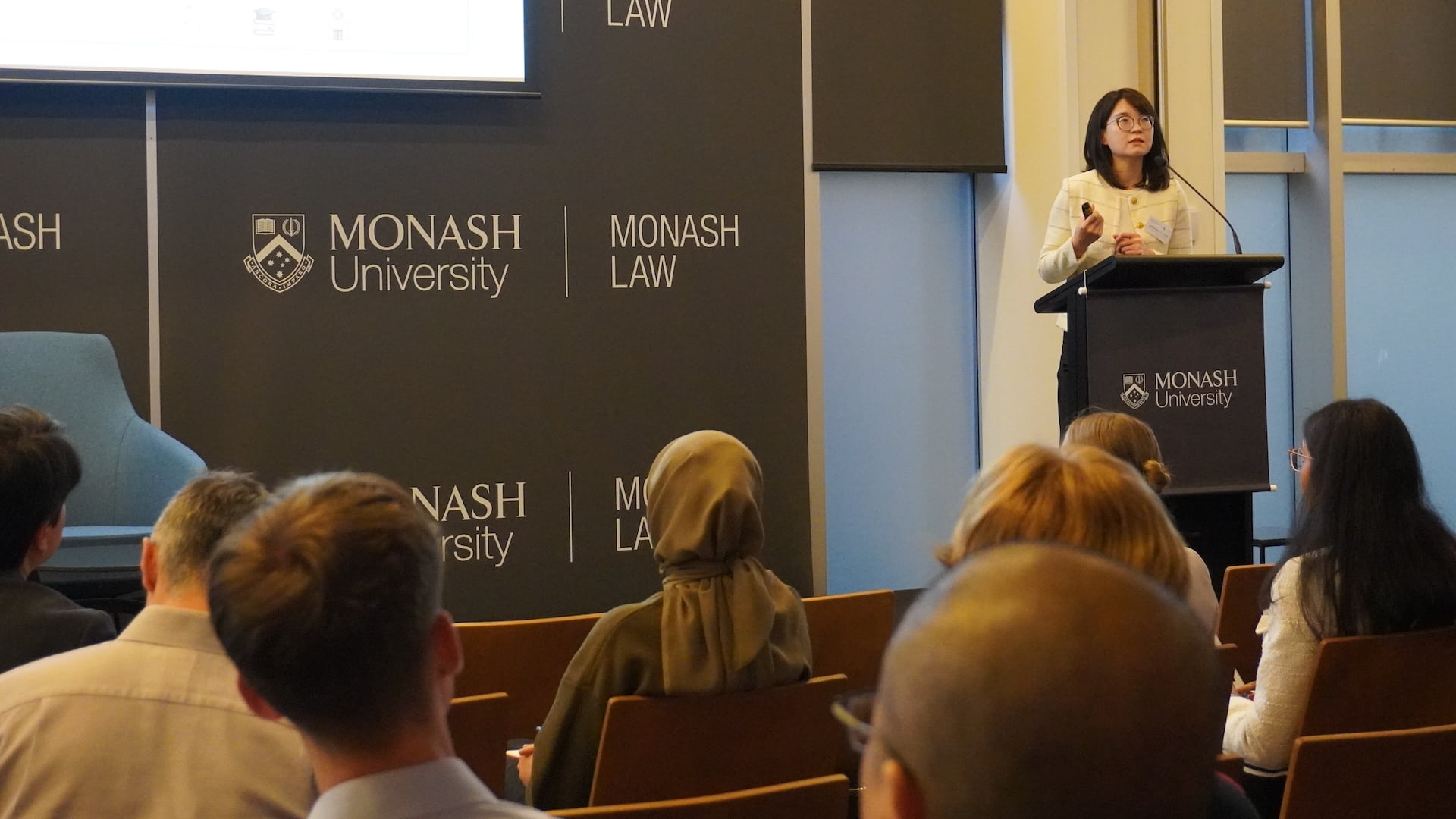
Dr Sherry Y. Chen, Associate Professor at NCCU College of Law.
Climate Disclosure in Taiwan: Regulatory Evolution and Industry Engagement
Dr Sherry Y. Chen, Associate Professor at NCCU College of Law detailed Taiwan’s multi-layered regulatory framework, describing it as a policy-driven model led by the administration and supported by the stock exchange. Environmental and climate issues are treated as top priorities, with companies required to publicly disclose related information as part of mandatory obligations. Taiwan adopts a hybrid regulatory approach that combines soft law instruments with compulsory disclosure requirements.
Challenges arising from fragmented oversight were highlighted, with different rules issued by the Ministry of Environment, the Financial Supervisory Commission (FSC), and the stock exchange may lead to conflicts and make compliance difficult for companies.
Read more about Australia-Taiwan Legal and Sustainability in Finance
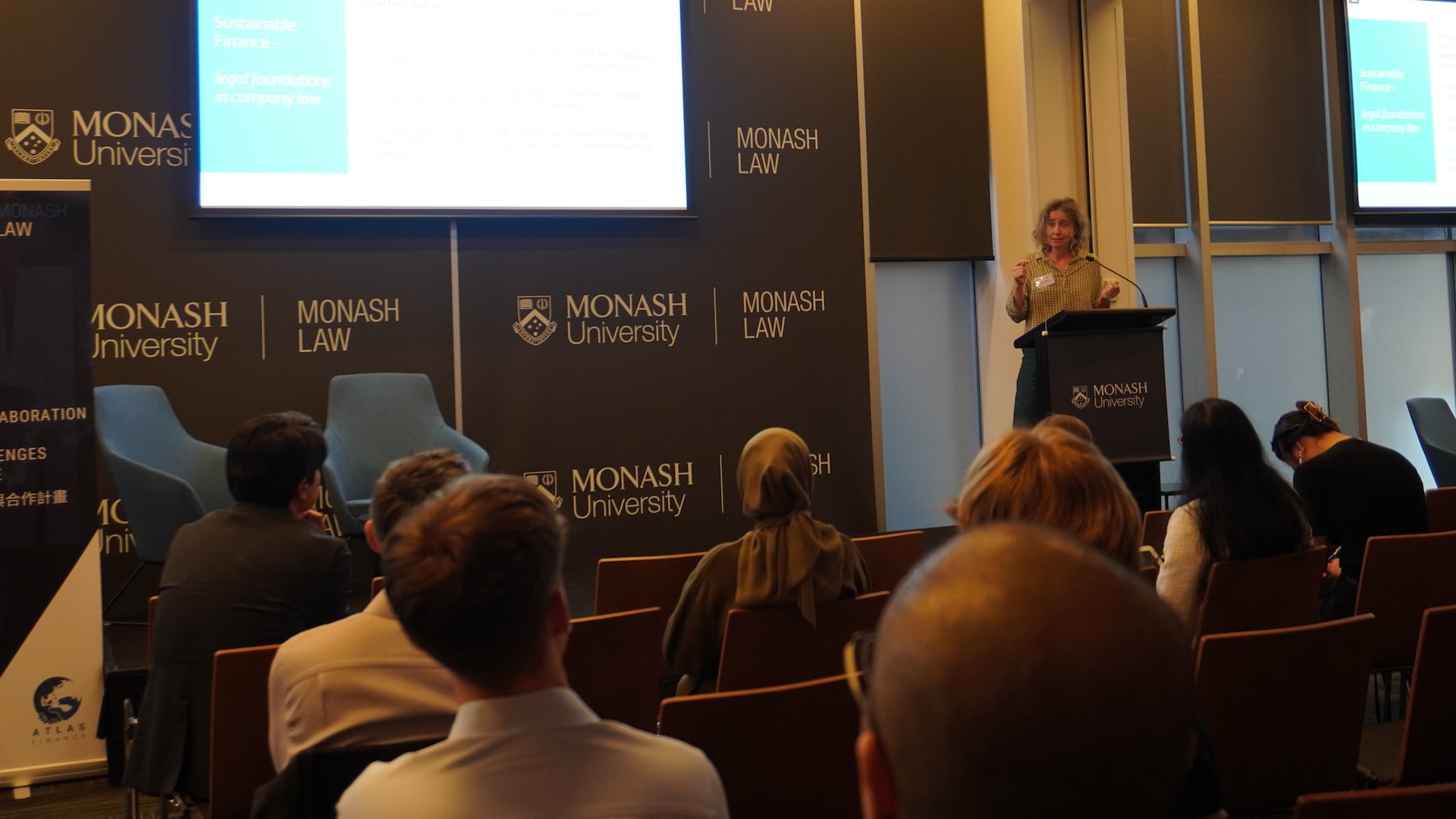
Dr. Anita Foerster, Associate Professor at Monash Business School.
Expanding Sustainable Finance: Aligning Capital with Global Goals
Dr. Anita Foerster, Associate Professor at Monash Business School emphasised the need to ensure that sustainable finance reforms really help us to align private capital with international sustainability goals and address the systemic risks posed by climate change and biodiversity loss..
Foerster discussed the current heavy reliance on transparency measures, which aim to raise awareness of risks and ensure the clear exchange of risk information. These mechanisms help decision-makers incorporate and price risks effectively, ultimately supporting the interests of shareholders and other market stakeholders while promoting transparent, efficient markets and financial stability. However these measures alone may not be enough to address systemic sustainability risks and align capital to global sustainability goals in a timely way.
By way of opportunities for strengthening sustainable finance measures, Forester explained the concept of double materiality, used in the European Union sustainability reporting frameworks. This requires companies to report not only on financial risks to the company, but also on the material impacts of their operations on social and environmental issues such as climate change and biodiversity loss. This includes any impacts directly caused or contributed to by a company’s operations, products, or services.
This approach acknowledges that while not all social and environmental issues pose immediate financial risks at the entity level, many business practices contribute to broader harms that can lead to long-term, systemic risks—ultimately affecting all entities within the system over time.
European approaches also more explicitly require and support alignment of company risk management with global climate and biodiversity goals.
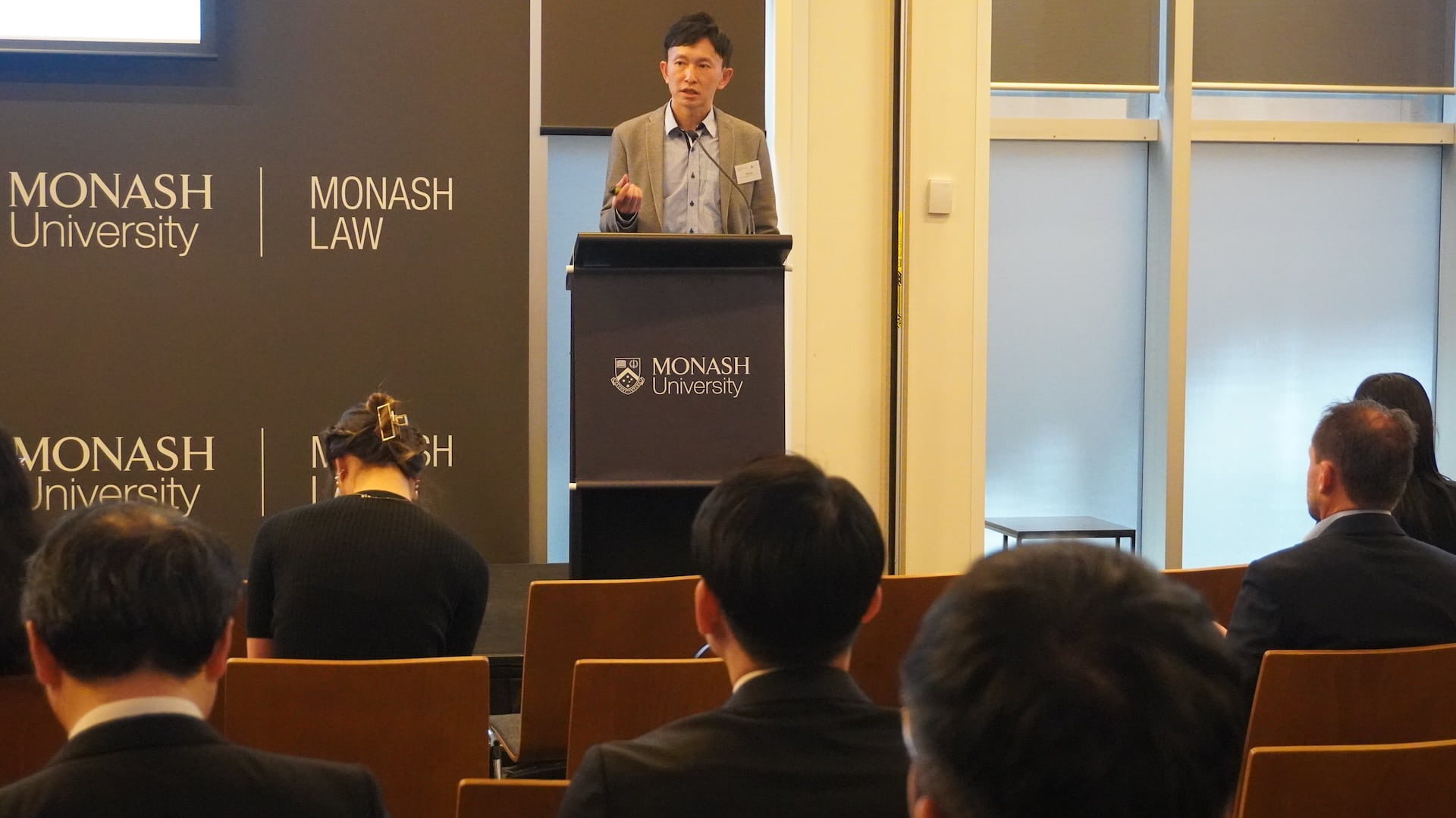
Taiwan’s Data-Driven Approach: JCIC’s ESG and Climate Risk Platforms
Lin from the Joint Credit Information Center (JCIC) showcased Taiwan’s innovative ESG and climate risk data platforms.
Since 2022, Taiwan has pledged net-zero emissions by 2050, while the FSC has advanced its Green Finance Action Plan to phase 4.
The JCIC, appointed by the FSC, leads these platform developments by integrating public and financial data sources and aligning with global standards.
Launched in 2024, JCIC’s climate risk platform provides over 140 types of data with GIS capabilities for risk mapping. JCIC plays a key role in data integration, helping banks manage risks and supporting Taiwan’s sustainable finance policy.
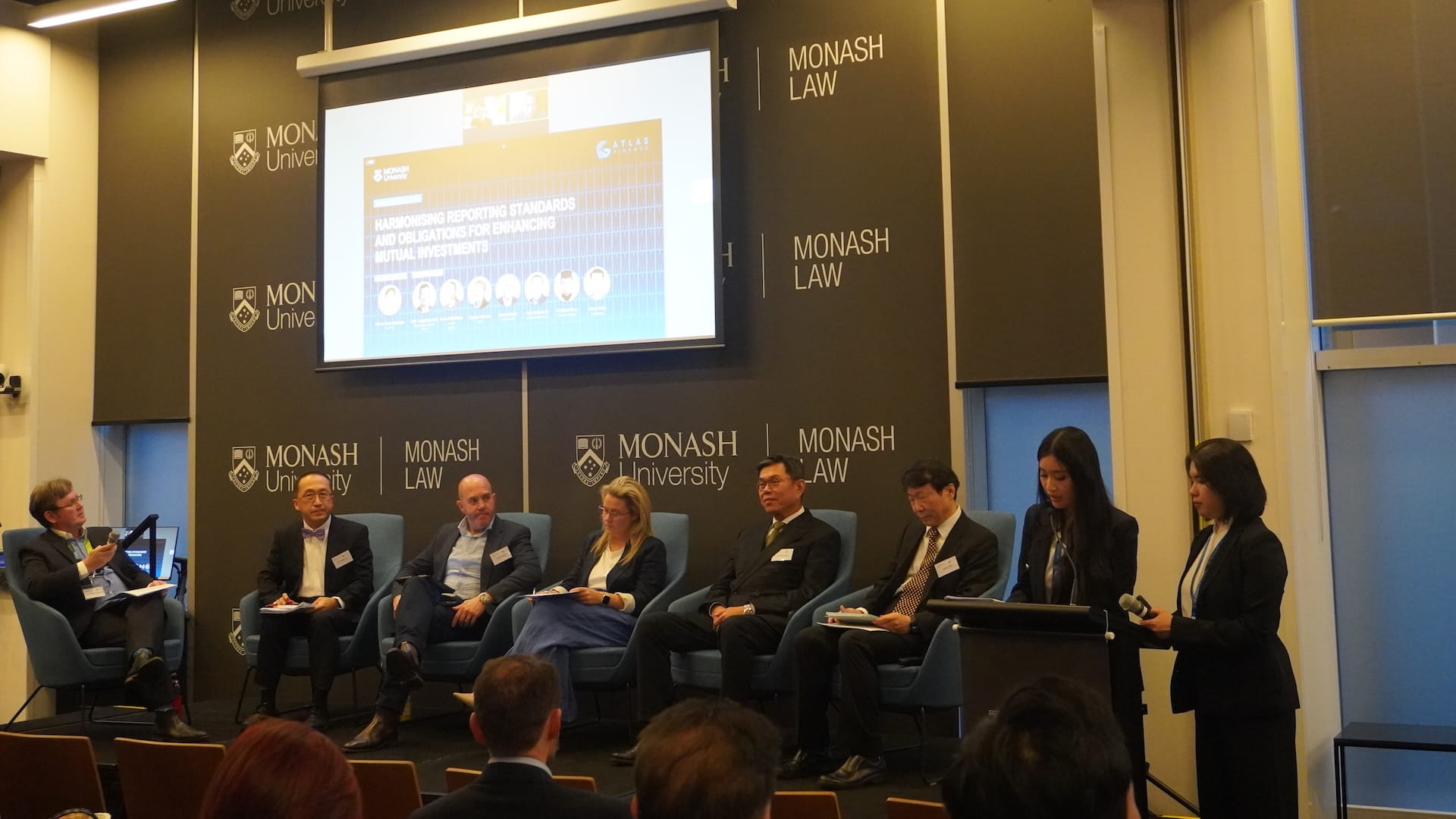
Roundtable Insights: Harmonising Standards, Enabling Digitalisation and Strengthening Accountability
Professor Andrew Lin from National Taiwan University College of Law noted that addressing legal and regulatory challenges does not necessarily require imposing additional or more stringent requirements. Instead, the focus should be on implementing regulatory approaches in a manner that is sustainable and adaptable over time.
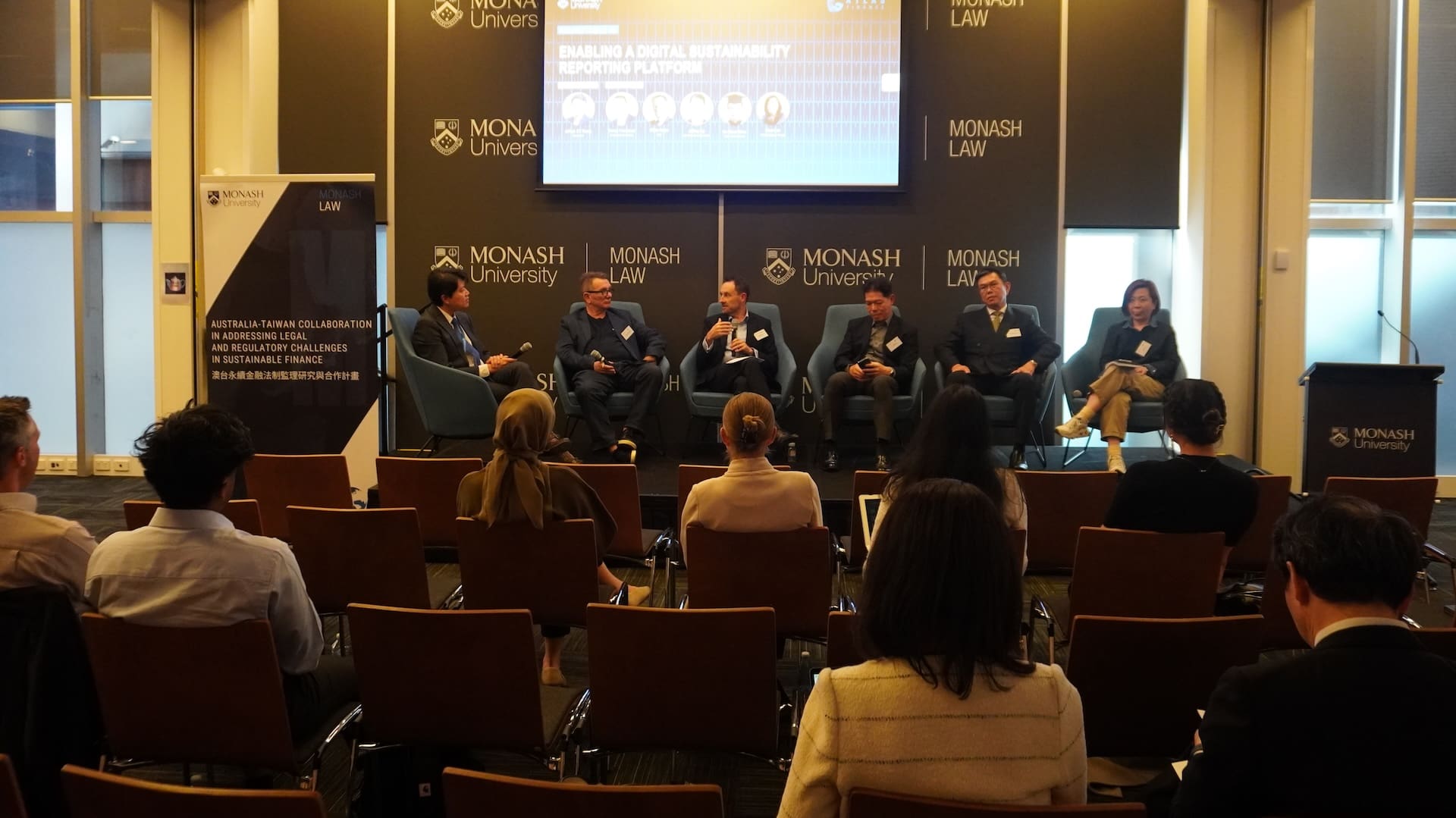
Industry experts emphasised that sustainability efforts extend far beyond mere disclosure. Achieving a net zero economy requires action from both companies and individuals. This includes the development of robust systems, involvement of new stakeholders, and improved access to high-quality data to support informed decision-making and sustainable practices.
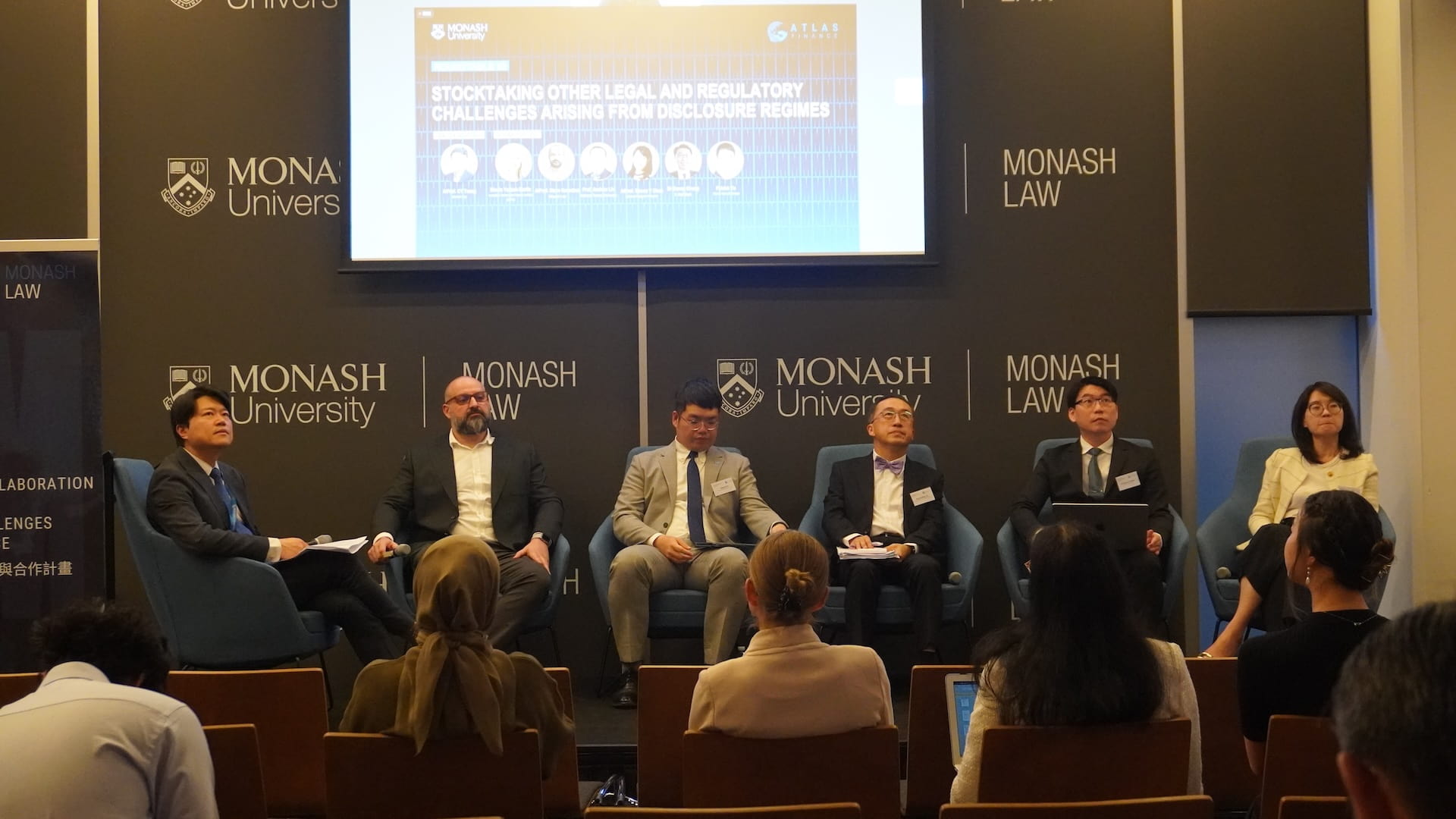
Both Australian and Taiwanese academics highlighted the growing legal accountability embedded in emerging regulatory models. In Australia, the shift from an investor-protection framework to one centred on public interest is broadening corporate responsibility to include large private entities. In Taiwan, forthcoming FSC directives are expected to strengthen the legal standing of sustainability reports and introduce mandatory alignment with sustainability taxonomies.
Looking Ahead: A Shared Vision for Sustainable Finance
The workshop concluded with a call to action for continued collaboration between Australia and Taiwan. In the closing remarks, Tsang highlighted three pillars to enhance coordination: interdisciplinary collaboration and research, public-private partnerships to drive sustainable finance, and the global alignment of reporting standards.
This shared vision calls on policymakers, financial institutions, and academia to work together in shaping a resilient and inclusive sustainable finance ecosystem - leading to the project’s next workshop in Taipei, Taiwan, focused on the theme: Regulatory Pathway for a Sustainable Financial Ecosystem.
Read more about Australia-Taiwan Legal and Sustainability in Finance