
Lawyers and the UK Post Office Scandal: A Call for Ethical Reckoning
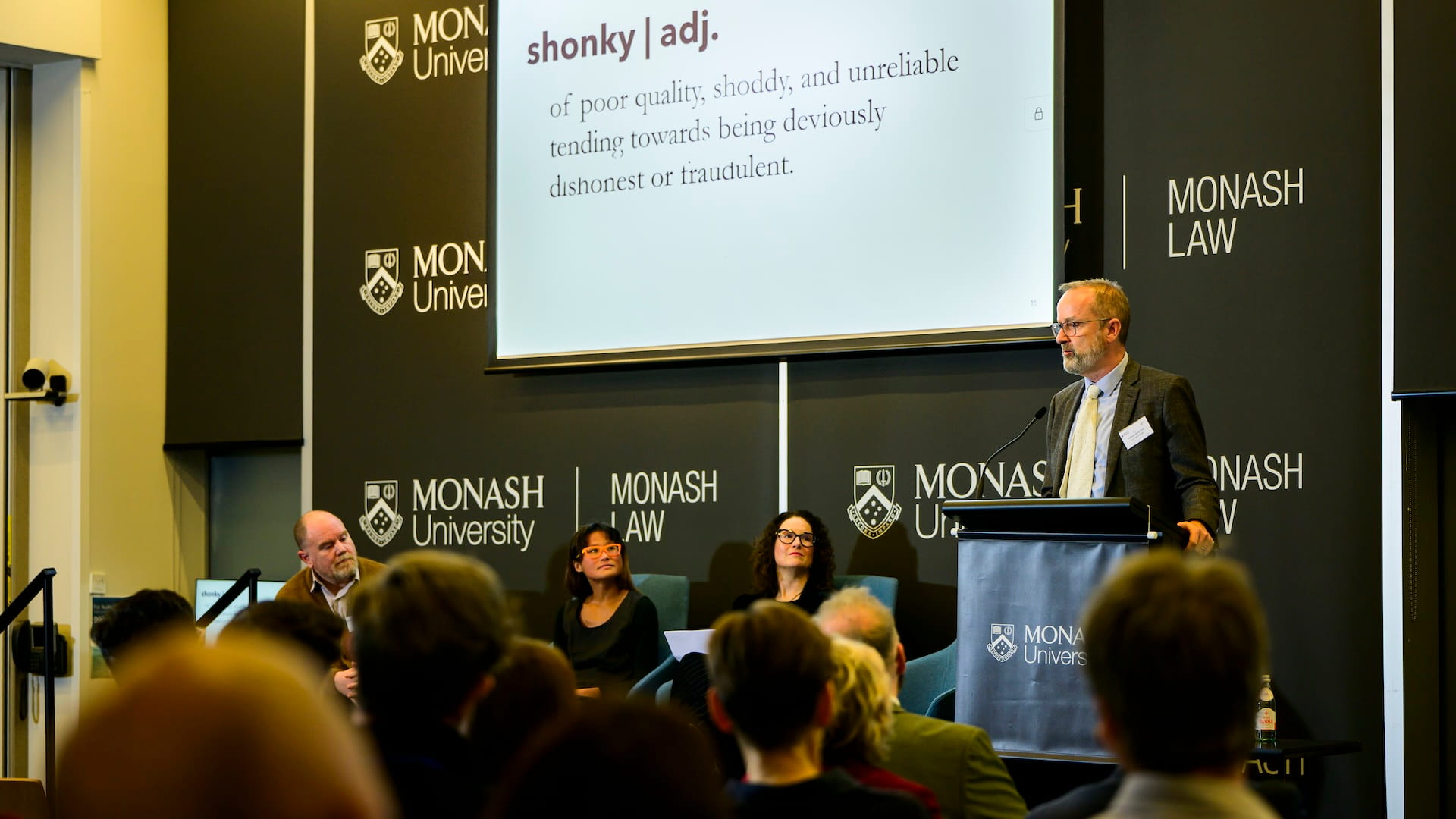
On the day he officially joined the Monash Law Faculty, Professor Richard Moorhead delivered a searing analysis of one of the UK’s most devastating legal failures - the Post Office scandal. Speaking at the Monash Law Chambers in Melbourne’s legal district, Moorhead’s presentation marked both a personal milestone and a public reckoning.
It was the Dean of the Faculty of Law, Professor Steven Vaughan who revealed that personal milestone in his welcome and opening remarks.
“ As of today, Richard is the newest Professor of Law inside the Faculty, and he'll be splitting his time between Melbourne and the UK,” explained Vaughan.
"We didn’t plan that this would be my first day working at Monash. It just sort of happened that way," Moorhead said with quiet humour.
Moorhead went on to reveal that he’d actually landed in Melbourne at 1pm on the day before this event.
"Nonetheless, it’s been fantastic. I really am delighted to be here and it’s a wonderful way to mark joining the Law School."
You can read more about Professor Moorhead’s appointment on the Monash Law website.
The Post Office scandal that shook a nation and the world
The UK Post Office scandal saw over 1,000 sub-postmasters wrongly accused of theft, fraud, and false accounting, based on faulty data from the Horizon IT system. More than 200 people were imprisoned. Lives were shattered.
"Livelihoods were lost. Lives were ruined. The effects on victims - economic, physical, social, and mental - have been extraordinary."
Moorhead’s research team, funded by the UK’s Economic and Social Research Council, has been investigating the scandal’s legal and ethical dimensions. Their findings are sobering and were presented on this night in a series of phases.
“ But the main way was prosecution. Mainly, but not only, private prosecutions brought by the Post Office itself, and they were brought with key evidence missing.”
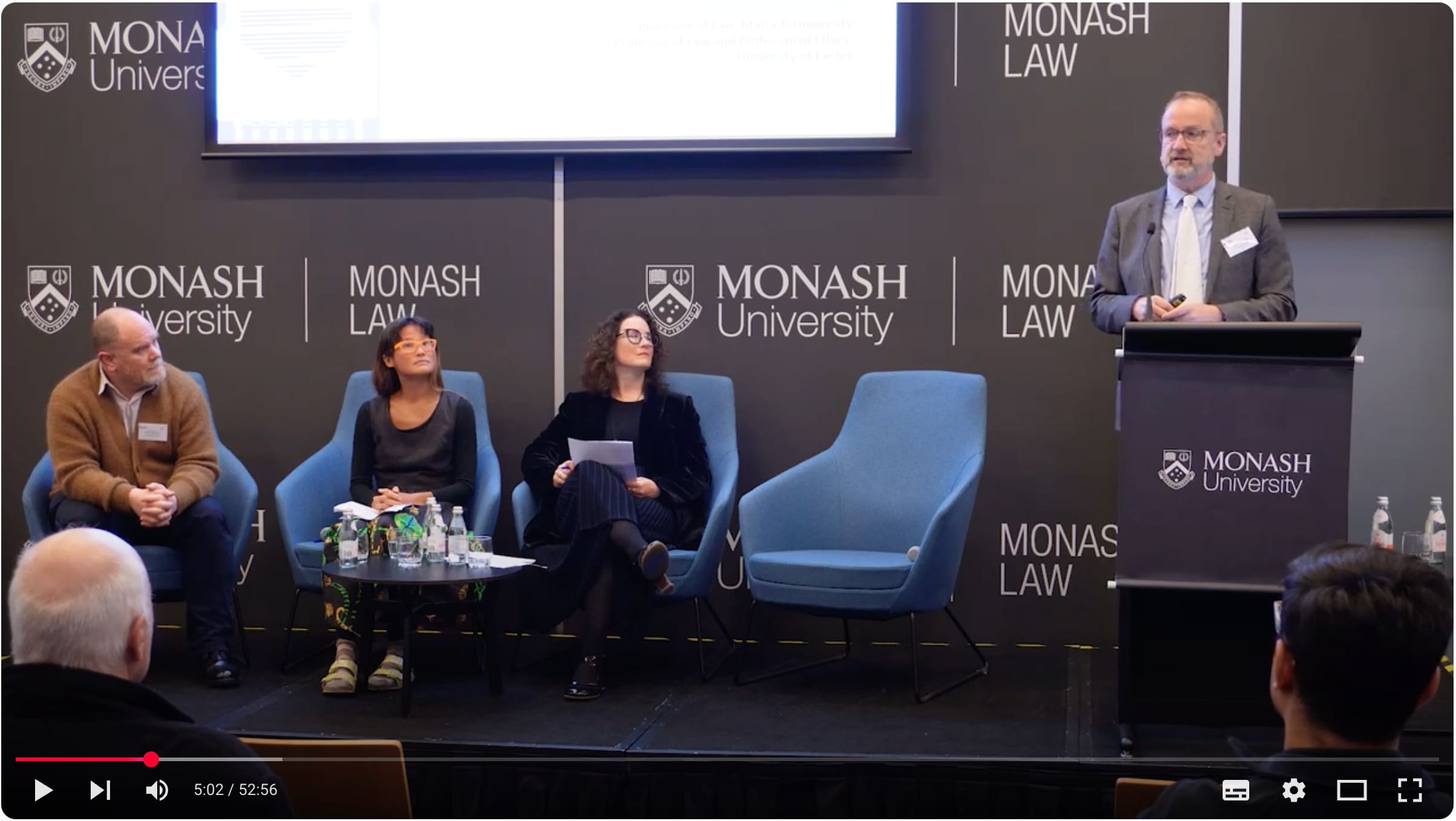
Watch Professor Richard Moorhead’s full presentation on Youtube.
Legal aggression and the illusion of legality
At the heart of the scandal was what Moorhead calls “legal aggression” - actions that may appear lawful but are misleading or unethical.
“ Improperly implying that something is legal, or true, or sometimes even just, when it's highly likely to be the exact opposite of that, typically untrue or illegal or unlawful. And done knowingly or recklessly, that is usually professional misconduct.”
He described how lawyers helped construct false narratives, including a letter from the Post Office CEO to a government minister claiming there was, “nothing to suggest any conviction was unsafe.”
"And of course, there was such evidence. There was actually plenty of evidence."
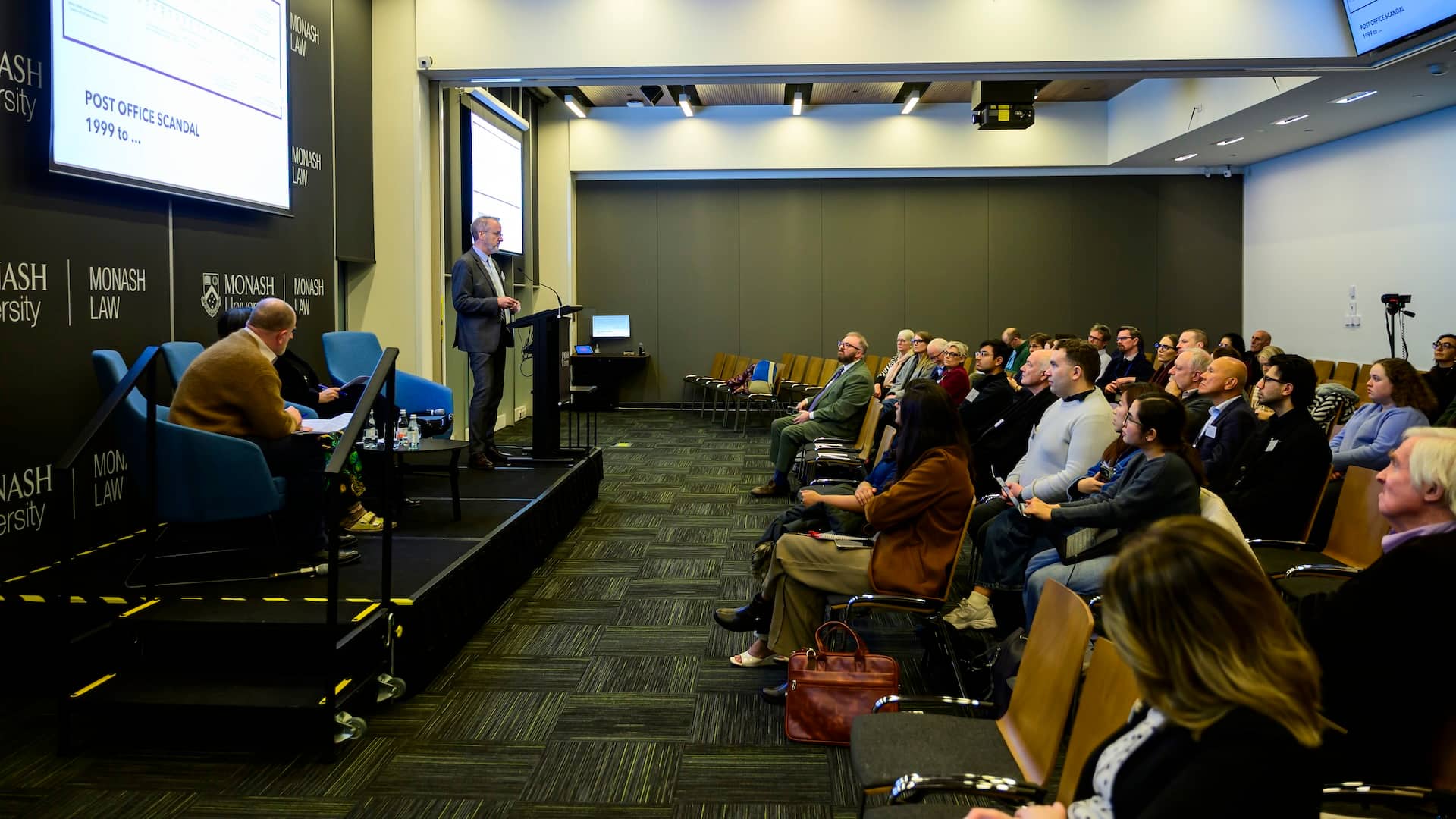
Systemic complacency and moral disengagement
Moorhead’s analysis goes beyond individual failings. He points to systemic complacency and corporate evangelism - a culture that labelled sub-postmasters as thieves and defended the flawed system at all costs.
“ Rather than get proper independent evidence of the robustness of the system, Post Office and its lawyers fed on cycles of confirmation bias. They believed the system was robust and successful prosecutions confirmed that robustness without the evidence really. Court wins reinforced overconfidence in their slanted version of reality.”
Even when lawyers knew the expert witness was unreliable, they withheld that information for years.
“ Prosecutions were run by the post office using an expert witness who was handled by prosecution lawyers in ways that discouraged candour and independence. The lawyers also improperly influenced the evidence before the court. And in 2013, Post Office was secretly advised by their own lawyers, that this evidence was misleading and the expert unreliable or tainted, to use the phrase one lawyer used.”
"They didn’t disclose this until 2020, when they should have disclosed it almost straight away."
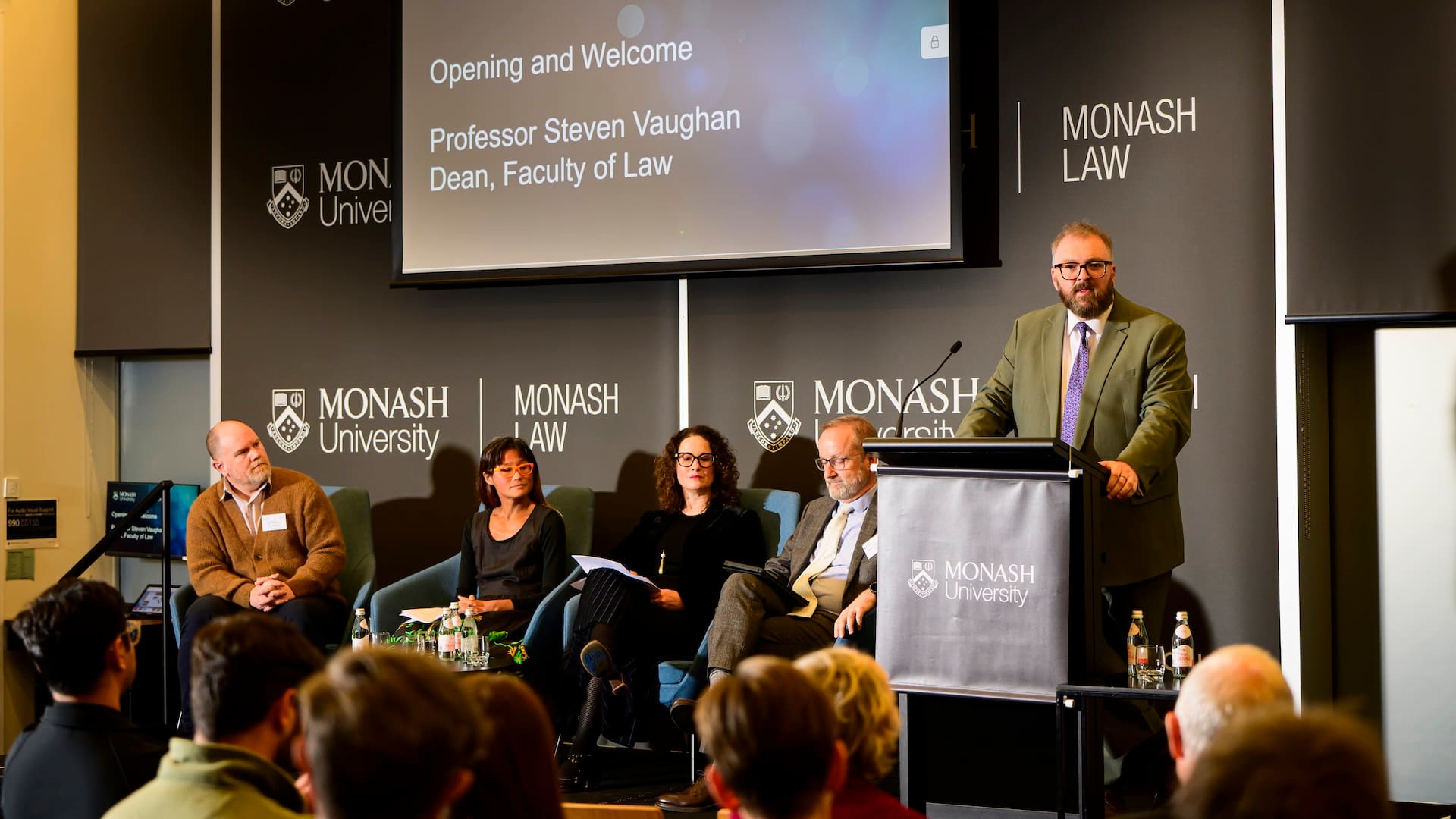
Dean of the Faculty of Law, Professor Steven Vaughan welcomes the audience and provides opening remarks at the Lawyers and Miscarriages of Justice lecture.
An unfortunate culture of strategic incompetence
Moorhead coined the term “strategic incompetence” to describe lawyers who prioritised client demands over professional obligations.
"A very large part of this problem was because lawyers could not say ‘no’. Actually it was worse than that. They couldn't even recognise that they ought to have been saying no.”
He also highlighted the disturbing use of legal professional privilege to shield misconduct.
“ Sometimes there were cultures of mutual irresponsibility. ‘I advise, the client decides’, the lawyer says. And the client says, ‘the lawyer told me I had to do it, I had no choice’. Mutual irresponsibility - no one is responsible. And legal professional privilege usually prevents that real position being exposed.”

Fiona McLeay, Victorian Legal Services Commissioner leads the panel discussion at the Lawyers and Miscarriages of Justice lecture.
Lessons for the legal profession and law students
Under the title ‘Lawyers and Miscarriages of Justice’, this Monash Law event featured a panel of experts including Fiona McLeay, Victorian Legal Services Commissioner, Associate Professor Yee-Fui Ng, and Associate Professor Joel Townsend. Their reflections drew parallels with Australia’s Robo-debt scandal, underscoring the global relevance of Moorhead’s insights.
“ The thing that really is striking to me, and for the purpose of our discussion tonight - important, is this failure to have regard to the paramount duty that lawyers have to the court and to the administration of justice, or to the rule of law, as it's sometimes expressed.
It's a fundamental duty that goes above and beyond the duty that lawyers have to their clients. And it is concerning to me the number of lawyers that confuse that and think that they have an obligation to do anything for their client. That's not the case,” explained McLeay.
A call to action for ethical behaviour in lawyers
Moorhead’s presentation was more than an academic lecture. It was a call for ethical courage.
"The post office case shows what happens when this gets out of hand. In this case it led to hundreds, possibly thousands of miscarriages of justice."
As regulators and legal educators grapple with the implications, Moorhead’s voice is a timely addition to Monash Law’s commitment to justice, ethics, and public accountability.
While the sub-postmasters continue their fight for justice, Monash Law continues to advocate and educate for ethical behaviour by lawyers.