
Monash Law alum Arnold Dix honoured by the Victorian Bar
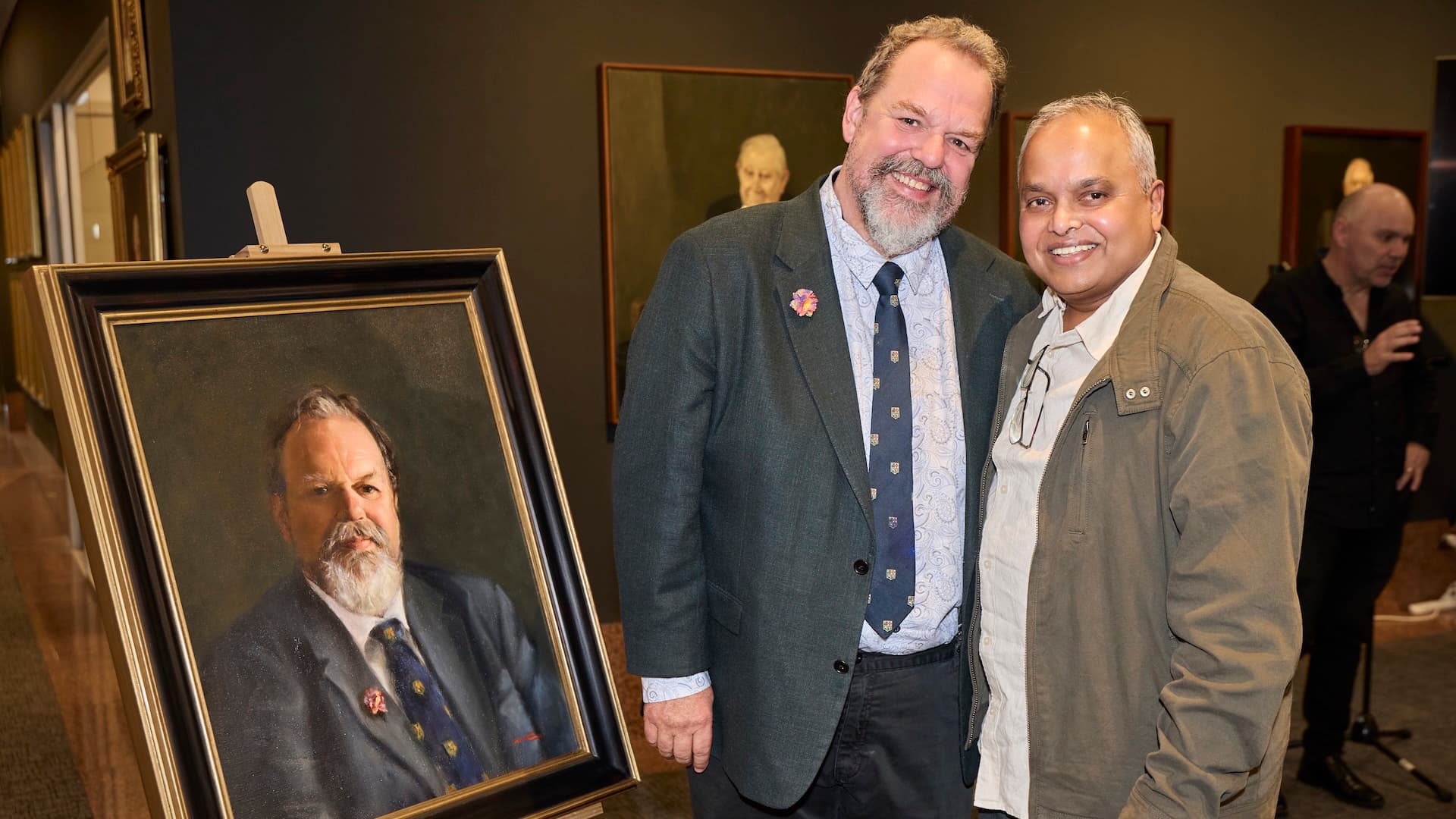
Arnold Dix and the artist who painted his portrait, Murali Surya. Photo courtesy of The Victorian Bar.
When a barrister’s portrait is added to the walls of Owen Dixon Chambers West, it is not a request made or a goal pursued. It is an honour conferred by peers, and one that carries the weight of history. In April this year, that honour was extended to Professor Arnold Dix, Monash Law alum, barrister, engineer, and disaster response specialist, when his portrait was unveiled in the Peter O’Callaghan QC Gallery, the ceremonial heart of the Victorian Bar.
For Monash Law, the moment marked more than a professional milestone. It was a recognition of a career shaped by ethics, mentorship, and service, and of a graduate who has carried those values into some of the most demanding environments in the world.
Watch the full ceremony of the unveiling of Arnold Dix's portrait at the Victorian Bar.
A gallery that speaks in centuries
The Victorian Bar has been appointing portraits to its gallery for over 125 years. The company on its walls includes Chief Justices, Governors‑General, Prime Ministers, and Attorneys‑General. Admission is rare, deliberate, and retrospective in tone, more often bestowed long after a career has ended.
Arnold Dix did not seek this recognition. In his own words, “no one applies for it.” Portraits are offered, not pursued. Standing among that lineage, he has spoken openly about feeling the scale of the honour and his difficulty seeing himself in such company.
That unease was not brushed aside during the evening. It sat quietly at the centre of it. The night was not framed as a victory lap or a summation of accolades, but as a moment of acknowledgment by a profession that values restraint over display.
The role of mentorship and Justice Robert Osborn
The unveiling of the portrait was entrusted to the Honourable Justice Robert Osborn AO KC, now of the Victorian Court of Appeal. For Arnold Dix, this detail mattered as much as the portrait itself.
“When it comes to diversity of practice, Arnold is out there in his own orbit. He regularly spins back into what most of us would think of as conventional practice, but he often explores roles and areas that are all his own,” Osborn said.
“He has spent time as a solicitor and another extended period in the Middle East working to save and improve the lives of immigrant workers. But he has come back to the bar as his working home and his own personal brand of independent professional practice.”
Justice Osborn was his mentor at the very beginning of his legal career more than 35 years ago. At that stage, Dix was a young barrister learning not only the mechanics of advocacy, but the conduct expected of someone entrusted with the law’s authority.
Mentorship in law is often spoken about, but less often given centre stage. This event placed it at the forefront. It acknowledged that careers are shaped not only by individual ability, but by those prepared to invest time, trust, and instruction long before public recognition arrives.
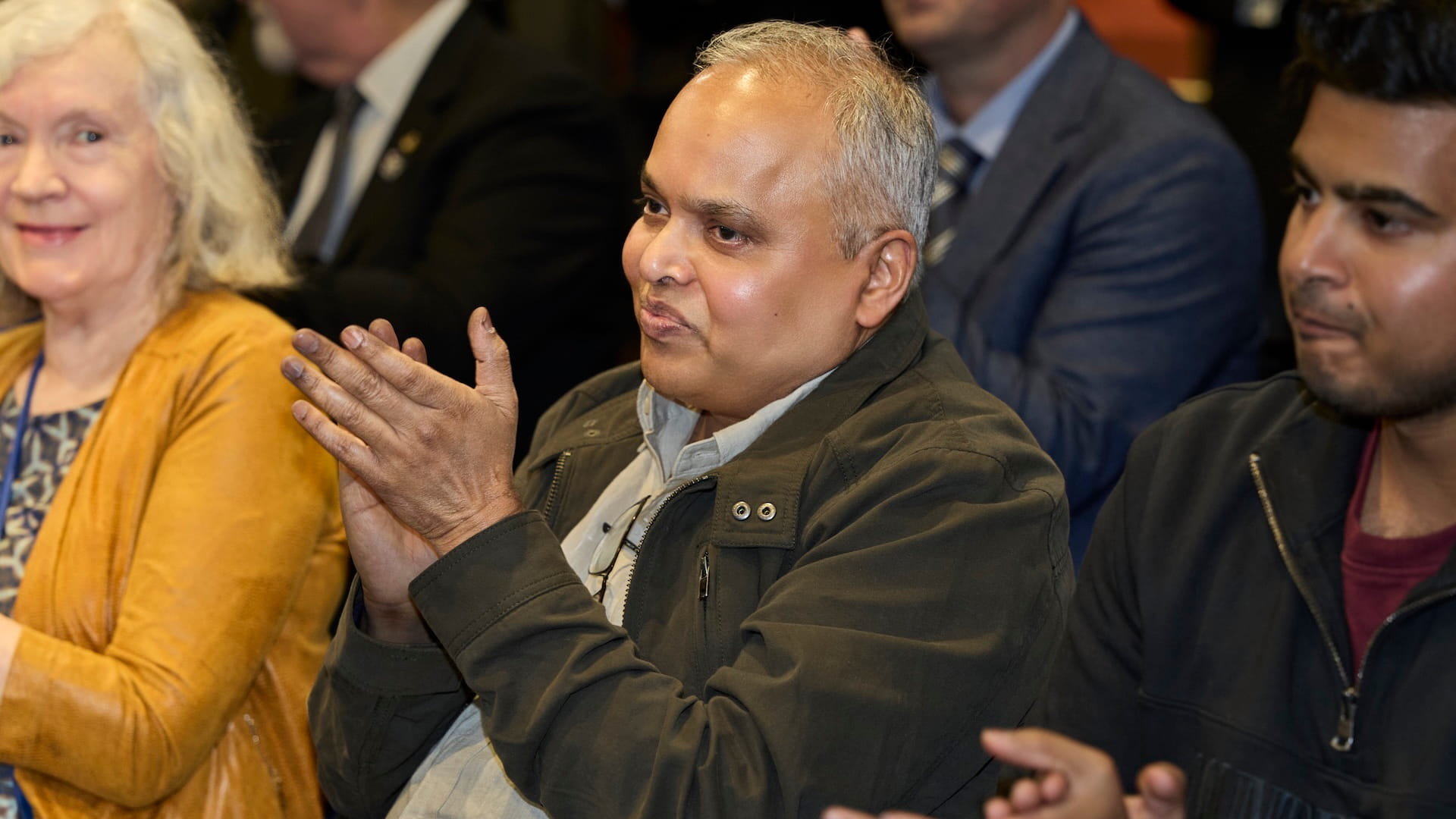
Murali Surya at the unveiling of his portrait of Arnold Dix. Photo courtesy of The Victorian Bar.
Painted calm, not grandeur
Dix’s portrait was painted by Murali Surya, a realism artist trained at the Florence Academy of Art in Italy. Like Dix, Surya has a split professional personality in that he worked as an engineer on the first particle accelerator constructed in India.
Surya spent approximately 60 hours sitting with Dix and has described the process not as transactional, but relational.
That approach shows in the final work. The portrait does not display authority through scale or ornament. Instead, it conveys calmness, compassion, and restraint. Dix has said he hopes viewers might even see a hint of a smile.
This was deliberate. Although his work takes him into extreme circumstances, collapsed tunnels, international disaster zones, legal crises under intense scrutiny, he has consistently resisted the idea that seriousness requires solemnity.
He has spoken often about the importance of joy, humility, and even silliness, as ways of staying human in work that can easily harden those who do it for long enough.
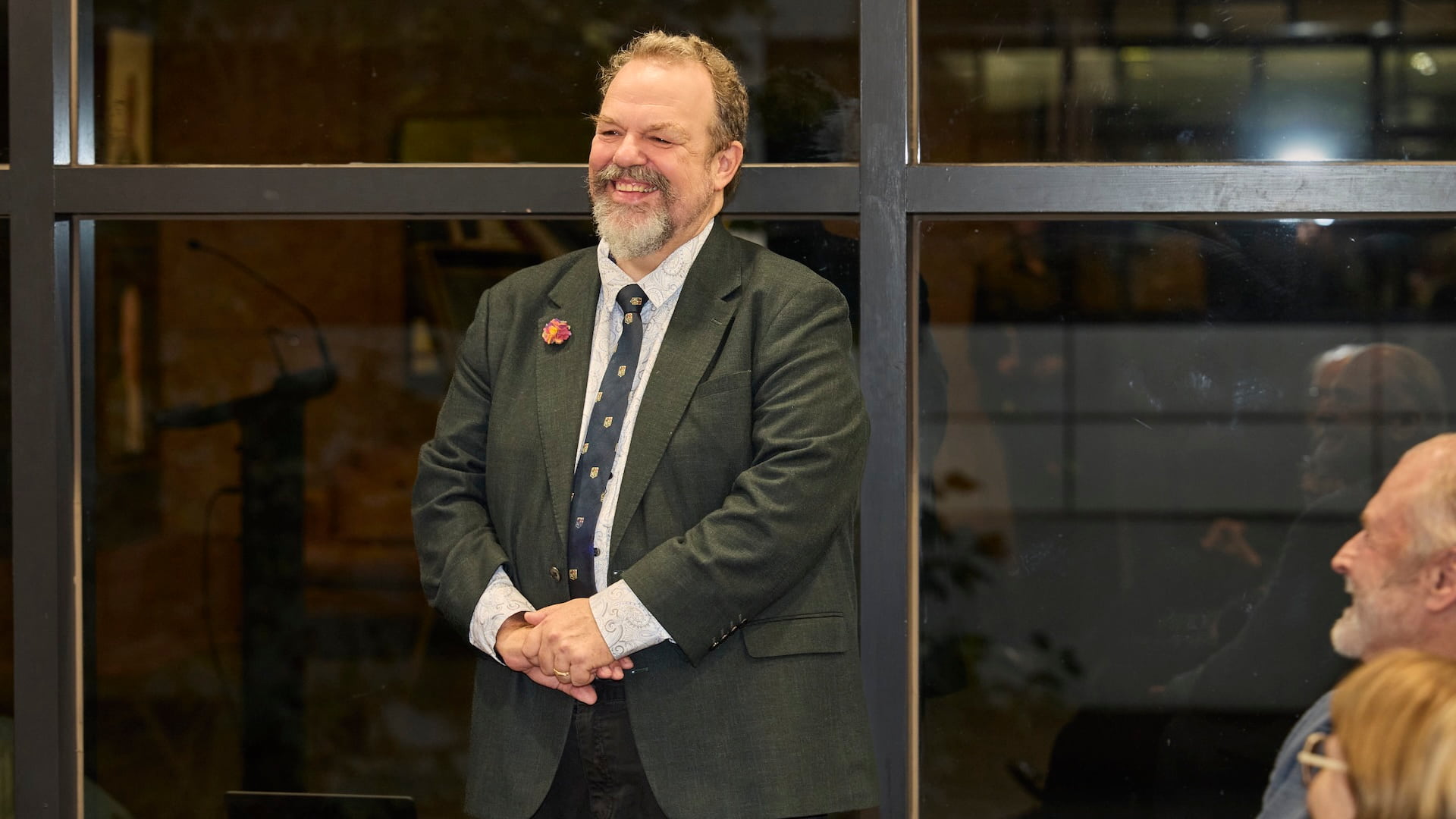
Arnold Dix watches on as his portrait is unveiled. Photo courtesy of The Victorian Bar.
A career lived beyond the courtroom
Arnold Dix’s legal practice has never been confined to Melbourne or even Australia. Alongside his work as a barrister, he is an international geotechnical engineer and a specialist in tunnelling and infrastructure risk. In practical terms, this has meant responding to some of the world’s most serious engineering crises.
He has described “doing major world disasters” as his day job, an understated phrase for work that has placed him in tunnels, mountains, and politically complex environments where lives depend on decisions made under pressure.
Professor Dix became a household name when he led the team that rescued 41 Indian workers trapped inside a collapsed tunnel high in the Himalayas in 2023.
This dual professional identity is not incidental. It is central to how Dix understands responsibility.
Law, in his view, does not sit above technical reality. Nor does engineering operate without moral consequence. Each informs the other, and when either fails, the results are often measured in human life rather than reputational damage.
That thinking increasingly informs his academic work as well.
Curiosity, risk, and the question of legal fear
Dix is currently completing a PhD, not as a career requirement but, by his own account, out of curiosity. The research draws directly from his professional experience and asks a difficult question about crisis decision‑making.
His hypothesis identifies what he calls the “Legal Impediment Problem”. At its core is the idea that fear of personal legal liability, whether criminal prosecution or civil suit, can silence experts at the very moments when clarity and courage are most needed.
He argues that this fear may deter technically qualified individuals from speaking honestly, acting decisively, or taking personal responsibility during engineering crises. When this occurs, the constraint is not merely individual. It is systemic.
Dix’s position is firm. Understanding and addressing this dynamic, where it exists, is as important to safe engineering outcomes as technical competence itself. Risk communication, legal structures, and corporate responsibility are not peripheral issues. They shape behaviour long before a crisis reaches the headlines.
For Monash Law, this intersection of law, ethics, and real‑world consequence sits squarely within the faculty’s teaching and research mission.

Jason Vorherr performs the song he wrote about Arnold Dix at the portrait unveiling. Photo courtesy of The Victorian Bar.
An unexpected song, freely given
A conventional portrait unveiling event at Owen Dixon Chambers would usually consist of a few speeches and the delicate removal of a red cloth from an artists easel. By now you may have come to the correct conclusion that nothing about Professor Arnold Dix is conventional.
Jason Vorherr, a musician from Upwey in the Dandenong Ranges, made a spectacular appearance at the unveiling to perform a song titled Arnold. He wrote it spontaneously after watching the ABC’s Australian Story on the Silkyara tunnel rescue in India, in which Dix played a prominent role.
There had been no commission, no invitation, and no expectation. Vorherr has said he felt compelled to write the song, and on the night of the portrait unveiling, he performed it live, accompanying himself on a video that was produced by Dix.
Within the austere setting of the gallery, the performance carried weight precisely because it came from outside the legal profession. It was recognition offered freely, without institutional framing, reflecting the reach of Dix’s work beyond professional circles.
The Victorian Bar’s decision to include this moment in its account of the evening speaks to the tone it wished to strike. This was not merely a professional honour. It was a human one.
Watch Jason Vorherr perform the song he wrote about Arnold Dix.
Gratitude, spoken simply
In reflecting on the night, Dix did not catalogue achievements or milestones. Instead, he spoke about gratitude and timing.
“It’s lovely to be acknowledged while you’re still alive,” he said. “This is giving flowers to the living, not the dead.”
"I've got a bee in my bonnet right now (and probably for the rest of my life) and that is I am very concerned that we, this generation, haven't dealt with high-level nuclear waste for the benefit of our children, and our children's children, for what will be tens of thousands of years," Dix said.
"And so, in the portrait, the tie I am wearing is from the International Atomic Energy Agency and they have asked me to champion the conversion of theory into burying nuclear waste for the world, so that's my current mission."
That framing aligns closely with Dix’s broader outlook. Recognition, when it comes, is received with humility and then placed back into the ongoing work of protecting human life.
“It is the highlight of my professional life to receive recognition from peers I respect so deeply. I could not do what I do around the world without the Victorian Bar. They encapsulate the very qualities that are necessary to make the world a better place.”
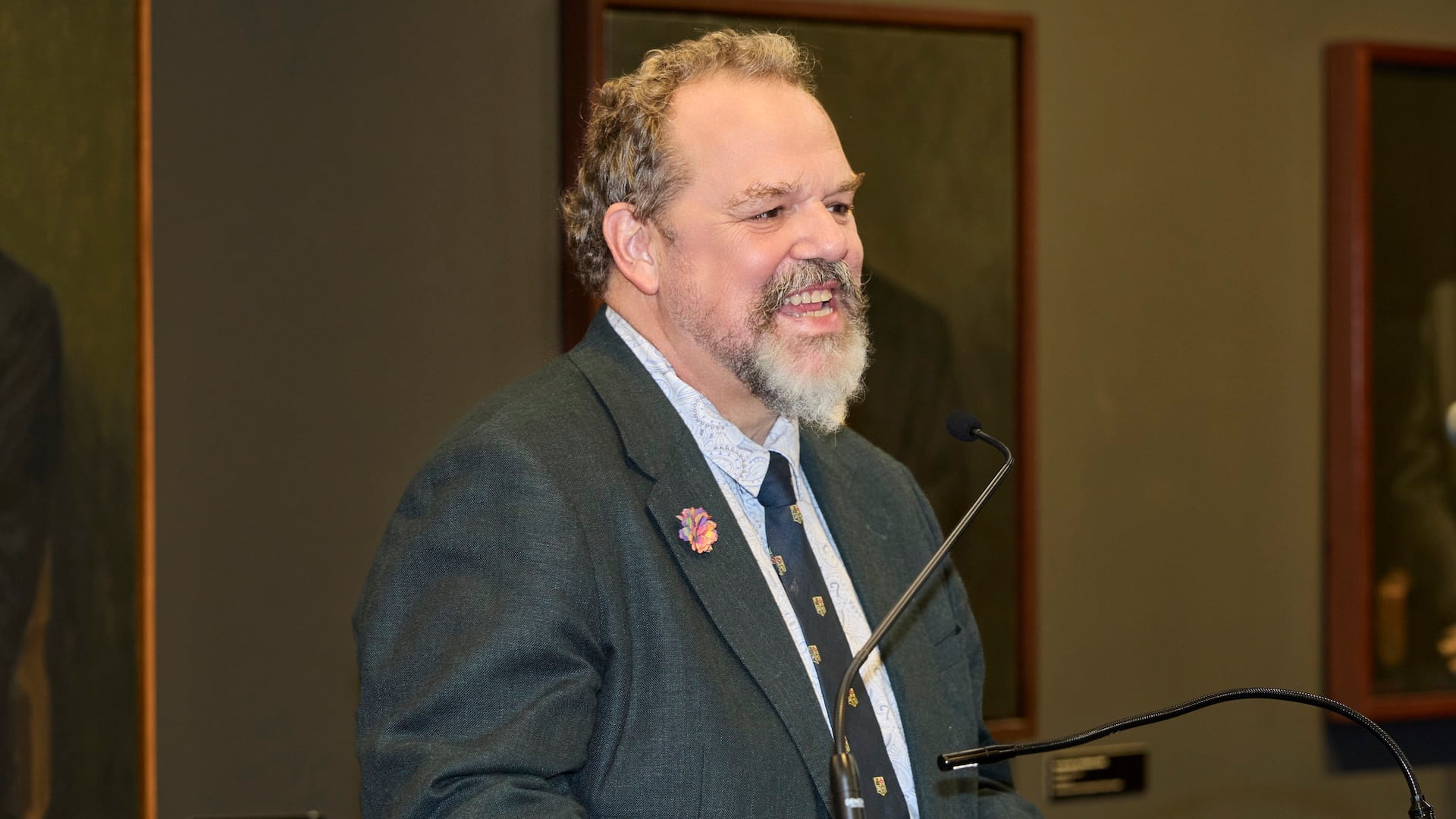
Arnold Dix expresses his gratitude at the unveiling of his portrait in the Victorian Bar gallery. Photo courtesy of The Victorian Bar.
Celebrating a Monash Law alum
For Monash Law, Arnold Dix’s portrait at the Victorian Bar is a moment that reflects the long arc of a career grounded in values the Faculty seeks to instil.
Dix’s life and work demonstrate how a law degree can become a foundation for service in places where law, engineering, politics, and humanity collide.
Monash Law students may never find themselves standing in a Himalayan tunnel or advising during an international engineering crisis. But the principles that guide those moments, honesty under pressure, responsibility without recognition, courage to speak when silence is safer, are forged in this Law School.
The work of Monash Law alumni often unfolds over decades, across disciplines, and far from the institution where it began - and all Monash Law alumni are connected by a common purpose - to make a positive difference through law.
As a Law School we are proud to see our alum honoured in this way and as always, we can’t wait to see what Professor Arnold Dix does next.
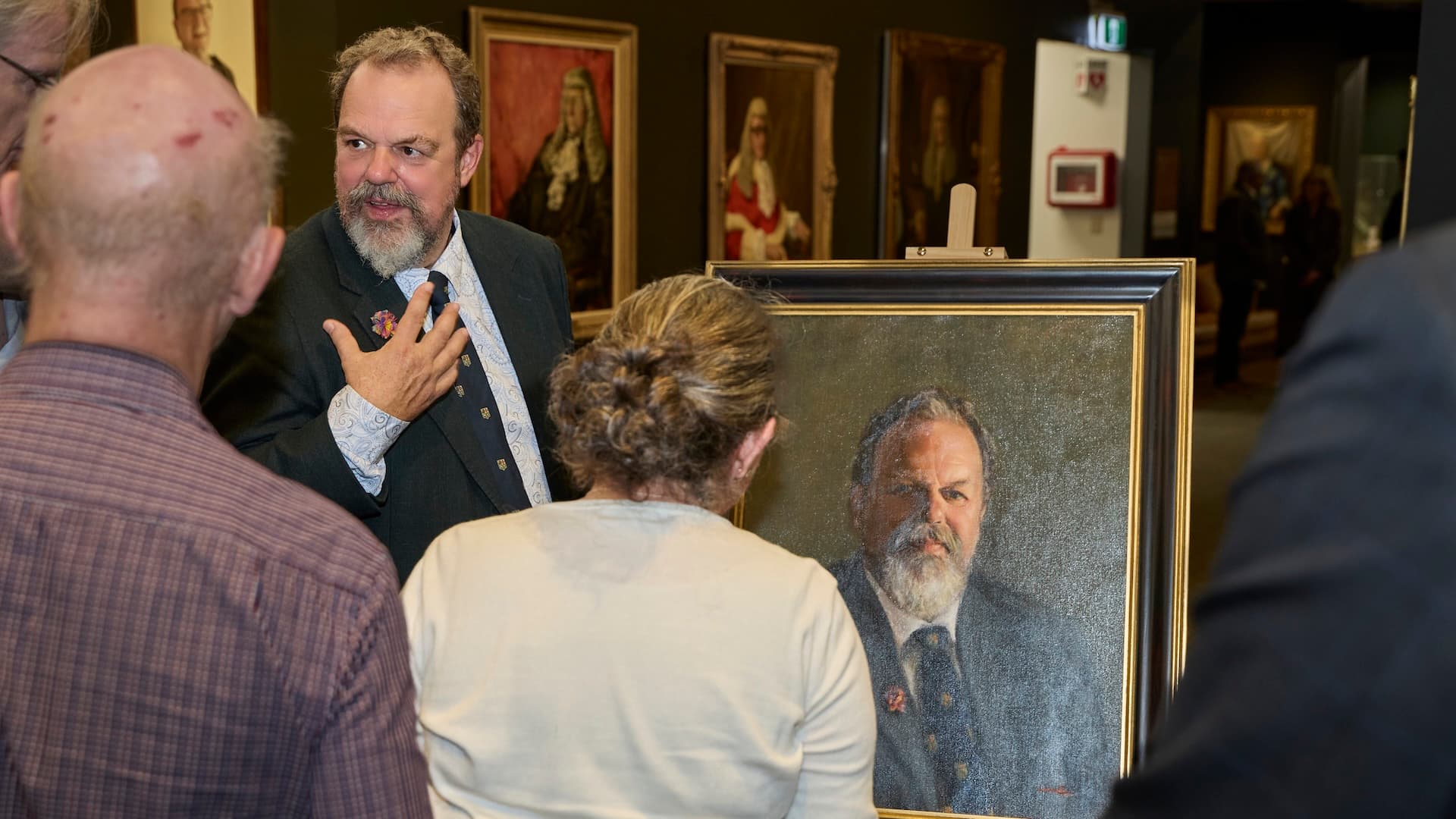
Arnold Dix with guests at the unveiling of his portrait in the Victorian Bar gallery. Photo courtesy of The Victorian Bar.