
Monash Experts Shape Bioethics and Global Health Debates
Monash Law's Health Law Group experts lead discussions at annual bioethics and health law meeting on Australian Law Reform, global pandemic agreement and the challenge of antimicrobial resistance.

Associate Professor Calvin Ho, Associate Professor Karinne Ludlow, Associate Professor Ronli Sifris, and Professor Gabrielle Wolf at the Australasian Bioethics and Health Law conference.
Health Law Group (HLG) members led discussions on important initiatives led by them at the annual meeting of academic peers at the Australasian Bioethics and Health Law conference held in Christchurch from 7th to 9th December 2025.
Associate Professor Ronli Sifris, currently working as Assistant Commissioner on the Australian Law Reform Commission's inquiry into Australia’s surrogacy laws, led a discussion on the inquiry into the regulation of surrogacy. Ideas explored in her talk included means to overcome existing barriers to accessing surrogacy in Australia, and what optimal regulation of surrogacy might entail. More details are available in an ALRC discussion paper led by Associate Professor Sifris, who has also recently published a book on the topic.
The HLG co-organised a 90-minute Global Health Law & Ethics workshop on the World Health Organization (WHO) Pandemic Agreement with the Bioethics Centre of the University of Otago and the WHO’s Western Pacific Regional Office. During the workshop, Professor Gabrielle Wolf, Associate Professor Calvin Ho and Associate Professor Karinne Ludlow considered how three key mechanisms introduced in the Pandemic Agreement (i.e. the pathogen access and benefit-sharing system, the global supply chain and logistics network, and the coordinating financial mechanism) could be introduced in ways that are fairer and just. The workshop also considered the ethical, legal and human rights implications of these mechanisms on three global health challenges, specifically infodemics, technology transfer, and disease transmission across species in the context of One Health. While these challenges have been identified in the preamble of the agreement, specific provisions relating to them are yet to be fully devised and set out.
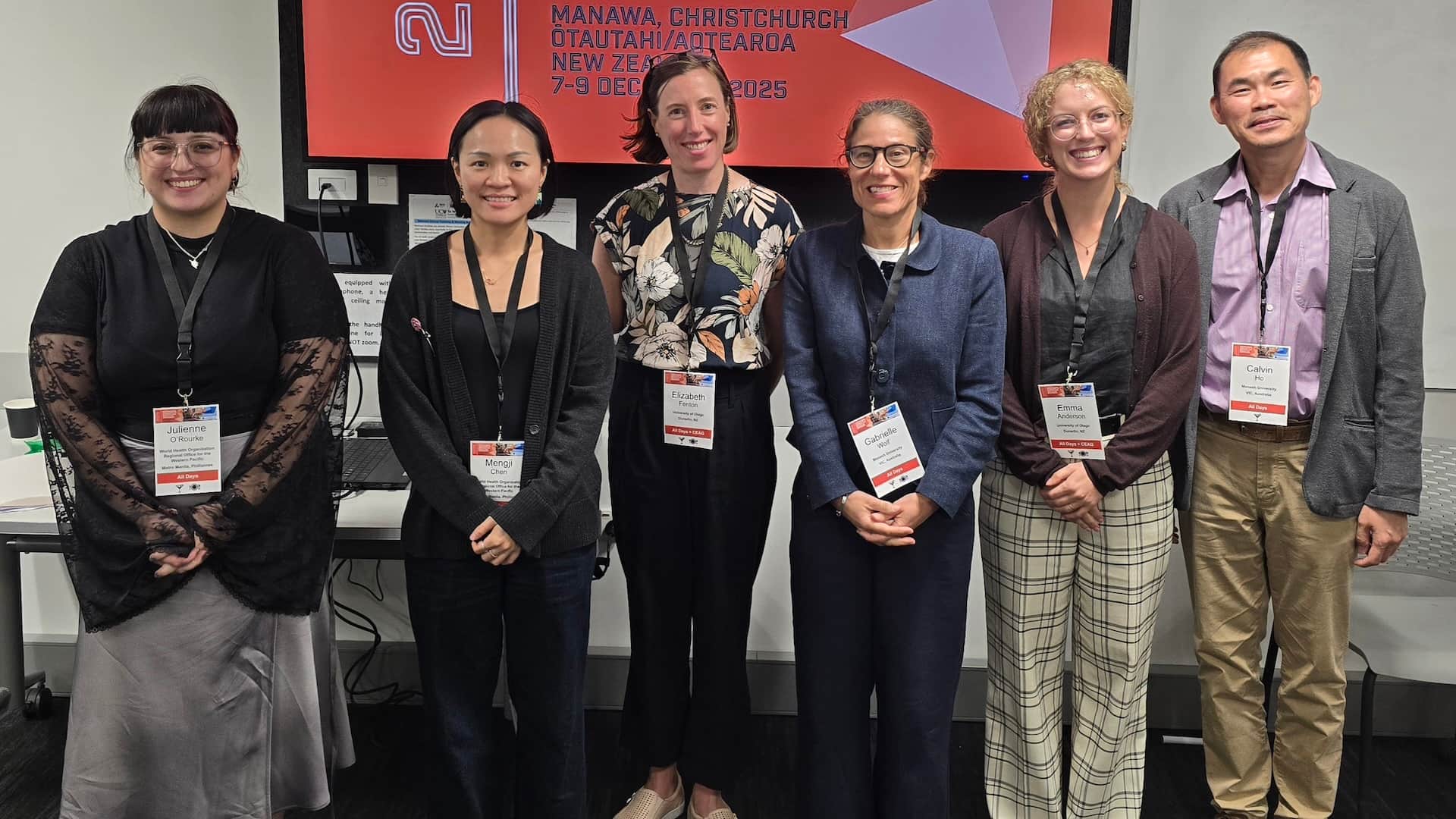
Group photo of Pandemic Agreement Workshop.
Associate Professor Calvin Ho also organised a 90-minute workshop to consider a transitions framework that allows concerns with antimicrobial resistance (AMR) to move beyond the immediacy of averting drug-resistance and to start thinking about a future in which humanity lives more sustainably with microbial ecosystems. AMR occurs when pathogens no longer respond to antimicrobials like antibiotics, and it is among the top 10 global public health threats today. Despite the magnitude of this threat, current countermeasures to AMR are uneven, do not advance equity and lack sustainability. While global AMR response has been successful in raising policy awareness of this growing threat, the burden of AMR continues to weigh heavily on the marginalised and disenfranchised. Associate Professor Ho is a member of the Just Transitions for AMR (JTAMR) Working Group, which is convened by the British Academy. The JTAMR Working Group looks into what forms of injustices underpin current approaches to living with microbes and to consider underexplored pathways of managing disease. The framework proposed in the workshop is intended to serve as a starting point for discussions on AMR responses that prioritise justice, sustainability, inclusivity and equity in the planning for a future with AMR.
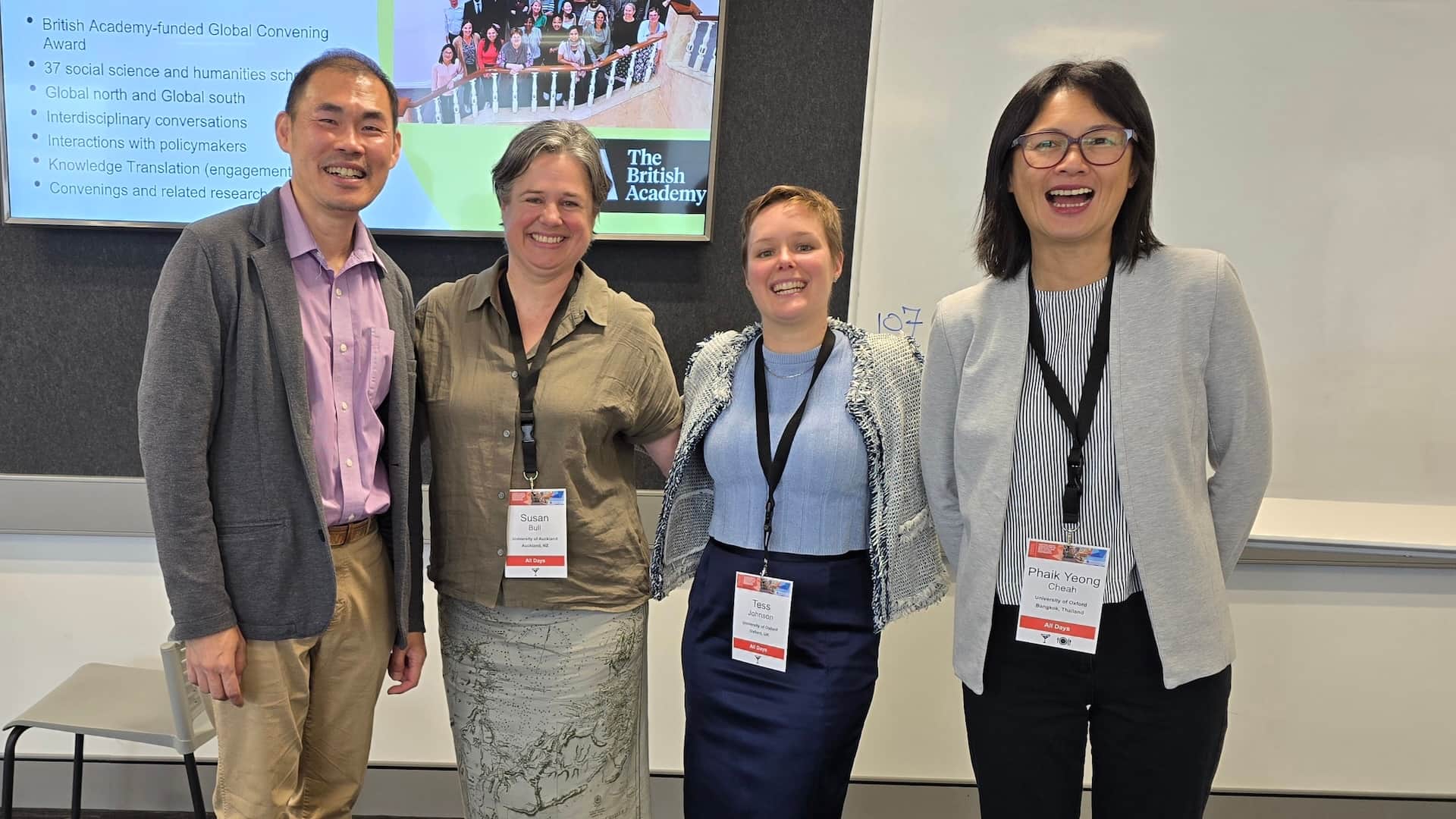
Group photo of AMR Workshop.