Australian National Fabrication Facility Design Acceleration Program
Putting user experience at the heart of technological innovation
Investigators
- Associate Professor Leah Heiss, Monash University
Co-investigators
- John Morrison, Director ANFF-C
Partner organisation
- Australian National Fabrication Facility
Funded by
- Australian National Fabrication Facility
Undertaken within
“If you'd asked ahead of time, "do we think we know who our users are, and how that impacts our designs?", our answer would have been, "Yes, we think so." But where the process was so valuable was not just identifying the limits of that knowledge, but establishing a process where we can ask ourselves the next level of right questions and look at how we can find the answers to those questions (while understanding why those answers matter to our design considerations).”
Alex Lubansky, Haemograph Chief Technology Officer
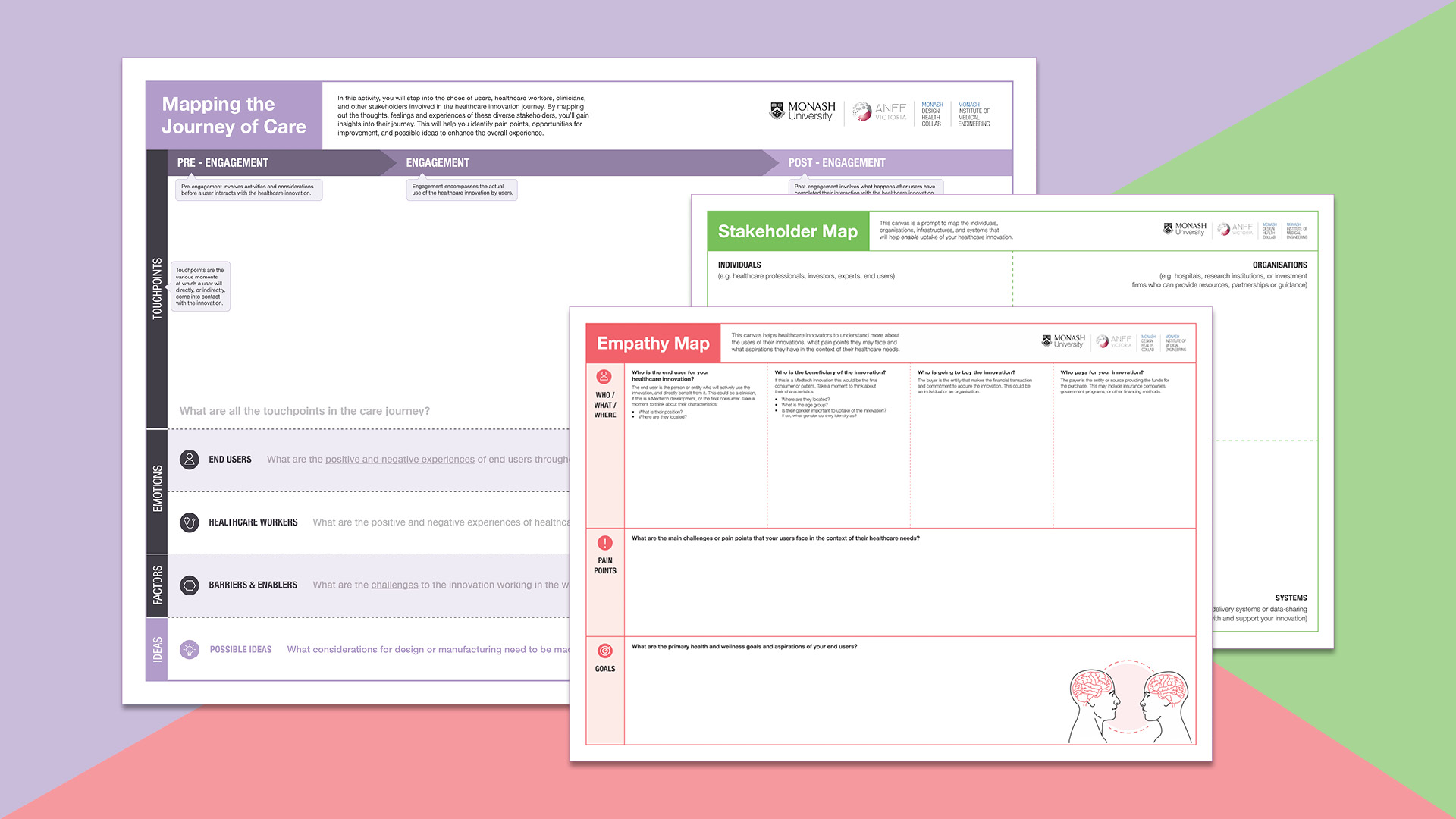
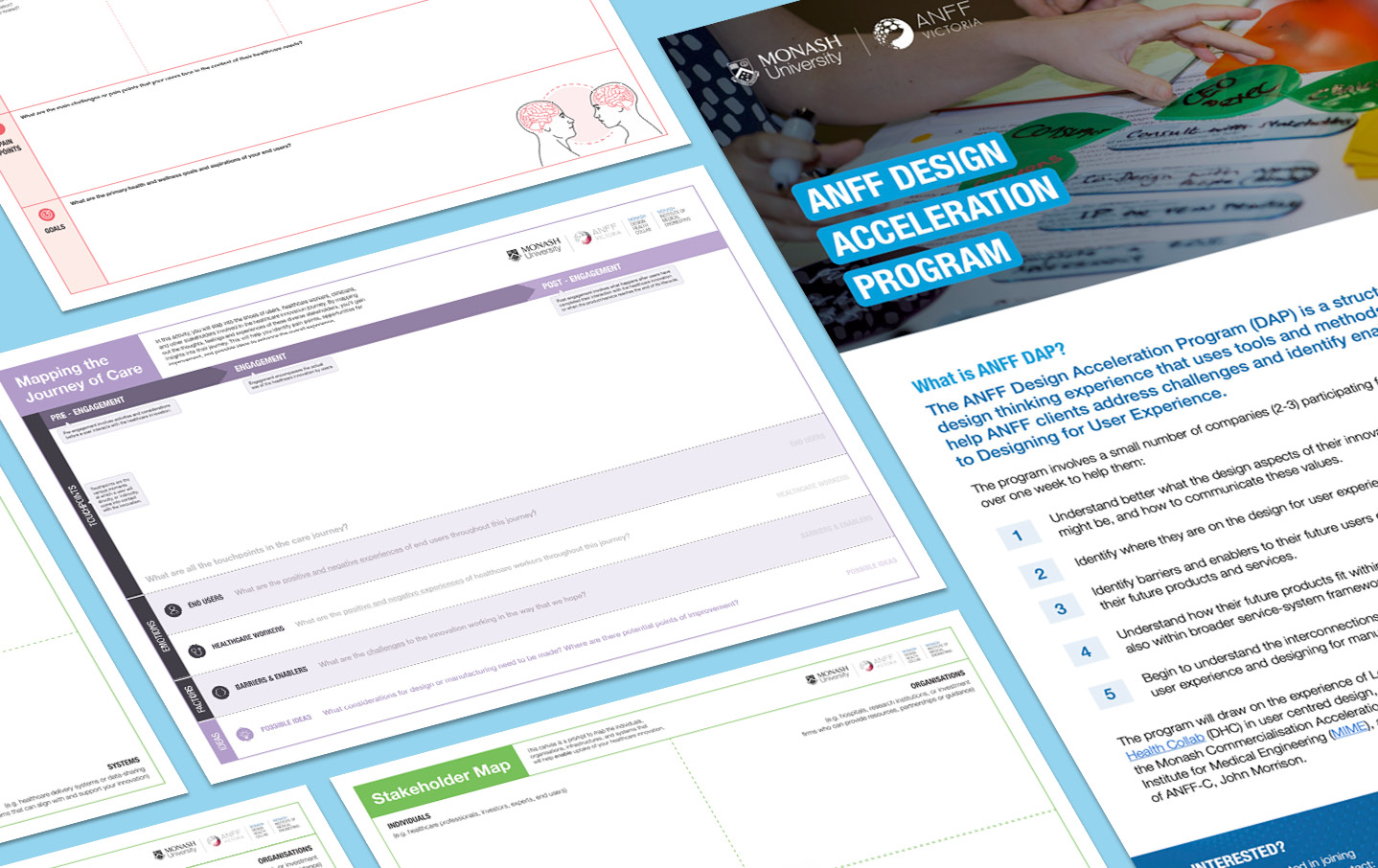
The ANFF Design Acceleration Program (DAP) was run in collaboration with the Australian National Fabrication Facility (ANFF) and brought together ANFF client companies over two days to participate in structured design-thinking activities that support Designing for User Experience. The ANFF DAP was run as a ‘prototype’ with a small number of companies to understand the benefits of the program and to iterative parts of it prior to developing the content further as a hybrid education program for rollout across the ANFF network.
Two teams participated in the ANFF DAP, Haemograph and Symex. Haemograph is a Melbourne-based SME that is developing an innovative, portable, point of service rheometer - a device that measures the viscoelasticity of fluid. Symex is a Melbourne-based SME that is building an innovative bio-sensor patch that can continuously track ovulation using hormone sensing.
The aims of the ANFF DAP were to support the participating companies in:
- Understanding better what the design aspects of their innovation might be, and how to communicate these values
- Identifying where they are on the design for user experience journey
- Identifying barriers and enablers to their future users engaging with their future products and services
- Understanding how their future products fit within user lifestyles and also within broader service-system frameworks
- Beginning to understand the interconnections between designing for user experience and designing for manufacture.