
Co-design
Design and Complex Challenges
Complex challenges increasingly rely on new trans-disciplinary specialisations and expert-led integration. Changing the systems that underpin these challenges requires collaborative research, building coalitions, and understanding how one aspect of the system affects another. These skills and approaches are core to design.
The methods, approaches and tools used in design help to provide a path forward that integrates diverse perspectives and interests. This integrative approach may involve investigating and understanding the interconnections between soft and hard infrastructures, or the social, technical, environmental and cultural factors that underpin the problem.
Using co-design, designers co-create solutions by bringing together diverse disciplines, sectors, stakeholders and users. They do this by activating complex systems, mobilising capacity within teams, setting a clear direction and testing next steps through prototyping and analysis.
What is co-design?
Co-designers recognise that partners, communities and stakeholders have unique perspectives on their needs and their relationships to larger challenges. Monash University’s Faculty of Art, Design and Architecture has expertise in a range of co-design practices. These include the development of design methods and bespoke tools to ensure productive connections between research, those affected by it and its application.
Co-design enables us to work collaboratively with diverse stakeholders and communities across various levels of social, economic and political influence to solve complex problems together. It helps overcome siloed thinking and the power imbalances that can hinder shared problem-solving. Our approaches surface personal insights and narratives from diverse perspectives, revealing points of connection and future-forward solutions. Design thinking methods – or the use of material tools and facilitated discussion – allow participants’ lived experiences to inform design solutions. Importantly, this co-design process can be an equalising force that creates spaces for under-represented voices to be heard and acted upon.
Why is co-design valuable?
Co-design enables partners, stakeholders and communities to engage early in the research process and then iteratively throughout. This inclusive approach increases trust and collaboration, and helps people to feel heard and valued. Expert co-design can also reveal the financial and nonfinancial value associated with the interests, needs and wants of individuals, partners and communities. These holistic approaches to problem-solving ensure that outcomes are more likely to be culturally appropriate and aligned with the community's values.
The co-production of research not only ensures more equitable and ethical engagement. As it encourages diverse perspectives and ideas, co-design can foster creative and innovative solutions that may not have been possible without the input of communities or end users. A sense of shared responsibility and accountability is also developed. When community members and end-users are involved in the co-design process, they become more invested in the project and are more likely to participate in implementation and support the sustainability of outcomes over time.
Find out more about our co-design expertise

Co-design for Healthy Ageing
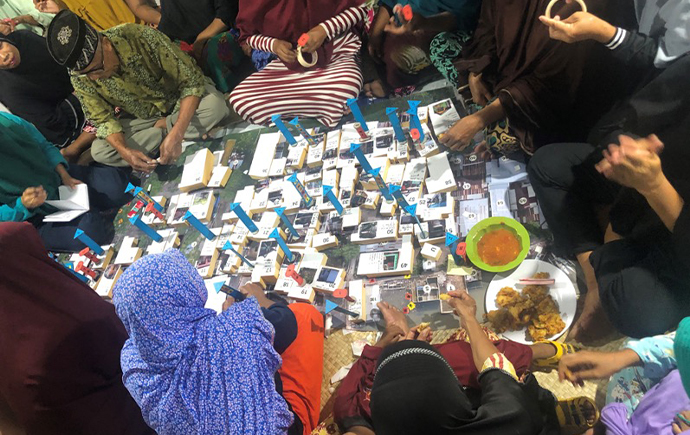
Co-design of water-sensitive settlement upgrading

Emergency Waiting Rooms

Safe Spaces: Understanding and enhancing safety and inclusion for diverse women

The Citarum Program
