North Western Melbourne Primary Health Network Digital Tools in Mental Health
Understanding the role of digital tools in supporting client mental health and wellbeing
Investigators
- Associate Professor Leah Heiss, Monash University
- Dr Myra Thiessen, Monash University
- Dr Gretchen Coombs, Monash University
- Leander Kreltszheim, Monash University
- Sara Daly, Monash University
Co-investigators
- Hatoun Ibrahim, Monash University
Partner organisation
- North Western Melbourne Primary Health Network (NWMPHN)
Funded by
- North Western Melbourne Primary Health Network (NWMPHN)
Undertaken within
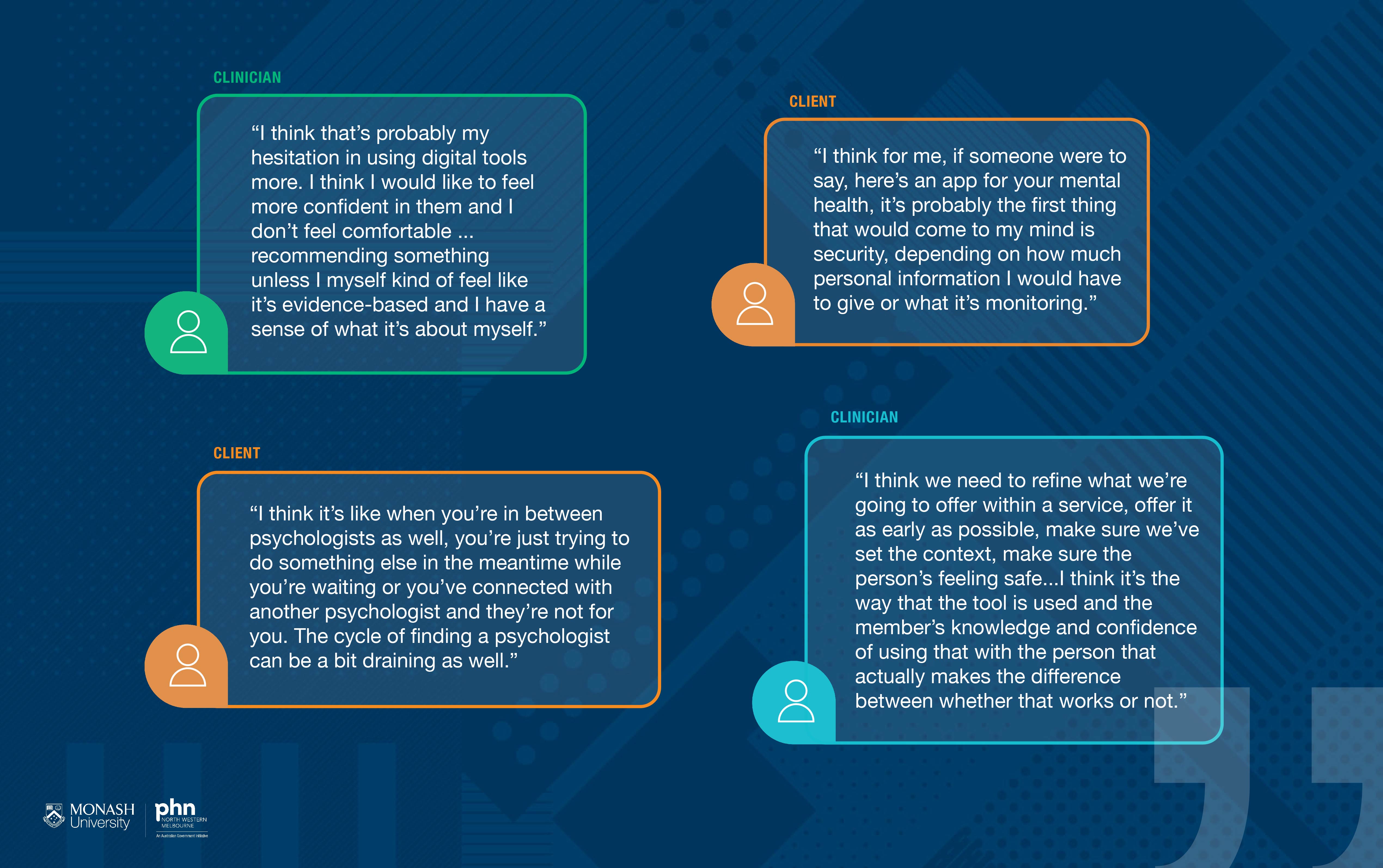
“I think it’s the way the [digital] tool is used and the member’s knowledge and confidence of using a [digital] tool with the person that makes the difference between whether the tool works or not.”
(clinician)
Digital health and digital health services are a growing area of interest for funders, service providers and service users.
North Western Melbourne Primary Health Network (NWMPHN) commissions primary mental health and alcohol and other drug (AOD) services with a focus on health equity and improved outcomes. NWMPHN were interested in learning more about clinicians’ uptake and adoption of digital tools into mental health care. To begin to understand current attitudes, behaviours and possible issues with uptake of digital tools, NWMPHN engaged Monash University Art, Design and Architecture to research what clinicians and clients think and feel about digital mental health and AOD tools to support mental health and wellbeing.
For the purposes of this study, digital tools were defined as ‘online tools or resources and mobile apps that are designed to support people to build their capacity to self-manage and support distress’.
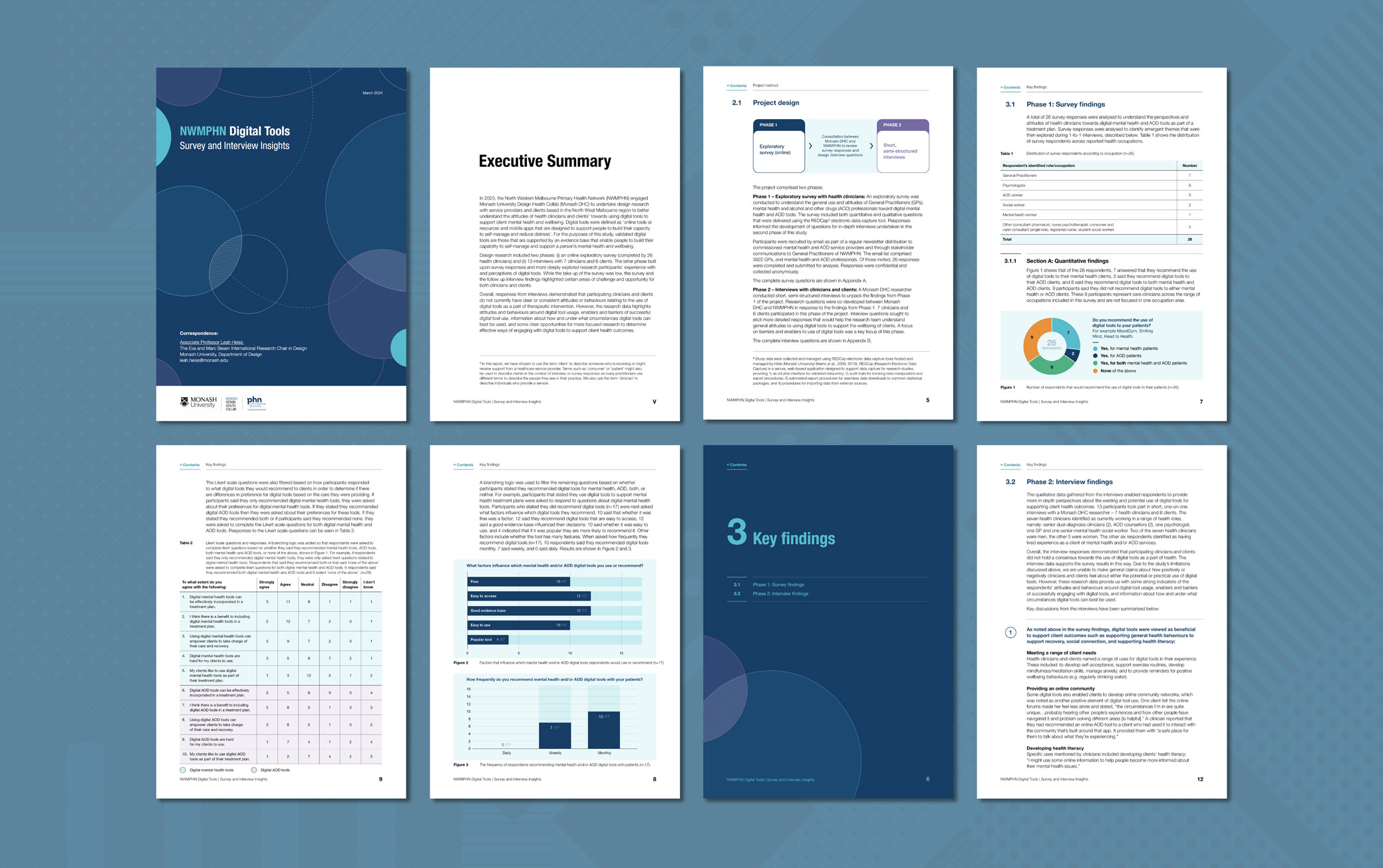
Design research included two phases: an online exploratory survey and interviews with clinicians and clients. The latter phase built upon survey responses and more deeply explored research participants’ experience with and perceptions of digital tools. The findings from the survey and interviews highlighted areas of challenge and opportunity for both clinicians and clients.
The research highlighted attitudes and behaviours around digital tool usage, including how and under what circumstances digital tools can best be used. Additionally, the research data foregrounded opportunities for future research that focuses on determining effective ways of engaging with digital tools to support client health outcomes.