
Rhea's Master of Design journey from computer science to UX design
Rhea's Master of Design journey from computer science to UX design
Image: Food Diary app
Rhea Babji started her career as a UI/UX designer in India with a computer science background and a sharp eye for interfaces. But industry work alone couldn’t give her what she was after.
"I wasn’t just interested in learning new tools or making better-looking interfaces," Rhea says. "I wanted to understand the thinking behind good design, learning the principles that guide decisions across complex projects instead of relying only on intuition."
That ambition brought her to Melbourne to study the Master of Design at Monash University.
Learning through collaboration and real-world practice
Moving to Australia meant more than a new degree. It was Rhea’s first time living away from home, and she had to build networks, adapt to a new culture, and manage daily independence alongside postgraduate study.
At Monash Art, Design and Architecture (MADA) the mix of backgrounds in the studio expanded her approach to problem-solving, with classmates from fine art, architecture, technology, and the humanities.
"Being surrounded by classmates who shared a passion for design but came from completely different backgrounds broadened the way I thought," Rhea explains. "The project-based structure at Monash exposed me to different types of design challenges simultaneously. Managing multiple projects taught me how to prioritise, collaborate, and deliver under tight deadlines."
That structure produced one of her proudest projects: a redesign of the Food Diary App, where she applied Monash's human-centred approach to streamline daily tracking for users.
"The Food Diary project taught me how to rethink an existing product and give it a new direction. It also helped me understand how much visual design can influence the overall user experience.” Rhea explains.
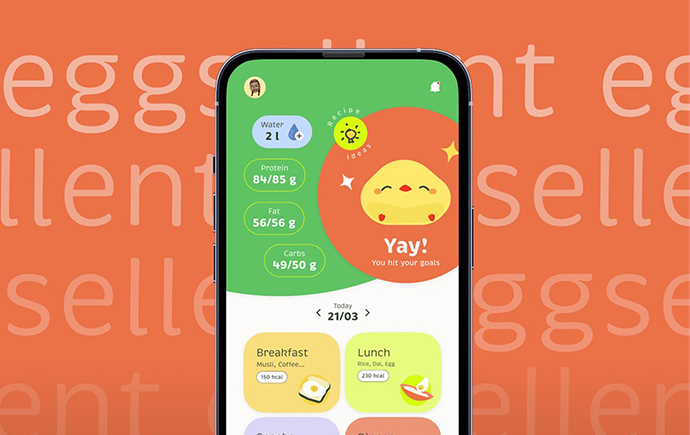
Image: Food diary app
She developed that user-first methodology through direct mentorship from faculty leaders.
"Every Monash Design lecturer shaped my approach in different ways," Rhea says. Dr Indae Hwang pushed us to experiment with emerging technologies like AI, while Dr Jiyoon Lee showed us why deep user research must always come before designing solutions. Dr Wilkie Tan's professional practice classes gave me the confidence to present my work, build a strong portfolio, and step outside my comfort zone."
Hands-on experience with Monash Education Technologies
As part of her Master of Design, Rhea completed an internship with Monash Education Technologies, gaining hands-on experience designing internal digital platforms in a large organisation.
"Working with the Monash Education Technologies team gave me valuable international industry experience before I graduated," Rhea shares. "Designing for real users, collaborating within a multidisciplinary team, and working within a large institutional environment gave me practical experience that I carried into my career after Monash.”
From classroom presentations to agency boardrooms
Rhea now works as a UI/UX designer at global agency KLoc Technologies, designing digital products, websites, and application interfaces across industries. She balances client business goals, technical constraints, and usability within agile project teams.
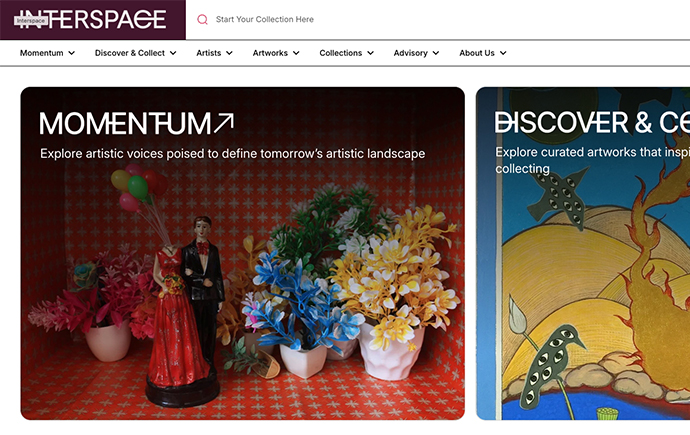
Image: client website 'Interspace'
She credits Monash for preparing her to communicate design decisions clearly to both stakeholders and developers.
"Throughout the Master of Design at Monash, we regularly presented our ideas and explained our choices," Rhea says. "Once I entered a design agency, I realised how essential that skill is. Being able to clearly communicate your thinking is just as important as creating the design itself."
Her advice to future international students: build a solid foundation in design thinking, not just tools.
"Design tools and technologies evolve continuously, but good design principles remain constant," Rhea explains. "Stay curious, step outside your comfort zone, and explore different opportunities. The more willing you are to experiment, the more you grow as a designer and as a person."