
Anna Varendorff’s bold new commission at MAF x NGV
Anna Varendorff’s bold new commission at MAF x NGV
When designer, artist and Monash Master of Fine Art alum Anna Varendorff reflects on her recent commission for the National Gallery of Victoria’s MAF x NGV art fair, she speaks less about prestige and more about possibility.
“This new Design commission has enabled me to have an opportunity that is much larger in scale than I would be able to achieve myself,” she says. “The fair reaches a huge audience I wouldn’t otherwise have access to, and the physical scale I am able to work at is amazing, and changes the works’ conversation.”
For the commission, Varendorff presented her iconic U lights and vases, works that sit at the intersection of sculpture, design and functional objects. Their luminous curves and precisely resolved surfaces have become a signature of her practice, grounded in a deeply material education.
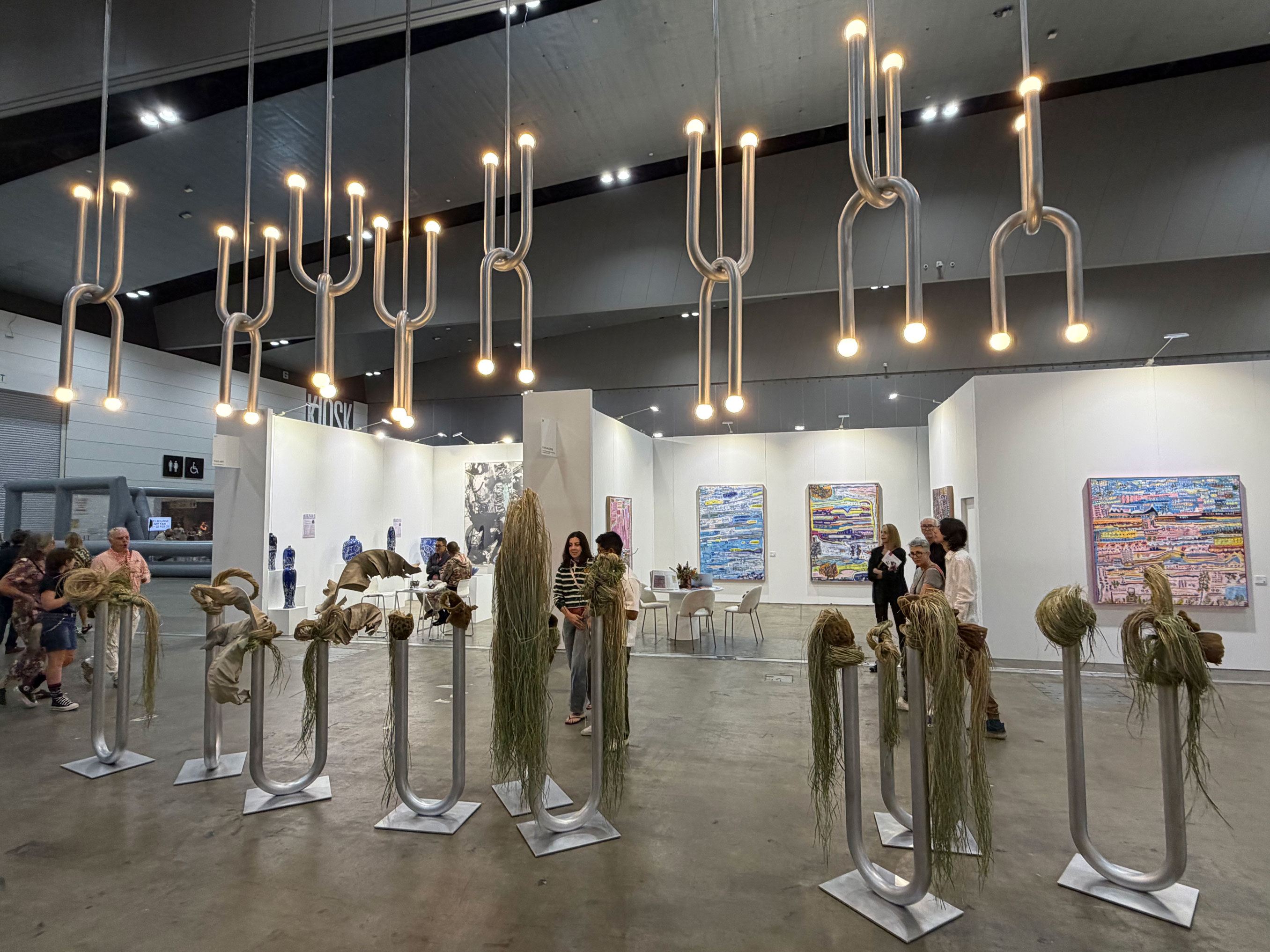
Image: U lights and vases (2026) by Anna Varendorff, MAF X NGV Design Commission, installation at Melbourne Art Fair 2026.
From jewellery bench to public scale
Varendorff began her career in jewellery, studying at Queensland College of Art before moving to Melbourne. Early on, she worked for jeweller Ari Athans, occasionally exhibiting together. During one of those exhibitions, she began creating vessels alongside her jewellery. The audience response was immediate.
“The first ones were really light, more like sculptural gestures than a product,” she recalls. Over time, invitations to exhibit the vases in design contexts shifted her methodology. “I honour them unequivocally now. I think about them differently.”
Today, Varendorff works with welders, engineers and metal benders to realise her forms, though she still polishes each piece by hand. Determining the achievable gauge of a bend or the structural limits of a curve requires constant negotiation between artistic intent and material logic.
“The material starts to curtail your options,” she explains. “I’m not an engineer, but I need to understand enough to make the metal express what I want.”
Navigating fabrication has not always been straightforward. In male-dominated industrial environments, she has encountered assumptions about her competency.
“Gender, equity and parity are huge issues working with fabricators and engineers,” she says. “Our competency as women is really questioned.” Over time, she has built trusted relationships with “fabulous fabricators” who respect the rigour of her practice.
The politics of material
Metal remains Varendorff’s primary language. Even when incorporating textiles or wood, metal anchors the work.
“I’m so comfortable working with it,” she says. “A tennis player knows their racquet.”
She is also conscious of politics. Extracting metal is environmentally costly, yet it is infinitely recyclable and enduring.
“Choosing materials is political for anybody,” she reflects. “The gesture of making art itself is political.”
This material awareness underpins her U lights. While functional, they are also meditations on line, balance and space, oscillating between domestic intimacy and sculptural presence. For Varendorff, design and art occupy distinct headspaces: a light must function, a sculpture answers to different values. Yet both share a common material intelligence.
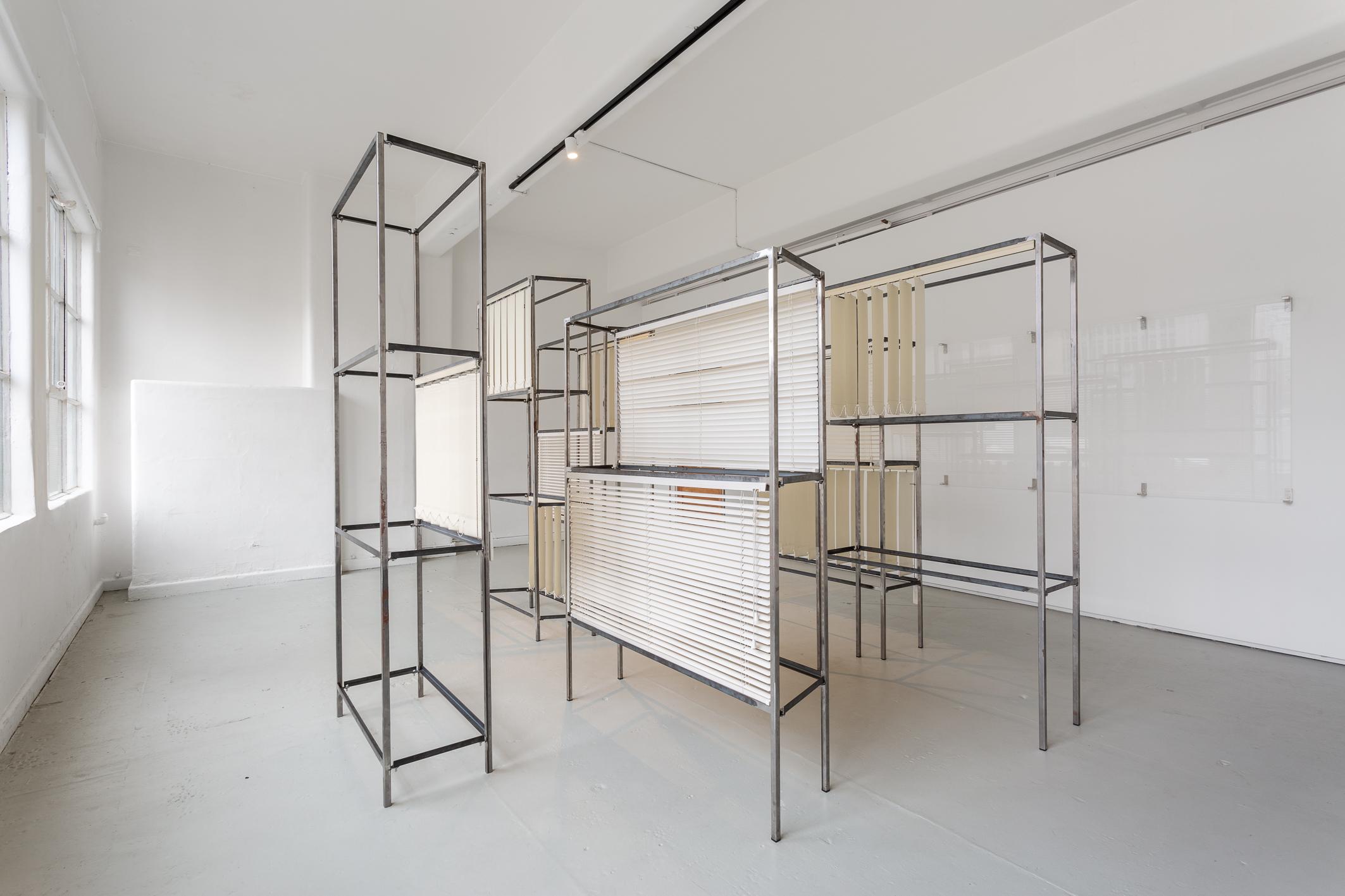
Image: house painting is dead (2025), Caves Gallery, Melbourne, Australia. Photography by Christo Crocker
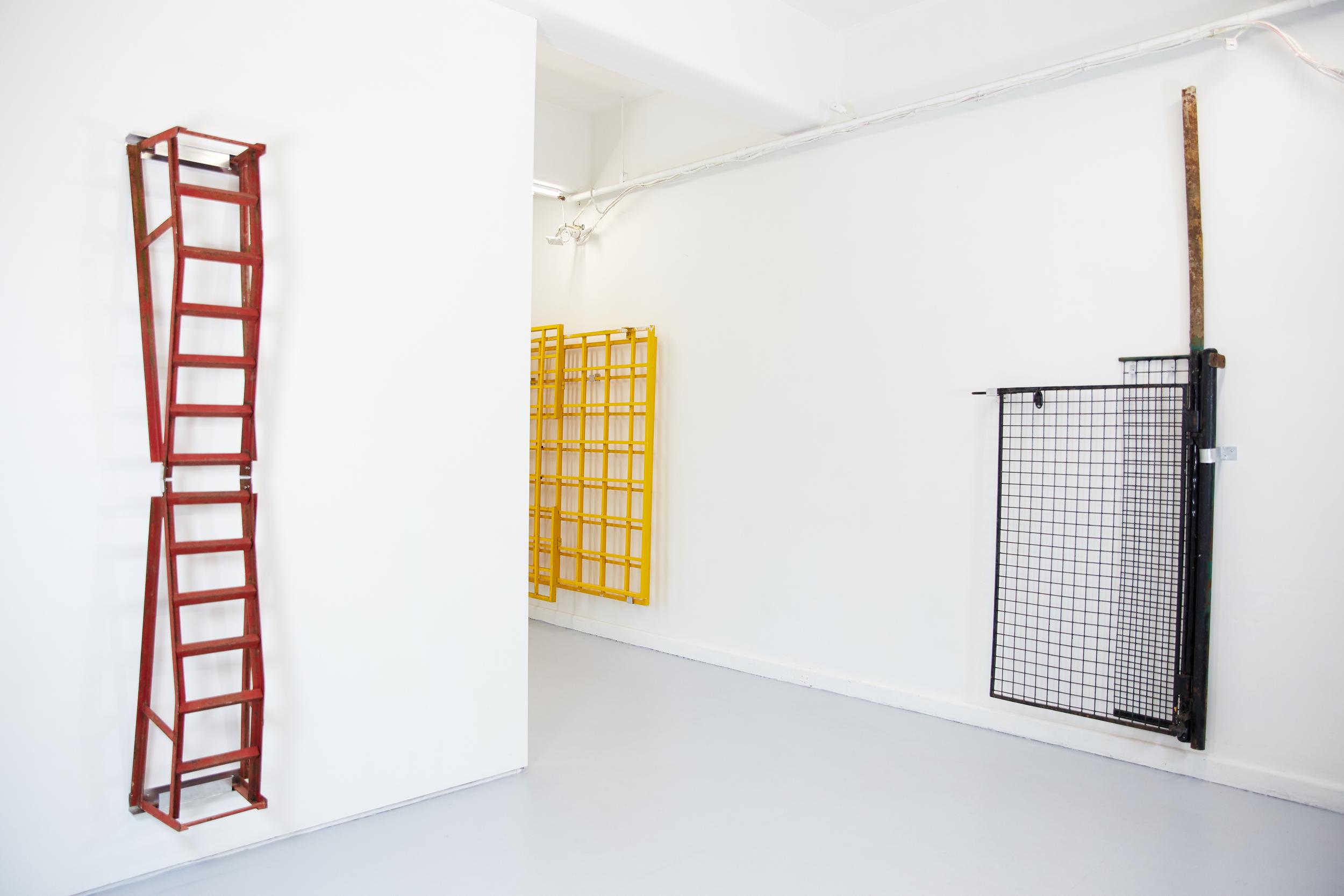
Image: two grid paintings (2023), Caves Gallery, Melbourne, Australia. Photography by Anna Varendorff
Monash: research, rigour and scale
Completing her Master of Fine Art at Monash in 2015 marked a turning point.
“I shifted up in scale a lot,” she says. Studying part-time allowed her to remain embedded in the studio, deepening her material research.
Monash’s jewellery program, led at the time by Dr Marian Hosking and Manon van Kouswijk, was pivotal. “They are very special people,” Varendorff says. “I didn’t want to just make jewellery; I was interested in the research.” Extensive workshop facilities and a strong library gave her the capacity to test ideas physically and conceptually.
It was at Monash that she began expanding jewellery’s intimate scale into more architectural gestures, an evolution culminating in works now entering a major public collection.
Community and continuity
Varendorff resists prescribing how audiences should experience her NGV installation.
“I’d rather let the work speak for itself,” she says. What matters is presence. “Being with work is profoundly different to seeing a photograph. Your physicality impacts your experience.”
Alongside her practice, she teaches, committed to equipping students with material skills before leading them into conceptual terrain. “I try to give them an armature of skills they can take with them as artists,” she says.
With her work now entering the NGV collection, Varendorff describes the moment as “really special, amazing and unexpected.” Yet her advice to emerging artists remains grounded.
“It’s hard work to make art, sustain a practice and earn a living,” she says. “But potentially you can make and achieve anything. Your job as an artist is to remove limitations. It’s hard — but it’s worth it.”