
Augmented Reality (AR) Zoo

This interactive was created by Monash University Master of Design students Xin Chen, Dongyu Liu, Riri Haruka, Jiongxin Wang and Ankit Khokhra, with the help of lecturers Jeff Janet, Nao Hayakawa and Dr Debbie Symons, along with Richard Pranjatno and Taiqing Ken Zhang from Monash’s Virtual and Augmented Reality Services (VARS) unit, and guidance from Zoos Victoria.
The students replicated each animal’s unique characteristics and movement using the Cinema 4D software suite, and designed species-specific environments for them to inhabit.

Welcome to the AR Zoo!
Did you know that Australia’s southern states have 27 locally threatened species that Zoos Victoria is fighting to protect?
With this interactive, augmented reality experience – created in collaboration between Monash University and Zoos Victoria – you can get up-close with five of them!
Here’s what to do to visit the zoo
- First, gather:
- glue
- coloured pencils or paints
- scissors
- an empty tissue box
- a device with a camera and internet capability
- Then, pick a species – scroll down and download and print their habitat PDF.
- Follow the PDF’s instructions to create your tissue box habitat.
- Return to the species you picked – scroll down and click their “Meet” button to launch the AR Zoo. Note: You may be prompted to allow access to your camera.
- Point your device’s camera at the ‘Zoo’ QR code in your tissue box and watch your habitat come to life!
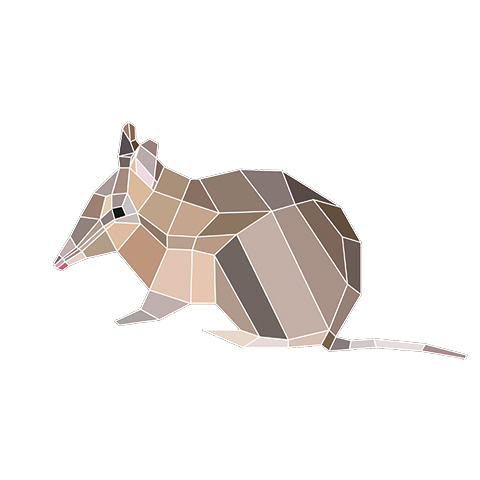
Eastern Barred Bandicoot
The Eastern Barred Bandicoot is a small nocturnal marsupial endemic to south-eastern Australia. Since European settlement, this species has undergone widespread and catastrophic decline in range and abundance on the mainland due to fox predation and habitat loss. They are solitary animals and have one of the short gestation periods of any Australian mammal, with young born after just 12.5 days of pregnancy. Females give birth to 1-4 young that remain in the backwards-facing pouch for approximately 55 days. At three months for females and four months for males they are sexually mature. Their small population size means loss of genetic diversity is another potential threat to the Eastern Barred Bandicoot, making reintroduction to the wild all the more urgent.
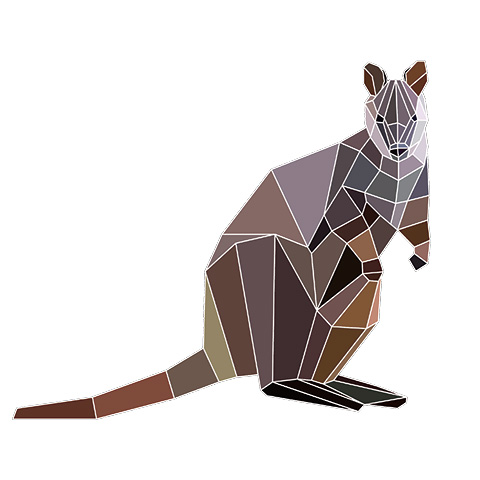
Brush-tailed Rock-wallaby
The Brush-tailed Rock-wallaby is a medium sized wallaby that shelters during the day within caves and crevices of complex rocky cliffs and emerge at night to feed on vegetation such as grasses and forbs. During the day throughout the cooler months the species will bask in sunshine on cliff ledges. The species’ range extends from Victoria to south-eastern Queensland. Within this distribution, three genetically-distinct groups exist, the southern population in Victoria, a central population in NSW and a northern population in northern NSW and south-eastern Queensland. Of these, the southern population in Victoria is most threatened, and classified as Critically Endangered within that state. In Victoria, the last known population of wild Brush-tailed Rock-wallaby is isolated to a single gorge in a remote part of East Gippsland. In 2008, this population was thought to contain fewer than 20 individuals.
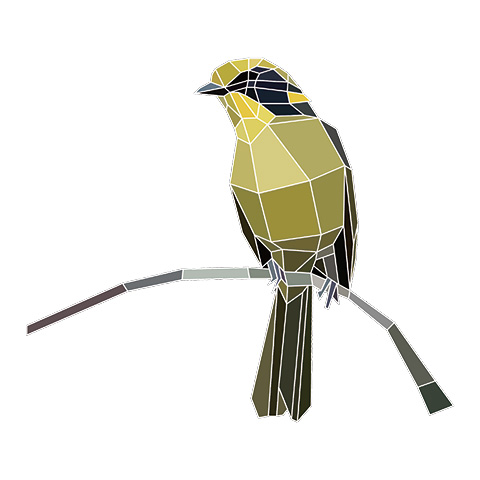
Helmeted Honeyeater
The Helmeted Honeyeater is Victoria’s only endemic bird and the State's bird emblem. It is one of four subspecies of Yellow Tufted Honeyeater. Currently, there is only one semi wild population living within Yellingbo Conservation Nature reserve. Their preferred habitat is streamside swamp forest. They feed on eucalypt sap, insects and flower nectar, using their long brush like tongue. They are a small fast-moving bird weighing between 28-32 grams. Once patchily distributed from Healesville to south Gippsland, populations of Helmeted Honeyeater have declined dramatically due to historic clearing of the forests. They are now confined to a single locality and are at risk of extinction.
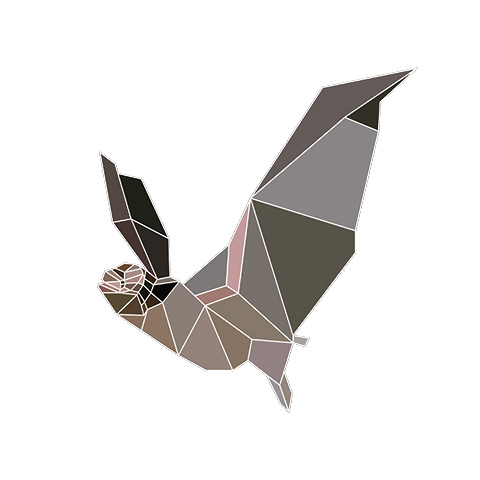
Southern Bent-wing bat
The Southern Bent-wing bat is a type of microbat measuring just 52-58mm and weighing about 15g. The bent-wing name comes from its unique anatomy, with the third ‘finger’ of its wing having a bone four times longer than the middle one, giving it a bent appearance. It has the longest wingspan of any bat in this family, measuring almost 2.5 times its head/body length. Southern Bent-wing bats are long-lived animals, with individuals recorded living up to 22 years old.
It is an obligate cave-dwelling bat occurring only in south-east South Australia and south-west Victoria. In the winter months, the bats go into hibernation within caves. These bats are insectivorous and use echolocation to find prey at night. They can often catch prey with their mouths, but also catch their prey with their wings or tail (like a baseball mitt!) and feed themselves mid-flight. They can consume more than half their body weight in insects each night.
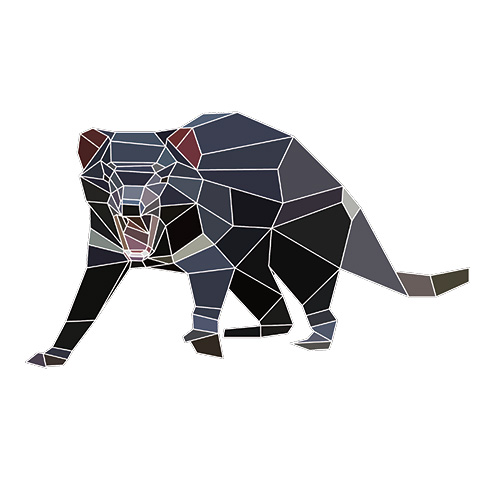
Tasmanian Devil
A notoriously shy animal in the wild, difficult to trap but known as the largest carnivorous marsupial in Australia. Although often a solitary animal, Tasmanian Devils can be raucous communal feeders when chancing upon the same meal. Tasmanian devils have a reputation for flying into a rage when threatened by a predator, fighting for a mate, or defending a meal. Early European settlers dubbed them ‘devils’ after witnessing displays such as teeth-baring, lunging, and an array of spine-chilling guttural growls. These behaviours also inspired the Looney Tunes portrayal of Taz, the Tasmanian devil, as a snarling lunatic. But this reputation might not be totally fair. Though the Tasmanian devil may seem aggressive, many of these behaviours are merely feeding rituals or fear-induced.
Devils are solitary and nocturnal, spending their days alone in hollow logs, caves, or burrows, and emerging at night to feed. They use their long whiskers and excellent sense of smell (can smell food up to 1km away), and sight to avoid predators and locate prey and carrion. They'll eat pretty much anything they can get their teeth on, and when they do find food, they are voracious, consuming everything—including hair, organs, and bones.
