
Anthropocene Landscapes
Course
- Bachelor of Architectural Design Semester 1, 2020
Studio leaders
- Georgia Nowak

“The Anthropocene marks severe discontinuities; what comes after will not be like what came before. I think our job is to make the Anthropocene as short/thin as possible and to cultivate with each other in every way imaginable epochs to come that can replenish refuge.” Donna Haraway
The studio is part of a broader investigation into Anthropocentric landscapes (environments shaped by human re-engineering of the planet) such as those affected by climate change, corporate action, land clearing and war. This studio will focus particularly on those of corporate action (mining and extractive industries) and will interrogate the systems and forces (hidden and visible) at play and subsequently develop a proposition for potential future use. Possible material developments, future settlement typologies, marginal uses and remediation proposals for these landscapes may be required, however the landscapes may also be deemed inhabitable and therefore a re-working of industrial or extractive practices for distant futures is to be proposed as an alternative.

Grace Upton Jones, That Seat's Taken 1
That Seat's Taken
Site: Arthurs Seat State Park
My project 'That Seat's Taken' is an attempt to spark an open conversation about the lack of knowledge on material processing and the environmental impacts of the Quarry industry. The architecture lends itself to remediating the connection people have with the landscape specifically the Old Pioneer Quarry situated in Arthurs Seat.

Grace Upton Jones, That Seat's Taken 2

Grace Upton Jones, That Seat's Taken 3
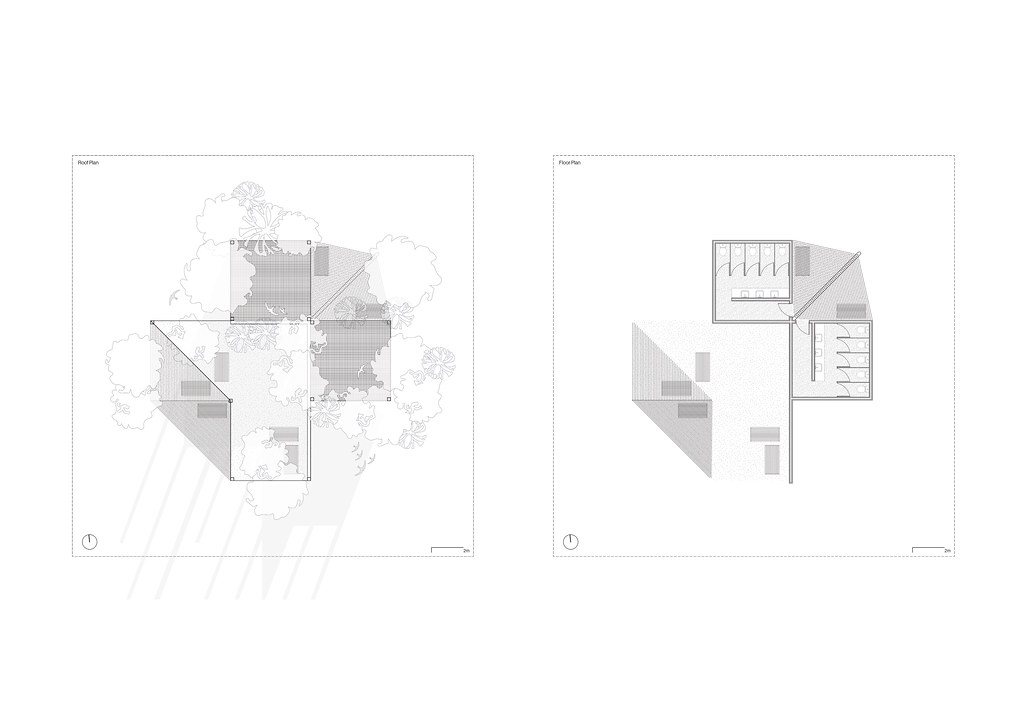
Grace Upton Jones, That Seat's Taken 4

Grace Upton Jones, That Seat's Taken 5

Claudia Kuen, Aim Diagram
The structure aims to significantly reduce air pollution produced by the extractive industries during their operations.
It seeks to filter air borne particle matter and pollutive gases to protect the health and wellbeing of workers, residents, flora and fauna. It will also contribute to a reduction in waterway and habitat contamination.
As a secondary function, the structure will strive to establish a more positive relationship between people and site whilst continuing to draw attention to the severe environmental impact that extractive processes have.
The structure is temporary.

Claudia Kuen, Major Location Map
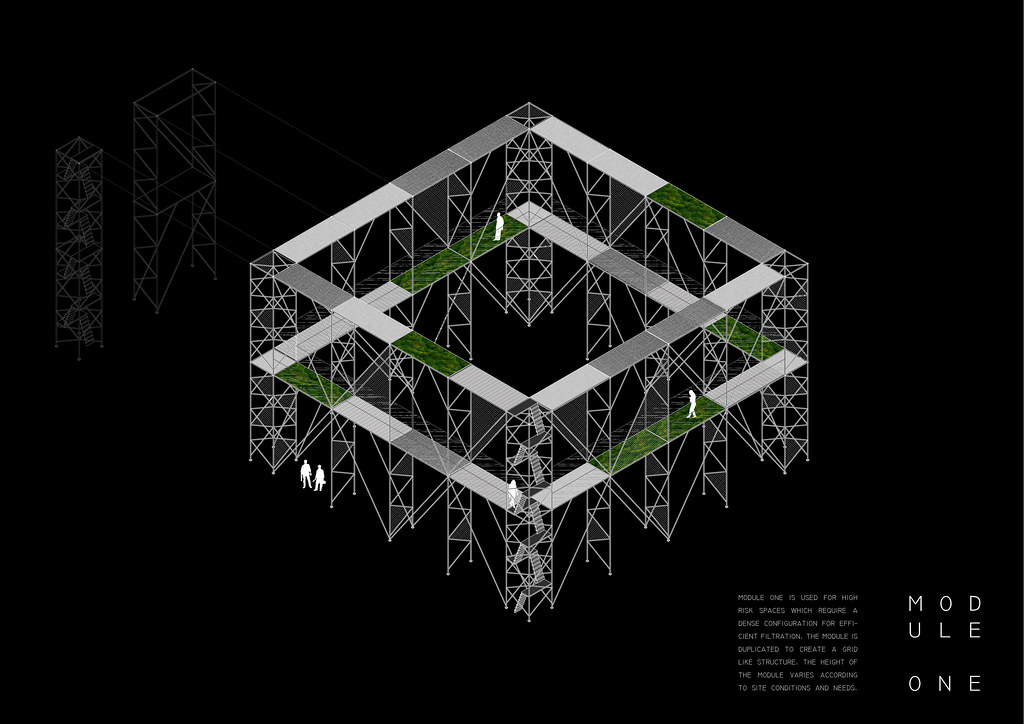
Claudia Kuen, Module 1

Claudia Kuen, Module 2
