
Achymeleh Teshale
PhD STUDENT PROFILE
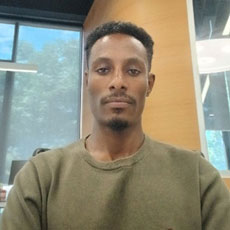 Achymeleh Teshale
Improving cardiovascular disease risk prediction with Artificial Intelligence methods and incorporating social determinants
Main Supervisor: Dr Rosanne Freak-Poli
Co-Supervisors: Dr Alice Owen, Dr Mor Vered
Achamyeleh is an epidemiologist and a PhD candidate in the Behavioural and Social Epidemiology group at the School of Public Health and Preventive Medicine. His research focuses on reducing cardiovascular disease (CVD) by enhancing risk prediction models using artificial intelligence and incorporating social determinant risk factors.
It's well-known that social determinants significantly impact health. According to a World Health Organization report, social determinants account for 35-50% of health outcomes, including CVD. Achamyeleh’s comprehensive umbrella review provided synthesized evidence that these determinants play a crucial role in cardiovascular disease (JAHA 2023). He assessed each of the 62 social determinants separately for 16 subtypes of CVD, revealing that economic circumstances and early childhood development are particularly influential. The review also emphasized the need for further research into factors such as homelessness, food insecurity, neighborhood conflict, environmental attributes, discrimination related to CVD, and health literacy.
Despite this, many existing CVD risk assessment tools overlook these important factors. Achamyeleh has demonstrated that state-of-the-art artificial intelligence models can significantly improve the accuracy of CVD risk prediction. In fact, social determinants are among the top predictors of CVD, surpassing well-established biological risk factors (e.g., J Med Syst 2024). Key social determinants include social networks, living arrangements, indicators of socioeconomic advantage, recent stressful life events (for men), and first language (for women). His work is at the forefront of advancing gender-specific evidence and applying AI deep learning in epidemiological research. Achamyeleh has shown that deep-learning AI models outperform traditional machine-learning techniques (e.g., Cox survival models) in predicting CVD, highlighting the importance of gender-specific models and the necessity of incorporating social determinants into CVD risk assessments.
Achamyeleh work provides evidence for the inclusion of social determinants in CVD risk assessment tools to enhance early detection, prevention, and management of the disease. Given the complex and intertwined relationship between social determinants, traditional risk factors, and CVD outcomes, utilizing advanced artificial intelligence models is essential.
Achamyeleh’s research aims to develop a comprehensive and easily accessible CVD risk assessment tool. This tool will be based on expanded risk factors and artificial intelligence methods and will help identify individuals at higher risk of CVD, ultimately improving prevention and intervention strategies.
For more information: Achamyeleh.Teshale@monash.edu