
ACCESS
2024–2027
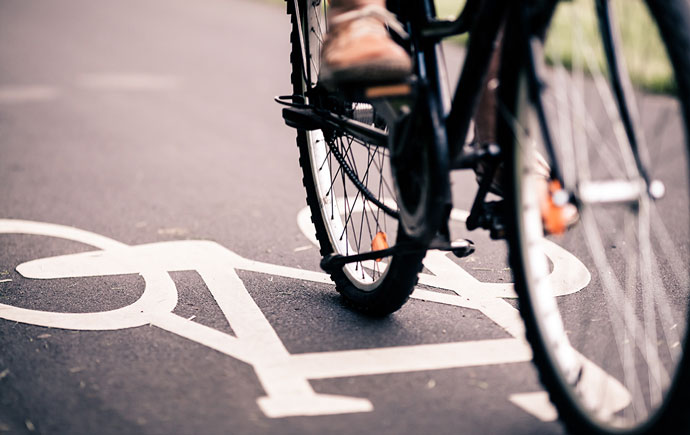 Bike riding has the potential to provide accessible and affordable physical activity as part of everyday life. Despite health and co-benefits, and substantial interest, the number of people cycling in Australia and many other Western countries is low. In Melbourne, only 1.7% of trips are made by bike. Further, there are substantial and persistent inequities in bike riding. Our research has shown that women have half the rate of cycling of men and that there is a five-fold lower rate of cycling in the lowest socioeconomic areas compared to the highest.
To date, we have not sufficiently enabled people’s experiences and needs to inform how we design safe, accessible and inclusive streets. The predominant performance measures used in street design are focused on enhancing service for motor vehicles, and not on people’s experiences. This is in part due to the absence of methods to measure user experiences. We know that there are currently no validated ways of being able to measure people’s experiences. New tools and methods are urgently needed to advance the measurement of user experiences and put people at the centre of safe, accessible and inclusive streets.
This project will develop novel and validated tools to measure people’s experiences while riding a bike by developing an Australian-specific bike riding simulator. We will use this simulator to identify valid methods to capture user perceptions while bike riding in different real-world environments to inform the types of bike infrastructure that are needed to enable a diversity of people to ride.
To undertake this work, A/Prof Ben Beck and his co-investigators were awarded $1.2 million from the National Health and Medical Research Council.
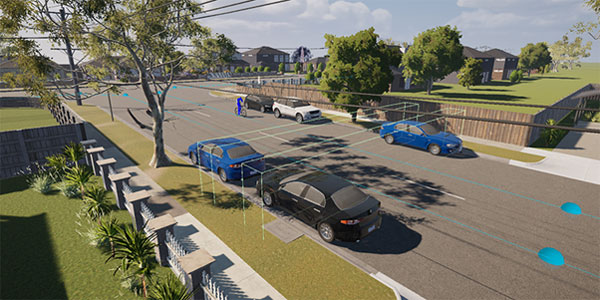
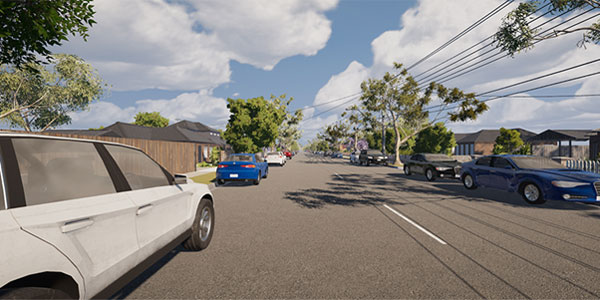
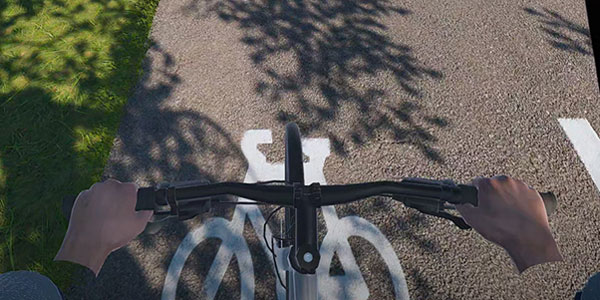
This project has three phases:
Phase 1
In Phase 1 we are building an Australian-specific virtual reality bike simulator. We are simulating a variety of Australian road environments with realistic traffic and environmental conditions to test the best ways of capturing user perceptions of different simulated events.
Phase 2
In Phase 2, we will capture the experiences of a diversity of people in various street environments in immersive and real-world conditions utilising methods from Phase 1. We are specifically focussing on the perceived safety and comfort of people of all ages and bike riding abilities in immersive simulations of a variety of street and path environments.
Phase 3
In Phase 3 we will use the results from Phase 1 and 2 and novel AI approaches to develop innovative tools to enable infrastructure prioritisation that will create safe and connected routes to access key destinations, thus enabling more people to ride bikes.
Meet the team
- A/Prof Ben Beck, Head of Sustainable Mobility & Safety Research, Monash University
- Dr Joanne Caldwell Odgers, Senior Lecturer, Physiology, Monash University
- Prof Dana Kulic, Professor, Department of Electrical and Computer Systems Engineering, Department of Mechanical and Aerospace Engineering, Monash University
- Dr Lauren Pearson, Research Fellow, Sustainable Mobility & Safety Research, Monash University
- Prof Chris Pettit, Director of City Futures Research Centre, University of New South Wales
- Prof Meghan Winters, Applied Public Health Chair, Gender and Sex in Healthy Cities and Professor, Faculty of Health Sciences, Simon Fraser University
- A/Prof Jason Thompson, Senior Research Fellow, School of Design, University of Melbourne
- A/Prof Farshad Alizadeh Mansouri, Associate Professor, Physiology, Monash University
- A/Prof Eli Puterman, Associate Professor, School of Kinesiology, University of British Columbia
- A/Prof Alex Bigazzi, Associate Professor, Transportation Engineering, University of British Columbia
- Prof Yuming Guo, Professor of Global Environmental Health, Monash University
- A/Prof Thomas Chandler, Associate Professor, Work Integrated Learning, Monash University
- Michael Neylan, PhD Candidate, Work Integrated Learning, Monash University