
ASPREE Research


Visit the ASPREE project website
Phone: 1800 728 745
Email: aspree@monash.edu


Professor Joanne Ryan and Professor Rory Wolfe are co-principal investigators of the ASPREE longitudinal follow-up study called ASPREE-XT. With the Study Director, Associate Professor Suzanne Orchard, they oversee the central coordination of all Australian ASPREE activity to ensure progress of the study.
The original ASPREE trial was established and led by Professor John McNeil AO and Associate Professor Robyn Woods, who continue to be involved in the broader research program of ASPREE.
The ASPREE (ASPirin in Reducing Events in the Elderly) study was an international, multicentre clinical trial to determine whether daily low-dose aspirin prolonged good health by preventing or delaying age-related illness, such as cardiovascular disease (heart attack and stroke), dementia, depression and certain cancers in healthy older adults. It was the largest primary prevention aspirin study ever undertaken in in this age group, mostly aged ≥ 70 years, and the first to weigh the benefits versus the risks of aspirin.
The randomised double-blind, placebo-controlled trial enrolled 19,114 healthy participants (16,703 in Australia, 2,411 in the US). Participants lived in urban/metropolitan, regional and rural locations in south eastern Australia and across multiple US states.
The Results
Published September 17, 2018 in NEJM
ASPREE found low dose (100 mg) aspirin did not prolong life free of disability, or significantly reduce the risk of a first heart attack or stroke in healthy people aged 70 plus, over the duration of the trial. The overall benefit (on life free of disability) did not offset the increased risk of bleeding, a known side-effect of aspirin*.
ASPREE findings continue to drive a rethink of aspirin use. Both the American College of Cardiology/American Heart Association and the influential US Preventive Services Taskforce (USPSTF) incorporated ASPREE trial findings, into revised aspirin guidelines.
Search a list of ASPREE and ASPREE-XT publications.
The Follow-up Study
With funding by the US National Institutes of Health, researchers continue to follow the health of ASPREE participants through an extension study, ASPREE-XT, to determine possible legacy effects of aspirin, such as on cancer prevention, cognitive decline and frailty, sometime after taking the drug. Researchers are also investigating demographic, environmental, lifestyle and genomic factors that contribute to the health status, both physical and cognitive health, in older adults. More than 4,000 GPs have patients in ASPREE-XT and provide critical support for the study.
*Please note: ASPREE’s findings relate ONLY to healthy older people, aged 70 or more years. The results do not apply to those taking aspirin on medical advice, for example those who have had a heart attack or stroke. Consult your GP before changing your aspirin regime.
READ: An aspirin a day of no benefit for fit and healthy elderly, study finds
READ: Daily low-dose aspirin in healthy older people
MEDIA RELEASE: Landmark study reveals: can aspirin prolong good health?

Agent of change – Professor John McNeil AO
Every morning, millions of elderly people without a medical reason take a low dose of aspirin, in hope of preventing first heart attack or stroke. The ASPREE Study proves otherwise.
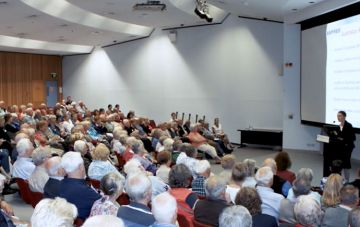
ASPREE study summary and thank you to participants
The first three papers of the ASPREE study have been published, and here the team explains the results and thanks the most important team players: ASPREE participants.