
Professor Hayley Newton
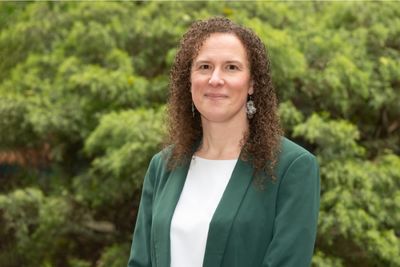
Professor Hayley Newton is a cellular microbiologist with a keen interest in understanding the ways in which intracellular bacterial pathogens can manipulate their human host cells. She has worked with a range of bacterial pathogens, but her main research impact has come from studies into the zoonotic pathogen Coxiella burnetii. As a pathogen of both humans and animals, C. burnetii remains an important example of the need for a One Health approach for research into human health and disease.
Professor Newton completed her undergraduate degree and PhD at Monash University, studying Legionella pneumophila. She was awarded an NHMRC Training Fellowship to undertake postdoctoral research at Yale University. Here she developed pioneering techniques to genetically manipulate C. burnetii and discovered key virulence factors of this poorly understood human pathogen. These findings have led to a significant shift in our understanding of this mysterious intracellular pathogen and opened new avenues of discovery research.
Professor Newton moved to the Department of Microbiology and Immunology, The University of Melbourne, at the Peter Doherty Institute in 2013 where she established her independent research program and a substantial teaching portfolio. In 2022, Professor Newton was recruited to the Infection Program, Department of Microbiology and the Monash Biomedicine Discovery Institute at Monash University.
In 2026, Professor Newton was appointed Head of the Department of Microbiology at Monash University. In this leadership role, she is dedicated to shaping the future of microbiology research and education, fostering a collaborative culture that drives world-class discovery science, and equipping the next generation of researchers with the skills to address complex global health challenges.
Beyond her university leadership, Professor Newton is deeply committed to advancing the discipline and championing scientific literacy across the broader community. She serves as the elected Vice President for Scientific Affairs for the Australian Society for Microbiology (ASM), leading strategic scientific initiatives on a national level. Driven by a passion for science communication and inspiring future generations of innovators, she also serves on the Scientific Advisory Board for the Gene Technology Access Centre (GTAC), helping to expand access to transformative bioscience education.