
Monash decoded Sleep
Desperate for a good night’s sleep? It’s all in the mind
Forget pillow sprays and milky drinks: these simple brain tricks could transform your nights.
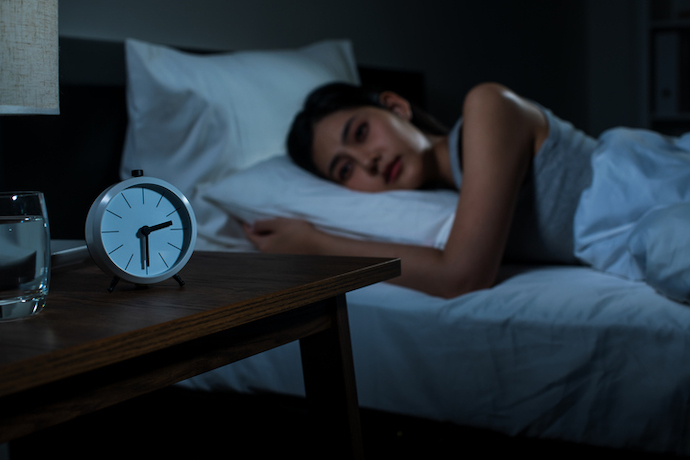
Your partner is snoring. Your mind is going over and over tomorrow’s presentation. The possums are crashing around the bins, your dog is going crazy and the dawn chorus is just about to kick in.
No wonder you can’t sleep – and you know you’re likely to feel terrible in the morning.
But finding effective ways to get a good night’s rest is vital, because lack of sleep could affect your mental and physical health long-term, too.
Solving the great mystery of what sleep actually is and does is vital – because a lack of it is a risk factor for several other conditions. One recent experiment showed that it took just three days of restricted sleep for a healthy person to become pre-diabetic. And other studies have found that patients with a diagnosis of sleep disorder are twice as likely to develop a neurodegenerative disease in the next 15 years.
Should I be worried?
What’s concerning is that millions of people report problems with sleeping – 40 per cent of Australians, according to a report from the Sleep Health Foundation in 2016. That includes around one million with sleep disorders like insomnia or sleep apnoea, 2.5 million with other health problems such as chronic pain, and a further 3.8 million who simply don’t get enough sleep because of their work-life schedules or undiagnosed issues.
There’s also evidence from population studies that show aspects of sleep disturbance that can occur during midlife increase dementia risk later in life, says Dr Melinda Jackson, Associate Professor in the School of Psychological Sciences. “We know that people with Alzheimer’s disease, for example, have a whole range of different changes to their sleep and circadian rhythms, and they also have a high prevalence of different sleep disorders.”
Your path to good sleep starts here
So what does good sleep look like? We’ve all heard the recommendation for a “good eight hours sleep”, but that may well be a fallacy.
While eight hours is a reasonable target for a solid night’s sleep, it’s not a hard-and-fast scientific rule – anything between six and ten hours is enough depending on the individual, the circumstance and the quality of that sleep, and we should expect to wake up a couple of times during the night.
Sleep is made up of several rounds of a four-stage cycle, with each of between four and six cycles lasting around 90 minutes in total. These cycles have three stages of progressively deeper sleep, followed by one phase of vivid dreaming – REM sleep.

What’s interesting is that while scientists can measure brain waves and have a good idea of what a good night’s sleep should technically look like, this doesn’t always match what participants in sleep studies report themselves. Instead, we often judge sleep quality on how quickly we fall asleep and how many times we wake – which are not necessarily the best metrics.
A focus on a single unbroken slab of sleep is something of a modern phenomenon – previous cultures were much more flexible, with some pre-industrial societies dividing their sleep into two periods with a couple of hours in between when they’d get up and do chores. Others preferred a siesta – and a nap even today of around 30 minutes can work wonders.
So if you do wake in the night, don’t worry – it’s entirely natural. If you can’t fall back to sleep, get up and do something – but make sure it’s dull.
“By keeping what you’re doing boring, you’re telling your brain there is no reward in being awake,” says Jackson. “That’s why scrolling on your phone doesn’t count. It’s too stimulating and rewarding for the brain.”
Take action – now
But what can we do to get more, and better, sleep? Don’t panic, help is at hand.
Firstly, there are the rules for sleep hygiene that we all know and ignore – avoid alcohol, caffeine and tobacco; don’t eat too late; don’t use the bed for anything other than sleep and sex; avoid screens before bed; maintain a healthy lifestyle and have a consistent sleep schedule. These may be boring, but they work. You don’t have to keep all of them, but ignore them at your peril.
There are chemical solutions such as melatonin, while some people listen to binaural beats or take the opposite route and wear ear plugs and eye masks. Then there are the therapies such as Cognitive Behaviour Therapy for Insomnia (CBT) and Mindfulness Based Therapy for Insomnia, delivered in person or via apps and online programs. These bring additional benefits, such as for menopausal women whose sleep is disturbed by hormonal changes.
“CBT for insomnia can help improve sleep and reduce hot flushes as well,” says Jackson.
Finally, there’s cognitive refocusing. This draws on research that shows that those who sleep well and those who sleep poorly have different types of thoughts before bed. Insomniacs tend to dwell on real-life problems rather than indulge in the sort of visual, dream-like imagery experienced by good sleepers.
Cognitive refocusing requires sleepers to plan ahead and think of a scenario that’s interesting… but not too interesting. It could involve a hobby – perhaps play a game of chess in your head – or reciting lyrics from a favourite song. Anything that will stop you thinking about more important things or, worst of all, worrying about why you can’t fall asleep.
“We’re trying to replace unwanted thoughts with more pleasant things,” says Jackson.
And with that, comes unconscious bliss. Sweet dreams!

Continue your learning with free #Decoded webinars
This article is a write-up of the alumni-exclusive #Decoded webinar, Sleep science, led by Associate Professor Melinda Jackson.
In the #Decoded webinar series Monash experts break down complex topics into bite-sized chunks so they’re easy to understand. To access these and other webinars, and to be notified about new events that are exclusive to Monash alumni, sign up to the Monash Alumni Portal.