
Simon R. Schultz
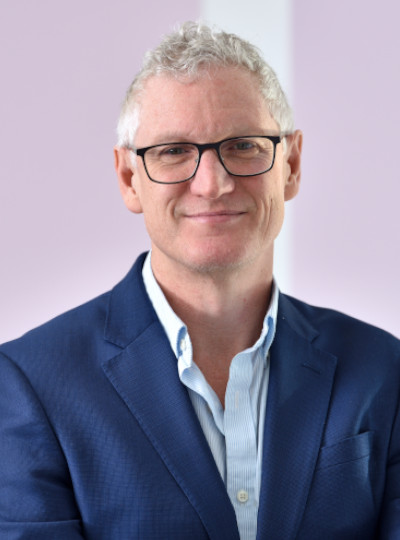
Simon R. Schultz is Professor of Neurotechnology in the Department of Bioengineering at Imperial College London, and Director of the Imperial Centre of Excellence in Neurotechnology.
He grew up in North-East Victoria, and attended Wangaratta High School, before studying Science and Engineering at Monash University from 1989 to 1993, receiving a Bachelor of Science in physics and applied mathematics, and a Bachelor of Engineering with first class honours in electrical and computer systems engineering.
He moved to Sydney University in 1994 to carry out research on analogue micropower implementations of neural networks, publishing five papers, for which he received the Master of Research Degree degree.
In 1995, he moved to Oxford for a doctoral studies in computational neuroscience, studying under Professor Edmund Rolls in the Department of Experimental Psychology, with scholarships from the English-Speaking Union (NSW) and the Oxford McDonnell-Pew Centre for Cognitive Neuroscience.
In 1997, he received a bursary from the A.C. Irvine Trust to spend the summer mountaineering in the French Alps. He was also Senior Scholar in the Sciences at Corpus Christi College, Oxford in 1998. He spent 5 months at the Australian National University as a Visiting Fellow with Trichur Vidyasagar and Mike Calford, before taking up a Howard Hughes Medical Institute funded postdoctoral position with Tony Movshon (1999-2003). After a second postdoc with Michael Häusser at UCL in 2003-4, he took up a Lectureship in the Department of Bioengineering at Imperial College in 2004.
From 2012-2016, he was a Royal Society Industry Fellow, working in partnership with Scientifica Ltd to explore novel applications of optical microscopy to neuroscience. In 2020, he received the Royal Society Translation Award for work on optical approaches to studying brain function.
He holds an affiliate position at the Sainsbury-Wellcome Centre for Neural Circuits and Behaviour at UCL, and has been a visiting fellow in Oxford (at the MRC Brain Network Dynamics Unit and Jesus College in 2016-17) and Tokyo (at the RIKEN Center for Brain Science in 2024). He is widely known for work on neural coding, ranging from the development of new algorithms based on information theory and graph theory to analyse neurophysiological data, to the use of two-photon calcium imaging to study the coding of sensory and cognitive variables in the activity of populations of neurons.
His contributions to neurotechnology include novel multiphoton scanning algorithms, behavioural readout apparatus, algorithms for processing two-photon calcium imaging movies, and two-photon targeted robotically automated patch clamp electrophysiology. His current neuroscience research focuses on brain-wide network-level mechanisms of memory consolidation; an aim is to use this to develop neurotechnology for memory enhancement.
He is a Fellow of the Institute of Engineering and Technology (FIET) and of the Royal Society of Biology (FRSB).