
Dr Murray Johns
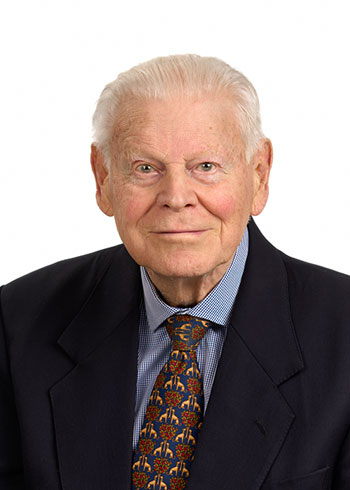
Dr Murray Johns, born in 1937 in Geelong, hails from a family with deep roots in the area. Growing up in Geelong, he attended local schools before enrolling at The University of Melbourne in 1955. Initially pursuing a Bachelor of Science degree with a major in geology, Dr Johns spent three years working as a geologist across various regions in Victoria. However, he soon realised that his true passion lay in medicine, prompting him to return to university.
Dr Johns joined the first cohort of medical students at the newly founded Monash University and graduated as part of its inaugural class of medical graduates in 1966.
His career took a significant turn in 1969 when he was instrumental in establishing the first sleep laboratory at Monash University, housed within the Department of Surgery. As a clinical physiologist, he spearheaded three major lines of research: investigating sleep disruption in post-operative delirium, developing detailed questionnaires on sleep habits, and studying the relationship between hormone secretion and sleep stages. His pioneering work earned him a PhD in Physiology from Monash University.
In 1974, Dr Johns joined the MRC Environmental Physiology Unit at London University to establish and manage a sleep laboratory there. His research focused on the regulation of body temperature during sleep and the link between thyroid function and sleep characteristics. After a period in general medical practice, Dr Johns collaborated with Epworth Hospital to develop the world’s first fully digital laboratory, a groundbreaking achievement in sleep medicine. He designed the first digital recording system, which replaced traditional polygraphs that used extensive paper recordings, and had it manufactured by Compumedics Pty Ltd in Melbourne.
Dr Johns is best known for creating the Epworth Sleepiness Scale (ESS) in 1991, a tool that has become the global standard for measuring daytime sleepiness. This scale has been cited over 13,000 times in scientific literature. Later in his career, he invented a method for monitoring eyelid movements using infrared technology, leading to the development of the Johns Drowsiness Scale (JDS). This scale assesses crash risk for drivers based on eyelid movement patterns.
To commercialise his innovative technology, Dr Johns founded Optalert Holdings Pty Ltd, which manufactures and distributes Optalert glasses and related devices globally, particularly in the mining industry. He introduced the term blepharometry in 2019 to distinguish eyelid movement measurements from eye movement studies in sleep medicine.
Dr Johns’ contributions to sleep medicine have been widely recognised. In 2018, Swinburne University of Technology awarded him an honorary Doctor of Health Science degree, and he has served as an Adjunct Professor at Swinburne for 20 years. In 2020, the Australasian Sleep Association honoured him with their Lifetime Achievement Award, acknowledging his significant impact on sleep medicine and the Association.