
From PCOS to PMOS: Monash alumna spearheads renaming of condition affecting 170 million women worldwide
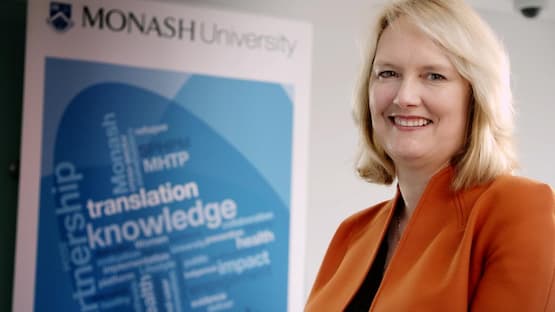
A global effort led by Monash University alumna Professor Helena Teede has changed the name of a significant women’s health condition that was long misunderstood to be ‘all about ovarian cysts’.
Polyendocrine Metabolic Ovarian Syndrome (PMOS) is the new name for the condition previously known as Polycystic Ovary Syndrome (PCOS), which impacts 1 in 8, or more than 170 million women of reproductive age, and many beyond this worldwide.
PMOS is characterised by disruptions in hormones or chemical messengers in the system, with impacts on metabolic and mental health, skin, and the reproductive system.
For too long, the name reduced a complex, long‑term hormonal or endocrine disorder to a misunderstanding about ‘cysts’ and a focus on ovaries. This contributed to missed and delayed diagnoses and to inadequate treatment.
Professor Helena Teede, Director of the Monash Centre for Health Research & Implementation and an endocrinologist at Monash Health, led the name change process with and for those affected, after spending decades researching the condition and partnering in the care of patients, seeing the impacts first hand.
“What we have demonstrated is that there is no increase in abnormal cysts on the ovary, it is not primarily on ovarian disorder and the diverse features of the condition are largely unappreciated,” Professor Teede said.
“It was heartbreaking to see the delayed diagnosis, limited awareness and inadequate care afforded those affected by this neglected condition. Yet it was not the fault of the individual clinicians. The condition was misclassified as an ovary condition, severely limiting research, education and care pathways. Not only have we now changed the name but we are reclassifying the condition.
“While Monash‑led International Guidelines through the NHMRC Centre for Research Excellence and now used in 195 countries, have advanced awareness and care, a name change was the next critical step towards recognition and improvement in the long‑term impacts of this condition.”
Monash’s role in shaping the global initiative
Professor Teede said her team and the expertise across Monash University alongside global collaboration, was central to the success of the renaming effort.
“My research and implementation at Monash is very much current, and the integration model where Professors are embedded as academic clinicians in hospital care, remains absolutely critical,” she said.
“It means we see bridge patient needs, health systems and world‑class research capability. That combination is challenging bridging silos and it’s what made this work possible.”
She said Monash’s interdisciplinary expertise was important here.
“Engaging across the richness of Monash faculties remains invaluable. Complex problems like PMOS require diverse expertise, and Monash provides that rich diversity.”
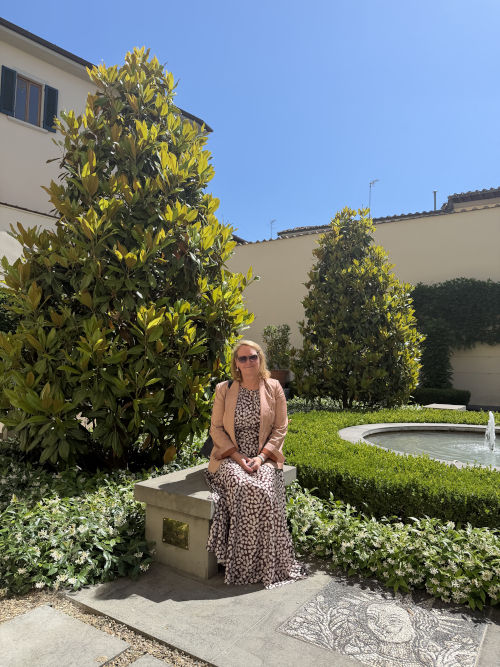
Professor Teede added that the Monash Prato Centre in Tuscany has played a pivotal role in building the collaborations, International Guidelines, the name change and the current implementation.
“Monash Prato has been fundamental to my global collaboration. Many of the relationships that made this and my other work possible were forged or strengthened there. Being back on the Prato campus currently is fitting.
Origins of her interest in women’s health
“My interest in women’s health began during my undergraduate training, and it deepened during my Canadian fellowship,” she said.
“Those early experiences showed me how profoundly women’s health conditions can shape lives – and how often they are overlooked or misunderstood.”
The name change journey, responded to 14 years of attempts by many to change the name – in the end it took global collaboration between experts and those with lived experience from all world regions and diverse disciplines.
Professor Teede led the process alongside International Androgen Excess and Polycystic Ovary Syndrome Society (AE‑PCOS Society) President, Professor Terhi Piltonen, an international co‑lead from Oulu University and Oulu University Hospital, Finland, AE‑PCOS Society Executive Director Anuja Dokras from the US and Chair of Verity (PCOS UK) Rachel Morman, with 56 patient and professional organisations.
A suite of additional academic papers by the same experts are being published on the need for and implications of the name change on a variety of issues including adolescent health, maternal health, clinical practice, policy reform and research. Among these are findings that there is no increase in abnormal ovarian cysts in the condition, further demonstrating the need to change the name.
The patient‑focused effort included more than 22,000 survey responses and involved multiple international workshops with patients and multidisciplinary health professionals.
The three‑year transition period includes broad media engagement, change in the WHO and electronic record nomenclature and coding, a major international education program targeting community, health professionals, governments and researchers globally – with the new name to be fully implemented in the 2028 International Guideline update.
Professor Teede said it was the largest initiative to change the name of a medical condition.
“The agreed principles of the new name included patient benefit, scientific accuracy, ease of communication, avoidance of stigma, cultural appropriateness and accompanying implementation,” she said.
“This is not just a name change, it is the next step in journey building on global partnership, Guidelines, relationship and trust building. The change was necessary but was not sufficient – now comes the reclassification of the disorder which will enable more research, broader education and care.
Most importantly, this changes the status quo of expert clinicians “doing to” women, to those with expertise “working with and for women” to improve care experience and outcomes.
“Make no mistake, this is a landmark moment that is a next critical step in the pathway towards recognition, research and education, that will support desperately needed worldwide advancements in patient experience and outcomes for over 170 million women affected globally.”
Professor Piltonen said an important part of the renaming process was considering the diverse needs of various cultures.
“It was essential that the new name was scientifically correct but also considered across diverse cultural contexts to avoid certain reproductive terms that could heighten stigma and be harmful for women in some countries,” Professor Piltonen said.
“This made a culturally and internationally informed consultation critical to getting it right.”
Lorna Berry, an Australian woman who has PMOS and played a key role in the renaming process, said the result will be life-changing.
“This is about accountability and progress. It is about my daughters, their daughters, and the countless women yet to be born. We deserve clarity, understanding, and equitable healthcare from the very beginning.”
- Lorna Berry
Rachel Morman, Chair of Verity (PCOS UK), was a lived experience expert on the global name change process and said the previous name misrepresented the true nature of this condition.
“It is fantastic that the new name now leads with hormones and recognises the metabolic dimension of the condition,” she said.
“This shift will reframe the conversation and demand that it is taken as seriously as the long‑term, complex health condition it is.
“Despite decades of tireless advocacy to improve awareness, we recognised that the risk of change would be worth the reward.”
Advice for alumni
Professor Teede said alumni aspiring to global impact need more than intelligence and hard work.
“A PhD is a critical tool – it gives you credibility and positions you for leadership. But research itself is a Trojan horse: it enables disruption, innovation and real‑world impact – leadership, relationships and deeply embedding research into healthcare is critical.”
She emphasised that impact comes from identifying shared and deep understanding of the problems to be solved, moving beyond what the academic or expert perceives and building the collaboration, delivering the codesign and creating the impact.
Impact doesn’t come from being clever or working long hours. It comes from leadership – learning to lead with others and leading well. It comes from large‑scale collaboration, looking broadly across and outside the university. And it comes from focusing on influence and accountability to the community that ultimately funds us.”
Her advice to students is “to involve communities from the very beginning - from the time you define the problem to be solved, not when you want to enable delivery of your solution”.
“Work with people with lived experience through codesigning, testing and implementing solutions. That’s how you create change that lasts.”