
Should you ‘Let Them’?
Should you ‘Let Them’?
What Mel Robbins’s viral theory gets right – and what it doesn’t.
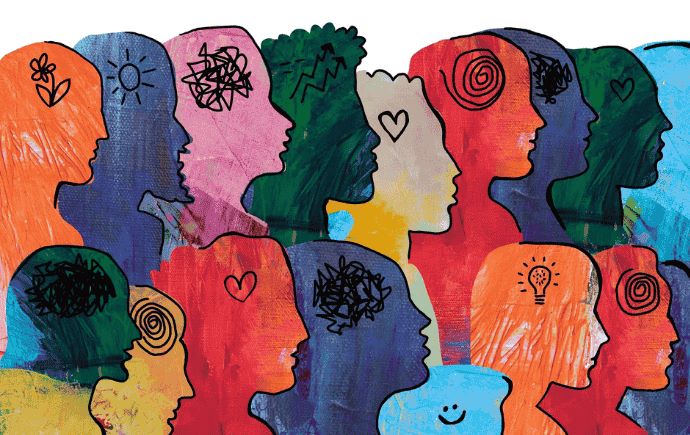
Friends not including you in their exciting weekend plans? Work colleagues being awkward? Teenage kids moping around because, well, because they’re teenagers? There’s only one thing for it – let them.
Yes, you heard that right. Just let them carry on. “‘Let Them’ is about letting people behave in the ways that they will. We’re not in control of them,” says psychologist, broadcaster, speaker and podcaster Sabina Read (Master of Psychology, 2011). “It encourages release of control and detachment from others, and it aims to reduce reactivity and empower choice.”
Avid TikTokers or Insta fans will know all about the philosophy, borne out of Mel Robbins’s Instagram video from 2023 – with 35 million views to date. But this is no mere social media phenomenon. The book Robbins wrote expanding upon the idea, The Let Them Theory, has sold more than seven million copies and spent 15 weeks on the New York Times Bestseller List. It’s been embraced by none other than Oprah Winfrey who went so far as to describe it as a ‘life changer’ on her podcast.
Traditional wisdom
And in the ensuing years, the phrase has spread like wildfire. But the wisdom underpinning it is a fascinating tapestry, with some strands dating back millennia. “This is not new,” Read says. “Mel Robbins doesn’t own it. In fact, one of these philosophies goes back to 500 BC.”
That would be the Buddhist principle that suffering arises from craving: wanting things – and people – to be ‘other’ than they are. There’s also the influence of the Stoics, the Ancient Greek philosophers, who taught that individuals should focus on what they could control (their own thoughts and responses) rather than external events. “Of course this is very similar to ‘Let Them’,” Read says, “and really, ‘Let Them’ is a Stoic mantra.”
Indeed, Read can pinpoint a dozen influences on the ‘Let Them’ philosophy, including the theory of detachment (associated with Alcoholics Anonymous) that suggests healthy detachment allows for emotional boundaries, and that should be reassuring to anyone who’s thinking of trying it out.
“There’s some really rigorous research that underpins the concept,” says Read.

It is powerful but it’s not new. Its wisdom has echoed across thousands and thousands of years of philosophy and psychology.”
- Sabina Read, psychologist, broadcaster, speaker, podcaster (Master of Psychology, 2011)
The benefits of ‘Let Them’
So, what are the benefits of letting other people do what they are going to do anyway, and deciding to get on with living your own life on your own terms? They are not to be sniffed at. “It can reduce stress and anxiety, increase personal agency, support emotional regulation, encourage clearer boundaries in our relationships and promote psychological flexibility and detachment,” says Read.
And at a time of global uncertainty, information overload and political havoc, she also believes that the ‘Let Them’ theory may dilute what she calls “this modern life fatigue”. It can also help to build emotional peace and freedom, and dial down conflict and reactivity with the people we love, the people we work with and the people we date. “We know that people who love the ‘Let Them’ theory say it’s liberating. It feels like a radical permission slip,” she says.
‘Let Them, Let Me’
There are certain situations in everyday life where the philosophy is particularly well suited, such as when people seem resistant to change, in relationships where there’s an ongoing, imbalanced effort, and in low-stakes situations where boundaries are repeatedly crossed – that coworker who always arrives late, say. But what about the limitations? Let’s get the big one out of the way. It is not appropriate in scenarios with harm or abuse. It can also develop an avoidance and suppression of our unexpressed needs. After all, relationships are built on healthy communication – and what relationship is without a certain element of conflict every now and again?
If we are just saying, without thinking, ‘Let Them’, but we are filled with resentment, seething with anger and bubbling on the inside, it can undermine assertiveness.”
- Sabina Read
The ‘Let Them’ theory can even support detachment and estrangement at times when we need connection, and it can promote a one-size-fits-all approach that doesn’t allow for nuance and context. “It can de-emphasise mutual responsibility and just let it all fall on one or other party,” Read says.
Perhaps most poignantly, taking a ‘Let Them’ approach seems to shift all the responsibility of repairing a relationship onto the other person, absolving an individual of any requirement to put some work or effort in. “It can dismiss the power and importance of repair,” says Read, citing the work of relationship psychologists John and Julie Gottman, whose research makes very clear that repair is the number one most influential factor in healthy relationships. The ‘Let Them’ theory can allow us to point the finger at someone else when actually, perhaps, we need to apologise. If only Robbins had titled her book “Let Them, Let Me”, Read wishes, “because that part is so key”.
Because while ‘Let Them’ is not the psychological panacea its most ardent advocates may like to believe, the approach can still be helpful. “Let’s apply it with discernment, not dogma,” says Read. “Let’s not drink the ‘Let Them’ Kool-Aid, but instead know that we can dip in and out of it when it feels right for us.”

Continue your learning with free Full Circle webinars
This article is a write-up of the alumni-exclusive Full Circle webinar, Embracing the Let Them theory for personal growth, led by Monash alumna Sabina Read.
The Full Circle webinar series is professional development with a difference, bringing you fresh perspectives on professional growth, inside and out. To access these and other webinars, and to be notified about new events that are exclusive to Monash alumni, sign-up to the Monash Alumni Portal.