
2023
-
Monash Indonesia welcomes collaboration from the department of Economics
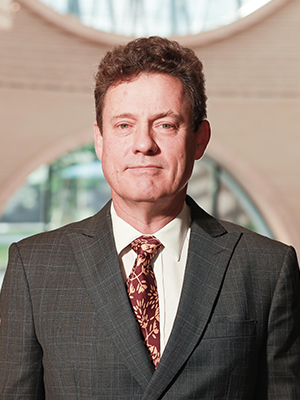 Andrew MacIntyre.
Monash University Indonesia is the first foreign university in that country, and is a postgraduate campus only offering Master’s degrees, PhDs and Executive Education courses.
The campus is based in the southwest of Greater Jakarta, with a faculty of about 25 academic staff and around 250 students. Professor Andrew MacIntyre is the President of Monash University Indonesia. With a background in political science, his research focus has been on Indonesian government politics and policy making.
“The business and wider community in Indonesia have been very supportive. We’re very clear that our core mission is all about making a strong contribution to the further success of Indonesia. In doing so we welcome more collaboration from colleagues at the Monash Business School, and there are many opportunities here for staff,” he said.
Monash Indonesia offers Master’s degrees and programs from different faculties at Monash Australia. These include: Master of Business Innovation, Master of Public Policy and Management, Master of Data Science, Master of Urban Design, Master of Cyber Security Master of Public Health. Next year, the Master of Sustainability and the Master of Marketing and digital communication followed by a Master of smart transportation and infrastructure.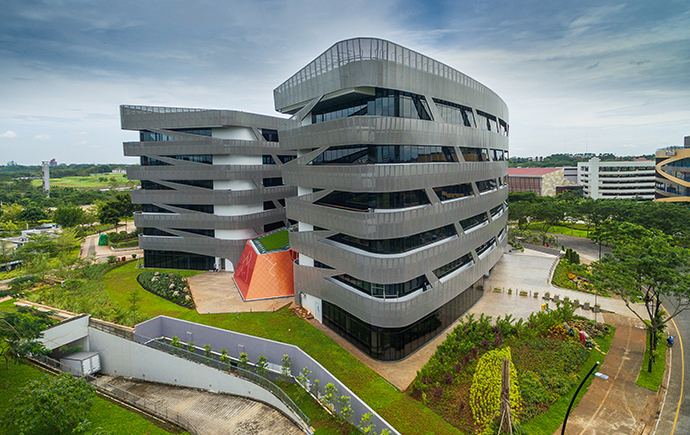 Monash University, Indonesia Campus.
While most students attending Monash University Indonesia have been local, the first international students have started arriving, from China, Taiwan and Qatar.
Both Monash University Indonesia and the Indonesian government hope to increase the number of foreign students. Most staff carry Indonesian passports but have been trained all over the world. There are already some joint units taught with Monash Business School and Monash Indonesia, especially in the Executive Education space. A future aim of the University is for students to start a degree in Indonesia and complete it in Melbourne.
“Too few people know that Indonesia is one of the loveliest countries in the world and there are such extraordinary economic and social opportunities here. The staff who come from overseas understand that their research and teaching can have a much broader impact here,” Prof MacIntyre said.
Monash Indonesia has two main roles: to build a successful and self-sustaining campus that the Monash community can be proud of; and to be a facilitative platform for the Monash community who wish to engage with Indonesia. In order to enhance these roles Monash Indonesia is looking to strengthen ties with Monash Business School and welcomes visits from, and collaborations with, staff from the Department of Economics.
“We hugely welcome interest from any colleagues in Economics whether they have an interest in Indonesia or have a good project or consulting operation. The more researchers from faculties of business and economics who have conferences, projects or collaborations here, the better, whether it links to our campus or not,” Prof MacIntyre said.“That could be research bids, grants or collaborative teaching programs that include Indonesia. Colleagues at Monash Australia would be surprised how good their colleagues are here and how good the students are. There is a huge opportunity for Monash in Indonesia,” he said.
-
In this issue of EcoNews we are delighted to feature three people essential to the smooth running of the department: Department manager Ms Sue Ball; Administrative Officer Ms Angela Kousourakis; and Executive Assistant Ms Elena Scherbak.
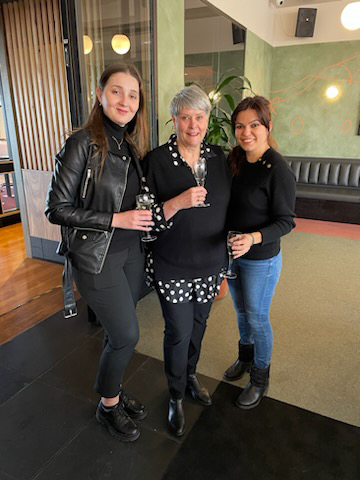 Sue Ball, Angela Kousourakis, and Elena Scherbak.
All three come from very different backgrounds and have been with the department for varying lengths of time. The department is so grateful for their ongoing support and efforts.
Let’s start with Ms Sue Ball. She worked for 22 years as the Student Centre Manager in the Graduate School of Education at the University of Melbourne, before she joined the department of Economics a little over five years ago. But originally Sue was a primary school teacher.
She was born in Ouyen in the Mallee and moved to Glen Waverley when she was six years old. What she most enjoys about working in the department is the variety of work and the people.
What do you like to do outside of work?
“I love going out to eat and trying new places. I am currently learning how to play lawn bowls,” she says.
Tell us something about yourself that you don't think your colleagues know about you.
“I played netball and basketball at a highly competitive level.”
Administrative Officer Angie Kousourakis has been working the longest at the department out of all the professional staff.
She first started working in the department of Information Technology for a couple of years but has been with the department of Economics for the last 11 years.
She has also previously worked in organising major sporting events in Melbourne where she is from.
“I was born in Melbourne at the Royal Women’s Hospital. My parents are Greek, and I grew up in Hughesdale. When I’m not working, I enjoy going out for dinner, drinks, and movies with family and friends. I do Zumba and love going for walks along the beach.”
She most enjoys working with the team and meeting new people.
Executive Assistant Elena Shcherbak is the latest addition to the professional team and has been with the department for 18 months. She was also previously a master’s student at Monash University. Elena moved to Melbourne from Russia in 2018.
“I was born in a small republic of Russia situated in the North Caucasus of Eastern Europe, the Republic of North Ossetia-Alania. When I was 18 years old I moved to Moscow to study and then, finally to Australia,” she says.
“Something I don’t think a lot of people know about me is that I used to do swimming and artistic gymnastics at a competitive level,” she says.
Previously she has worked both in the private sector and in a primary school. She enjoys the variety of work in the department and connecting with new people.
When I’m not working, I love travelling and discovering new places, and meeting new people. My dream is to go to Antarctica and see Emperor penguins,” she says.
-
Record number of fly-outs for successful recruitment
This year’s junior recruitment process took on unprecedented proportions and the department of Economics has recruited three excellent new lecturers. A fourth position will soon be advertised for a senior macro researcher.
Over 300 people applied to the four available positions. 60 applicants were interviewed over zoom and finally 16 researchers flew out to Monash Business School for in-person presentations and interviews.
Associate Professor Michelle Rendall was one of the senior leaders on the recruitment committee. She collaborated with Professor Sascha Becker, Professor Arthur Campbell, Associate Professor Laura Puzzello, Dr Chengsi Wang, and Head of Department Professor Michael Ward.
“It has been so nice to meet people in person, share their excitement and see them face to face. For a university in Australia, I think it is especially important to offer the candidates fly-outs so they can see what great opportunities there are here at Monash and in Melbourne. Many don’t know anything about Melbourne, they just think Australia is far away. It is also a signal that they are really interested if they are willing to go on the long journey”, says A/Prof Rendall.
The candidates would spend a few days at Monash Business School and in Melbourne, presenting their research and speaking to as many colleagues at the department as possible. All staff were then encouraged to send the recruitment committee their comments about each candidate to be taken into consideration.
“We had about 50 pages of feedback from our colleagues and we took those comments very seriously. The feedback was spread very evenly across the candidates, so it still made the decisions tricky. There were a lot of comparisons and discussions. Ultimately, we had to put aside our own personal preferences and really think about which candidates will benefit the department most,” A/Prof Rendall says.
Macro and Public Economics were this year’s top priorities for recruitment, and the level of all candidates who were offered a fly-out was very high.
In the end Maxime Gravouille from the Paris School of Economics specialised in Public Economics and Filip Primek from the University of Minnesota with a focus on Structural Industrial Organization were offered positions as lecturers at the department. They will commence their positions later in the year.
“When you are a top 50 university there is quite a narrow span of recruitment. You are not going to get the very best candidates – they’ll go to the top universities in the world. But you still want to aim very high to reflect your level of research and ambition. I think we have done very well,” she says.
What was the hardest?
“Deciding who to take in the end was very hard. We’ve had some long and tough but also very interesting discussions. Sending negative e-mails to those who didn’t’ get an offer is also hard.”
What was the most fun?
“Meeting all the young people, seeing their excitement and listening to their research.”
What surprised you most?
“The amount of work it takes when you are in a senior recruitment role. Just organising and coordinating when you have that many applicants, interviews and fly-outs is huge.”
Would you do it again?
“As frustrating and tiring as the process is, I probably would do it again. You have great conversations, and you get a lot out of it.”