
2024
-
We're hosting the Econometric Society Australasian Meetings
Monash Business School is thrilled to once again host the Econometric Society Australasian Meeting (ESAM), marking a 20-year interval since we last hosted in 2004. ESAM 2024 will be co-hosted by the Department of Economics and the Department of Econometrics and Business Statistics (EBS), from December 4 – December 6, 2024.
The program chairs are Prof Heather Anderson (EBS), Prof Lata Gangadharan (Economics), Prof Jiti Gao (EBS) and Prof Yves Zenou (Economics).
This year’s conference has drawn an impressive 538 submissions, of which 315 papers appear in the final program, showcasing a rich variety of research and discussions at the forefront of economics and econometrics.
“Organising a conference of this scale is both challenging and rewarding, and it would not be possible without the dedicated efforts of our colleagues across the department,” Prof Lata Gangadharan says.
“Their hard work in reviewing submissions, arranging sessions, and managing logistics has been invaluable in ensuring a smooth and enriching experience for all participants. We are excited to welcome distinguished economists from around the globe next month, who will share their latest research and insights through engaging talks and discussions,” she says.
A special feature of the upcoming ESAM is the session Making Connections and Mentoring, an inaugural initiative dedicated to supporting women registered for the conference. It was funded by the Econometric Society, and organised by Prof Heather Anderson, Prof Lata Gangadharan and A/Prof Solmaz Moslehi.
“This session aims to foster networking and, mentorship, creating a supportive space
for senior and junior women economists to connect, share publication strategies, and discuss pathways for professional growth,” Prof Gangadharan explains.
This year’s Australasian conference welcomes a record number of participants, not only to Australia but especially to Monash Business School.
“I look forward to hearing all the great plenary speakers and participating in interesting sessions. This really solidifies Monash Business School at the forefront of Economics and Econometrics research both globally and in Australia. That is so important,” Prof Yves Zenou says.
Plenary speakers
- Prof Larry Samuelson, First Vice-President, Econometric Society, Yale University
- Prof Siwan Anderson, The University of British Columbia
- Prof Alison Booth, Australian National University
- Prof Xiaohong Chen, Yale University
- A/Prof Ben Golub, Northwestern University
- Prof Oliver Linton, University of Cambridge
- Prof Peter Phillips, Yale University, University of Auckland and Singapore Management University
Program committee members
- Klaus Ackermann
- Natalia Bailey
- Otavio Bartalotti
- Silvio Contessi
- Quoc-Anh Do
- Stefanie Fischer
- David Frazier
- Neal Galpin
- Bonsoo Koo
- Claudio Labanca
- Anke Leroux
- Ole Maneesoonthorn
- Rigissa Megalokonomou
- Solmaz Moslehi
- Bin Peng
- Laura Puzzello
- Birendra Rai
- Michelle Rendall
- Paulo Santos
- Chengsi Wang
- Choon Wang
- Wei Wei
- Benjamin Wong
- Xiaojian Zhao
Local organising committee
- Solmaz Moslehi
- Bin Peng
- Liang Choon Wang
- Wei Wei
More details, including the preliminary program, are available on the ESAM 2024 website.
-
Ross Booth (1952 - 2024)
A Tribute
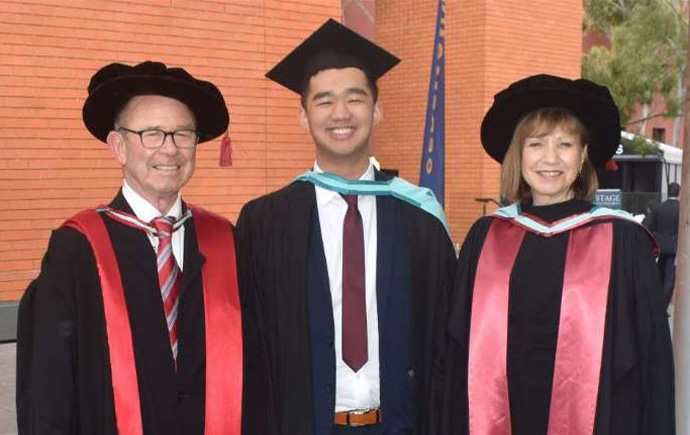
Dr Ross Booth, who passed away suddenly on 3 June 2024, was a mentor and friend to countless colleagues and students in the Monash community. Joining the Department of Economics as a Senior Tutor in 1988, Ross completed a PhD in 2000. After promotion to senior lecturer in 2006, Ross served as Course Director for the BCom and BEc at the Clayton and Malaysia campuses.
Ross sits alongside two other great Monash scholars whose teaching and research blended with a passion for sports, in particular Australian Rules football. Historian Ian Turner delivered the annual Ron Barassi (Senior) Memorial Lecture from 1966 to 1978, developing the concept of the ‘Barassi Line’, which separates the parts of Australia where Australian Rules and Rugby League are the most popular football code. Keith Frearson, who taught the core unit in statistics to thousands of economics students from 1968 to 1987, was No 1 ticket holder for South Melbourne Football Club (before it relocated to Sydney), and was a founder and president of the Monash Football Club (Frearson Oval at the Clayton Campus is named for Keith). Ross developed and taught the very popular unit in Sports Economics, offered for many years in degrees at Caulfield, Clayton, and Peninsula. A champion amateur footballer, Ross progressed to commentating on VFA/VFL matches for ABC TV.
Sports economics exists as a field of study because the business of sport differs in several ways to that of conventional business. Sports teams cannot attempt to become a monopoly supplier, as without at least one competitor there is no product to sell. Teams do not exist to maximise profits, as is assumed in conventional models of microeconomics; rather, owners will spend on player wages to maximise the utility derived from winning matches and trophies. And while most non-sport firms seek to develop products that consumers will find to be of consistent, reliable quality, sports leagues will regulate their labour markets to ensure that the result of any match is uncertain, and thus attractive to spectators – a concept known in sports economics as competitive balance.
Ross’s PhD was a study of competitive balance in Australian Rules – this was his main area of research, although he also published articles and chapters on the organisation of sports leagues, governance and sustainability in sports, the economics of major sports events, and the participation of women in sport in scholarly journals, as well as international sports economics handbooks. As a researcher, Ross had an international reputation, and was an active Vice-President of the North American Association of Sports Economists. For over a decade, Ross blended econometrics and economics in a scholarly partnership with Rob Brooks, co-supervising a large number of honours students, and beginning supervision of two PhD students.
- By Associate Professor Lionel Frost.
-
A recent mentoring workshop for women in academic economics has highlighted the need for better gender balance in the discipline.
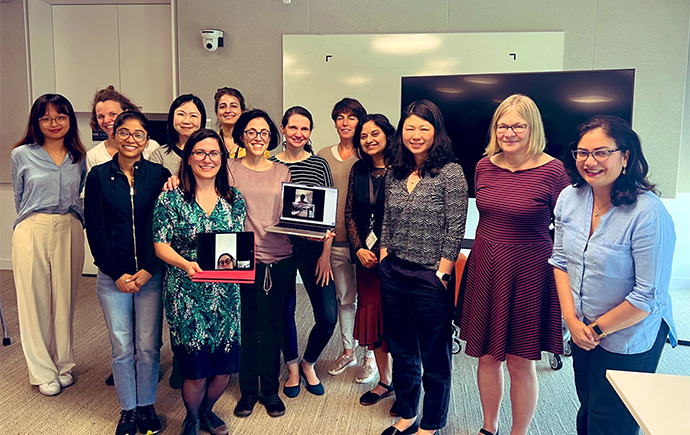
Trying to encourage and retain women in academic economics is a major challenge worldwide. Only one in four economists in Australia is a woman according to the latest statistics from the economics database IDEAS RePEc.
Even fewer women reach top academic positions, with just 13 per cent of economic professors female, according to the Economic Society of Australia. Building networks and support through mentorship programs can help counterbalance this issue.
For a long time, Associate Professor Laura Puzzello avoided the mentoring space, but after becoming a mother herself, and struggling with work life balance, she became more engaged in mentoring and gender-related challenges.
While working on her research on cross-border investment, A/Prof Puzzello came across Professor Anusha Chari from the University of North Carolina at Chapel Hill, who is currently chair of the Committee on the Status of Women in the Economics Profession (CSWEP) - a standing committee of the American Economic Association established in 1971.
The committee’s main remit is to promote and support the advancement of women in the economics profession, through a range of initiatives such as mentoring programs.
With the support of the Dean’s Office, A/Prof Puzzello was able to invite Prof Chari to visit Monash Business School and participate in a December 2023 mentoring lunch and workshop for junior and mid-career women hosted by the Department of Economics.
“Discrimination against women is ingrained in the system,” A/Prof Puzzello said.
She believed “men were running the system the best way for most”, but it was not a model that worked for women.
“Women have different needs; we bond over different interests and on a different schedule and do not necessarily feel comfortable acting strategically even when we should. Events like (the mentoring lunch) are truly helpful to build the support system we need to level the playing field,” she said.
The mentoring lunch was based on American workshops frequently run by CSWEP. Prior to the event, mentees were asked to fill out a questionnaire about their professional and personal support networks, their goals, and priorities.
The group of 12 attendees was then split into two groups to discuss topics such as research, networking, promotion, and work-life balance, with each group facilitated by two senior female researchers.
Prof Lata Gangadaran and Prof Erte Xiao (both Economics) and Prof Heather Anderson (Econometrics and Business Statistics), plus Prof Chari, who all shared their experiences working as a woman in the profession. After roughly 30 minutes the groups swapped mentors, and the lunchtime meeting ended with a Q&A panel.
“We want to improve the climate, so economics becomes more diverse and inclusive. We lose the marketplace for ideas when we don’t hear from different perspectives and voices which has implications for both research and policy making,” A/Prof Puzzello said.
“Mentoring is especially important for women because the networks are so small, and we are trying to build a sense of community. We want a safe space to be supported where you can get advice. It’s also important for senior women to hear the concerns of junior women and support the community to understand what is needed,” Prof Chari said.
A mentoring program run by economists could naturally do randomized controlled trials on itself, she said, with results from a randomized control trial run by CSWEP’s CeMENT workshop show that women who participated in mentoring workshops were more likely to get tenure, stay on in academia, have bigger co-author networks and more publications in top journals.
Monash Business School aims to extend these workshops to run frequently across all departments.
During the final Q&A, several senior female professors regretted not being pushy enough and proactive about their research when they were younger. There was a repeated feeling of isolation.
“I wish I had been braver and more outgoing earlier on in my career. Instead, I was more shy. I wish I had been more confident and not worried about being perceived as too forward” Prof Chari said.
She said the main current challenge for women in economics was the climate they worked within.
“The field is built on a culture of brutally honest debate. For example, seminars can be so combative that oftentimes women are put off and shy away from the discipline itself. Ideally, we would want a climate where you have robust debate but that’s respectful and more welcoming. The change I would most like to see is a culture that is less hostile,” Prof Chari said.
Professor Anusha Chari’s advice for female mentees:
* Think about people who support you and who you can ask for help in your network, both professionally and on a personal level so you can actualise your potential.
* Build a network of mentors, both internally in your department and externally.
* Don’t hesitate to approach other researchers and talk about your research.
* Make a list of people to connect with and invite them for online or in person seminars.
* Before going to a conference, set a goal and be purposeful about what you want to accomplish, for example certain people you want to talk to or potential co-authors you want to meet.
* Be brave and put yourself forward. You are not being too pushy.