
2022
-
Success for PhD placements
Despite the very competitive job market, several PhD students from the Department of Economics have landed great jobs and are looking forward to promising careers.
From 2015 to 2022, 56 PhD students were enrolled in the department, indicating an average of seven per year. More than 95 percent of all PhD students complete their thesis.
So far 20 students have been placed in academic positions, six in government positions, and the remaining with industry jobs.
Although the labour market is increasingly competitive, in the last two years, six PhD graduates obtained academic positions in leading universities including the University of Melbourne, the University of Sydney, RMIT, Curtin University, and Xiamen University in China.
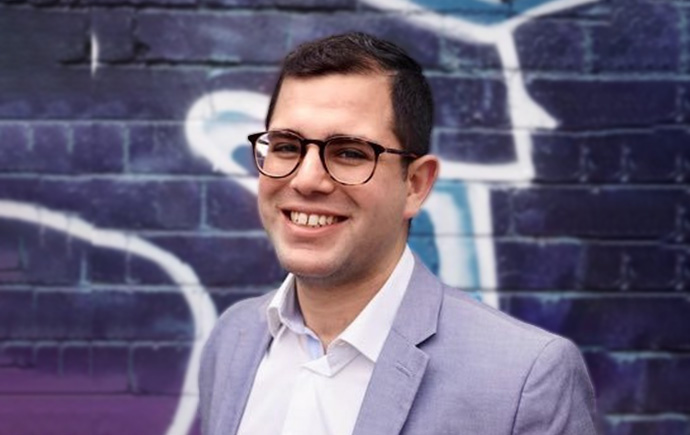 Ben Grodeck.
One of the department PhD graduates, Ben Grodeck, recently obtained a prestigious postdoc position. He will be starting his research fellowship in behavioural and experimental economics at the Max Planck Institute for Evolutionary Biology in Germany and at the University of Exeter, UK.
“I saw the postdoc opportunity on the ESA email list. I thought it would be a really good fit for me, so I applied. A number of factors contributed to getting the postdoc,” he says.
Dr Grodeck’s says his research topics (on cooperation and encouraging altruism towards future generations) aligned with his experience running economic experiments.
“As usual, luck and timing also played a crucial role. I feel very fortunate to have received the offer. I could not be more excited.”
While many of the Department’s PhD students achieved a good outcome in their job search, we observe that many of them found jobs through informal pathways or personal contacts. Some also choose to delay their job market entry and stay on at Monash Business School for a longer period.
PhD placement coordinator Dr Chengsi Wang believes more graduates would benefit from trying a more formal job market process, which is a standard practice in many good US and European departments.
The Department of Economics at Monash will potentially fund their trips for interviews (however, now most interviews have been moved online due to COVID-19).
“The process of going to the US to present yourself in front of numerous interview panels is very stressful but it is also fun. It is an experience you don’t want to waste,” he says.
-
Great success for inter-country inter-campus unit
For the first time, the Department of Economics is running a joint unit with the Monash Malaysia campus.
The unit ‘Southeast Asian economies and global business’ is co-organised by Dr Anupama Sethi from Monash Business School and Dr. Sharon Koh from Monash Malaysia.
The brand-new unit welcomes 71 students in total from both Australia and Malaysia.
The joint workshops are conducted online using a wide range of tools such as google forms, Padlet, AnswerGarden, and break-out rooms for group discussion.
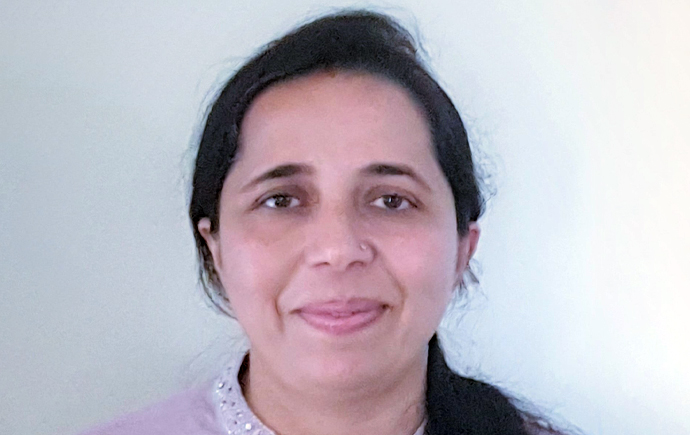 Dr Anupama Sethi.
“We have tried our best to fulfil our learning objectives to keep students engaged and to improve cultural awareness across both campuses,” says Dr Sethi.
“We mix the groups freely, which allows students from both campuses to gain exposure to a diverse range of perspectives and backgrounds.
“This provides students with a more global perspective on current developments in Southeast Asian economies. We are building knowledge from several perspectives and that makes students more motivated.”
Students across both campuses are frequently collaborating in break-out rooms. A lot of thought has gone into the details to help students get to know each other.
“We always use ice breaker questions to get the students talking. It can be something simple like what they like to eat for breakfast or which countries in Asia they have visited,” says Dr Sethi.
“From there we might move on to which Asian country they would like to invest in, and then discuss the economic and business environment in that particular country.”
With the increasing importance of Southeast Asian economies in the global business and economy, Dr Sethi and Dr Koh felt there is a need to learn more about these economies such as Indonesia and Malaysia. The unit is accessible for undergraduate students as well as postgraduate students.
“It has been a new and exciting challenge to develop this unit and organise inter-campus and inter-country joint workshops. Overall, it has been quite rewarding to receive a lot of positive feedback from students on both campuses.
“They really enjoy learning with different students from different countries. The diverse backgrounds and different cultures and countries make the learning experience more enjoyable and unique” she says.
The unit will run again next year, and Dr Sethi has thoroughly enjoyed working with Dr Sharon Koh and Monash Malaysia. She hopes more inter-country inter-campus units will be available for students in the future.
The Department of Economics has been very supportive in the development of the new course and the unit received a teaching and learning grant for developing workshop resources from the department.
Discussions with Dr Jaai Parasnis (Director of Learning and Teaching), Dr Vinod Mishra (Director of Education) and Mr. Kris Nagi (Educational Designer) were also instrumental to the success of the new unit.
-
Economics Student Society Australia (ESSA) - Ten years of fun and careers for students
Elise Rodrigo
The Economics Student Society of Australia (ESSA) started ten years ago at the University of Melbourne and spans across three branches: Monash Clayton, Monash Caulfield and the University of Melbourne.
It is the largest economics society in Australia and aims to connect students with their peers, foster useful soft skills outside of academia and connect students with academics and professionals from industry.
Elise Rodrigo is a fourth-year student of a double degree of Commerce and Arts. She has been a committee member at ESSA Clayton for a year.
“I got involved in clubs as a social and professional development opportunity. Commerce is such a broad degree, and it can be hard to know where you’re going in life.
“As part of a society, it’s easier to make friends. You find people who enjoy what you do in a more niche environment. You also work with career guidance and developing your soft skills such as leadership and communication. Clubs really take you that extra step further,” she says.
ESSA typically organises a mix of social and career building events such as Orientation Week at the start of the year and social events to engage with the member base.

An ESSA career panel.
As part of the education component there are career panels with sponsors and industry sponsors. Every year the society runs a “women in economics” networking night.
“One event we work together across all three branches is a trivia night. And we specifically collaborate with Monash Caulfield on our careers guide. For example, we interviewed alumni to see where they ended up.
“People branched out a lot and went into so many different sectors it was very interesting,” she says.
As an officer on the Publications team of the ESSA committee, Elise Rodrigo works closely with other students who write economics related articles for the club, all of which are published on the website.
She believes it’s a good place for students to start if they’re interested in economics but don’t really know what it is. The articles are readable and engaging for anyone interested in current world issues. ESSA aims to make economics and financial literacy accessible to anyone from any discipline, not just economics.
“I studied accounting in high school and went into a commerce degree, but I had no idea what economics was. I find a lot of people are confused by economics and don’t know how to define it, but my advice is to give it a go.
“You learn a lot of good practical knowledge and it helps you understand the world and the news better,” says Elise.
Next year, when she graduates, she is going into management consulting, something she “fell into” by talking to people at the club while exploring career directions.
She interned in management consulting earlier this year and realised it was a great application of her economics background. The team-building skills from working in clubs helped her adapt to the workplace environment.
“Being part of a committee allowed me to develop my leadership and communication skills. It helped me find my strengths and choose a graduate position that aligned with my interests,” she says.
“We have a great culture in the club and they’re all a friendly bunch. We welcome new members who also want to meet new people. I would say give the committee a go, it’s a great social and career development opportunity,” she says.
-

Dr Jaai Parasnis MBUS awarded Senior Fellowship with Advance Higher Education
Department of Economics Senior Lecturer Dr Jaai Parasnis has been awarded a Senior Fellowship with Advance Higher Education, a professional recognition of contributions to university teaching and learning.
The Senior Fellowship is awarded by a UK based professional accreditation body involving a lengthy application process reflecting on the narrative as an educator, engagement with the profession and the impact as a leader on others. The application is supported by student and peer evaluations.
Currently, Monash has fewer than 20 Senior Fellows. Just two from the Business faculty become Senior fellows in this latest round.
“I am very pleased to receive this formal recognition of my impact upon the practice of colleagues across a range of teaching and learning,” says Dr Parasnis.
“It is another lens to reflect and develop. It’s been a great learning experience for me as a person and educator.”
Facilitated by Monash Education Academy, the fellowship applications involve several steps from Associate Fellow to Principal Fellow.
With each fellowship level the sphere of influence expands. Dr Parasnis was mentored by Michael Bryant from Monash Education Innovation. The Senior Fellowship, which is the second highest level, is focused on leadership.
“During this process I realised I have more of a story to tell. It feeds self-awareness and helps you to be more intentional in what you do,” she says.
“It also brings more perspectives on teaching and education and the more perspectives you have on your practice the more enriching your experience is.”
Currently, Monash has fewer than 20 Senior Fellows and just two from the Business faculty become Senior fellows in this round. In the future, Dr Parasnis hopes to inspire and facilitate others who want to walk the same path as she in earning this recognition. She can herself become a mentor for others.
“Being a part of this Fellowship gives me both access to a professional network across the world and continued professional development.
“It keeps my connection to the people within the faculty who have gone through the same process.
“I’ve also realised how important and rewarding it is to take time to reflect on what we are doing. I hope there will be others in the department interested in doing the same,” she says.