
Staff news
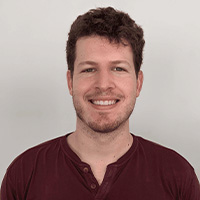
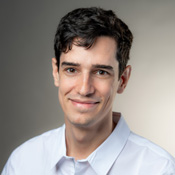 When Dr Santiago Hermo first enrolled at university in Argentina, he imagined a future in computer science. Today, after completing a PhD at Brown University, a postdoctoral fellowship at the University of Oslo and joining Monash University as a lecturer, he is helping to answer some of the biggest questions in labour economics.
Originally from a small city about 90 minutes outside Buenos Aires, Santiago completed his undergraduate degree at the University of Buenos Aires before returning to the city for a master's degree at University of CEMA. Recently, he was delighted to reconnect with his academic roots.
"I'm back at the university where I completed my master's, and they've given me an office there, so I still have strong connections with Argentina and several ongoing research projects," he says.
From computer science to economics
Santiago's path into economics was anything but straightforward. "When I finished high school, I thought I was good with computers, so I enrolled in computer science," he says. "After about six months, I realised I was spending more time reading books about economics, history and public policy than computer science."
A conversation with his father, who works in business, helped point him in a new direction.
"He suggested economics and I like it because it combines mathematics, history and policy. I realised it brought together everything I was interested in,” he says.
As an undergraduate, Santiago was inspired by professor Diego Weisman to pursue an academic career.
"Until then, I didn't really know that academia in economics was a career path. By the time I started my master's degree, I already knew I wanted to pursue a PhD."
That journey eventually led him to Brown University in the United States, where he completed his doctorate under the supervision of professors Jesse Shapiro, Peter Hull, Lorenzo Lagos, and Neil Thakral.
Understanding labour markets
Santiago's research focuses on labour economics, particularly how labour market institutions shape wages and employment outcomes.
"Argentina has some very distinctive labour market institutions, including strong unions and collective bargaining, so that naturally sparked my interest," he explains.
Much of his work examines monopsony power—the ability of employers to influence wages because workers have limited alternative employment options.
"I'm interested in understanding when employers are able to pay lower wages than they otherwise could because they have labour market power, the implications for public policy, and how those dynamics differ across countries and are influenced by local prevailing institutions."
After completing his PhD in 2024, Santiago spent a year as a postdoctoral researcher at the University of Oslo, working with Professor Manudeep Bhuller. During his time in Norway, he also embraced a new pastime.
"I learned cross-country skiing," he says.
His collaboration with Professor Bhuller continues, with Bhuller set to visit Monash later this year.
Why Monash?
Although Australia seemed a long way from home, Santiago says Monash quickly stood out.
"At Brown, our job market coordinator always encouraged us to apply broadly because you never know where the best opportunities are. Monash turned out to be both my strongest academic option and a wonderful place to live,” says Dr Hermo.
Moving to the other side of the world was a significant family decision.
"We talked a lot about being so far from home, but we felt it was worth it. Melbourne is an incredible city, and it's a great place to raise children. At Monash, there's also a strong emphasis on supporting research, with excellent opportunities to collaborate internationally and attend conferences."
Looking ahead
While Santiago plans to deepen his understanding of the Australian labour market, he also remains closely connected to research in Argentina.
One of his newest projects investigates a recent Ponzi scheme that affected an astonishing proportion of a local Argentine community, leading to large and unexpected financial losses.
"We've obtained unique data from the scheme, allowing us to see who invested, who recruited whom, and who ultimately gained or lost money. It's an unprecedented opportunity to study not only the economics of financial fraud but also its effects on labor market outcomes, mental health, families and even political behaviour."
He hopes that, over time, his research will increasingly include Australian labour markets alongside his international work.
"I'm really interested in understanding how the Australian labour market works, its distinct labor market institutions, and I hope to develop more research focused on Australia in the future,” he says.
Outside academia, Santiago enjoys travelling and exploring new places with his family.
"Since arriving in Melbourne we've mostly been busy settling in, but we're looking forward to exploring Australia. It's such a beautiful country, and now we can start discovering more of it."
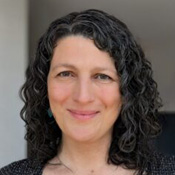 We are delighted to welcome Associate Professor Daniela Scur to the Department of Economics. Daniela joins us from Cornell University, bringing with her an international research career and a strong interest in how organisations, managers and institutions shape economic and social outcomes.
Daniela Scur was born in Brazil into an Italian family and moved to Canada at the age of 14. She grew up in Toronto, where she still has family and friends, and completed both her undergraduate and master’s degrees at the University of Toronto.
So, what made you become an economist?
“Well, I read The Economist as a kid!”
But behind the joke was a genuine desire to understand the world around her. As a young person, Daniela wanted to help address the challenges facing families in developing countries. Having experienced migration herself, she was particularly interested in finding ways to improve the lives and opportunities of families like her own.
“I was a young person who wanted to save the world, and I needed to do economics because it runs the world,” she says.
Early on, Daniela thought working at the World Bank would be the way to do that, and realised that pursuing a PhD would be an important step towards that goal. Her first job after university was at an economics think tank in Toronto, where she worked on the World Management Survey, an experience that would become an important foundation for her later research.
An opportunity then took her to the London School of Economics, where she undertook what today would be described as a pre-doctoral position. She subsequently completed her PhD at the University of Oxford. It was also at Oxford that she met her Australian husband, a PhD student in aerospace engineering.
Their career ambitions eventually took the couple to the United States, where both joined Cornell University. Now the family has made the move to Australia.
Understanding what makes organisations work
Daniela is an organisational economist, with research interests centred on managers, management practices and how the ways organisations are structured affect their performance and their employees.
“I always ask, what about the managers?” she explains.
Her research examines how managers and managerial practices affect outcomes such as productivity, learning and employee wellbeing, depending on the context. Earlier in her career, she focused particularly on productivity and then on labour market outcomes, including how management and organisational structures affect workers' mental health and the movement of employees between firms.
Her research interests have increasingly expanded into the public sector, including several fascinating new areas.
One project examines management in scientific laboratories. She wants to understand how research laboratories are organised and what type of organisational practices lead to better outcomes in this setting. Daniela is interested in understanding what makes some laboratories more successful than others.
Another project looks at management in municipalities and state capacity. A particular challenge, she explains, is that much of the available data tells us what governments should do—based on laws and regulations—rather than what they actually do. Understanding how management works in practice may therefore provide important insights into why some governments and public institutions function more effectively than others.
Daniela is also increasingly interested in artificial intelligence and management. As organisations adopt AI, managers face a new challenge: they have to learn how to manage AI itself. While some firms appear to be using these technologies successfully, others struggle. Daniela and her colleagues are exploring how managerial ability influences workers’ capacity to take advantage of AI, and how AI may in turn affect organisational hierarchies and the nature of managerial work.
So why make the move from the United States to Australia?
“Things are trickier in the US at the moment with funding and visas,” Daniela says. But Australia was not simply a practical alternative. She had long been drawn to the country, even before meeting her Australian husband.
“I have always loved Australia,” she says, noting that Australians and Brazilians share many similarities in terms of their lifestyle and outlook. There is also a sizable Brazilian community in Australia, which has helped make the transition feel familiar.
And why Monash?
“Monash is paradise”, she laughs.
The couple needed to find a location that could accommodate both Daniela's work in economics and her husband's research in aerospace engineering, which narrowed the possibilities to Melbourne or Sydney. Daniela already knew several people at Monash Business School and was impressed by the faculty when she visited.
“When there was an opportunity, it was a no-brainer,” she says. “This place is awesome.”
Discovering Melbourne
Daniela moved to Melbourne in July and has already found the city surprisingly familiar.
“Melbourne feels very much like Toronto—minus the snow,” she says. “It feels very similar in lots of ways, so I already feel at home.”
Outside work, she has plenty of plans for exploring her new home. She wants to visit Melbourne's many beaches, return to the theatre, and get back to rowing, a sport she loves.
Daniela also discovered an appreciation for whisky while living in England and Scotland and is looking forward to visiting her brother-in-law in Tasmania and exploring some of the island's distilleries.
Previous staff news
 2026
View
2026
View

-
Dr Keaton Ellis’s profound interest in behavioural economics and in comparing human behaviour to machines has brought him to Monash Business School in 2026, while his passion for the Rubik’s cube has given him an immediate local community.
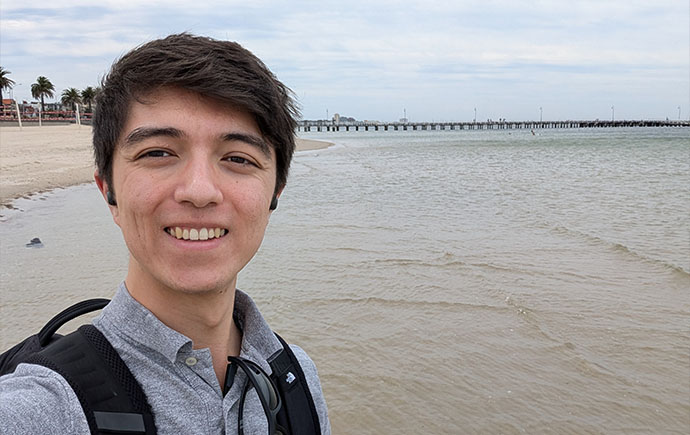
Dr Keaton Ellis.
He said multiple factors drew him to MBUS, including its “excellent behavioural experimental group that let me hit the ground running.”
“I’m already discussing projects with several professors in the department,” Dr Ellis said.
Another reason he chose Monash was because his wife has also joined the school, as a statistician in the department of Econometrics and Business Analytics. “We had spent seven years apart during our PhDs and post docs so to be able to both live and work here together is lovely”, Dr Ellis said.
Both his parents are professors of landscape architecture, and he spent his childhood moving across America, living in places as varied as Illinois, Texas, Michigan, and Maryland. As a kid he loved maths, and later stumbled across economics by chance at university.
“In college I took maths as a major and I didn’t start economics of any kind until my 2nd year of university,” Dr Ellis said.
“Only then did I pick it because I thought it would look better on my resume when I went looking for jobs.”
“I didn’t enjoy many classes until I took behavioural economics, which was the coolest class. It was all about doing maths with people in very interesting situations. It got me motivated outside of class, and I started reading a lot of pop economic books and having fun.”
From economics looking good on your CV to undertaking a PhD is a pretty big leap - how did that come about?
“Well, one day I went to see my professor to ask for some help. He said, ‘You ask good questions in class, have you considered a PhD?’ I told him that my plan was to look for a job in finance so I could go to New York , but a spark was lit inside me and I thought why not do a PhD? I applied to the University of Maryland, where I was at the time, and that professor became my supervisor”, says Dr Ellis.
Tell us more about your PhD and research agenda.
“My PhD and research agenda has broadly focused on bringing a new tool to the behavioural experimental tool kit,” Dr Ellis said.
“I apply machine learning tools to economic models to evaluate predictive power and identify previously overlooked behavioural patterns. This includes work on how data-driven methods compare with traditional economic models in predicting choice behaviour.”
“If economic models perform worse than machine learning models, it’s because there is some regularity in the data that the economic models miss but a machine learning model can capture. So, go figure out what that is and incorporate that into your economic model!”
What do you hope to explore more of in Melbourne, and in research moving forward?
“Life at Monash is lovely with a fantastic group of people. I feel productive and motivated during the week, and then on the weekends we often catch up with the young cohort within the department. Melbourne is a great city. I love Aussie Rules football and there are lots of things to do. But it is far away from family, and that is hard.”
“With regard to research, I’m very excited about a new project I’m working on with Dr Kate Huang which explores the human and AI collaboration space. We are interested to see how different types of communication of your preferences to an AI agent will have it make better or worse decisions on your behalf.”
“We ask how does communication affect the quality of the AI agent, how it handles conflicting pieces of information, and how it resolves the conflict. We have named our working paper Should I State or Should I Show?, and we have some results, but it is still early days.”
When he’s not working, Dr Ellis is something of a Rubik’s cube celebrity. He has been a competitive Rubik’s cube solver since high school, and briefly held the world record before it was again broken by someone else the same day. These days he mostly facilitates events and commentates, for example at the Rubik’s cube world championships in Seattle in 2025.
“Why is the Rubik’s cube still so popular? I think because there is a beautiful simplicity to it while it is still so hard to solve,” Dr Ellis said.
“Once you learn how to solve it there is something satisfying to see everything click into place. There is also a wonderful community of people doing this around the world. You’re not rewarded necessarily for beating anyone else but for beating your own previous best time. People cheer for each other when they achieve their personal best, so people stick around because people are great.”
“During undergrad I went to Hungary as an exchange student, and I posted (that I was visiting) in a Rubik’s cube online community.”
“(Then) people picked me up from the airport, took me out and showed me around and drove me to competitions. Wherever you go there is always a friendly community. ”
Dr Mitchell Watt, who has a background in mathematics and has worked in politics at Parliament House in Canberra, has joined the Department of Economics. Returning to Australia after stints at Harvard and Stanford, Dr Watt always knew he would eventually come back to his home country - and said Monash Business School presented the perfect opportunity sooner than he expected.
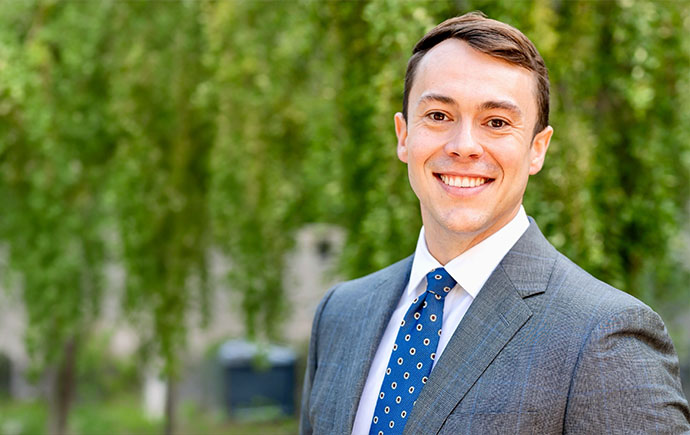
Dr Mitchell Watt.
Dr Watt’s time in politics, along with his childhood growing up in a household that relied at times on government assistance, influenced his decision to study economics and specialise in market design and public policy.
“I grew up in the outer suburbs of Brisbane and completed my undergrad in maths at the University of Queensland,” Dr Watt said.
“I had always been strong in maths at school, so I just fell into it at university. At the same time, I was involved in youth politics, and after graduating, I was lucky to land a job as an advisor and speechwriter for Jim Chalmers, who is now the Treasurer of Australia,” he said.
“He was new to Parliament at the time, and it was often just the two of us working together. It was a fun and fascinating job, but I knew I wanted to pursue postgraduate study.”
“I eventually applied to Harvard's Master in Public Policy program, and while there, I took several PhD classes in Economics. Several professors encouraged me to continue on to a PhD, which ultimately led me to Stanford University.”
Dr Watt is a microeconomic theorist whose research sits at the intersection of market design and public economics. His PhD dissertation examined how governments and other institutions can design price mechanisms to shape outcomes in large markets, especially when concerns about equity and efficiency interact.
“I use theoretical tools to address practical problems in market design and regulation,” Dr Watt said.
“My job market paper explores how governments can design in-kind transfers in settings where recipients can supplement their subsidised allocations in private markets. The main applications are to programs such as social housing and food assistance.”
This sounds like it might be influenced by your time in politics. Are politicians good at listening to the advice of academics?
“In my experience, good politicians engage a great deal with academics — especially those who can communicate their ideas in a way that is practically useful. That is genuinely valued. I think politicians are usually trying to make the best decisions they can to address difficult economic and social problems, but they operate under constraints that we academics don’t often model explicitly. Such as balancing competing interests and operating under constant media scrutiny.”
“I don’t think politics made me too cynical. If anything, it gave me a deeper appreciation for how complex policy-making is and what can be achieved within constraints. In politics, you have the ability to implement change and respond to urgent problems. But I also enjoy stepping back and analysing issues in more depth and over longer time horizons — and that’s what I get to do now,” he says.
And now you are back in Australia, what made you choose Monash?
“I knew I wanted to move back eventually, and as an academic you need to take advantage of any opportunity to come home. I’m very happy to be at Monash for several reasons. The colleagues are great. There are quite a few young faculty members, which creates lots of opportunities for interesting discussions as well as fun outside of work. The senior academics I’ve engaged with have also been very supportive and welcoming, and I am already involved in new projects. I’m also looking forward to teaching and meeting the students.”
“I will be teaching market design, and there aren’t that many courses on that in Australia. In Stanford, it’s one of the most popular economics classes, taught by my PhD adviser, Professor Paul Milgrom. His Nobel prize certainly helps attract students, but I hope I can bring some of that same enthusiasm to students at Monash interested in business and government, as well as those who are more research-inclined.”
You are originally from Queensland - will you be complaining about the weather in Melbourne?
“Well, the beaches here are beautiful, though I might complain a little about how cold the water is. Otherwise, I like Melbourne a lot. When I’m not working, you will find me exploring wineries, bars, and restaurants as well as going to the gym and the beach.”
What in your future with Monash excites you?
“I’m excited to finish some projects from my PhD, which always takes a little longer than anticipated. I’m also working on a new project with Professor Tim Moore on the design of Australia’s tax and transfer system, which is more applied than a lot of my previous projects, so that’s exciting, too. Otherwise, I will be celebrating my engagement party soon, and we’re planning to get a Golden Retriever later this year. It’s all exciting,” says Dr Mitch Watt.
2025
View
-
From Chantilly to Monash: How a French economist found her calling in Melbourne
Growing up in Chantilly, a provincial town just 20 minutes north of Paris, Dr Lisa Botbol never imagined her path would lead her to Melbourne’s Monash Business School.
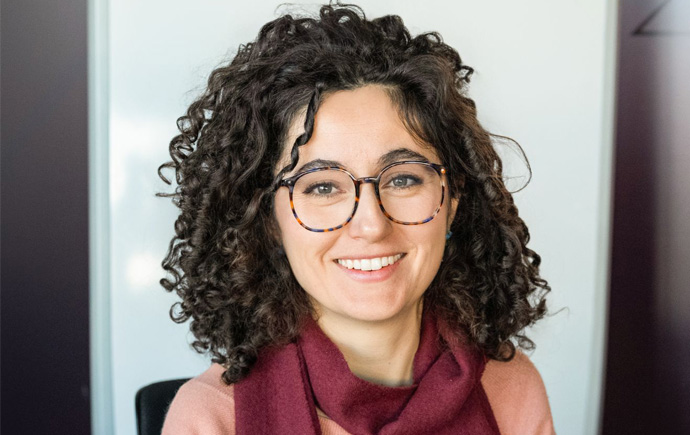
Dr Lisa Botbol.
“Chantilly is not suburban—it’s really provincial. I spent my childhood there before moving to Lyon as an 18-year-old for boarding school in a convent with nuns,” Dr Botbol recalled.
While boarding schools are uncommon in France, Dr Botbol’s school offered a rigorous classes préparatoires (or prépa) program—an intensive two- to three-year course preparing students for France’s elite competitive exams. She pursued the economics track, which combined mathematics, economic thought, and economic history.
“I loved it,” she recalled. “In France, when you’re a good student, you’re told to go to prépa. I was reading classical literature, doing theatre, and even got into acting school—but my parents wanted me to have financial independence, so I chose business.”
That decision led her to HEC Paris, one of Europe’s most prestigious business schools.
“I didn’t really like the classes, and honestly, people didn’t care much about them,” she admitted. “So I took two gap years and spent time in Latin America, working in Costa Rica and at the French Embassy in Lima, and backpacking by myself,” she says.
At the time, she considered moving permanently to Mexico. “But I realised I was missing something analytical. I wanted to study deeply—so I turned to economics.”
In Toulouse, she began a Master’s degree, which she describes as a leap of faith. “It’s good I didn’t know how much maths there was, or I might have lost confidence,” she laughed.
“But I loved it, and it led me to my PhD.”
Her doctoral research focused on matching policies—how scarce resources are assigned to people on waiting lists. “My thesis is three essays on assignment mechanisms. I focused on social housing and school admissions—how people react to different rules, who applies, and how outcomes change.”
Her findings revealed important insights into French housing policy. “Social housing in France isn’t actually favouring disadvantaged people—it’s often assigned on other criteria. Yet, when poorer households do get housing, they benefit most, which increases welfare overall,” she said.
Dr Botbol first examined school admissions, exploring how affirmative action quotas could unintentionally reinforce segregation if not carefully designed. But the lack of transparency and scale of France’s social housing system—where nearly 40 per cent of renters are tenants—drew her focus. “I was lucky to find good data,” she noted.
After completing her PhD in Toulouse, she moved to Australia. “My husband, who’s from New Zealand, got a great job opportunity in Sydney, so I did a postdoc at UNSW before starting my role at Monash.”
Monash, she says, was her top choice. “I didn’t think I’d get it! I had several offers in Europe, but my husband and I had agreed to move to Australia—so when Monash worked out, it felt perfect. The department is so active, and people are incredibly kind and collaborative.”
Now settled in Melbourne, she admits she was initially unsure how it would compare to Sydney. “Melbourne is just getting better and better. I love jazz, and Melbourne’s scene is amazing. Plus, there are so many thrift shops!”
Outside of work, she sings jazz, does Pilates, reads widely, and enjoys time with friends. “Lately, it’s been a lot of wedding planning and moving,” she laughed.
Looking ahead, she’s eager to connect with new collaborators and explore fresh research directions. “I’m looking for data, co-authors, and new projects. I hate working alone and love bouncing ideas off others,” she said.
“And I’d like to start a social basketball team in the department!”
-
From picking fruit to an academic career in Australia
Dr Alexander Haas is from a small town in the Black Forest near the French border of Germany. All of his close family and relatives still live in the same town. He is the first in his family to move away and go to university.
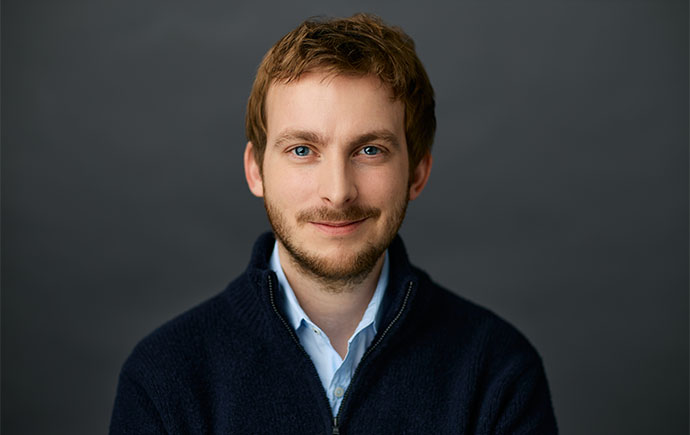
Dr Alexander Haas.
His academic journey wasn’t straightforward. After high school, he took a gap year to work and travel in Australia and New Zealand, acquiring casual work picking capsicums and rockmelons.
“That experience helped me grow a lot. I wasn’t even sure I would go to university because no one in my family had gone but being abroad exposed me to new ideas and people,” Dr Haas says.
He studied Economics at the University of Tübingen in the south of Germany.
“Studying at Tübingen was fascinating because it attracted a very diverse cohort,” he says. “ The program was interdisciplinary, combining politics, history, and languages, which made it even more exciting.”
While he still has broad interests in those fields, they are now more of a side focus, he says.
“I became interested in macroeconomics and monetary policy in the years following the global financial crisis when you could see the economic fallout across Europe and the U.S,” he says.
“I struggled to understand what was really happening, which made me want to study it more deeply. The more you learn, the more you realize how complex and messy things are, which kept driving my curiosity.”
After his undergraduate studies in Tübingen and one year as a visiting student at Harvard, Dr Haas went on to study in Berlin and Oxford, receiving his PhD in Economics from the University of Oxford in August 2024. Throughout his graduate studies, he also spent extended stints at the European Central Bank (ECB), the Bank of England, and the Bank of Spain.
His research focuses on the intersection of macroeconomics, monetary economics, and macro-finances.
“One key question I explore is how financial market frictions affect monetary policy,” Dr Haas says.
“Before the pandemic, I worked on negative interest rates, analysing their different dimensions and unintended consequences. My work often involves small-to-medium scale models that can be used to test policies and run counterfactuals,” he says.
“In two more recent papers, I document and analyse the implications of regional heterogeneity in financial frictions, and I study the effective conduct of monetary policy in a (rapid) tightening cycle, when policymakers raise interest rates to fight inflation but aim to do so without destabilizing the financial sector.”
“A challenge in this field is that there is often a lack of extensive data because financial crises (luckily) don’t happen frequently. That’s why models are so important—they help us understand potential outcomes even when historical data is limited,” says Dr Haas.
Why did you choose Monash and Australia for your first job after the PhD?
“First off, I really enjoyed my flyout and with every meeting the idea of starting my academic career here at Monash felt a bit more exciting,” Dr Haas says.
“Just as important though, my wife, Annik, also studied Economics at an undergraduate and graduate level in Glasgow and at Oxford. She then worked at a hedge fund in London but she always knew she wanted to pursue a PhD so when we were in the lucky position to decide between four or five different options in February last year it was important that there would be opportunities for both of us.”
“She is now starting a PhD at the University of Melbourne so that has worked out really well.”
What do you think of Melbourne?
“My experience in Melbourne has been fantastic so far. The department is great, and everyone has been incredibly supportive. We’re both very excited about everything Australia has to offer,” he says.
“Outside of work, we both love literature and read a lot. It was a challenge to bring all our books to Australia!”
“Some of the authors I’m currently reading include Hanne Ørstavik, Annie Ernaux, Éric Vuillard, and Deborah Levy. We also enjoy exploring the cafes, bars, and restaurants in Melbourne, even if (for now) our focus has shifted a bit with the arrival of our first baby in December last year.”
“Looking ahead, I’m excited to give quite a few seminars in Australia and New Zealand this year. And getting to know and learning more about the work done at the Reserve Bank of Australia (RBA) makes a lot of sense. I also look forward to engaging with students here at Monash. Let’s see, there’s a lot to be done, and I’m excited to be here.”
-
A range of academics, including several from within the Department of Economics, have shared their memories of the late Professor Sisira Jayasuriya, following his passing in February 2025.
“I had known Sisira for a very long time, and a lot could be said about his kindness, warmth, generosity of spirit, his ever-smiling face and laughter. But let me just share with you the following:
Evidence of the kind of person Sisira was in this email I received from him on March 27, 2024 when Sisira was in the middle of a painful round of chemo, with the subject heading Wealth inequality in India. An excerpt from the message:
“…I have read the paper by Piketty et al re inequality in India, and see violent refutations in the Indian press. What do you think?”
And further:
“It’s disgusting to see the flaunting of wealth by the rich with millions lavished on foreign singers and dancers and actors brought for weddings while so many people lack basics… I am in the middle of chemotherapy again… but reading gives me a useful distraction… I am quite detached… though I continue to be interested in the world (and upset and angry with the world too).”
"Our dear colleague Sisira has passed away, and with his departure, we have lost a truly gentle soul. He was always ready for a conversation — whether about work or any other topic that sparked curiosity and joy. Among my fondest memories of Sisira were our long chats in the corridors about Andrea Camilleri’s crime stories featuring Inspector Montalbano, a character he deeply loved. We talked about the exquisite Sicilian meals Montalbano enjoyed, his house by the sea, and his favorite restaurant—one that, if I recall correctly, Sisira had even visited himself while travelling in Sicily.
Sisira had a deep love for people and for life. It was a pleasure to know him, not only as a colleague but also as a person. His kindness and curiosity were inspiring, and will be greatly missed."
“It is with considerable sadness that I learnt of the passing away of Sisira Jayasuria. Even in the relatively short period I knew Sisira, he became a dear friend. I was struck by his kindness and extreme generosity that made him stand out in my eyes. With very progressive views and with genuine empathy for the underprivileged, he was someone we could all look up to and learn from. I was impressed with his vast knowledge of a wide variety of subjects, not just Economics. He was a genuine scholar from whom I learnt a lot.
His contribution to Monash can never be exaggerated. He lifted the profile of CDES by making it truly international. Given his personality, he had a vast network of friends, some in very prominent positions globally, that he used to invite them over to give talks to our students and colleagues. I know of quite a few who visited Monash or spoke in webinars thanks to Sisira. More than that, he stood out in taking Monash to countries such as India, Bangladesh, Sri Lanka and Pakistan by holding conferences there and conducting research projects with researchers based in the developing world. I can’t think of a greater contribution to making Monash truly international. Having just watched the memorial service celebrating the life of Sisira, I became more aware of what an extraordinary person he was. He will be deeply missed.”
“I remember Sisira as a very kind person with a lot of empathy. The first time I met him in 2016 we talked about general development issues, in particular with respect to social networks. How important are social networks in developing countries? Does the informal sector help the economy to grow? He was always calm and very thoughtful. I loved his positivity. Even when he was sick he was still positive and hopeful! Even though I met him late in life he will be a role model for me on how to behave and respect others - and how to be a perfect gentleman!”
“The distinguished economist Professor Sisira Kumara Jayasuriya, Sri Lanka-born and who spent much of his professional life in Australia, passed away on 18 February 2025, after a prolonged battle with cancer. Sisira was a highly respected economist whose contributions to economics, ranging from macroeconomics to microeconomics, were wide and deep. Throughout his professional career, he maintained an abiding interest in studying the Sri Lankan economy and participating in the country’s economic policy debate.
Sisira was born 22 June 1946 into a middle-class academic family in Bandaragama. His parents were both schoolteachers. He was the second child in the family, with an older sister and a younger sister. All three siblings graduated from the leading university in the country, the University of Ceylon (later renamed Peradeniya University).
He was an old boy of Ananda College, just before the primary language of instruction in higher education in Sri Lanka was changed from English to Sinhala (and Tamil). He entered the University of Ceylon in 1965 as a student in the science stream but later decided to switch to social sciences to study economics, majoring in statistics—an extremely rare and bold decision at that university, where disciplines were traditionally rigid.
Sisira was a political activist from his high school days. He was an active member of the student wing of the Lanka Sama Samaja Party (LSSP). In 1968, when the LSSP leadership entered mainstream politics, Sisira joined a breakaway group of young LSSPers who formed the Trotskyist Revolutionary Communist League (RCL) (subsequently renamed the Socialist Equality Party), affiliated with the International Committee of the Fourth International. During his university days (and perhaps beyond), he was the chief editor of the party’s weekly newspaper, Kamkaru Mawatha.
Powerful and passionate speaker
Sisira was a powerful and passionate speaker for the party, with a remarkable ability to directly quote Marx, Lenin, and Trotsky to debunk his political opponents. Those of us who were at the University of Peradeniya during his time have vivid memories of the speeches he delivered under the famous ‘strike tree,’ using evocative and stirring language tinged with humour, complemented by sharp, deliberate hand movements to punctuate key points.
After graduating in 1970 and spending short spells as an assistant lecturer in the same department and at the Rubber Research Institute, Sisira came to the Australian National University (ANU) in 1972 for post-graduate studies on Colombo Plan. He first enrolled in the Master’s program at the Development Studies Centre, Research School of Pacific Studies (RSPS). Upon completing his Master’s in 1973, Sisira was awarded an ANU scholarship for doctoral research. His doctoral thesis focused on the long-term investment decisions of rubber smallholders in Sri Lanka, set against the backdrop of emerging analytical literature on the investment behaviour of farmers engaged in perennial cash crops.
In 1978, he joined the International Rice Research Institute (IRRI) in Los Baños, Philippines, as a Post-doctoral Fellow and was promoted to scientist/economist in 1980. After a five-year tenure at IRRI, he returned to the ANU in 1982 as a Research Fellow in the economics division of RSPS. Subsequently, he taught at La Trobe University (as Senior Lecturer, and then Reader) and at the University of Melbourne (as Associate Professor and Director of the Centre of Asian Studies), before joining the Department of Economics at Monash University as a Professor in 2010. At Monash, he played a pivotal role in founding and shaping the Centre for Development Economics and Sustainability (CDES) into a leading centre for cutting-edge interdisciplinary development research.
Quintessential applied economist
Sisira was the quintessential applied economist, with a firm grounding in theory and analytical techniques. His research and policy advisory activities spanned trade, macroeconomics, environmental issues, and food policy in developing countries, with a multidisciplinary focus. His publications included six books and over 50 papers in multi-authored volumes and scholarly journals. Sisira regularly advised governments and international organisations on development policy, offering real-world insights. He supervised and mentored many doctoral students from various countries, including Australia, Sri Lanka, Thailand, Indonesia, and Vietnam.
He was a frequent visitor to the Institute of Policy Studies in Colombo during its formative years. He worked closely with Dr. Saman Kelegama (Executive Director) and Dr. David Dunham (Resident Economist funded by the Dutch government) in developing the research profile and capabilities of the institute, helping it become a major multidisciplinary research centre in the South Asian region.
During the first Chandrika Kumaratunga regime (1994–1999), he worked closely with Dr. Lal Jayawardene, the main economic advisor to the Government. He drafted the Economic Policy Statement of the Government of Sri Lanka (13 September 1994) when the new Government came into power, though he was later disappointed by the sharp deviation of practice from the declared policy.
During his tenure at La Trobe University, he sponsored several students from Sri Lanka to undertake doctoral research under a major research project on Land Degradation in Sri Lanka (1992–2000), in collaboration with the Ministry of Plantation Industries, Sri Lanka. He co-authored a major book on macroeconomic policy in Sri Lanka and several papers on key economic issues of the country, which have now become an integral part of its knowledge base.
A ‘man of conviction’, he was never aggressive or incoherent, even in heated arguments; reasoned calmness was a hallmark of his character as a public intellectual. He had a vast coterie of friends across continents who appreciated this gentle soul. As much as we mourn his passing, we will also celebrate the opportunities we had to know and associate with him.
Sisira is survived by his wife, Sreeni, and their daughter, Tanya.”
By Professor Prema-chandra Athukorala from Australian National University and Dr Sarath Rajapatirana, Advocata Institute, Colombo.
2024
View
-
 Meet Dr Kate Huang, a recent addition to our department who joins us from China
Dr Kate Huang has only been in Melbourne for a month, but despite growing up in China, she is no newbie to Australia.
Originally from Chongqing in southwest China, she moved to Shandong in northern China for university. While there, she had the opportunity to transfer to the University of Queensland (UQ).
“I started at UQ as a second-year student. It was challenging at first—moving to a different country, adapting to English as my second language, and getting used to the Aussie accent. But overall, I really enjoyed the program, and afterward, I decided to pursue an honors year,” Dr Huang recalls.
“During that time, I met some great advisors who encouraged me to pursue a PhD in North America,” she says, adding she eventually chose Caltech in Southern California for her doctoral studies.
“That was a whole new level of challenge—Caltech has a very special PhD program, with a small cohort of about 5-6 students per year, focused heavily on training in micro-theory, political economy and empirics,” Dr Huang says.
“It was an enriching experience, and everyone in my cohort was very supportive of each other, despite having diverse research interests. I was fortunate to meet my advisor (and now coauthor), Omer Tamuz, a mathematician and economist who taught me many things about math, research, and life.”
Why did you choose economics to start with?
“To be honest, it wasn’t my first choice. But perhaps it was meant to be. In high school, I was on the science track and initially wanted to become a medical doctor due to family influence. When I was applying to university, economics was actually a backup option suggested by my mother, so I could understand things like the stock market. Ironically, none of my research involves the stock market. I mostly work on microeconomic theory, which is a field of economics that is more abstract,” says Dr Huang.
Dr Huang completed her PhD about three months ago, with her thesis focusing on rational social learning theory, which builds on the idea that people often infer information and learn by observing what others do.
A simple example is when you’re choosing a restaurant—if you see a lot of people lining up, you think it must be good, and that influences your decision. This is also known as herd behaviour.
“In my research, I formalise this behaviour mathematically and draw conclusions about how social learning works in different settings. For example, what happens when the quality of a restaurant changes over time? How does this affect people’s behaviour, and how much information can we learn in such a dynamic environment? What if people have the opportunity to interact repeatedly? I use mathematical models to answer these types of questions, which then allow me to prove theorems that offer economic insights, as well as doing fun math. Aside from theory work, I also have secondary research interests in applying theory in both experimental and empirical settings.”
As an example of how her theoretical work applies to the real world, she looked at empirical data to test some of these theories. One case involves lung transplants, specifically how social learning might influence decisions about organ rejection.
“Sometimes, if people start rejecting an organ, others may infer from these rejections that something is wrong with it, even when it’s not the case, leading them to reject it as well. This is a negative effect of social learning. We’re working on designing algorithms to improve efficiency in this market and reduce waste, especially since the demand for organs far exceeds the supply, yet people are still saying no to certain transplants and organs are wasted because of this behaviour.”
Once her PhD was complete, Dr Huang was keen to return to Australia with her partner. While she had received an offer in the US, they both wanted to come back here - and she chose Monash because she really liked the environment.
“People are very friendly, and I’m also interested in the work of Prof. Arthur Campbell and Prof Yves Zenou, two researchers at Monash whose work aligns with my interests,” she says.
What do you like to do when you’re not working?
“Anything outdoors really. I love being in nature. I like to trail run with my partner and we camp and hike and spend time with friends outdoors. In Southern California we did some ultra-marathons, running for 7 to 8 hours in places where it is very dry. Here in Australia, it’s completely different—there are rainforests, birds, wallabies, and kangaroos. We’ve gone to Lysterfield Park a few times. It’s beautiful.”
What do you hope to achieve in the near future?
“I’m really excited to start working on new projects with different people here in Australia. Social learning, which is my field, isn’t as developed here yet, and I want to help Australia become a stronghold for this kind of research. I’d love to be part of that movement.”
“In terms of teaching, I want to help students, especially those considering studying abroad. I had great mentors who prepared me well, and I want to contribute by preparing honours students who are interested in pursuing higher studies, whether in the US or elsewhere. I’d like to help raise the competitive standard for honours students if they choose to go overseas.”
“As for life, I’m here for the long haul! I’m looking forward to being part of the academic and research community in Australia, while also enjoying everything Melbourne has to offer.”
A year of huge changes for Dr Filip Premik
 Dr Filip Premik.
In the past few months, so much has changed for Filip Premik. He completed his dissertation, became Dr Filip Premik, married his girlfriend in the US and moved to Melbourne to take up the position of lecturer at Monash Business School’s Department of Economics. Now he’s ready to get to work.
“When you change jobs and move to a new country there is a lot of idle time so now it’s time for me to really push workwise. I’ve talked to several people about collaborations and I hope to make some discoveries,” Dr Premik said.
Dr Premik did both his undergraduate and Master’s degrees at the Warsaw School of Economics in Poland. He worked for the National Bank of Poland for a few years, before an opportunity to pursue a PhD program in the US presented itself.
“I was looking for an adventure so I thought why not? The University of Minnesota is known for macroeconomics but despite working for the Polish Central bank for a few years, my research rarely concentrates around typical macro questions. But there is a small but vibrant Industrial Organisation community in Minnesota and I was very happy to be part of it.”
His research focus is on industrial organisation, applied micro economics and empirical auctions, and his job market paper focused on switching costs in an environment where buyers repeatedly purchased goods that had the same purpose but could be differentiated; specifically, city buses.
Whenever bus companies need to replace buses, they never replace all of them at once because it’s too expensive and risky. The public bus operators are also not able to pick just any bus but need to organise auctions.
These auctions may be organised in a way that allows public bus operators to favour one potential bidder over others. So Dr Premik’s paper tracks the degree of favouritism and shows that it responds to changes in the bus fleets, with the brands that are already in the fleet those that the operators prefer in this discriminating auction. This suggests that there is a “switching cost: associated with a new brand.
Dr Premik uses favouritism to quantify the switching cost and suggests how to change the environment to improve the welfare of the publicly funded companies.
How did you come up with the idea of public city buses?
“Public transport is kind of my hobby! I always liked buses and when I was young, I was chasing buses around Warsaw. At some point I had been on almost every single bus in Warsaw and ridden at least one stop. But then they renewed their fleet and I was too old to keep doing it. When I was looking for a good topic for my PhD dissertation in Minnesota I thought maybe I can use this. And when I managed to get the data for the auctions it just evolved.”
Why did you choose to come to Monash Business School?
“During the job market period I was applying everywhere. It’s hard to know what places are like just from reading university websites. Monash was the only Australian university I knew about beforehand. When I came here for the interview, I really liked it. The research environment is very good. I know it’s far away but for me Minnesota was already far away from Warsaw so this is fine. I’m enjoying it so far.”
“My wife is also an economist and she got a post as an associate professor in Canada. We met in math camp at the start of our PhDs, and even shared the same PhD advisor. A very romantic story! Unfortunately, we got split up in the job market, but we thought we needed to give it a chance. I hope she will one day come here as there are quite a few universities to choose from in Melbourne.”
You’ve only been here for about two months but what do you make of Melbourne so far?
“Compared to Minneapolis, Melbourne is very different and doesn’t share many undesired specifics which I truly wanted to avoid. [FP1] Instead, there’s interesting nature, great food and finally the coffee is also good!”
What do you look forward to in Melbourne - have you been on the buses?
“Yes of course! From my new apartment in Caulfield, I will be able to see the station so maybe I will become a train spotter. I also like to go out and explore so I hope to do some weekend trips and discover the wildlife.”
-
Growing up in a small town outside Nantes in western France, Dr Maxime Gravoueille was one the first in his family to attend university.
His decision to continue on to complete a PhD and pursue an academic career was something his family wholeheartedly supported.
“Because I do public finance, my family keeps asking if I can do their taxes for them, which I can’t. But they sort of understand what I do. And they always encouraged me to make my own choices and do what I want so I never experienced any backlash.”
Dr Gravoueille completed his first two undergraduate years in Nantes and then moved to Paris for post graduate studies and his PhD at the Paris School of Economics.
He has been doing Economics since high school and it is the combination of maths and social science that suits him.
As a public economist, his research is at the intersection of labour economics and public economics.
“I’m interested in government interventions in the economy, and what shapes labour market outcomes. I study how taxes and benefits affect the labour market outcomes of individuals,” he explains.
“For example if you are subsidised for work, will you in fact work more or less and how does that affect wages? It doesn’t have to be taxes and benefits but any kind of government intervention such as regulations and the minimum wage. I’m an applied economist so I try to quantify this using a lot of data,” he says.
“Initially I was doing more macro monetary economics. One of my master's thesis was about growth. But somehow I didn’t really relate to the content, so I shifted to public economics, redistribution and taxation.
“This can be linked to other things like labour economics and education so I could see where I was going and it made sense. Yet during my PhD I shifted towards macroeconomics again doing public finance and public economics, because now I am able to think about models and understand why they are abstract and what they are capturing.”
You completed your PhD in 2023 and the job market is very competitive. Why did you choose Monash Business School?
“I had some other fantastic opportunities but I partly chose Monash because the job market fly-out was really great. I’ve never lived out of France but I really felt I could live here. I loved it and so does my wife so it has been quite a smooth transition for us. Month after month we develop our life here and we still love Melbourne. It’s a fantastic city and I would even say the food is better than in France because there is so much diversity and the Asian food is really good,” he says.
“It reminds me of London in the sense that it is more spread out and has all the different little boroughs with their unique character. Paris is lovely but so dense and overcrowded. “
What do you like to do when you are not working?
“I like reading, I’m reading Pride and Prejudice by Jane Austen right now and it’s a great book. I can’t wait to get home every night to keep reading. I also like to watch romantic comedies. “Notting Hill” is a favourite that I think has aged well. And I play video games with my younger brother in France. It is a good opportunity for us to connect online and stay in touch.”
What are you hoping to explore in the near future research wise? “I want to pursue my research agenda. I have a good view of what I want to do and now I have to make it work. I have a few projects I am keen to start. My advisors and co-authors are very good and supportive.
“They have taught me what it is to be a good researcher and how often you’re rejected so I don’t think I’m naive about the rejection. I always knew it was going to be tough.
“During the Melbourne winter I go back to Europe to five or six conferences and to see my research team back in Paris so that is very exciting,” he says.
A year of huge changes for Dr Filip Premik
Dr Filip Premik.In the past few months, so much has changed for Filip Premik. He completed his dissertation, became Dr Filip Premik, married his girlfriend in the US and moved to Melbourne to take up the position of lecturer at Monash Business School’s Department of Economics. Now he’s ready to get to work.
“When you change jobs and move to a new country there is a lot of idle time so now it’s time for me to really push workwise. I’ve talked to several people about collaborations and I hope to make some discoveries,” Dr Premik said.
Dr Premik did both his undergraduate and Master’s degrees at the Warsaw School of Economics in Poland. He worked for the National Bank of Poland for a few years, before an opportunity to pursue a PhD program in the US presented itself.
“I was looking for an adventure so I thought why not? The University of Minnesota is known for macroeconomics but despite working for the Polish Central bank for a few years, my research rarely concentrates around typical macro questions. But there is a small but vibrant Industrial Organisation community in Minnesota and I was very happy to be part of it.”
His research focus is on industrial organisation, applied micro economics and empirical auctions, and his job market paper focused on switching costs in an environment where buyers repeatedly purchased goods that had the same purpose but could be differentiated; specifically, city buses.
Whenever bus companies need to replace buses, they never replace all of them at once because it’s too expensive and risky. The public bus operators are also not able to pick just any bus but need to organise auctions.
These auctions may be organised in a way that allows public bus operators to favour one potential bidder over others. So Dr Premik’s paper tracks the degree of favouritism and shows that it responds to changes in the bus fleets, with the brands that are already in the fleet those that the operators prefer in this discriminating auction. This suggests that there is a “switching cost: associated with a new brand.
Dr Premik uses favouritism to quantify the switching cost and suggests how to change the environment to improve the welfare of the publicly funded companies.
How did you come up with the idea of public city buses?
“Public transport is kind of my hobby! I always liked buses and when I was young, I was chasing buses around Warsaw. At some point I had been on almost every single bus in Warsaw and ridden at least one stop. But then they renewed their fleet and I was too old to keep doing it. When I was looking for a good topic for my PhD dissertation in Minnesota I thought maybe I can use this. And when I managed to get the data for the auctions it just evolved.”
Why did you choose to come to Monash Business School?
“During the job market period I was applying everywhere. It’s hard to know what places are like just from reading university websites. Monash was the only Australian university I knew about beforehand. When I came here for the interview, I really liked it. The research environment is very good. I know it’s far away but for me Minnesota was already far away from Warsaw so this is fine. I’m enjoying it so far.”
“My wife is also an economist and she got a post as an associate professor in Canada. We met in math camp at the start of our PhDs, and even shared the same PhD advisor. A very romantic story! Unfortunately, we got split up in the job market, but we thought we needed to give it a chance. I hope she will one day come here as there are quite a few universities to choose from in Melbourne.”
You’ve only been here for about two months but what do you make of Melbourne so far?
“Compared to Minneapolis, Melbourne is very different and doesn’t share many undesired specifics which I truly wanted to avoid. [FP1] Instead, there’s interesting nature, great food and finally the coffee is also good!”
What do you look forward to in Melbourne - have you been on the buses?
“Yes of course! From my new apartment in Caulfield, I will be able to see the station so maybe I will become a train spotter. I also like to go out and explore so I hope to do some weekend trips and discover the wildlife.”
-
Meet Brazilian-born Dr Ricardo Dahis, a recent addition to the Department of Economics, who shares details on his academic journey, what brought him to Australia and what he loves about Melbourne.
Brazilian-born and raised, Dr Ricardo Dahis undertook his entire undergraduate and master’s degrees at Pontifical Catholic University of Rio de Janeiro. After gaining a PhD in America, he returned to a position at his Alma Mater in Rio for two years. Despite his strong connection to Brazil, Dr Dahis was happy to accept an offer from Monash Business School’s Department of Economics.
“My wife and I had a good month of existential contemplation on whether we should move all the way round the world,” Dr Dahis said.
“In the end we thought it was a fantastic opportunity. The department is clearly growing with plenty of resources and a high energy level. Everyone wants to move in the direction of more and better research and teaching. People are friendly and relaxed,” he said.
“The conditions are very attractive. Personally, we have always loved Australia. The culture and society seem to be a good fit for us. Brazil is wonderful but it is also complicated,” he added.
Dr Dahis has studied Economics his entire academic career, but there was a time when he was ready to switch paths completely.
“During my master’s studies I fell in love with psychology and neuroscience, and I applied for a PhD in psychology,” he said. “I probably would have done it if I had been accepted but life happens in strange ways.”
“In Economics you see how wide the scope is and the power of the framework. We study constrained decision-making and how constrained decision-makers interact. That’s quite a broad definition and within that you can fit policy, government, history, environmental conservation, and of course psychology!”
In 2015 he started his PhD in Economics at Northwestern University in Chicago. Dr Dahis’ academic work focuses on political economy, environmental economics and to some extent development economics. Within those fields he studies governance, bureaucracy and environmental conservation or climate change mitigation.
“One paper investigates decentralisation in Brazil, how governments obstruct it and whether this leads to more, or less development on a municipal level. I found that government splits had positive effects on education provision and on general economic activity in the new decentralized areas while not having any detectable negative effects in the rest of the country. So, even in the presence of corruption or favoritism, this is consistent with efficiency gains,” he said.
“Now I am excited about an environmental paper about enforcement and spill over effects in environmental protection,” Dr Dahis said, explaining: “When the Brazilian government decided to crack down on deforestation in the early 2000s, by hitting farmers with fines for deforestation, there was not only a direct effect on the farmers who were fined, but also an effect on their neighbours.
“This is what we call a spillover and this extra effect was stronger in the early years and weaker in the later years of the policy.”
“In the early years the government as a whole was dedicated to curbing deforestation but around 2011, the implementation weakened with for example pardoning of deforestation by farmers.
“By then the spillover effects lessened as farmers started to update their beliefs that they might not be punished. Deforestation and agriculture are major parts of Brazil’s carbon emissions, and we want the Amazon standing. We have already lost a fifth of it since the 1970s,” Dr Dahis said..
Dr Dahis joined Monash in August 2023, and he now feels settled in Melbourne, walking his dog most days in Fawkner Park or the Botanic Gardens.
“It’s interesting that Melbourne isn’t exactly a touristy place with that many obvious attractions but it’s so good to live here,” he said.
“Everything is easy and pleasant. I love the green spaces, it's safe, the traffic isn’t crazy, and people are relaxed. I love it.”
“When I’m not working, I explore the city and I’ve started making espressos. I enjoy cooking and hosting people at home. I love music. I play the guitar, some piano, and sing. In the future I look forward to going out to listen to more music here in Melbourne,” he said.
A year of huge changes for Dr Filip Premik
Dr Filip Premik.In the past few months, so much has changed for Filip Premik. He completed his dissertation, became Dr Filip Premik, married his girlfriend in the US and moved to Melbourne to take up the position of lecturer at Monash Business School’s Department of Economics. Now he’s ready to get to work.
“When you change jobs and move to a new country there is a lot of idle time so now it’s time for me to really push workwise. I’ve talked to several people about collaborations and I hope to make some discoveries,” Dr Premik said.
Dr Premik did both his undergraduate and Master’s degrees at the Warsaw School of Economics in Poland. He worked for the National Bank of Poland for a few years, before an opportunity to pursue a PhD program in the US presented itself.
“I was looking for an adventure so I thought why not? The University of Minnesota is known for macroeconomics but despite working for the Polish Central bank for a few years, my research rarely concentrates around typical macro questions. But there is a small but vibrant Industrial Organisation community in Minnesota and I was very happy to be part of it.”
His research focus is on industrial organisation, applied micro economics and empirical auctions, and his job market paper focused on switching costs in an environment where buyers repeatedly purchased goods that had the same purpose but could be differentiated; specifically, city buses.
Whenever bus companies need to replace buses, they never replace all of them at once because it’s too expensive and risky. The public bus operators are also not able to pick just any bus but need to organise auctions.
These auctions may be organised in a way that allows public bus operators to favour one potential bidder over others. So Dr Premik’s paper tracks the degree of favouritism and shows that it responds to changes in the bus fleets, with the brands that are already in the fleet those that the operators prefer in this discriminating auction. This suggests that there is a “switching cost: associated with a new brand.
Dr Premik uses favouritism to quantify the switching cost and suggests how to change the environment to improve the welfare of the publicly funded companies.
How did you come up with the idea of public city buses?
“Public transport is kind of my hobby! I always liked buses and when I was young, I was chasing buses around Warsaw. At some point I had been on almost every single bus in Warsaw and ridden at least one stop. But then they renewed their fleet and I was too old to keep doing it. When I was looking for a good topic for my PhD dissertation in Minnesota I thought maybe I can use this. And when I managed to get the data for the auctions it just evolved.”
Why did you choose to come to Monash Business School?
“During the job market period I was applying everywhere. It’s hard to know what places are like just from reading university websites. Monash was the only Australian university I knew about beforehand. When I came here for the interview, I really liked it. The research environment is very good. I know it’s far away but for me Minnesota was already far away from Warsaw so this is fine. I’m enjoying it so far.”
“My wife is also an economist and she got a post as an associate professor in Canada. We met in math camp at the start of our PhDs, and even shared the same PhD advisor. A very romantic story! Unfortunately, we got split up in the job market, but we thought we needed to give it a chance. I hope she will one day come here as there are quite a few universities to choose from in Melbourne.”
You’ve only been here for about two months but what do you make of Melbourne so far?
“Compared to Minneapolis, Melbourne is very different and doesn’t share many undesired specifics which I truly wanted to avoid. [FP1] Instead, there’s interesting nature, great food and finally the coffee is also good!”
What do you look forward to in Melbourne - have you been on the buses?
“Yes of course! From my new apartment in Caulfield, I will be able to see the station so maybe I will become a train spotter. I also like to go out and explore so I hope to do some weekend trips and discover the wildlife.”
2023
View
-
From small-town Canada via Princeton to Monash
 Dr Dan McGee.
Dr Dan McGee grew up in a small town in Canada not far from Niagara Falls. After a few years of working in industry in Toronto he was accepted into the doctoral program at Princeton University. He landed in Melbourne just over two months ago to become a research fellow in the department of Economics.
Dr McGee’s research spans economic theory, behavioural economics and political economy.
His PhD thesis focuses on applying tools of game theory to try to understand discrimination, prejudices and stereotyping.
“The underlying idea is that although discrimination is morally wrong, it can yield economic benefits for discriminators, so in that sense prejudices and stereotyping are not irrational or accidental. If we understand how this process works then we can change incentives to discourage discrimination,” Dr McGee said.
“For example, one question is not only ‘What do I think these group labels mean?’ but ‘What do I think other people think of me?’ Even when the beliefs are not objectively true, and even when the stereotyped group does not believe the stereotypes to be true, they can still have an effect because the discriminators believe in them and will act on them.
“Then the stereotyped group will respond, anticipating this discriminatory treatment. So we understand how stereotypes can be harmful without having to rely on assuming the stereotyped group is less capable or that they become convinced that they’re less capable than the rest of society. We see this sort of behaviour everywhere, especially where people are competing for desirable rewards, like university admissions or top jobs.”
Why are you interested in this topic?
“I think these topics are of general importance to society, understanding why discrimination and prejudice is so persistent. We should wonder why people hold onto stereotypes in the face of contradictory evidence.
“In our classic understanding, economic incentives should drive out bad information, but what happens when bad information is beneficial to some people? So I bring these interests together with formal modelling tools from game theory to explain why people behave this way.
“It flips the classical explanation, rather than driving out bad information, competition can make it persistent. A lot of these ideas have been floating around in the social sciences, but have not been explored with these economic tools, so I try to formalise these intuitions in a useful framework.”
Why did you come to Monash?
“I learned about the research reputation of the department during my PhD and recognised it as an active and productive environment. It’s ambitious. Also, there’s a notable focus on behavioural economics, there are many people working on economic theory, political economics, and people with interests in group inequality, stereotyping, and segregation, so (when considering) my offers, Monash looked attractive.”
“The position I was offered gave me more freedom to pursue my own research interests, rather than only being someone’s research assistant. As a young academic, it’s important to establish yourself as an expert in an area and have a unique perspective, which so far I feel I can do here.”
What do you hope to achieve during your two years here?
“One of my aspirations during this fellowship is to expand the skills I have as an economist. I’m a theorist by training and work with formal models, but the trend in economics is joining theory and empirical models to show real empirical evidence.”
“It’s no longer good enough to tell a good story about a model, people are asking for proof. And when you present empirical evidence, to explain why, what’s causing your findings? So I’m excited to work on applied theory with the research group and take some of my theory to the data, whether this is evidence using lab or field experiments, or collecting empirical data.”
What do you like to do when you are not working?
“My biggest hobby is cooking. I’m a fairly experimental cook and baker. At the moment I’m cooking a lot of Thai curries so another big plus coming to Melbourne is that the South Asian food here is great.”
“I play ultimate frisbee and I’ve found myself a local league to play in. Melbourne is a lovely city and it’s nice to be connected to a larger city rather than a small town like where Princeton is.”
A year of huge changes for Dr Filip Premik
Dr Filip Premik.In the past few months, so much has changed for Filip Premik. He completed his dissertation, became Dr Filip Premik, married his girlfriend in the US and moved to Melbourne to take up the position of lecturer at Monash Business School’s Department of Economics. Now he’s ready to get to work.
“When you change jobs and move to a new country there is a lot of idle time so now it’s time for me to really push workwise. I’ve talked to several people about collaborations and I hope to make some discoveries,” Dr Premik said.
Dr Premik did both his undergraduate and Master’s degrees at the Warsaw School of Economics in Poland. He worked for the National Bank of Poland for a few years, before an opportunity to pursue a PhD program in the US presented itself.
“I was looking for an adventure so I thought why not? The University of Minnesota is known for macroeconomics but despite working for the Polish Central bank for a few years, my research rarely concentrates around typical macro questions. But there is a small but vibrant Industrial Organisation community in Minnesota and I was very happy to be part of it.”
His research focus is on industrial organisation, applied micro economics and empirical auctions, and his job market paper focused on switching costs in an environment where buyers repeatedly purchased goods that had the same purpose but could be differentiated; specifically, city buses.
Whenever bus companies need to replace buses, they never replace all of them at once because it’s too expensive and risky. The public bus operators are also not able to pick just any bus but need to organise auctions.
These auctions may be organised in a way that allows public bus operators to favour one potential bidder over others. So Dr Premik’s paper tracks the degree of favouritism and shows that it responds to changes in the bus fleets, with the brands that are already in the fleet those that the operators prefer in this discriminating auction. This suggests that there is a “switching cost: associated with a new brand.
Dr Premik uses favouritism to quantify the switching cost and suggests how to change the environment to improve the welfare of the publicly funded companies.
How did you come up with the idea of public city buses?
“Public transport is kind of my hobby! I always liked buses and when I was young, I was chasing buses around Warsaw. At some point I had been on almost every single bus in Warsaw and ridden at least one stop. But then they renewed their fleet and I was too old to keep doing it. When I was looking for a good topic for my PhD dissertation in Minnesota I thought maybe I can use this. And when I managed to get the data for the auctions it just evolved.”
Why did you choose to come to Monash Business School?
“During the job market period I was applying everywhere. It’s hard to know what places are like just from reading university websites. Monash was the only Australian university I knew about beforehand. When I came here for the interview, I really liked it. The research environment is very good. I know it’s far away but for me Minnesota was already far away from Warsaw so this is fine. I’m enjoying it so far.”
“My wife is also an economist and she got a post as an associate professor in Canada. We met in math camp at the start of our PhDs, and even shared the same PhD advisor. A very romantic story! Unfortunately, we got split up in the job market, but we thought we needed to give it a chance. I hope she will one day come here as there are quite a few universities to choose from in Melbourne.”
You’ve only been here for about two months but what do you make of Melbourne so far?
“Compared to Minneapolis, Melbourne is very different and doesn’t share many undesired specifics which I truly wanted to avoid. [FP1] Instead, there’s interesting nature, great food and finally the coffee is also good!”
What do you look forward to in Melbourne - have you been on the buses?
“Yes of course! From my new apartment in Caulfield, I will be able to see the station so maybe I will become a train spotter. I also like to go out and explore so I hope to do some weekend trips and discover the wildlife.”
-
Profile: Professor Moshe Hazan
 Prof Moshe Hazan.
Professor Moshe Hazan is an Israeli macroeconomist who specialises in demographics and gender differences. He will join the Department of Economics at Monash Business School in early September.
“I never planned to leave Tel Aviv but now I am very excited to join Monash and live in Melbourne. It’s a new beginning and new beginnings are always exciting,” he says.
Professor Hazan was born in Israel and completed his PhD at the Hebrew University in Jerusalem. After a postdoc at MIT, he spent another ten years at the Hebrew University before Moving to Tel Aviv University. He also served more than five years as a voting member on the Monetary Policy Committee of the Bank of Israel. Recent political developments in Israel pushed him to look for a job outside of his home country.
“We made a family decision to move. I knew that Monash was hiring. My visit to Monash was great: I felt immediately that this is a place where I can find people to work with, be very happy socially, and contribute from my experience to its further development. I’m very sad to leave the Economics department in Tel Aviv but I think Monash is going to be amazing,” Prof. Hazan says.
His broad research interest is in gender differences and demographics. This area has many consequences for many areas and Prof. Hazan focuses on a lot of topics.
One main area is the consequences of the Second World War on the working lives of women. It is well known that for the first time for the adult generation of women during the war, they were encouraged to seek employment outside of the home as the men went to war.
What is perhaps less well-known is that the generation of women who were still children during the war, met with a very crowded job market after the war. As many older women never left the labour market once the war was over, according to US data. Therefore, the generation after the war found it much harder to find work and many decided to return to the home to raise children.
“It was tough for young women after the war to find work and this lasted up until the end of the 1950s. These results showed the very different consequences for different generations of women. Then, once the war generation retired, even younger generations went out to work and fertility levels were lower but the generation after the war missed out on this,” he says.
Another of Prof. Hazan’s research topics is the consequences of the increasing income inequality on fertility. Previously, highly educated women chose to have fewer children or no children at all. But as services such as nannying, after school care, cleaning became relatively cheaper - along with time-saving innovations such as take away meals - more highly educated women could purchase services and outsource a large part of raising children.
“The traditional negative effect of highly educated women and fertility has disappeared. Instead, income inequality increases the demand for home care services.”
His last main project is about married women’s economic and legal rights historically. More specifically, the impact of the abolishment of coverture on investment portfolios and household decisions on fertility and child education. In common law countries, such as America, Britain and Australia, a married woman’s legal existence was merged with her husband’s.
Any real estate assets still belonged to the woman but were managed by the husband. All financial assets automatically belonged to the husband. Once this legal doctrine was abolished, there were major impacts on society between 1850 and 1920.
“In one paper, we compared data from different states in the U.S. which abolished coverture at different times to see the effects it had on investment portfolios, and state level interest rate and credit, and on structural change away from agriculture.
“We found that rights led to shifts in portfolios towards financial assets, to lower interest rates and higher credit, consistent with a positive supply shock. Finally, it led to higher employment in non-agriculture, and especially so in sectors that were capital intensive.
“In another paper, we look at the consequences for households’ decisions on fertility and education of their kids. We find that gender equality led to reduced fertility and more investment in children’s education.
“The reduction in fertility comes mostly from states with high maternal mortality rates, suggesting that husband and wife disagreed over their willingness to tolerate such risks in having additional children. Importantly, I find it very interesting to see how all these consequences played out in society,” he says.
Prof Moshe Hazan will spend some time on holiday in Europe before flying to Australia in late August. He has not yet decided on what area to live in but hopes to be close to the city to remind him of his bustling hometown of Tel Aviv.
What are you looking forward to in Melbourne?
“I just hope my kids will fit in at school, the rest will be fine. I’m confident Melbourne will be awesome. And I look forward to getting to know a lot of people in the department.”
After your experience at the Central Bank of Israel, will we hear you comment on the Reserve Bank of Australia?
“I will need to spend some time learning about the Australian economy but after that, I’m sure I won’t be able to stop myself.”
-
Tributes to Professor Klaus Abbink
Department of Economics staff and students have come together to pay tribute to Professor Klaus Abbink who passed away recently. He is greatly missed.
Professor Lata Gangadharan
Klaus Abbink had an extremely creative mind and he pioneered many strands of research in economics. He designed innovative experimental approaches to understand corruption, conflict and anti-social behaviour, and these experimental paradigms have been used extensively since, and represent many important economic phenomena.
He sometimes looked reserved and stern, but Klaus had a subtle sense of humour and a nice flair for the dramatic. This came through in the remarks he made and also in the titles he chose for his papers: “The pleasure of being nasty”; “How to choose your victim”; “Al Qaeda at the bar: Coordinating ideologues and mercenaries in terrorist organizations”; “Letting the briber go free: An experiment on mitigating harassment bribes”; “Arms Races and conflict”.
His papers were easy to read and were about issues that many connected with. Not surprisingly, he had publications in the American Economic Review, Economic Journal, European Economic Review, several excellent field journals and also in general interest journals such as Nature Communications and Management Science. He was kind and compassionate and very generous with his time. Students and colleagues found his research and his somewhat unconventional ideas inspiring. He encouraged students to test for power and account for heterogeneity analysis long before it was seen to be fashionable. His research influenced many young scholars and will be remembered as an important contribution to understanding the dark side of human beings.
Klaus was at Monash for more than a decade. In his time here, he was the Director of MonLEE, he was a Ph D milestone coordinator, coordinated seminars for the Behavioural, Experimental and Theory group, and taught the third-year course in Experimental Economics. He has left a significant footprint in the department, and we will miss him.
Professor Gaurav Datt
Klaus: A couple of personal reflections
(1) “You want it darker”
Klaus reminded me of the Leonard Cohen song “You want it darker”. He was an investigator of the dark side of humanity. Not that this was all he worked on, but what lies behind the dark side of individual and social behaviour was a recurring theme he returned to in many of his papers. I recall my first exposure to this was a seminar by Klaus in the Economics Department, not long after I came to Monash. The paper he presented, published years later as “How to choose your victim”, introduced the key question by historical reference to the once commonly-accepted Custom of the Sea, which codified cannibalism by shipwrecked sailors using a random draw to select a victim to be killed and eaten, to enhance the chances of other sailors’ survival. Klaus pointed out that the choice of the victim was seldom random. Clearly, not your regular day at a seminar. You can read the paper, but the conclusion was sober: “Our results show that spontaneous formation of mobs is easy, and surprisingly many subjects are inclined to be a part of it, showing little concern for the consequences for the victim. Nominations of victims are frequent even if the gains from it are minimal, and individuals do not hesitate to pick a fellow group member who is already poorer than themselves. In this case, the victim’s relative poverty only serves as a focal point and a coordination device…” I cannot but notice the parallels with cow vigilante lynchings in India.
Klaus was not shy to push his research into the uncomfortable realm that other researchers may be wary of treading. That’s one thing that set him apart.
(2) Simple and direct
I have only one joint paper with him, which in fact is yet to be published. What I remember most about working with him on this paper is his insistence on simplicity and directness, both of the experimental approach for the underlying research, and later, of the writing of the paper itself. I believe there are several other examples of his work of which this is also true. Simplicity and directness was also a feature of Klaus himself. His day-to-day life always seemed pared down to the essentials. Few of us would have visited his apartment, but if you stepped into his office, its sparseness was unmistakable. Likewise, he wasn’t given to social niceties and had no time for political correctness. Some found that awkward on occasion, but the straightforward candour had a very refreshing element to it. He was a bit of a recluse, so it was difficult to get to know him at a personal level. But if he was a hermit, he was a kind one. Klaus, we will remember you and we will miss you.
Professor Andreas Leibbrandt
The saying is that anonymity can reveal one’s true self. My first contact with Klaus was when he refereed one of my papers (he never told me or even signalled it; he would have never done that, but I knew). He wrote one of the nicest referee reports that I have ever received: “This is a very good paper, I recommend publication (…) The study does NOT need additional treatments or sessions.
I immediately liked Klaus. He was always a vocal advocate for simplicity, clarity, and efficiency. While this may not come as a complete surprise given his upbringing in Germany and training under Reinhard Selten, he rigorously applied these principles to his experimental research and personal life. He moved to Hughesdale because it is “equal distance to Caulfield and Clayton”, he did not unpack his boxes in his office because he (rightfully) believed that he will have to move his office, and he did not say ‘Hi’ or ‘See you’ when meeting.
One day, I thought I got him when he showed up with his new car, a swanky Mercedes 500SL. However, again it made perfect sense because ‘It is the only car where I can stretch my long legs’.
Klaus was a great supervisor and teacher for his students. He was very patient and provided consistent care and equal effort for everyone that crossed his path. Students and colleagues learnt a lot from him and how simplicity, clarity, and efficiency are key drivers for generating knowledge and staying on track. Struggling or thriving, disadvantaged or privileged, he helped them all. While it may have sometimes looked like he did not need others to care for him, he really appreciated small gestures. I believe he only extended the rental contract in his first apartment because the porter always handed him a printout of the weather forecast (which he often showed me and we both made fun of a typical Melbourne forecast with sun, clouds, rain and a wide temperature range).
He was not an idealist. In a period in which almost all researchers in his field worked on social preferences, hoping to uncover the good in us, he was one of the pioneers to study the dark side of human motivation. He believed that to give the good a chance, we need to learn to control the bad and if possible make this a sound equilibrium strategy. He was deeply respected by his peers. Everything he said had real substance.
One of the first times I met him, we watched a rugby game together in a bar in the Docklands. I recall how he drew the attention of many (taller) women and how small I appeared by his side. But I never felt small by his side. I doubt that he has made anyone feel small.
The last time I met him, our conversation drifted quickly to topics like the inherent dangers in capitalism and socialism. In addition to his principles and desire for simplicity, clarity, and efficiency, he was fascinated by essential questions. I hope that he can ponder more on these wherever he is while cruising in his Mercedes.
Klaus, thank you for being a part in our journey. We miss you. See you in a different world.
Professor Ranjan Ray
I was shocked and deeply saddened to hear the news of the passing away of our colleague, Klaus Abbink. Having never worked with Klaus, I was an ‘outsider’ to the group of colleagues who co-authored and interacted with him quite closely. Nevertheless, from our conversations and having seen him participate in departmental events such as meetings and milestone seminars by our PhD students, Klaus left a lasting impression on me. He was a very helpful guide to doctoral students and I heard many of them express their appreciation for his mentoring role.
There are two particular events that I will always remember about Klaus. The first was his trip to India, I think to the city of Hyderabad, that he made in connection with his research on bribery. When we met after his return to Melbourne, I was quite struck by his perceptive remarks on India and Indian society. The second was a seminar that was organised at short notice by the CDES in Monash. A junior scholar working in Ashoka University in Delhi once wrote to me that she is visiting a relative in Melbourne and wondered if a seminar could be organised at short notice. I asked Gaurav and he promptly organised a CDES seminar by this scholar. She was not a ‘prominent speaker’ nor someone with an ‘outstanding research record’ but her topic, on the dietary pattern of India’s lower castes, seemed quite interesting. Only three or four people turned up (besides Gaurav and myself) and that included Klaus. He was the last person who I expected will turn up since I didn’t associate his research interests with development. Not only did Klaus attend the sparsely attended talk but his questions and comments were some of the most insightful and helpful.
Klaus spoke little, especially in meetings, but when he did speak his comments could be quite decisive. When Klaus joined the department with Stephen King as the Dean, we were on an upward trajectory in our research standing but hadn’t quite established ourselves. Klaus played a big part in Monash Economics having the high ranking internationally that it enjoys today. In the passing away of Klaus, we have lost a valuable colleague. If his life was not cut sort, he could have contributed so much more to Monash and the wider academic community beyond Monash. My regret is that I didn’t make greater effort to know Klaus more closely. If I did, I could have learnt so much more from him. May his soul rest in peace.
Associate Professor Vai-Lam Mui
Klaus' Silent Smiles
I could not recall exactly when this happened. But toward the end of Klaus' job visit to Monash more than a decade ago, I and several colleagues took him to the Faculty club for lunch. At that time, the University already made him an offer and my recollection was that he already indicated that he would accept. When walking with him, I teased him: "Your appointment increases the average height of the Economics Department, both figuratively, and literally." He did not say anything, but offered me a mild, silent smile.
In one of my visits to him in the hospital late October last year, I asked Klaus whether I could bring him any of his favourite food that might cheer him up, and he said: “gummy bears.” Fortunately, Woolworths carried the "original since 1922" Haribo German gummy bears. When I went back to give him the gummy bears the next day, he gave me a silent, but big, smile. Digging through my emails, according to an update email sent out by Sascha less than 2 hours after I left Klaus the gummy bears, "part of the gold bear sweetie bag is already empty."
I still found the sad news surreal, but when I thought of Klaus, I tried to recall his silent smiles, in the above, and other occasions throughout the years.
Dr Ben Grodeck
I am deeply saddened by the news of Klaus' passing. Klaus played a pivotal role in my development as an economist (and a thinker in general) throughout my PhD journey. He was always happy to give me feedback on my weird and wacky ideas, even encouraging them. His perspective on experimental design was invaluable. I was also fortunate to TA for Klaus' experimental economics class (twice). He gave me the freedom to add my own personal touch to the tutorials, and I think we made a fantastic team.
Klaus was the chair of my dissertation committee. I'll always remember his comments after each of my milestones, which left me with a glow and the motivation to finish my PhD. I was truly lucky to have him as a mentor.
2022
View
-
Welcoming Dr Rigissa Megalokonomou
 Dr Rigissa Megalokonomou.
Dr Rigissa Megalokonomou will join the Department of Economics as an Associate Professor at the end of February next year.
Hailing from the Greek capital of Athens, A/Prof Megalokonomou’s undergrad years were spent at the University of Athens, where she really fell in love with Economics.
“I was good at maths and economics in high school and it was the cool thing to do so that’s what I applied for at University. Once there, when I could try a range of subjects, I found I was really passionate about economics,” she says.
For her Masters degree she went to the University of Essex in the UK and graduated in 2010, uncertain of her future direction.
“It was just after the financial crises so returning to Greece was not a good idea. I had spent my entire life studying so I thought, why not do another degree. So I started a PhD at Warwick University.”
Her first academic job brought her to the University of Queensland where she has been for the past six years.
“When you go on the job market you just don’t know where you are going to end up. But my husband and I really love it in Australia. We like the lifestyle and the weather, the balance between work and leisure. Once you experience Australia, it’s difficult to leave,” she says.
A/Prof Megalokonomou is an applied micro economist with a focus on education- and labour economics. She has also conducted research on migration, health economics and gender.
During her PhD she constructed her own data set based on information from 150 high schools in Greece. Although an arduous and time consuming project, it has served her well for several years.
“Initially I collected the data from all these schools just to be used in the one paper. But I have used it for so many projects. And I actually like doing data collections. Once you do it, you convince yourself you are good at it so you do it again. I am always looking for areas that have not been explored. This is how I can add value,” she says.
Her current research focuses on another original data set from Greek Supreme Court cases she has compiled with the help of research assistants.
“The data set is complete and I am exploring it based on several dimensions, such as gender. My current topic is whether the gender composition of the judging committee leads to different outcomes. Hopefully this data set will keep me busy for another five years,” says A/Prof Megalokonomou.
She is also extending her research in the education field by conducting RCT surveys with the aim to understand why students behave in a certain way, something her original data set cannot explain.
“We are doing online experiments to understand more. This is completely new to me so I am learning a lot. That's what I like about research, you are always evolving.”
Switching to Monash Business School was not part of her initial plan but she became interested once she was approached by the department. She is attracted by the active and growing research groups.
“I am really looking forward to the nice, friendly research environment with interesting colleagues. We are also looking forward to everything a big city can offer. We enjoy the outdoors like hiking and picnics in the park with our two year old son.
“Everyone has warned me about the weather but I will evaluate it once I get there,” she laughs.
-
Dr Quoc-Anh Do: “This is really the best place I could aspire to be.”
 Dr Quoc Anh Do
After a long period of changing countries and universities, Associate Professor Quoc-Anh Do joins the department of Economics in January 2023. He looks forward to settling down and exploring the many research opportunities with colleagues in the department.
Dr Quoc-Anh Do – or ‘QA’ as his Anglo-Saxon friends and colleagues usually call him – is originally from Hanoi in Vietnam. That is where he grew up but from his undergraduate years and onwards, he has studied and lived all over the world.
He started out studying maths and engineering at the École Polytechnique in Paris and did another Masters’ degree in statistics and economics at ENSAE.
“In Vietnam I really didn’t have any notion of what we today would call modern Economics, but my engineering school in Paris let me try a lot of things,” he says.
“I have always been interested in social sciences and economics sits right at this intersection between maths, science, and social science.”
After his Masters’ degrees Dr Do had a path in mind to complete a PhD in France. But when he sought out a professor for advice on his future career, his plans changed completely.
“This Professor really pushed me to do a PhD in the US and so I ended up spending six years at Harvard doing a PhD in development economics,” he says.
Once his PhD was complete, Quoc-Anh Do got his first job at Singapore Management University, followed by another stint in Paris at Sciences Po.
For the last few years, he has been a visiting Associate Professor and Fellow at the Ford Center for Global Citizenship at the Kellogg School of Management at Northwestern University in Illinois.
His research focus is on political economy.
“I work on a broad range of topics in applied microeconomics, especially political economy. It is in the overlap between economics and political science. Some of the issues I’ve studied involve governance and misgovernance such as corruption and favouritism both across and within countries,” he explains.
“More specifically, I’ve investigated the role of capital city locations, and how politicians are likely to favour their hometown regions for infrastructure projects, which contributes to uneven development within a country.
“We’ve shown that this kind of favouritism also happens in non-democratic countries like Vietnam where politicians are not selected by voting, and yet they still favour their home region,” he says.
“In the US, the favouritism is more related to friendship links, and they are stronger at State level politics than at the federal level.
“My explanation is that there is more scrutiny at the federal level so less opportunity for the politicians to favour their friends’ companies for example. Congressmen face a lot of media scrutiny and pay more attention to the consequences. At state level, politicians have more local power to favour local companies.”
QA Do’s broad research interest is a great match with the Monash Department of Economics, and he looks forward to interacting with all his new colleagues. He has formerly conducted lab and field experiments and is keen to get to know both the Experimental Economics group and the Development Economics group.
“There are several people whose research I really love, like Professor Paul Raschky and Professor Sascha Becker whose research interests are close to mine,” he says.
“I am already working with Professor Yves Zenou and I hope to be more active in the Network Economics group with Professor Arthur Campbell. I can’t wait to take part in the reading groups and seminars to get to know everybody.”
You’ve visited Melbourne several times, what do you think of the city so far?
“I’ve already discovered that Australian wine and coffee are great, and I’ve found some Vietnamese friends-of-friends in Melbourne. There’s a lot of Vietnamese culture and food, which is nice,” says Associate Professor Do.
“As a family we like to travel and do road trips, so I think Australia is perfect for that and I look forward to exploring the city.”
-
Field experiments are calling Dr Mallory Avery
 Dr Mallory Avery
Although Dr Mallory Avery had not previously considered taking on a job in Australia, she was certain postdoctoral research at the Department of Economics was exactly what she wanted.
The opportunity to work with Professor Andreas Leibbrandt and the very strong experimental research group at Monash’s Clayton campus were pivotal in her decision.
It is also an advantage that her husband, who is a nurse, can work here.
“Everyone has been so nice and supportive and is doing great research. It is good to go to the seminars and hear what people are doing and to connect with everyone who’s doing cool and interesting things,” says Dr Avery.
“Research is a lot more fun when you collaborate with each other.”
Like so many others, her plans were postponed by over 18 months due to COVID-19. After completing her PhD at the University of Pittsburgh in Pennsylvania, she scraped by, returning to stay with her parents in New York and working online from home as a part-time research assistant on existing research projects.
“It was a stressful and rough period. It felt like being in limbo and trying to figure out if it would ever end,” she says.
Dr Avery and her husband finally made it to Melbourne in January this year and are set to stay for two years. She hopes the post doc will give her the opportunity to learn more about different topics, research and meet new people.
“It’s so great to learn how other people think. It allows you to explore and be open and curious. The tone of the department is so conducive to learning and growing,” she says.
Her work sits somewhere between labour economics, topics on diversity and inclusion as well as mental health and substance abuse. She uses lab- and field experiments in her research.
With Professor Leibbrandt she is working with Australian and foreign companies on topics connected to the future of work. For example, how does the use of artificial intelligence in recruitment and working from home affect diversity and inclusion outcomes?
“We look at it both from a supply and demand level. Does this encourage underrepresented groups to apply for jobs or does it discourage them? That can have huge welfare implications.” Dr Avery says.
Her job market paper was on a lab experiment looking at how likely a candidate who’s experienced affirmative action early in their career is to be hired later. The results show women who are successful in an early career stage with affirmative action are much less likely to be successful later.
“This is why we might be seeing great diversity early on in careers such as in college but we’re not seeing the same gains and diversity later because people assume they’ve got in because of affirmative action, not because they’re good.
“Women who were hired without affirmative action are more likely to get a more successful career later. So, my point is you can’t just have affirmative action early on and think you’re done. It might be better to also implement diversity programs later,” she explains.
Dr Mallory Avery is looking forward to developing work in field experiments with companies during her next two years at Monash Business School.
Why would you recommend others to do a postdoc here at the Department of Economics?
“Melbourne is really cool, and the postdoc gives you an extra period of time to learn and grow before you go on to a tenure track position. This is a great place to do that because of how kind and encouraging everybody is and that is not as common as you might think. There is room to grow here.”
The best place in the world for Dr Sebastiano Della Lena
 Dr Sebastiano Della Lena
The research agenda of the Department of Economics as well as the wish for an overseas experience is what brought Dr Sebastiano Della Lena to Monash Business School.
“I think I’m in the best place in the world for me, for many reasons. It’s a great university with a lot of opportunities. Now I just have to work hard,” says Dr Sebastiano Della Lena who is the second postdoctoral researcher to join the department this year.
As with so many others he expected to arrive in Melbourne two years earlier but when Australia closed the borders and the COVID-19 virus put life on hold, his plans were postponed.
Luckily Dr Della Lena had a research grant in Belgium to keep him going. He finally arrived in January at the height of Melbourne summer.
“So far, I really like both Melbourne and Australia. The city is big but not huge and it’s not polluted.” He is also happy to interact with Professors Arthur Campbell and Yves Zenou.
“Networks, social interaction, and cultural transition is really what I’m interested in so it’s great to be able to interact with them. It’s an incredible opportunity for me,” says Dr Della Lena.
He is a micro theorist, and his work focuses on the economics of social interactions. He studies how different environments and information affect people, their behaviour, opinions, culture, and beliefs – and how this in turn influences economic outcomes.
For example, when influential people are trusted experts on a topic but have opinions about other topics that they don’t know anything about on social media platforms like Twitter, the misinformation can spread more quickly and become very dangerous.
“It isn’t necessarily in bad faith, but you can’t be an expert on everything so it’s very important that they care about what they spread,” he says.
The other research topic is about cultural evolution and how different cultures interact and social norms are transmitted from one generation to the next.
He often starts out with an intuitive idea and builds a mathematical model to test whether his intuition is right.
“I try to think about some pattern between parents and children for instance and try to provide a simple mathematical model of that to study the outcome. Sometimes you have an intuition that gives you unexpected results. You should trust your intuition but also check it and sometimes I’m truly amazed by what the maths can do.”
Dr Sebastiano Della Lena is from a small village in Tuscany. He studied in Siena and went to Venice to complete a PhD. But it wasn’t quite as romantic as it might sound.
“Venice is very enjoyable when you go there as a tourist but for study and work it was very hard. Housing is so expensive, and the quality is terrible. It’s hard to get around and it's humid and cold. Living in Venice was harder than doing the PhD itself,” he laughs.
What are you hoping to get out of your stay at the department of Economics?
“My goal is to work hard and to write good research papers to produce the best research I can. I am keen to learn and when you interact with good people you learn. I’m at an early stage of my career and I hope to improve as a researcher.”
Why would you recommend others to do a postdoc at Monash?
“Doing a postdoc is a good moment to do research and improve as a scholar. It’s so important to take this time to learn from very talented people. It gives you time to concentrate on research without having to teach. I love teaching but when you’re young you really need to focus on research,” says Dr Della Lena.
The Department would like to welcome the following new research fellows:
Dr Mallory Avery, who is a research fellow with Prof Andreas Leibbrandt.
Dr Sebastiano Della Lena, who is a research fellow with Prof Arthur Campbell and Prof Yves Zenou.
Prof Jeff LaFrance and Dr Gennadi Kazekevitch (former deputy Head of Department and Education Director) have retired. Dr. Kazekevitch will continue teaching one unit as a sessional employee. We thank them for their incredible service to the department and wish them all the best for the future.
-
A new chapter for Dr Krisztina Orbán
 Dr Krisztina Orbán
Seeking a life filled with adventurous travel has seen Incoming staff member Dr Krisztina Orbán live in multiple countries, master four languages and experience a rewarding academic career.
She is currently completing her post-doctoral position at the National Bureau of Economic Research in Cambridge, Massachusetts and will shortly join the Department of Economics.
Her research focus is on understanding how firms operate and make decisions and how these decisions translate into growth and development. She is fascinated by the impact of government policies on firms and how firms in turn react to these influences and the effects this has on the macro level.
“My interests are quite broad, but this is the most concentrated sub-question. I’m always interested in talking to people on many different subjects as I really like combining insights from different fields,” Dr Orbán says.
Dr Orban is originally from Miskolc, a city in the north-eastern part of Hungary where she lived until the age of ten. Her parents worked overseas for a while, and this was the start of Krisztina’s interest in other environments.
She has since lived in the US, Italy, the Netherlands and Germany, and speaks all these languages fluently. For the last eight years she has lived in the US cities of Chicago and Cambridge.
Her academic background is reflected in her passion for new environments and different countries. She spent her undergraduate years studying maths and economics in Budapest and Amsterdam and completed her master’s degree at the Central European University.
She completed her PhD in Chicago in 2019 before accepting her current post-doctoral position at NBER.
Why did you choose to come to Monash?
“I had a very good impression of the Department of Economics and the people there. I’m excited to interact with my colleagues and look forward to our conversations. When I see how my childhood and my life has evolved, coming to Australia is a nice continuation of my exploration of the world. I’m an adventurous person,” she adds.
When Dr Orbán is not working she enjoys exploring urban areas and learning about the culture and history of new neighbourhoods. She is a keen photographer and after staying put during the long period of COVID-19 she is hungry for new constellations of buildings, plants, open spaces and people.
Once in Melbourne, she looks forward to being able to bike to work. She also really likes water sports and hopes to swim outside all year round.
“I would like to learn to surf, and I am really excited to live so close to the sea,” she says.
Kaveh Majlesi’s long journey, on COVID time
 Professor Kaveh Majlesi
For Professor Kaveh Majlesi, the journey from Sweden to Melbourne to take up a position in Monash’s Department of Economics has been long-winded, to say the least.
Delayed by COVID-19 for 20 months, he and his family finally arrived at the start of the Australian summer, thankfully managing to avoid a stay in quarantine.
“The past 20 months have been so disruptive as we never knew when we were going to leave!” he says.
“The trip was postponed several times but the department in Lund (University), Sweden was very good to me. It was difficult leaving them – they let me develop as a researcher and were always supportive.”
Professor Majlesi originates from Iran, from a south westerly region that should be of interest to many wine-loving Melburnians: Shiraz.
“It is the region where the grape comes from and I grew up there until the age of 18 when I went to Tehran to study electrical engineering at Sharif University,” he says.
But engineering was not his passion and after a few years of work in the private sector he was accepted to do a Master of Public Administration at Harvard University and moved to the US. His focus was economic development and after a stint at an NGO in California he went to Austin, Texas to conduct his PhD.
Once complete, he moved across the world again, to Lund University in the south of Sweden. Here his research interest shifted.
“My dissertation focused on trade shocks in developing countries and its effects on people’s choices and life outcomes. During my years in Lund, I became interested in wealth inequality and its origins.
“Now my core research is on how households and individuals make their financial choices and what the consequences are for the dynamics of wealth inequality. I look at this from many different perspectives.”
Would you tell us more about your research?
“One area I am interested in is, why do people make vastly different decisions with their money? When you think about financial decision-making, it could be genetic or driven by the environment like the behaviour of parents, siblings, or the larger environment. Or it can be an interaction between the two,” he says.
“Basically, I have thought about how important are pre-birth factors compared to the environment and what the environmental mechanisms are that could affect economic and investment decisions. In a couple of papers we worked with data on Swedish adoptees and linked them to both their adoptive and biological parents so we could see the variation. This research sort of changed my world view.”
How?
“Well, we find that when it comes to risk-taking in the financial market, that is, let’s say, investing in the stock market versus putting money in the bank, the environment you grow up in is much more important than the type of genes you inherit from your parents. We know that in the long run risky assets perform much better and this has implications for the dynamics of wealth inequality.
“Your environment matters so much more than your genetics. Note that it is not about inheriting your parents’ assets if they are rich. We conduct our analysis before any sort of bequest takes place. I wasn’t really surprised by the findings, but it reinforced and solidified what I knew. It’s not a pretty picture when it comes to wealth inequality and what drives it. It’s quite depressing,” says Prof Majlesi.
Other areas of research include the impact of labour market and socio-economic background on financial behaviour, how different types of investors act around stock market events as well as political economy. He has looked at how import competition with China affected political outcomes in the US.
The conclusion was that extreme trade shocks dramatically increased polarisation. Voters living in affected areas mostly went extreme right and in some cases to the very liberal left.
After more than nine years in Sweden Prof Majlesi and his family decided they were open to move. They had only five cities in which they were willing to live: Boston, Washington DC, London, Melbourne, and Sydney.
He received offers from universities in four of those cities but in the end decided to try his luck at Monash Business School.
“The easy option would have been to go back to the US. We have many friends there. It’s just that I liked the department here much better. You need some reassurance when you move to the other end of the world. And I could see that the department had made some impressive hires. Those people wouldn’t have moved and stayed at Monash if they didn’t think the department was good enough,” he says.
When he is not working Prof Majlesi loves football and coffee.
“My six-year-old son is now also obsessed with football. We both play and watch the sport. I’m a Liverpool supporter. I also like reading novels. My wife translates novels, mostly mid-century American novels, from English to Persian.
“She is also a musician and plays the Persian instruments Tar and Se-tar. She hopes to find an ensemble to perform with here. I’m also very positive about the city of Melbourne. The fact that you could have random conversations with people has been a highlight of my time so far. And the coffee is beyond anything I’ve ever experienced.”
What are you looking forward to now for research and also personally?
“The last 20 months were very uncertain and disruptive for my career as we never knew when we were going to leave so it was a very unproductive period.
“Now I have this urge to get back to my old self and to work hard again. I very much look forward to interacting with my colleagues and I hope covid-19 won’t put a restraint on that,” he says.
The Department would like to welcome the following new research fellows:
Dr Mallory Avery, who is a research fellow with Prof Andreas Leibbrandt.
Dr Sebastiano Della Lena, who is a research fellow with Prof Arthur Campbell and Prof Yves Zenou.
Prof Jeff LaFrance and Dr Gennadi Kazekevitch (former deputy Head of Department and Education Director) have retired. Dr. Kazekevitch will continue teaching one unit as a sessional employee. We thank them for their incredible service to the department and wish them all the best for the future.
2021
View
-

Dr Corey White and Dr Stefanie Fischer From California to lockdown Melbourne: Monash welcomes new recruits
Despite travel restrictions and closed borders due to COVID-19, the Department was able to welcome its first new staff from abroad in a long time.
After a 14-month struggle to obtain a visa, Senior lecturer Dr Stefanie Fischer and Senior lecturer Dr Corey White arrived from California in July and spent two weeks in hotel quarantine with their baby in Sydney before starting at the Department of Economics.
"We finished the academic year in June 2020 and moved out of our house. We thought we would be moving then but it didn't happen. Every month there was a chance we would be able to leave, and every month our departure was postponed due to the pandemic and closed Australian borders," says Dr Fischer.
"We've been living out of a suitcase all this time and in the middle of it all we had a baby. What an adventure! Now I am just so happy to be here."
Previously they were both Assistant Professors of Economics at California Polytechnic State University on the Central Coast of California.
Dr. Stefanie Fischer is a labour and public economist and uses quasi-experimental techniques and field experiments to better understand the determinants of human capital. Within that umbrella, she has work that is focused on the early life determinants of human capital formation such as access to medical care for mothers and babies, and family planning.
Another focal point is understanding post-secondary education attainment. She is interested in how public policies and student behaviour affect outcomes like persistence and field of study.
"What motivates me as a researcher is to provide compelling evidence to inform public policy decisions as they relate to human capital.
"My hope is that this work has important implications for addressing inequality, since human capital is a central lever for economic mobility," says Dr. Fischer.
Dr. Corey White is an environmental economist who is active in the cross section between environmental economics and health economics. Some of his research explores how exposure to extreme temperatures and extreme weather affects various outcomes such as hospital visits and mental health. Why does climate change affect disadvantaged groups more? How come high income people can protect themselves more against the negative outcomes of climate change? These are some of his research questions.
"What inspires me is externalities. How my behaviour affects everybody else. In environmental economics these are always negative externalities, companies dumping waste and polluting for example. But in health economics externalities can be positive such as vaccine externalities on mortality and work absences," says Dr. Corey White.
They both chose to accept offers from the Department of Economics at Monash Business School because they were drawn in by the friendly environment for doing research.
"To have productive and interesting conversations with colleagues is so important and more than anywhere else that seemed to be the case with Monash. There's a number of people doing research on environmental and health-related topics and I am looking forward to finding out where we have interests in common," says Dr. Corey White.
Although they have not been able to interact very much with colleagues yet as they have spent most of the time since they arrived in Melbourne in lockdown, this is something they both look forward to.
"Everyone has been so professional and helpful. I am very excited to meet new colleagues and have discussions about research and ideas. And I can't wait to grab a drink with them and go to restaurants. I've hardly been to a restaurant since February 2020 when I came out to Melbourne for my flyout," says Dr. Fischer.
When they are not working both enjoy the outdoors: running, cycling, paddle boarding, and they look forward to exploring Melbourne and its surrounding areas.
Dr White concedes this is a strange time to be in Australia. "Hopefully Australia will succeed better than the US with vaccinations and vaccination passports. In the US we lived in fear of COVID-19 for 18 months, then we got vaccinated but we still had to worry about our baby," he says.
"It's hard to be in lockdown but it's nice to be safe. So far, we are enjoying the small things, like running in the Botanical gardens and the excellent coffee you can find just about anywhere. That would never happen in the US."
-
Capturing research impact of Economics
 Dr George Rivers
A critical new role capturing the research impact from the Department of Economics has been announced.
Dr George Rivers, formerly Associate Dean (Research Collaboration) will help demonstrate research engagement synonymous with its translation, to support a faculty-wide strategic initiative that began in 2020.
This is a part-time role which is new to the department.
"While traditional academic impacts are measured through citations of published work by other academics, the Australian Research Council defines research impact as ‘the contribution that research makes to the economy, society, environment or culture, beyond the contribution to academic research'," explains Dr Rivers.
"My role is basically to try to capture the engagement and impact from the Department of Economics. It can be for the purpose of the department itself, faculty-wide, for the University or the wider community."
Early impact is defined as the uptake of research by next users, while long-term effect is shown by the research benefits on end users, or which creates change that may include increases or reductions.
The ability to display research impact has become more and more important for universities globally in the last decade and goes further than spin-offs, or new or amended policies and practices to identify the changes, differences or benefits it has brought about.
It can be measured in many ways, depending and including through indicators such as improvements of quality of life, changes in healthcare costs, reduction in waste levels, improvements in business performance or policy decisions informed by research.
Yet measuring impact is never easy and straight-forward so Dr Rivers admits the role will be challenging in this respect.
"Attribution of the research to the final outcome is hard to show. How can you tell it's really the research and not something else that has given this outcome?
"This is always hard whether it comes to politics, policy or community projects. If you've got some evidence the research has played a role then we want to know. We have to start somewhere," he says.
And Dr Rivers has great faith in the department. He thinks a lot of researchers are too modest and expect 100 percent proof of their impact when this is something they will rarely find.
"Many people in the department do really great research. I think their impact is much bigger than they actually estimate themselves. They play it down, but I say let's brag a little bit and show how good we are."
-
With the start of the year, there have been some staff changes within the Department. Congratulations to those who are taking on new roles and a big thank you to all of you stepping aside for your dedication and hard work.
- Monash Business School Head, Professor Simon Wilkie has appointed Associate Professor Vinod Mishra as an additional Deputy Head of Department. He will also retain his role as Director of Education, as well as take on more responsibility, both within education and more generally as required.
- Professor Philip Grossman will also continue as a Deputy Head of Department in his current role and responsibilities, which are focused on research and strategic planning, including the upcoming external review process.
- Professor Mark Crosby is the new coordinator of the Economics component of the Master of Applied Economics and Econometrics, replacing Senior Lecturer, Dr Mita Bhattacharya who served for five years. His focus will mainly be on engagement.
- Senior Lecturer Dr Jaai Parasnis has been appointed as the new Director of Learning and Teaching (LTC). She replaces Associate Professor Simon Angus who was the inaugural LTC Director. LTC initially started off as IQEG and then became Learning and Teaching to align with Faculty LTC.
- Associate Professor Xiaojian Zhao is the new Director of Monash Laboratory for Experimental Economics. He replaces Professor Erte Xiao.
- Dr George Rivers is the new Impact Director for the Department.
- Postdoctoral fellow in Network Economics, Dr Matthew Olckers is moving to a research fellowship in the computer science department at UNSW to work with Toby Walsh on AI research. His new email address is: m.olckers@unsw.edu.au