
The Monash University Law Review’s 51st Annual Dinner: A Note from the Editors
2025 marked the 51st year of the Monash University Law Review (‘Review’), the flagship academic journal of Monash Law School. As the Editors of the 51st volume, Anna Huynh, Tina Tu, Isabelle Jenkins, Mohammad Amin Sedigh, and I had the privilege of hosting the Review’s Annual Dinner. The Annual Dinner is held to recognise the efforts of the Editorial Committee in preparing the year’s volume and to celebrate the Review’s enduring legacy of publishing timely and exceptional legal scholarship. The 2025 Annual Dinner was hosted in the Isabella Fraser Room of the State Library Victoria.

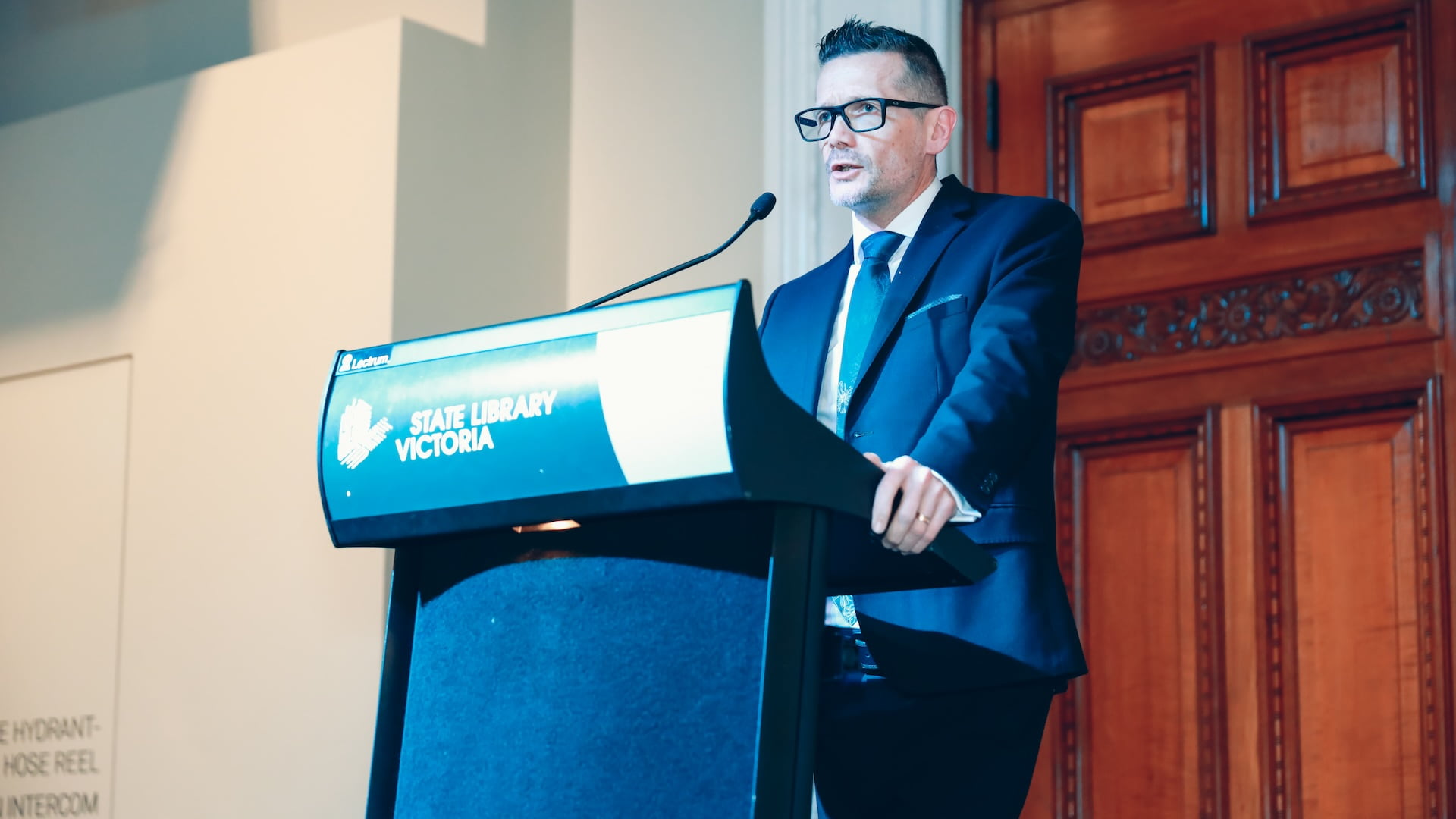
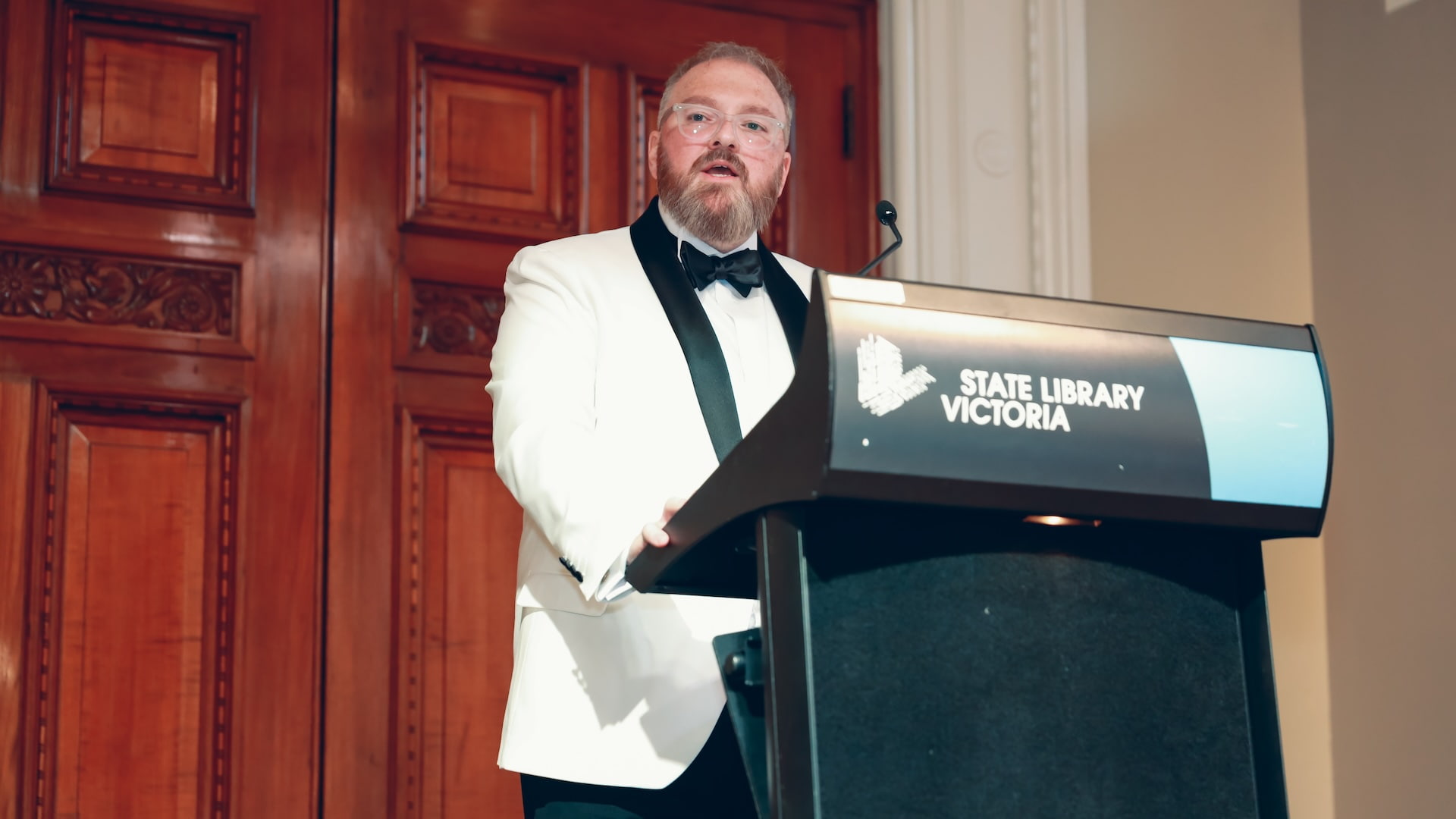
The keynote address for the evening was delivered by the Honourable Chief Justice Richard Niall of the Supreme Court of Victoria, who emphasised the importance of strong and enduring institutions. This was preceded by the faculty address delivered by the Dean of Monash Law School, Professor Steven Vaughan, and was followed by closing remarks delivered by Dr Paul Burgess — the Review’s faculty advisor since 2022.
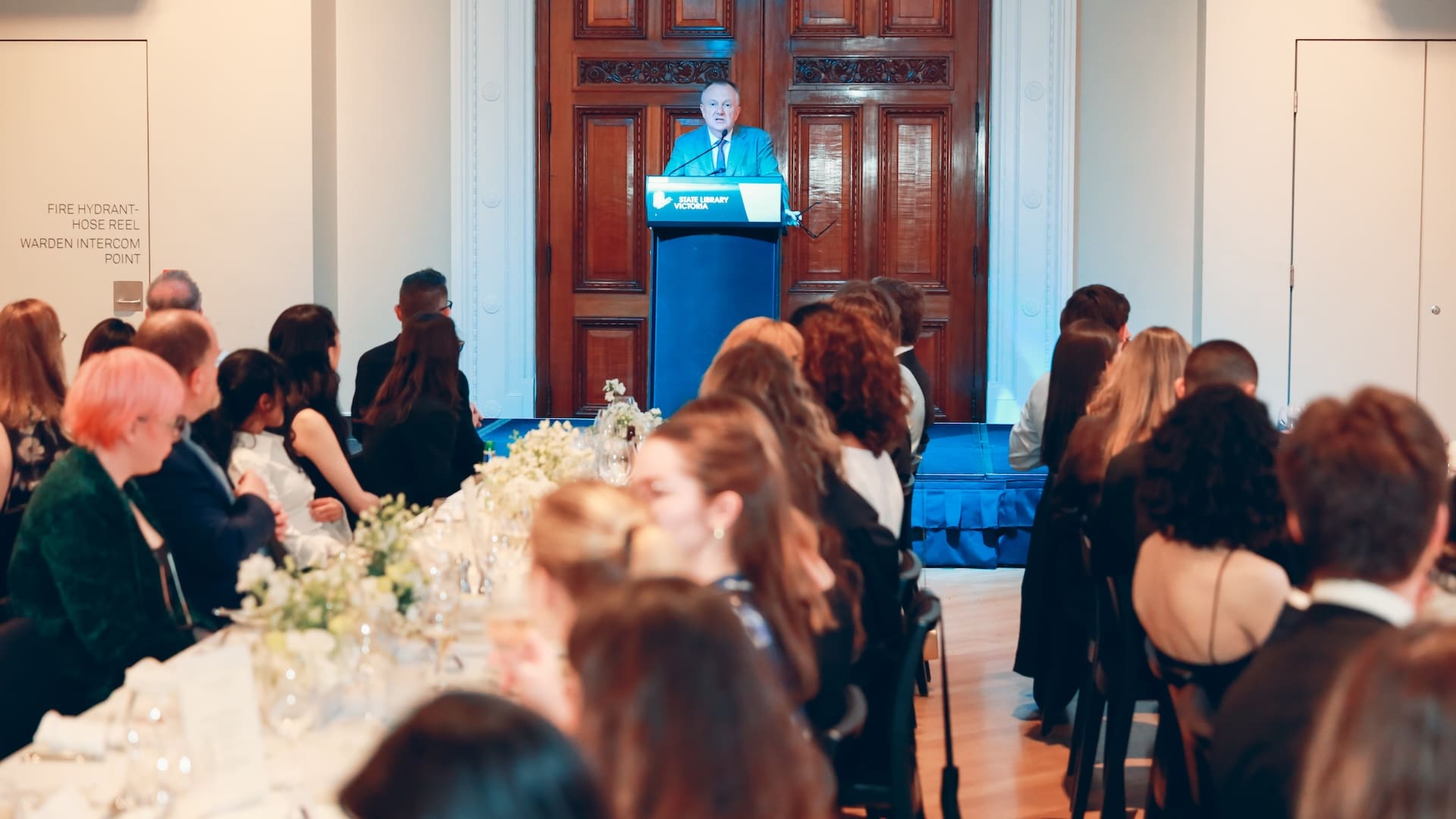
The Honourable Chief Justice Richard Niall of the Supreme Court of Victoria, presenting the keynote address at the Monash University Law Review’s 51st Annual Dinner.
In addition to members of our Editorial Committee, the Annual Dinner was also attended by many esteemed members of the legal profession. This included the Honourable Justices Jane Dixon and Michael Croucher of the Supreme Court of Victoria, Justice Rowena Orr of the Victorian Court of Appeal, and Deputy Chief Judge Patrizia Mercuri of the Federal Circuit and Family Court of Australia.
In attendance were also representatives of the Review’s sponsor firms: Allens, Arnold Bloch Leibler, Corrs Chambers Westgarth, Gilbert + Tobin, Herbert Smith Freehills Kramer, and Mallesons; as well as distinguished practitioners, academics, faculty staff, and alumni of the Review — all of whom are instrumental in the Review’s operation and ongoing legacy.
Year 51: A brief summary
In the Review’s first year following its semicentennial, the idea of forward momentum was at the forefront of the minds of my fellow Editors and I. This Annual Dinner celebrated the Review’s first-ever year of online-only publication — demanding considerable efforts to ensure a smooth transition to rolling basis publication, including by trialling new copyediting processes, adapting citation methods, and promoting the Review through new marketing initiatives.
2025 saw a range of reforms implemented that ultimately achieved shorter and more streamlined publication timelines for our contributors, an increased number of submissions, and the expansion of the Review’s online presence and readership engagement. Volume 51also featured the publication of our first book review in over five years. These innovations are characteristic of the Review’s enduring role as a leading space for legal debate.
This growth is reflected in the Review’s focus on scholarship that addresses contemporary problems. Articles published in volume 51 have considered legal issues including statutory negligence, equality and discrimination law, informed consent, slavery and stolen wages, the use of artificial intelligence, environmental and climate law, and the quality of legal research. No two volumes are the same, and these publications embody the Review’s commitment to meeting the legal landscape as it continually evolves.
Guidance from the bench and the academy
But with this growth, it is prudent to periodically stop and remember the purpose of these efforts. Professor Vaughan’s faculty address highlighted the importance of law reviews in the realm of legal debate. He underscored the role of published legal scholarship as a forum to test ideas against standards of truth and fairness, and to scrutinise existing understandings of legal doctrine. Not only is this important to ensure that the law’s operation continues to reflect broader societal aims, but the process of doing so arms students with the tools required to carry this practice into the future. In this regard, law reviews are an instrument for the ongoing maintenance and succession planning of good law. In furtherance of this imperative, Professor Vaughan concluded by encouraging us to champion integrity in publishing and to pursue scholarship that is thoughtful, clear, and critical.
Fidelity to the standards of strong legal institutions remained a central theme throughout Chief Justice Niall’s keynote address. His Honour acknowledged the historic inequalities that have been and continue to be present within our legal system, and how this influences public confidence in the judiciary. It was noted that, while commendable efforts have been made thus far, more work must be undertaken to cultivate a system in which people can place their trust. A strong and enduring legal institution is one that promotes equity and access to justice alongside legal excellence, and one that is committed to the ongoing refinement of its practices to achieve this. His Honour urged us not to lose sight of these goals as we progress into legal practice; the responsibility to uphold these principles rests as much with us as with current members of the legal profession.
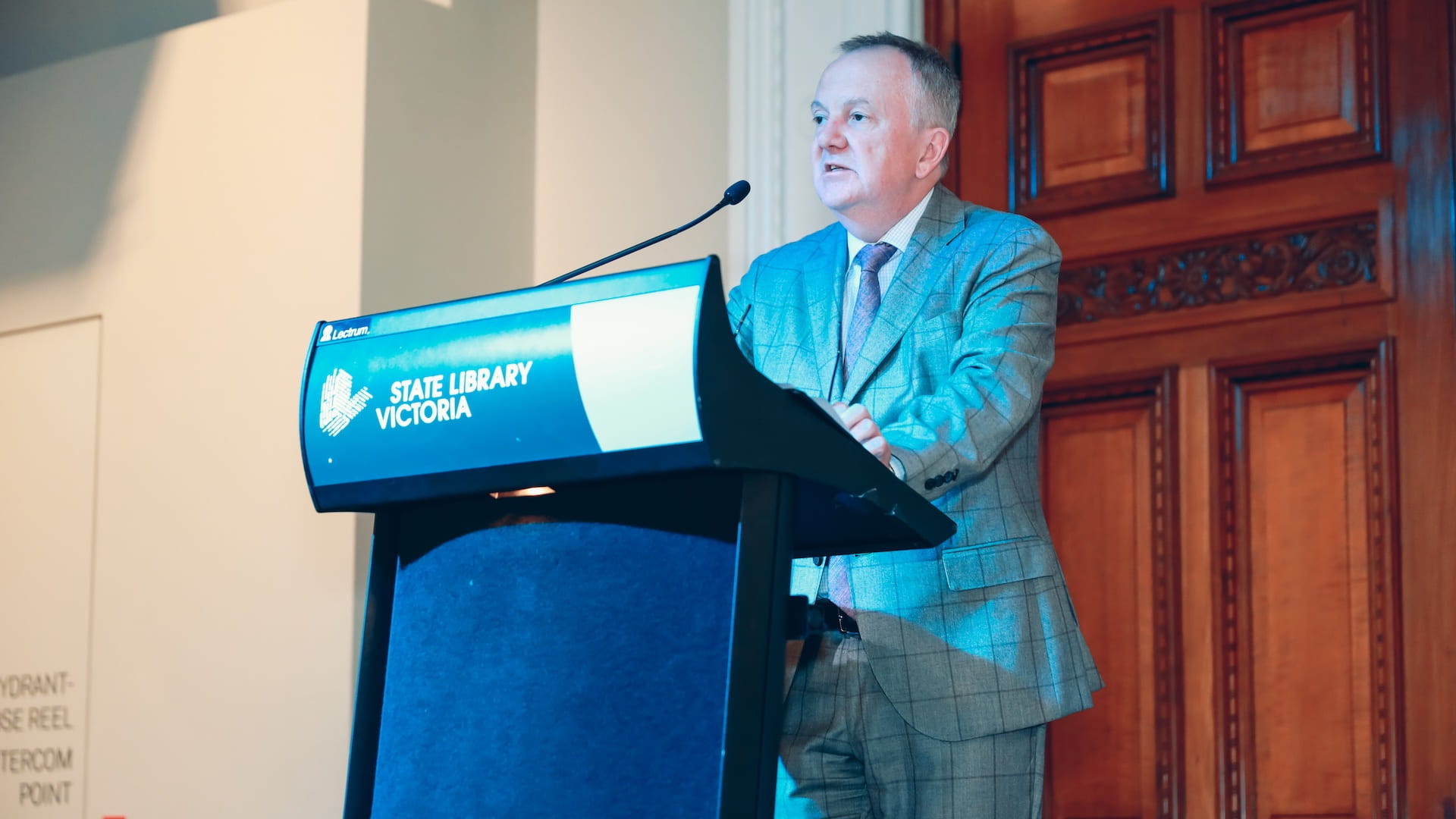
Finally, we heard a heartfelt farewell from our faculty advisor, Dr Burgess, who has guided successive Editors as they navigated the challenges of operating a leading Australian law journal. Dr Burgess reflected on the many changes that the Review has undergone throughout the years and the significant efforts of each year’s Editors to effect these. However, he also identified elements of the Review that have not changed over time. Namely, that the Review relies on its Editors and the enormous degree of dedication and care demonstrated by the broader Editorial Committee.
We would like to express our gratitude to Dr Burgess, who has always advocated for the Review and maintained its status as a student-led journal. His faith in our ability, and his wealth of knowledge and experience, have been a constant source of guidance and support throughout our tenure.
Dr Burgess will be passing the torch to a new set of faculty advisors starting this year, who will be pivotal to promoting the Review’s continued longevity.
An enduring legacy
There has been an idea that has accompanied me throughout my tenure as an Editor of the Review, one which was on full display during the evening of the Annual Dinner: the notion of legacy and stewardship.
Student-led law journals are integral in bridging the divide between leading members of the judiciary and the students who follow in their footsteps. They enable students to engage with practical deliberations of legal problems and the reasoning through which legal principles are articulated and refined. Accordingly, the Review’s Editorial Committee is, and has always been, comprised of individuals who are deeply passionate about the progression of legal scholarship; it is the field which contemplates the future as informed by considerations of the past.
In the words of our Dean: ‘the Review is an important site for the operation of the rule of law; and … you — as Review [members] — help to furnish and help with the flourishing of a space for debate, reflection, and the betterment of society’.
The Annual Dinner provides an opportunity to meet these leading figures in person, and be reminded that they once occupied the same position as current students. Many of the distinguished guests in attendance are alumni of Monash Law, including Chief Justice Niall. Further, many of these individuals were past Editors of the Review, as pictured below alongside some of the more recent Editors.
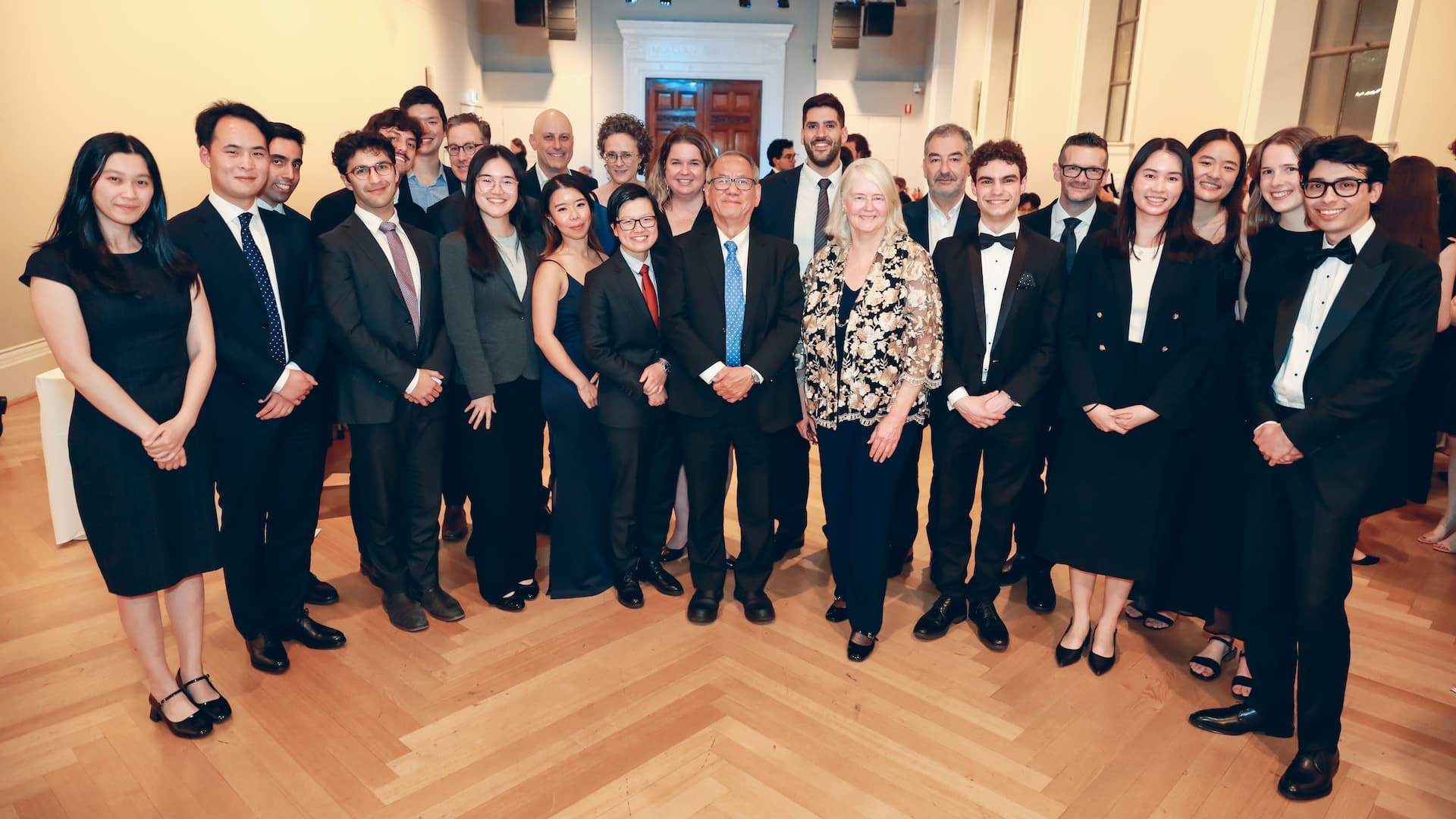
Past Editors of the Review, as pictured below alongside some of the more recent Editors.
Other notable past Editors of the Review include the Honourable Anne Ferguson, former Chief Justice of the Supreme Court of Victoria, and the Honourable Chief Justice Debra Mortimer of the Federal Court of Australia.
Closing thoughts
The Review represents more than simply a group of individuals who are engrossed in the (sometimes painful) art of copyediting. To my mind, it is a vehicle that continually adapts to foster discussion and challenge how we understand the law’s place in society. As members of the Review progress beyond their studies, they evolve from the facilitators of legal debate to active participants in this discourse as lawyers, academics, and policymakers. This cycle, both forward- and backward-looking, forms the essence of the Review.
With these reflections in mind, I am grateful to have had the privilege of being part of this enduring tradition. The Editors thank all those who attended the 2025 Annual Dinner and celebrated the publication of volume 51 with us.
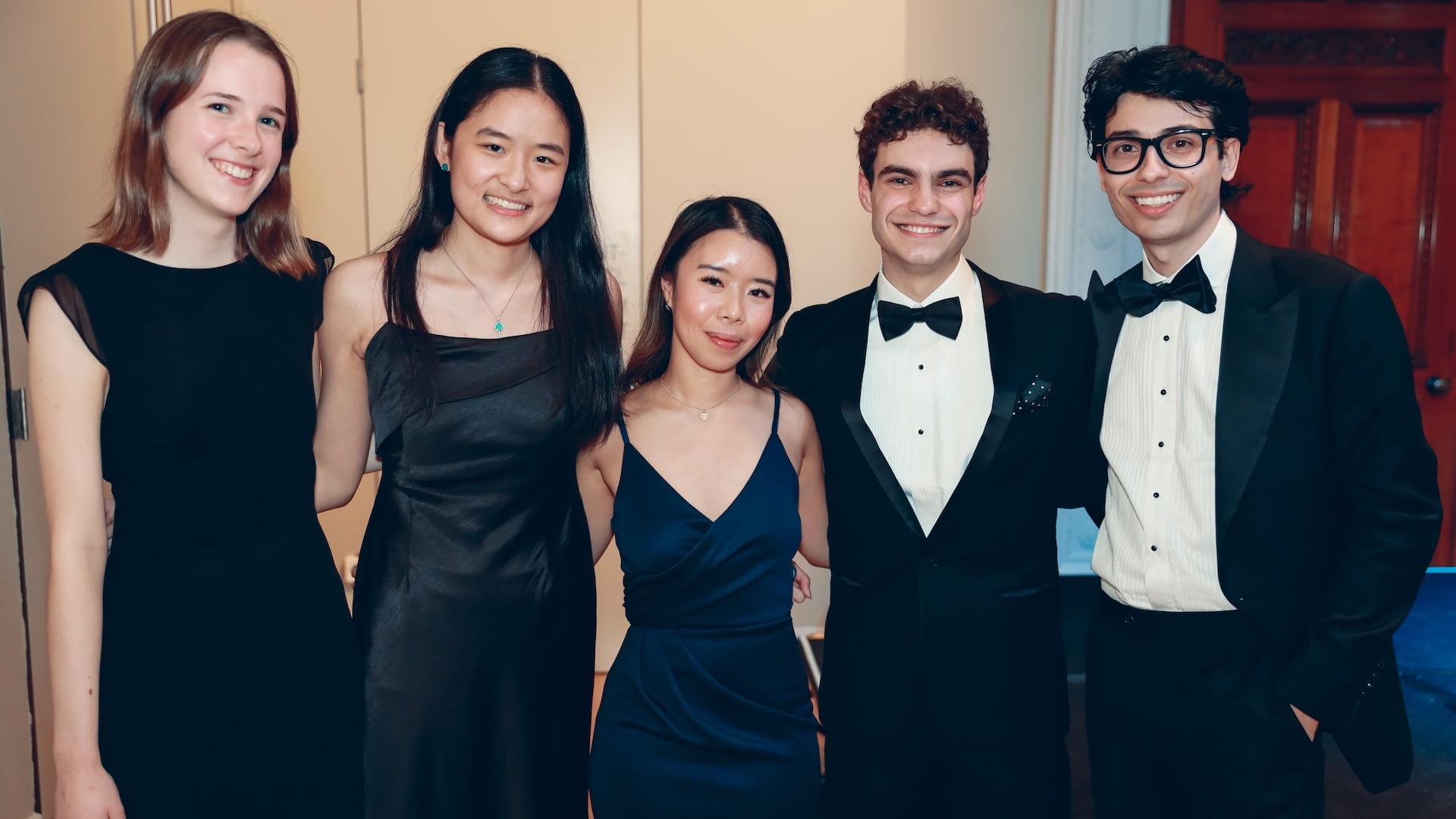
The Editors of the 51st Monash University Law Review.