
Swampworks
Awareness and connectivity for the Southern Brown Bandicoot and Australian Grayling
Project team
Designed, made and installed by Monash University Master of Architecture students
Led by Professor Nigel Bertram and Professor Catherine Murphy
Stakeholder collaborators
Undertaken within
Great Swamp Regeneration Plan
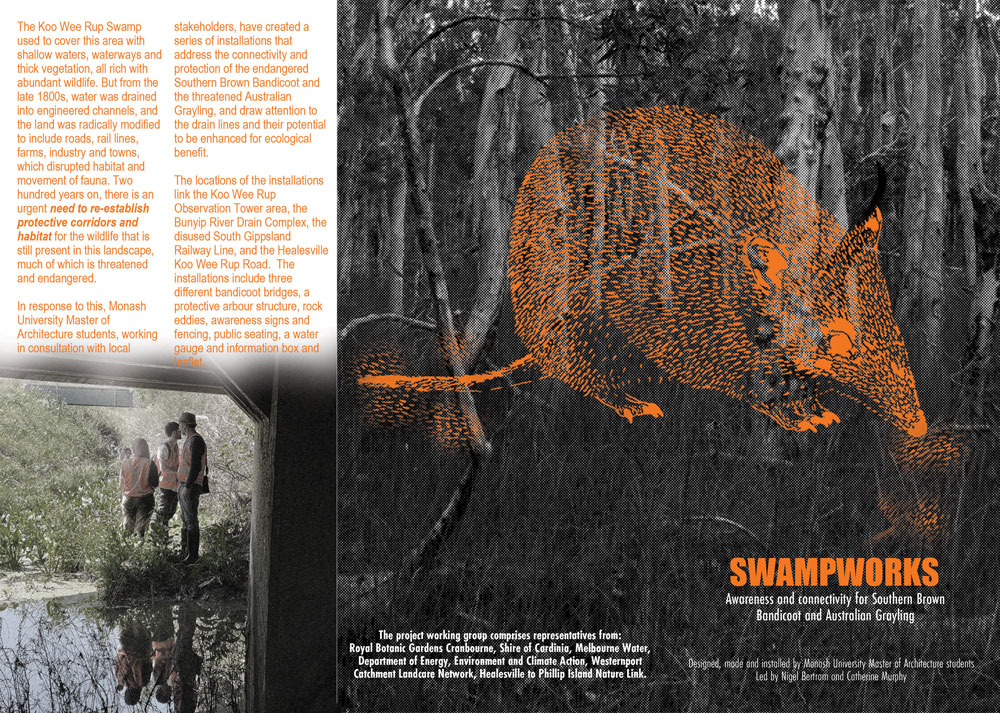
The Great Swamp Regeneration (GSR) is a long-term, 200-year plan that reimagines the future of the low-lying landscapes close to Western Port Bay and Melbourne’s urban growth boundary. This umbrella program brings together research and design to explore how ecological systems can adapt to changing climatic and urban pressures.
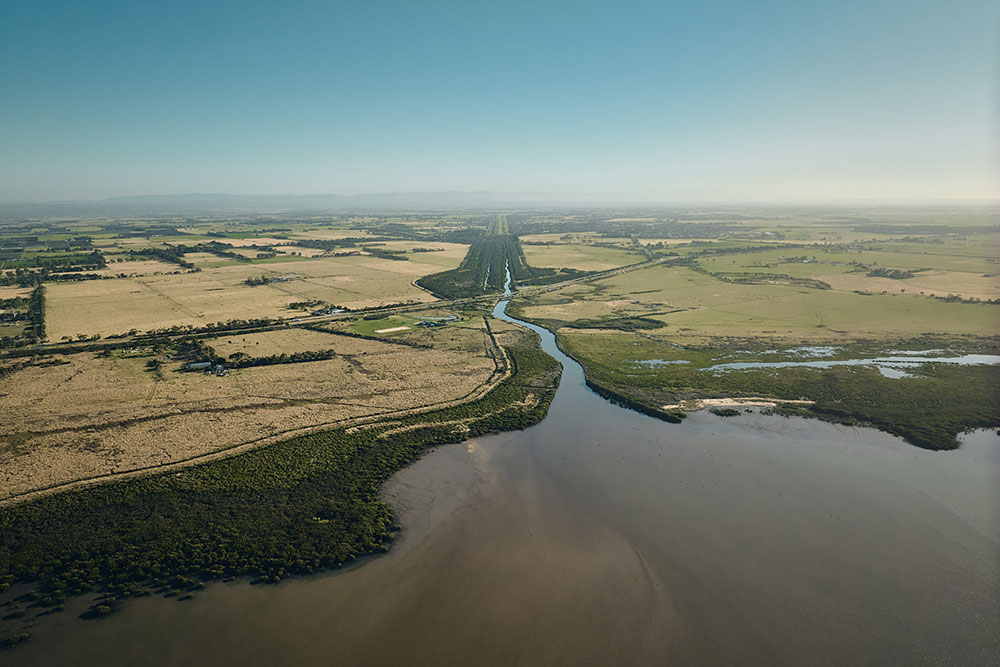
Through exhibitions, scenario planning and prototype building, GSR examines how two centuries of land modification - from swamp drainage to infrastructure and industry - have shaped today’s landscape. By learning about the Great Swamp prior to settlement, and its subsequent changes, the program proposes new, sustainable land uses for today’s ‘as found conditions’, which support all forms of life.
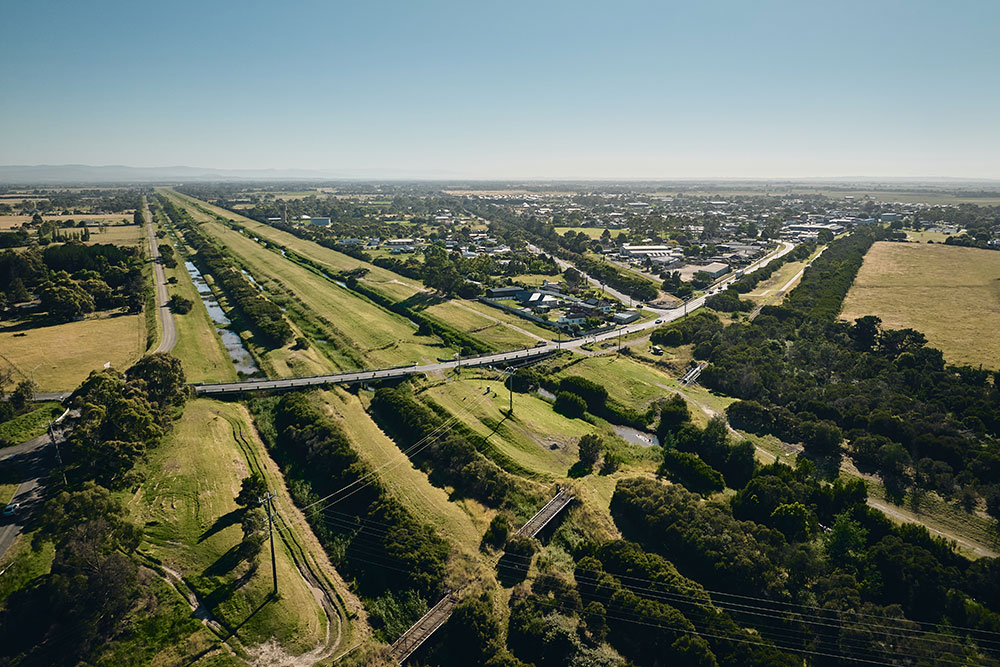
For thousands of years, the Great Swamp was a thriving wetland of shallow waters, waterways, and dense vegetation, rich with wildlife. Since the 1880s, drainage and settlement have dramatically altered the environment, destroying habitats and fragmenting fauna movement. There is an urgent need to restore protective corridors and habitats for threatened species still present in this landscape.
Swampworks: Awareness and Connectivity for Bandicoot + Grayling
As part of GSR, Swampworks focuses on raising awareness and improving habitat for the Southern Brown Bandicoot and Australian Grayling. Monash Master of Architecture students designed and built bridges, protective structures, awareness signage and seating, which highlight the potential of the existing drain lines to be reimagined for ecological benefit.
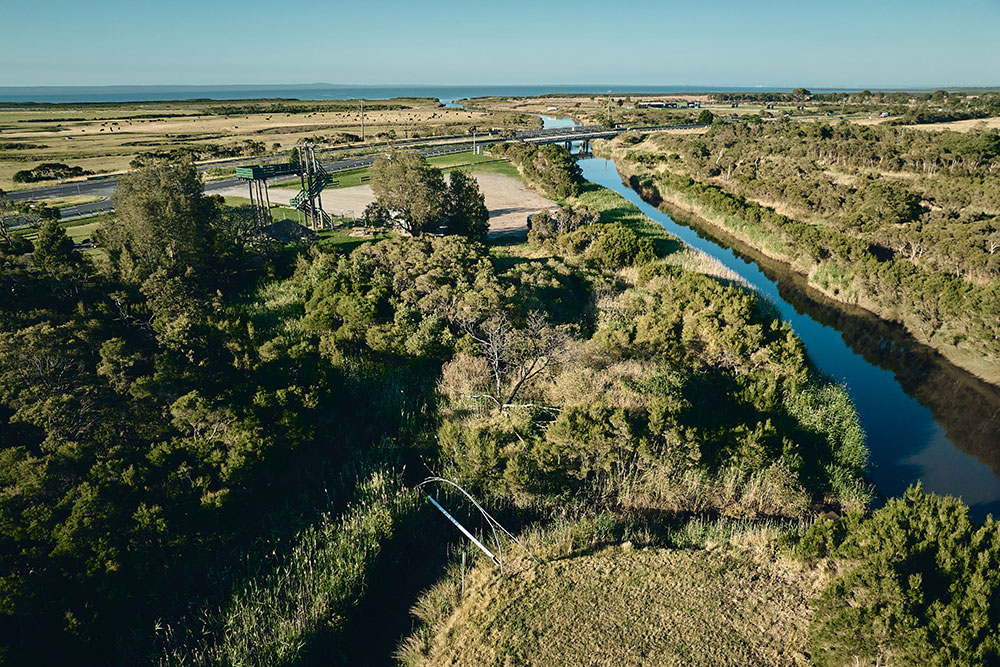
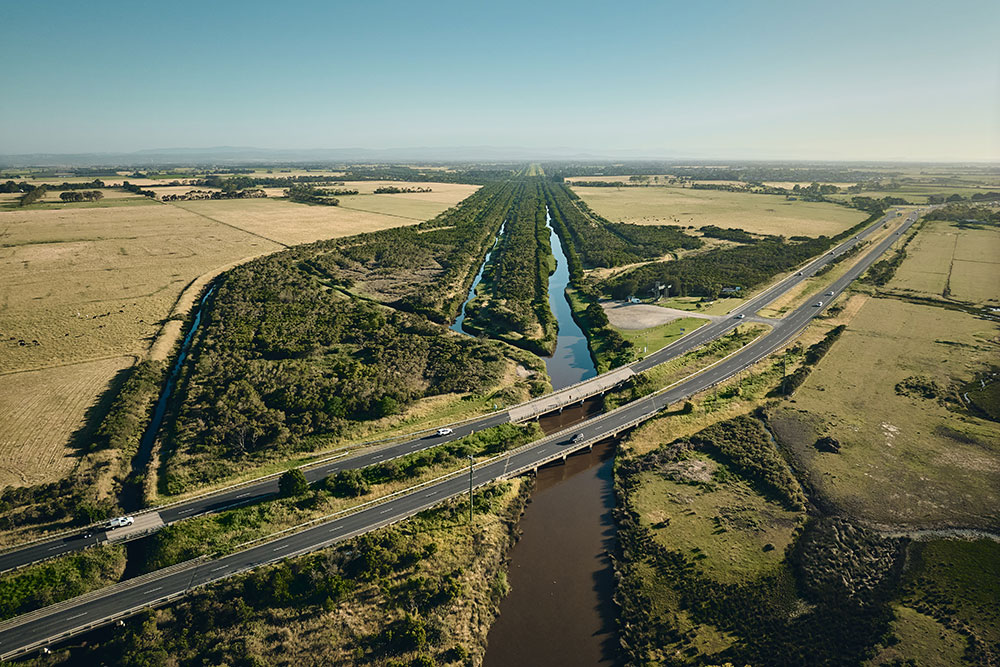
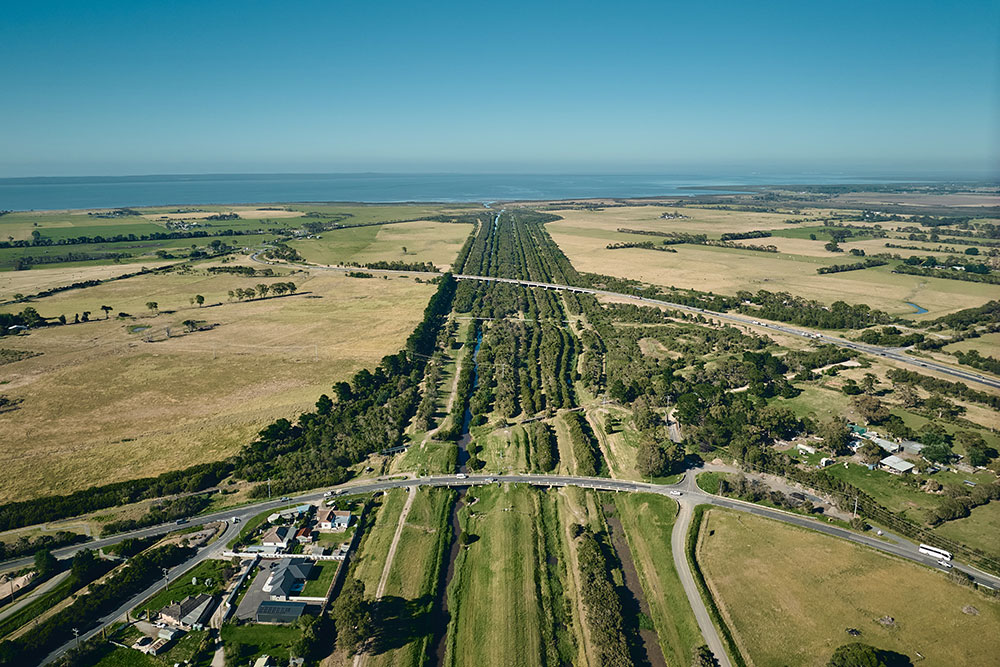
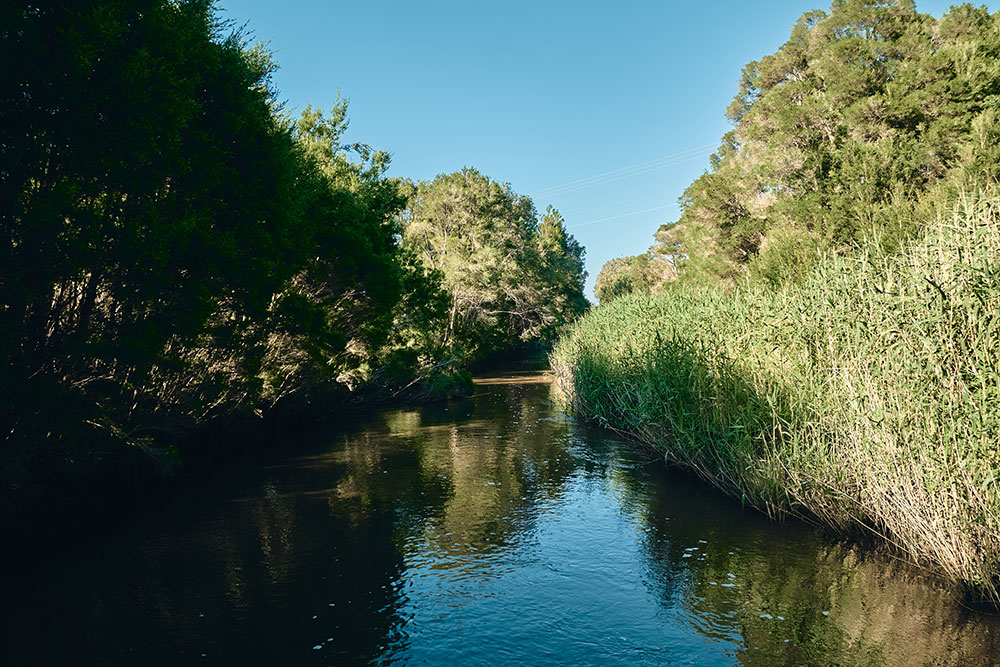
The installations are in the Koo Wee Rup Tower Lookout area on the South Gippsland Highway, the Bunyip River Drain Complex, the disused South Gippsland Railway Line, and Healesville-Koo Wee Rup Road.
The works include:
- Three bandicoot bridges
- A protective arbour structure
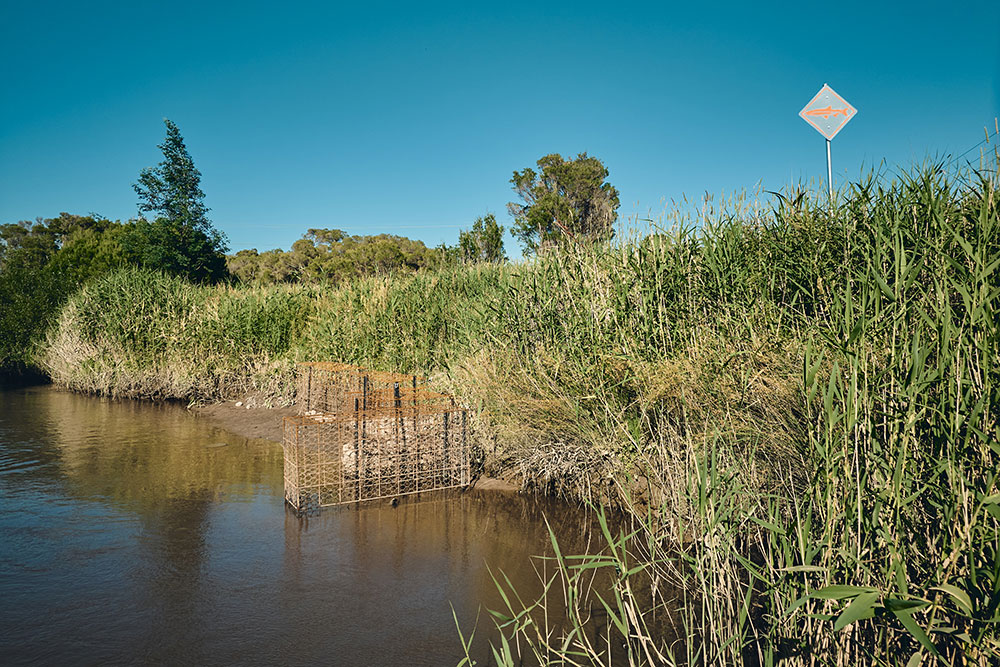
- Rock eddies for fish habitat
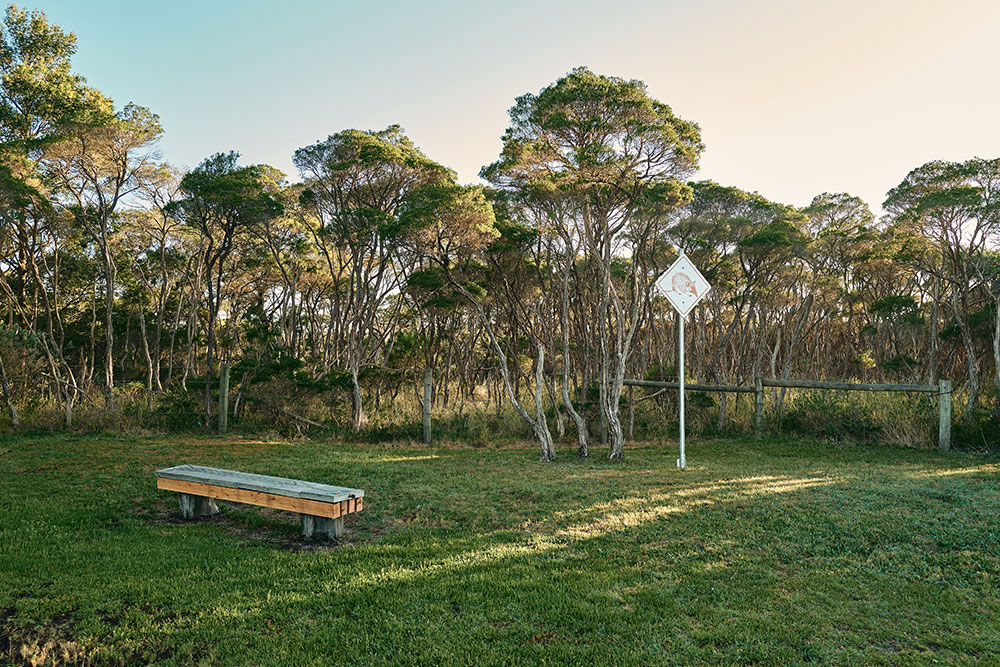
- Bandicoot awareness signs and fencing
- Public seating and a water gauge
- Information box and leaflet
Stakeholder Collaboration
Swampworks was developed through a collaborative design process with Royal Botanic Gardens Cranbourne, Shire of Cardinia, Melbourne Water, Department of Energy, Environment and Climate Action, Westernport Catchment Landcare Network and the Healesville to Phillip Island Nature Link Inc.
Together, these efforts are reconnecting landscapes, regenerating habitats and inspiring new ways of caring for the Great Swamp for the next 200 years.
Download
Details of works
Pole Signs
Alan Jones and Sakshi Ahuja
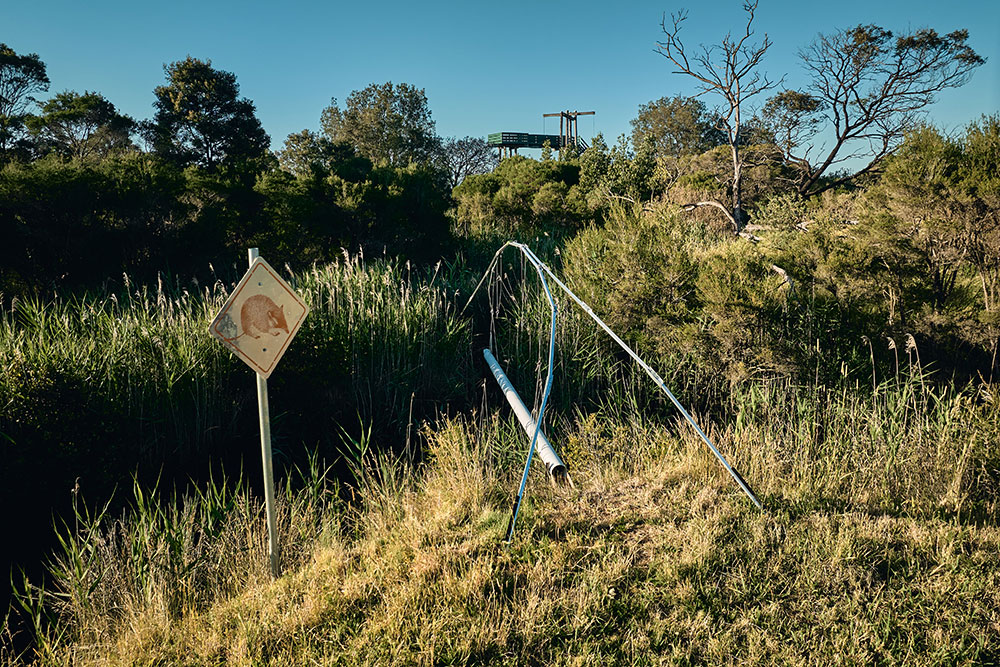
Six signs sprayed in orange paint are positioned from Koo Wee Rup town edge to Koo Wee Rup Observation Tower to raise awareness of the endangered bandicoot, the Australian Grayling and local snakes.
Roadside Fencing
Alan Jones and Sakshi Ahuja
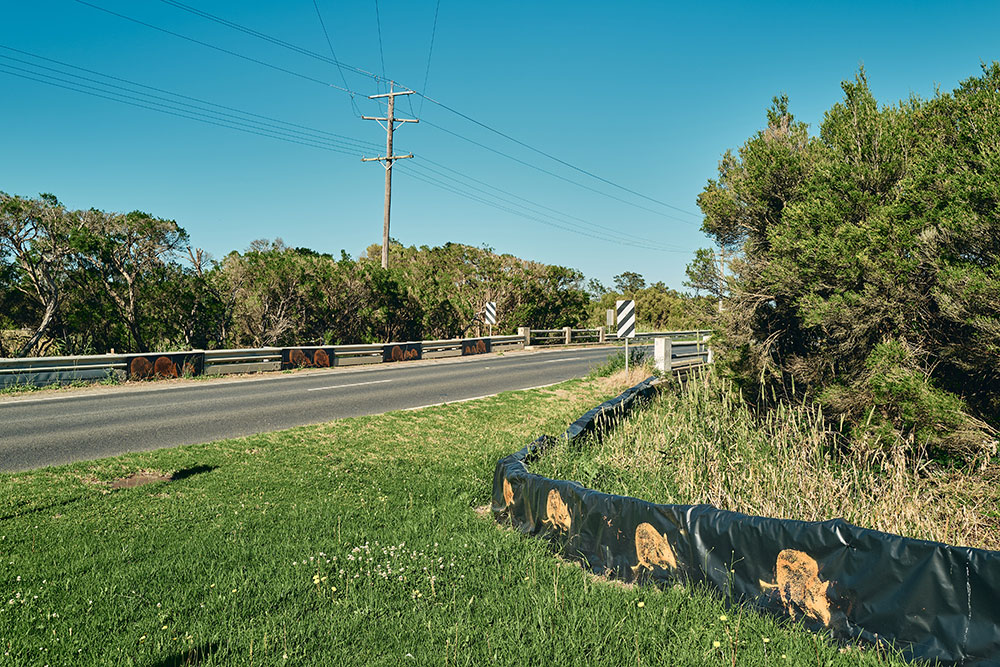
Hung over the road-side barriers, black fence material is sprayed with orange bandicoots. This highlights the endangered bandicoot's precarity, as bandicoots experience frequent roadkill here.
Pipe Bridge
Hajar El-Hennawi, Thomas Inglis, Sakshi Ahuja
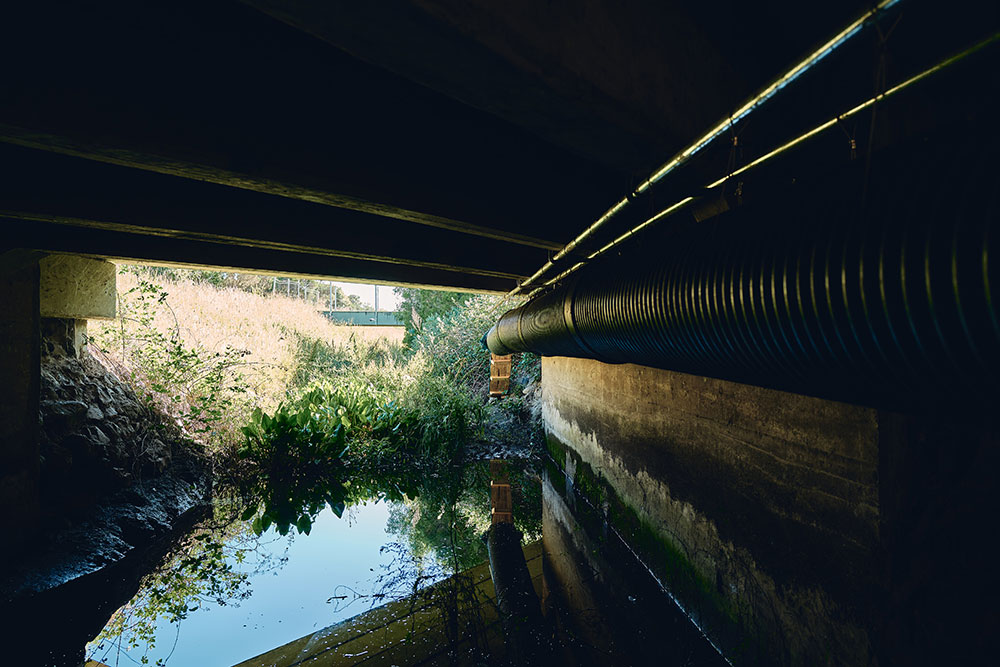
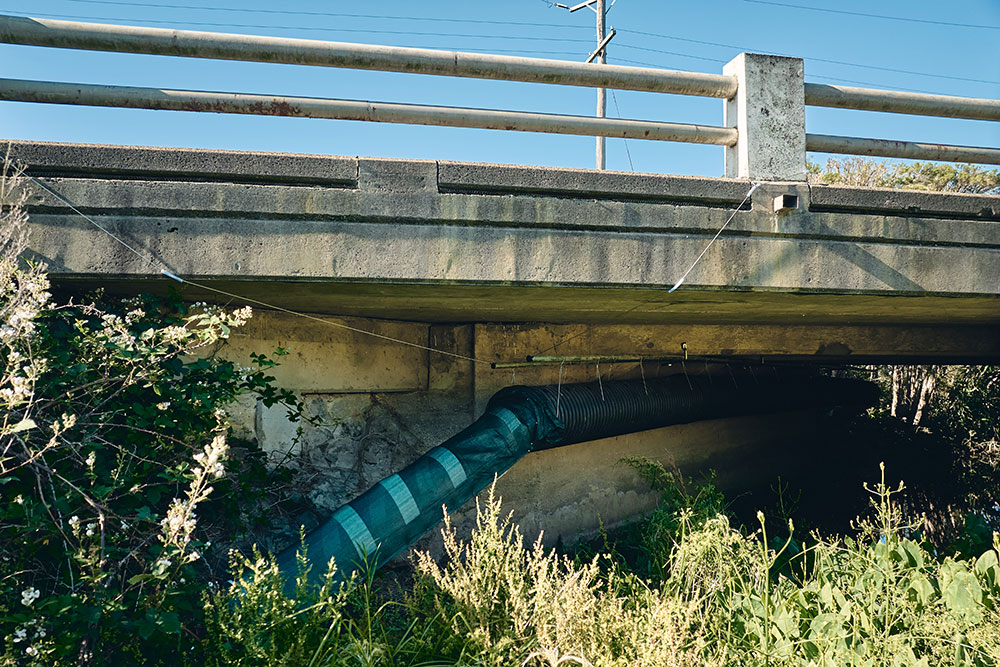
Made of large pipes with an internal wooden platform, the bridge is suspended under a concrete culvert. This will stop the bandicoot going onto the road and is not visible from the public realm.
Pontoon Bridge
Mia Hannon, Yizhou Hou, Xihao Xu
Comprised of connected and covered pontoons made of plywood and large recycled water bottles, this bandicoot crossing covers the span of the Main Drain and replaces a recently removed bridge.
Trainline Arbour
Jiaqi Li, Letichia Hoban
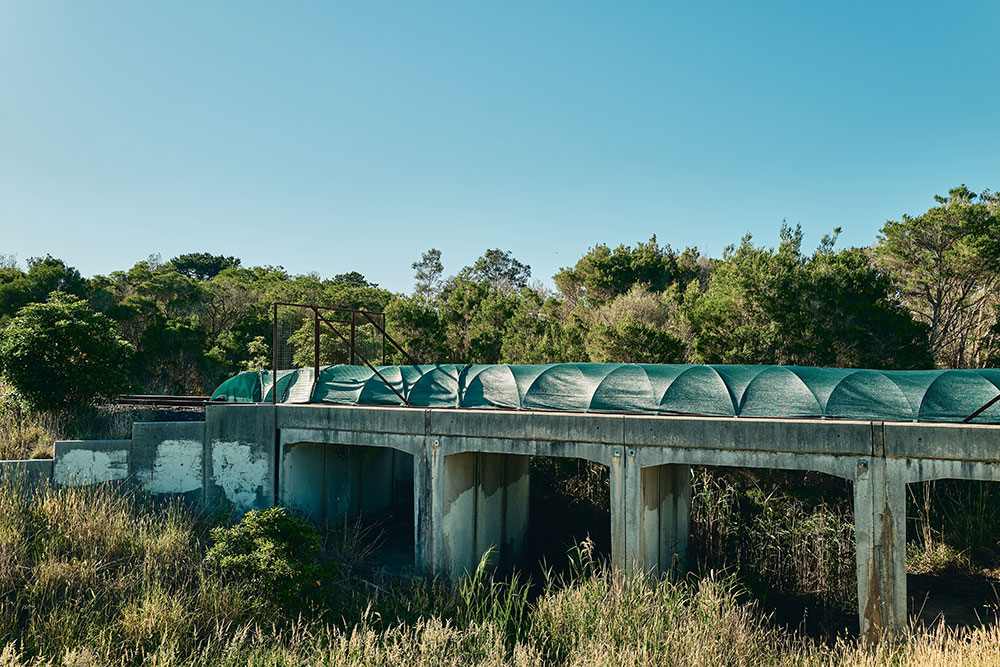
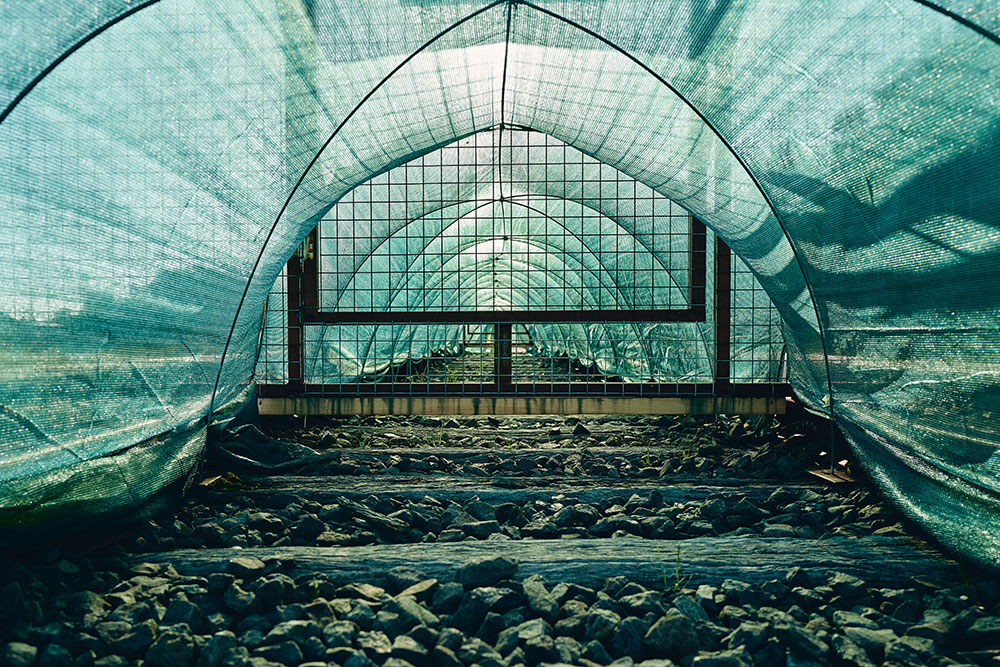
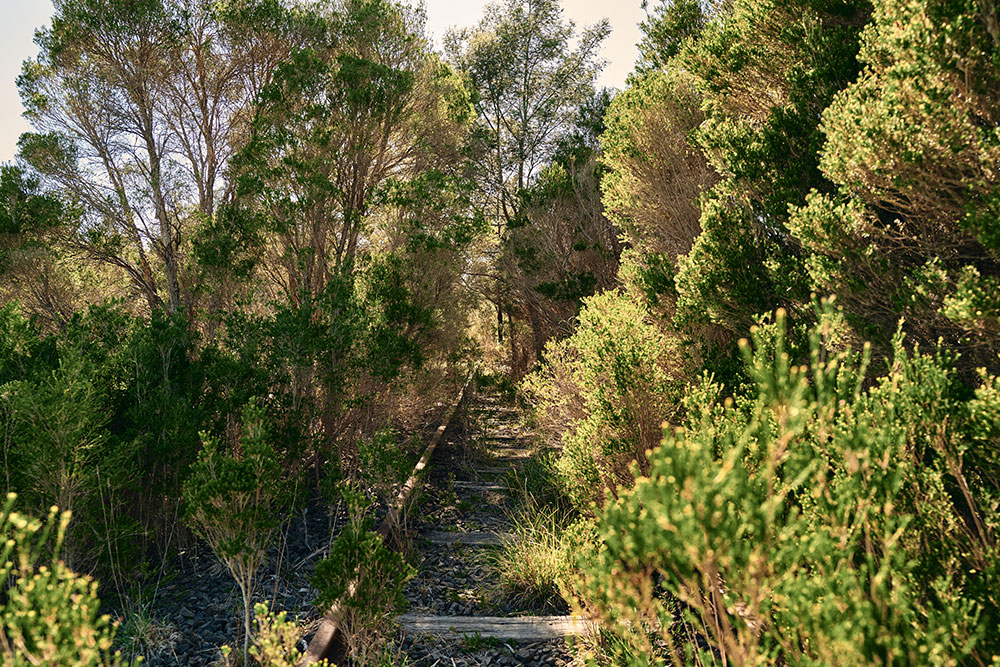
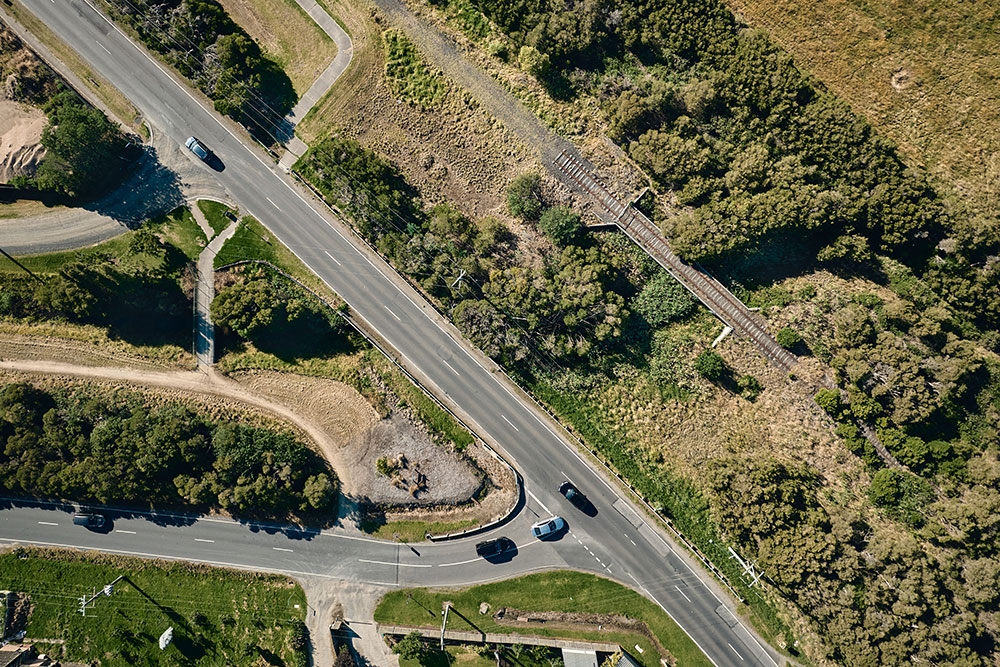
This arbour structure is made of steel arches and shade cloth, tied to the disused train tracks of an exposed section of an old rail line. This provides bandicoot cover from aerial and ground predators.
Bank Gabions
Bryce Ferguson, Yousun Oh
Four rock-filled, wire wall structures stabilise the drain bank and create a side eddy to slow the water flow. This creates habitat for the endangered Australian Grayling to rest on its migratory path for spawning.
Drain Water Seat
Grace Upton Jones, Savini Senevirathne
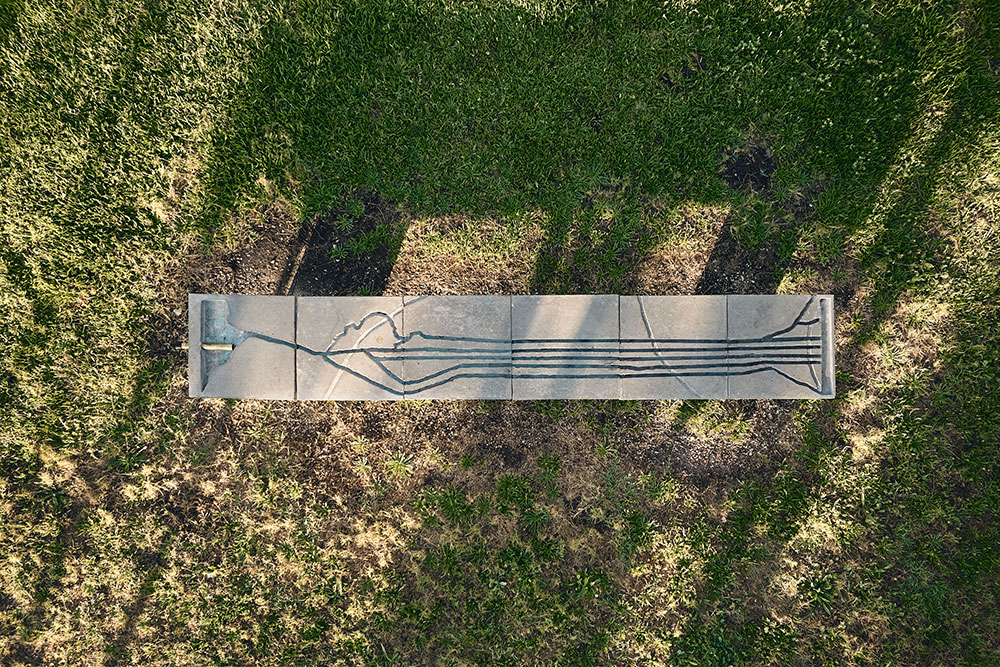
A seat is repaired by adding concrete tiles, carved with a scaled version of the Bunyip River Drain Complex. Its drain lines can fill and overflow with water, mimicking the flooding of the real drains.
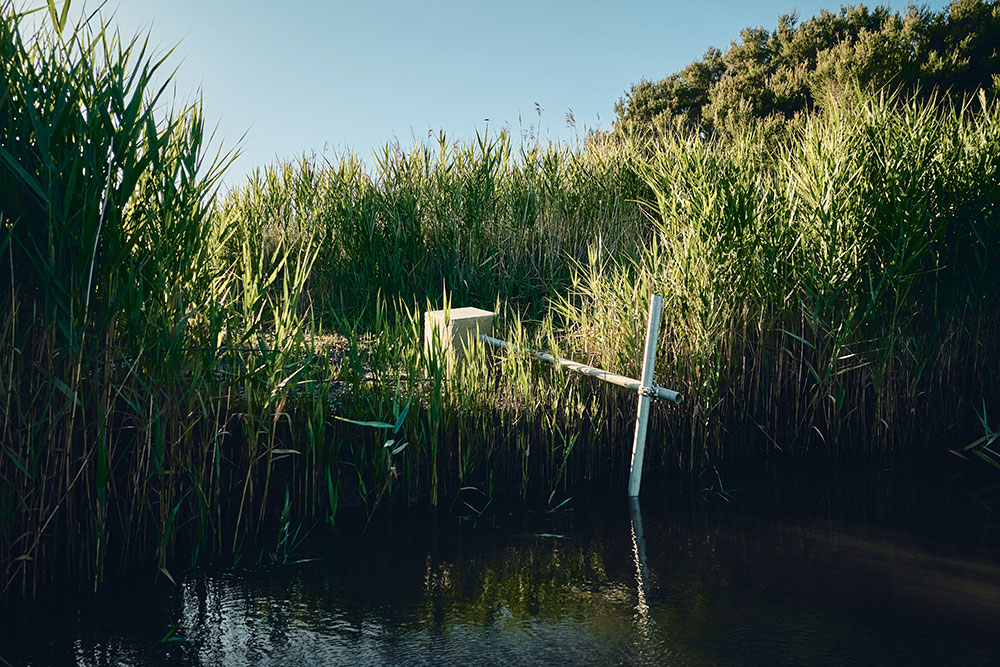
Fishing Seat Water Marker
Grace Upton Jones, Savini Senevirathne
The cast concrete seat is positioned on bank, with the attached steel water level gauge positioned in the drain. This secluded fishing spot engages with the rising and lowering water levels.
Paw Bridge
Adelina Holil, Ran Duan
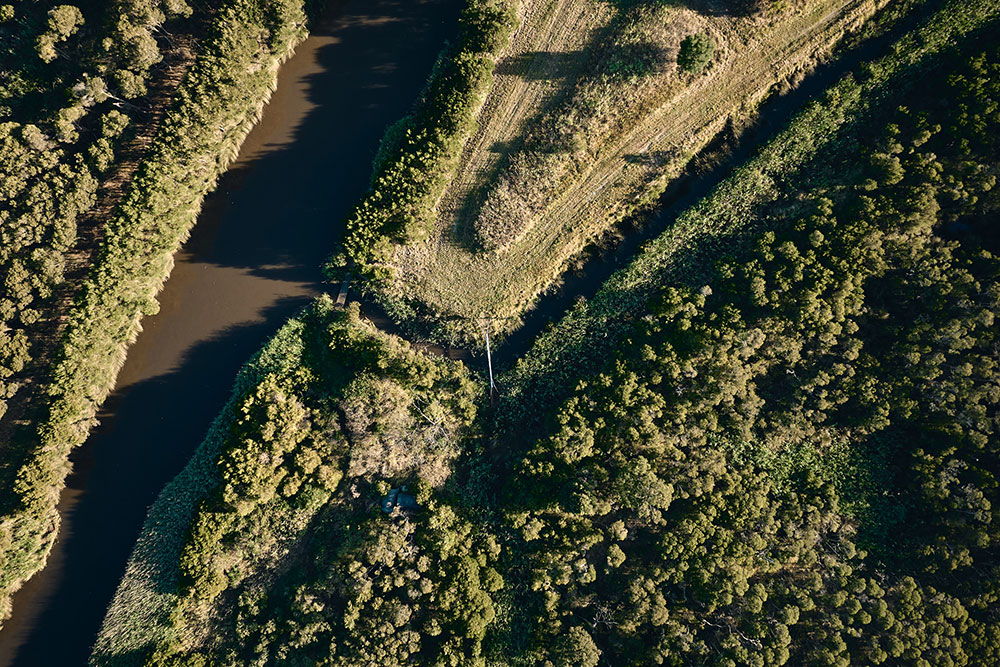
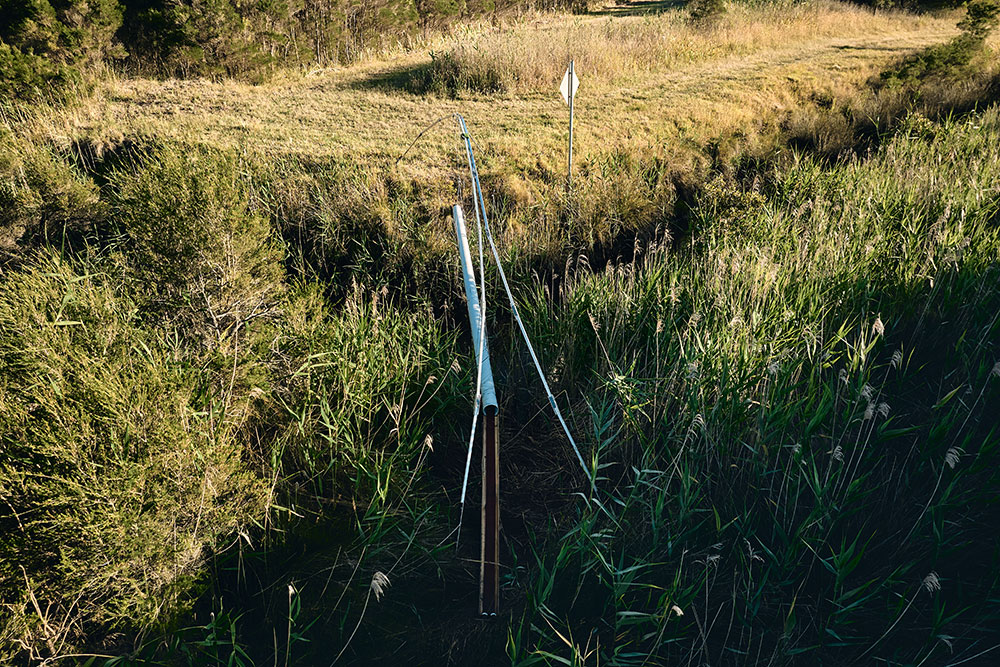
Made of pipe, this bandicoot bridge is supported by an arched steel structure with cables connected to bank. The bridge enables the bandicoot to move over the secondary drain into a vegetated area.
Bandicoot Roof
Alan Jones and Sakshi Ahuja
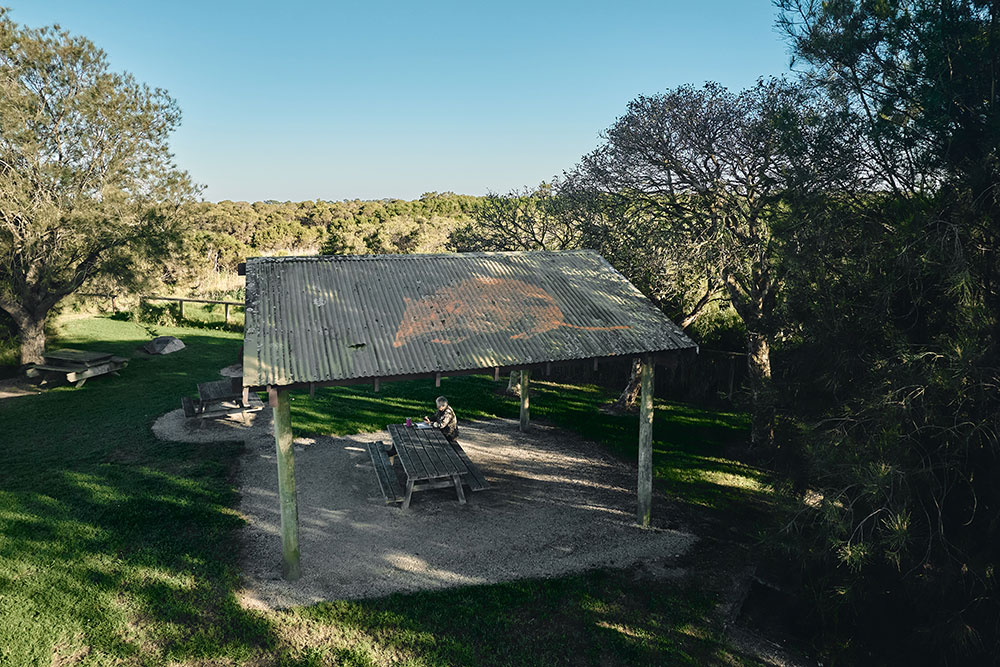
A stencil of a bandicoot is sprayed with orange paint on the roof of the picnic shelter and is visible from the Koo Wee Rup Observation Tower. This image introduces or reinforces bandicoot awareness.
Leaflet Drain Box
Alan Jones and Sakshi Ahuja
Made of ply and carved with drain lines, this information box is attached to the side of the public information board. Inside, leaflets provide information on the students' installations, including a map of their locations.
Images
Photography: Peter Bennetts