
Alfred Health Residential Eating Disorders Facility - Model of Care and Lived Experience specification
Co-designing a model of care and experience specification for the Alfred Health Residential Eating Disorders Facility.
Investigators
- Associate Professor Leah Heiss
- Dr Gretchen Coombs
- Dr Troy McGee
- Eden Potter Monash Art, Design and Architecture
Co-investigators
- Hatoun Ibrahim Monash Art, Design and Architecture
Partner organisation
- Alfred Health
Funded by
- Alfred Health
Undertaken within
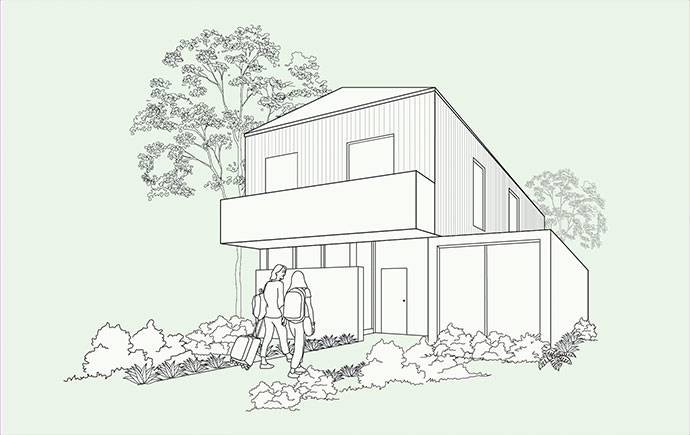
It’s developing a connection with each other because when you have an eating disorder, the eating disorder wants to disconnect you from others. Forming community is so important because it develops connection and it actually brings a true self forward and creates a purpose; like people actually do like me, I’m actually okay, I actually deserve these [good things]. All those kinds of feelings that develop through connection with others. That’s really important with an eating disorder because you actually lose that sense of self and that sense of belonging.
(Co-design participant, quote edited for clarity)
Residential ED treatment is part of a stepped system of care for patients experiencing persistent psychological, physical and social impacts from troubled relationships with food and eating. As part of the Victorian strategy to tackle eating disorders, Alfred Health was commissioned by the federal government to develop Ngamai Wilam, the Victorian Residential Eating Disorders Program. The 12 bed facility is located in Kew, Melbourne.
MADA researchers worked with Alfred Health to co-design a unique model of care for the facility and ‘translate’ these model of care principles into spatial and experiential properties (a ‘lived experience specification’) to guide the functional brief for the architects. Bringing together more than 35 key stakeholders, ranging from clinical leaders in mental health, Victorian Department of Health staff, architects, alongside lived experience advocates and their peer mentors, this co-design process identified spatial, structural, sensory and experiential qualities that would support wellbeing, recovery and overall healing.
Industry reports
Workshop 1: Co-Designing the Model of Care
Workshop 2: Co-Designing the Experience Specification for the Architecture
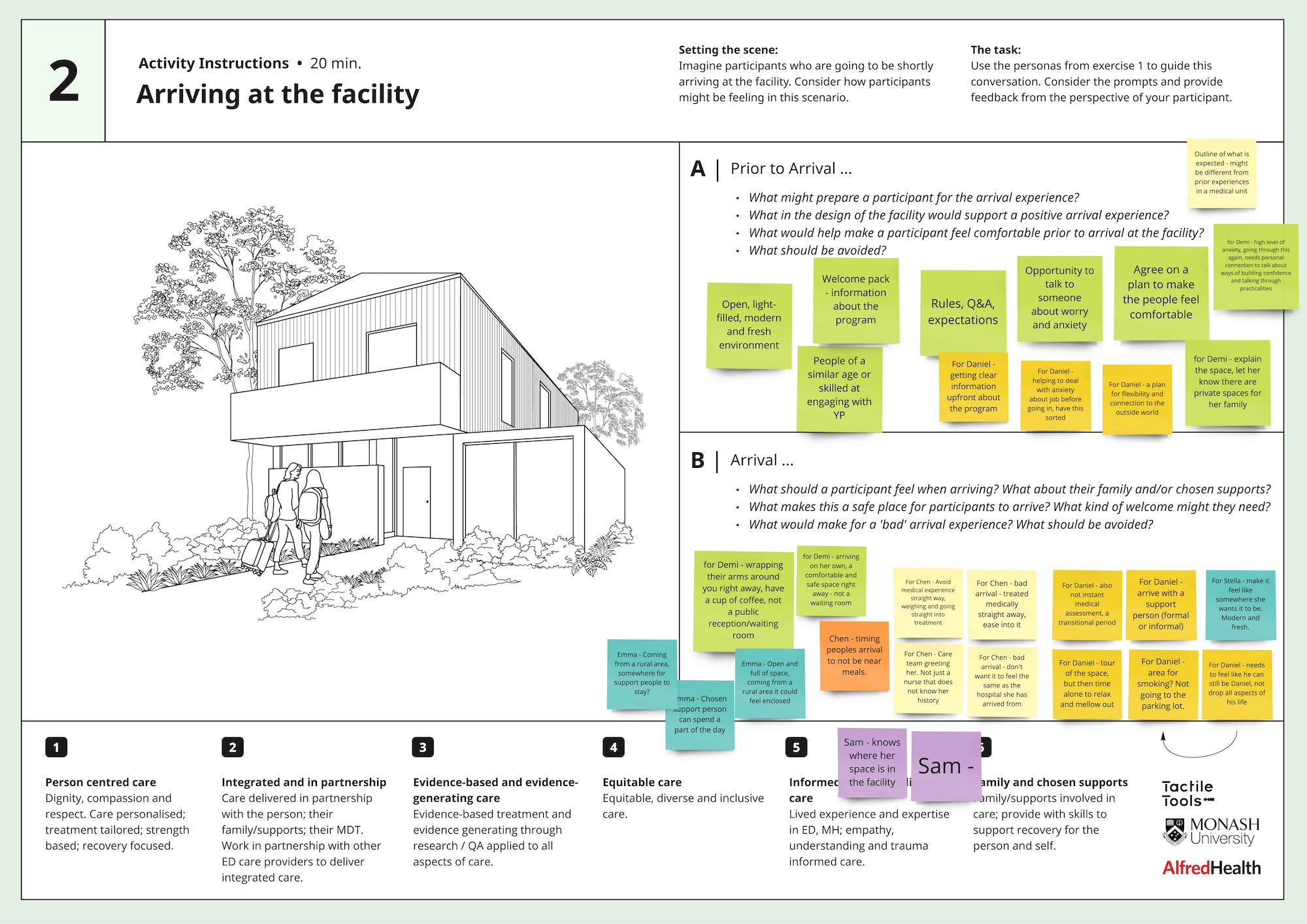 ‘Arriving at the facility’ MIRO Board from the Alfred Health Spatial Translations Workshop focusing on the experience of arriving at the Residential Eating Disorders facility.
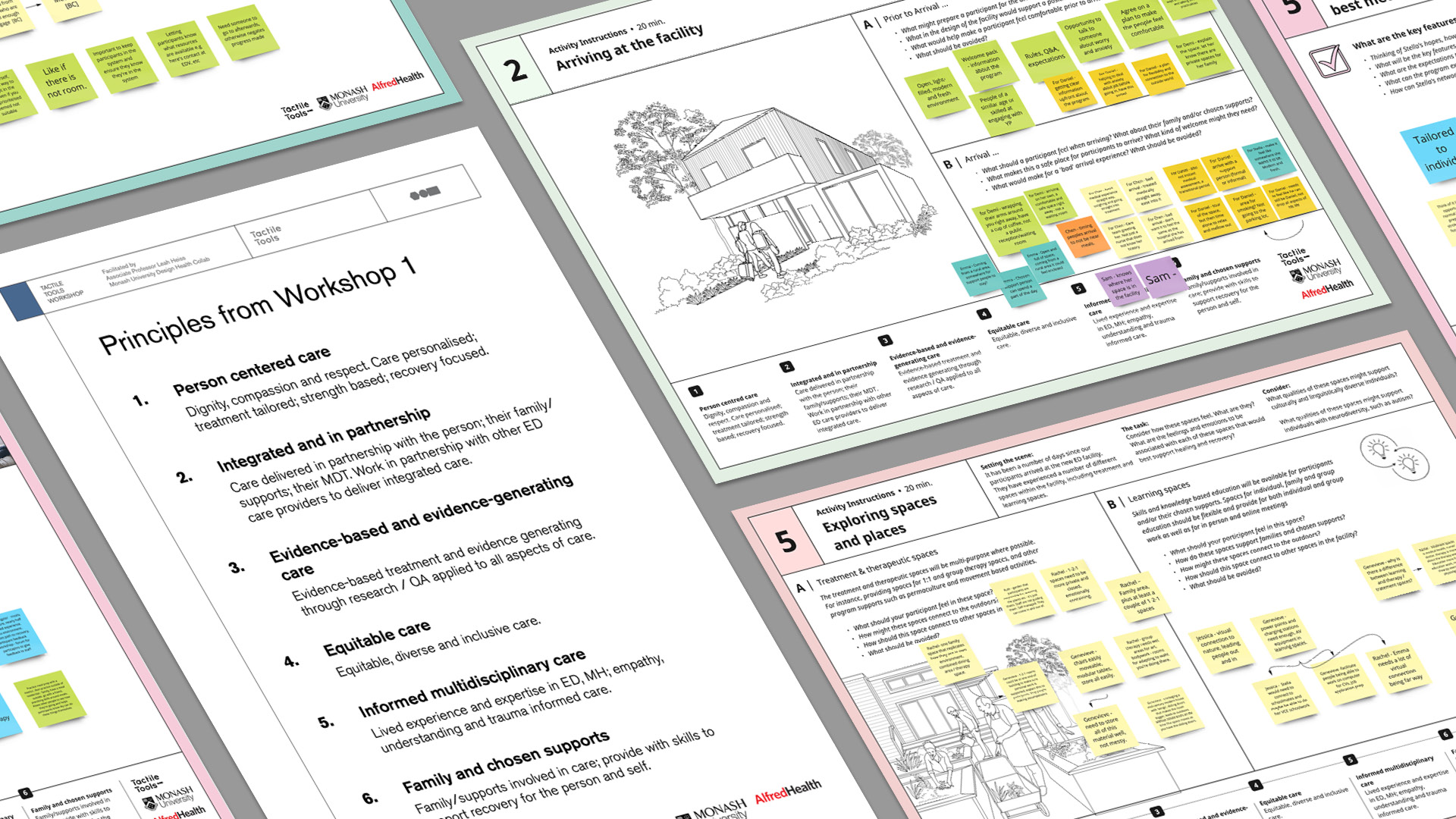 Alfred Health principles poster and workshop canvases.
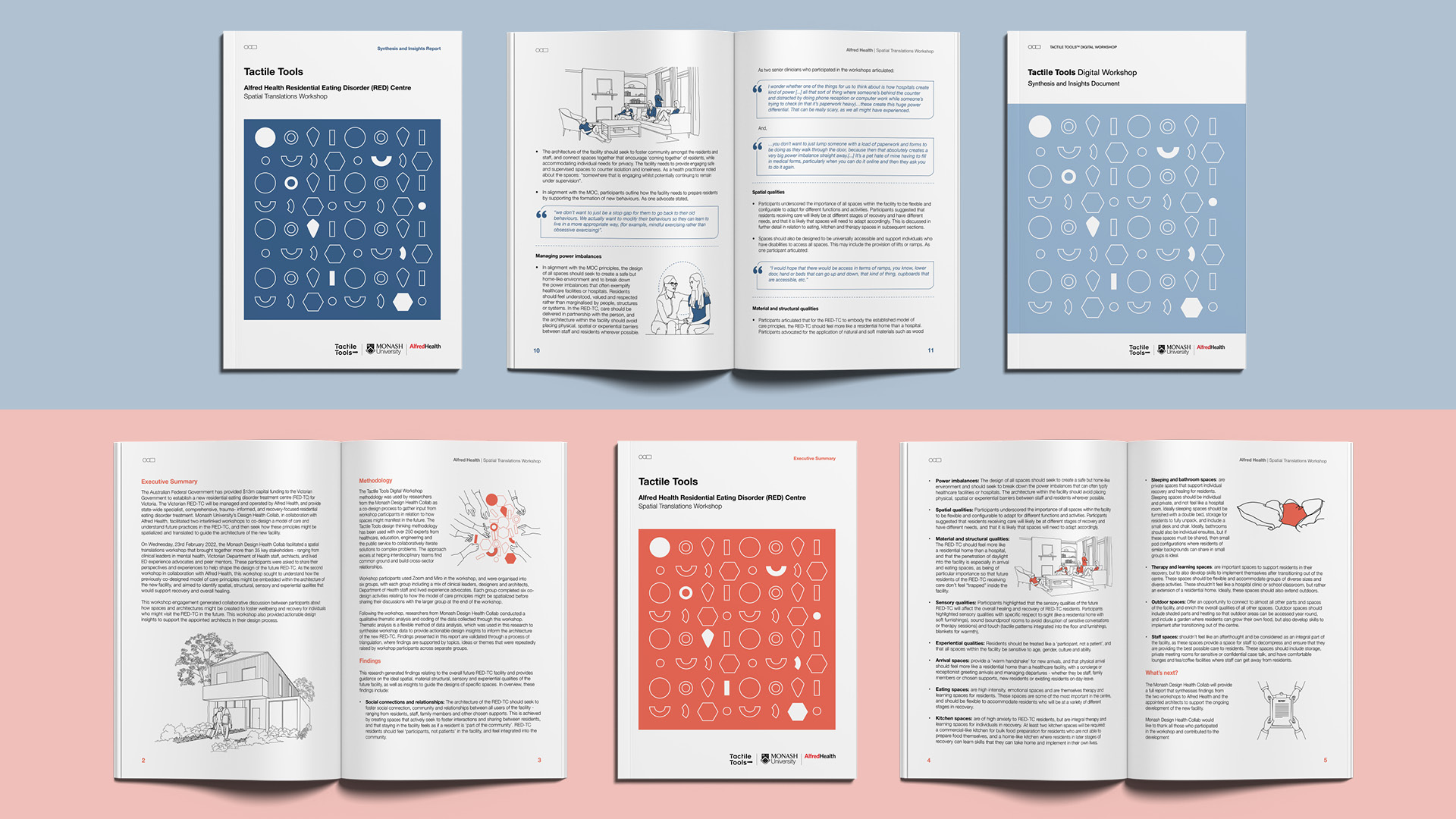 Alfred Health reports.