
WHO Design Principles and Tools to improve use and impact of WHO guidelines
Co-designing principles and tools to support guideline creators at the World Health Organisation (WHO)
Investigators
- Associate Professor Leah Heiss
- Dr Myra Thiessen
- Professor Gene Bawden
- Dr Amy Killen
- Dr Troy McGee Monash Art, Design and Architecture
- Kidist Bartolomeos, Unit Head, Science Division
- Elisabetta Minelli, Implementation Evaluation Officer, Science Division World Health Organisation (WHO)
Co-investigators
- Sara Daly
- Hatoun Ibrahim Monash University
- Adjunct Associate Professor Olga Kokshagina University of Sydney
Partner organisation
- World Health Organisation Science Division
Funded by
- World Health Organisation
Undertaken within
The Monash University co-design methods helped us to bring together guideline developers and users from countries and regions to understand the lived experience of using WHO guidelines. The WHO Principles and Tools contribute to the organisation’s effort to tailor guidelines to countries’ needs, and optimise the use and impact of WHO guidelines in countries.
Kidist Bartolomeos, WHO Science Division, Geneva.
As part of its charter, the World Health Organisation publishes a series of guidelines for all levels of healthcare and patient management based on scientific evidence. The aim is to promote informed decision-making to achieve the best possible health outcomes.
To understand the usability of guidelines in different countries, the WHO Science Division consulted with more than 70 end-users, including policy advisors, advocacy groups, patient representatives, and design experts. These interviews revealed that while WHO guidelines are trusted documents, there are multiple barriers to their implementation and uptake.
In a bid to address this, and enhance the design and usability of its guidelines globally, the WHO Science Division collaborated with MADA researchers to develop the WHO Principles and tools to improve use and impact of WHO guidelines.
The three year design process aimed at investigating how WHO guidelines can be designed and developed to be more accessible to the people and communities who use them. The project engaged stakeholders from across 16 countries, including national government staff from health and transport ministries, healthcare leaders, WHO country offices and ministries of health.
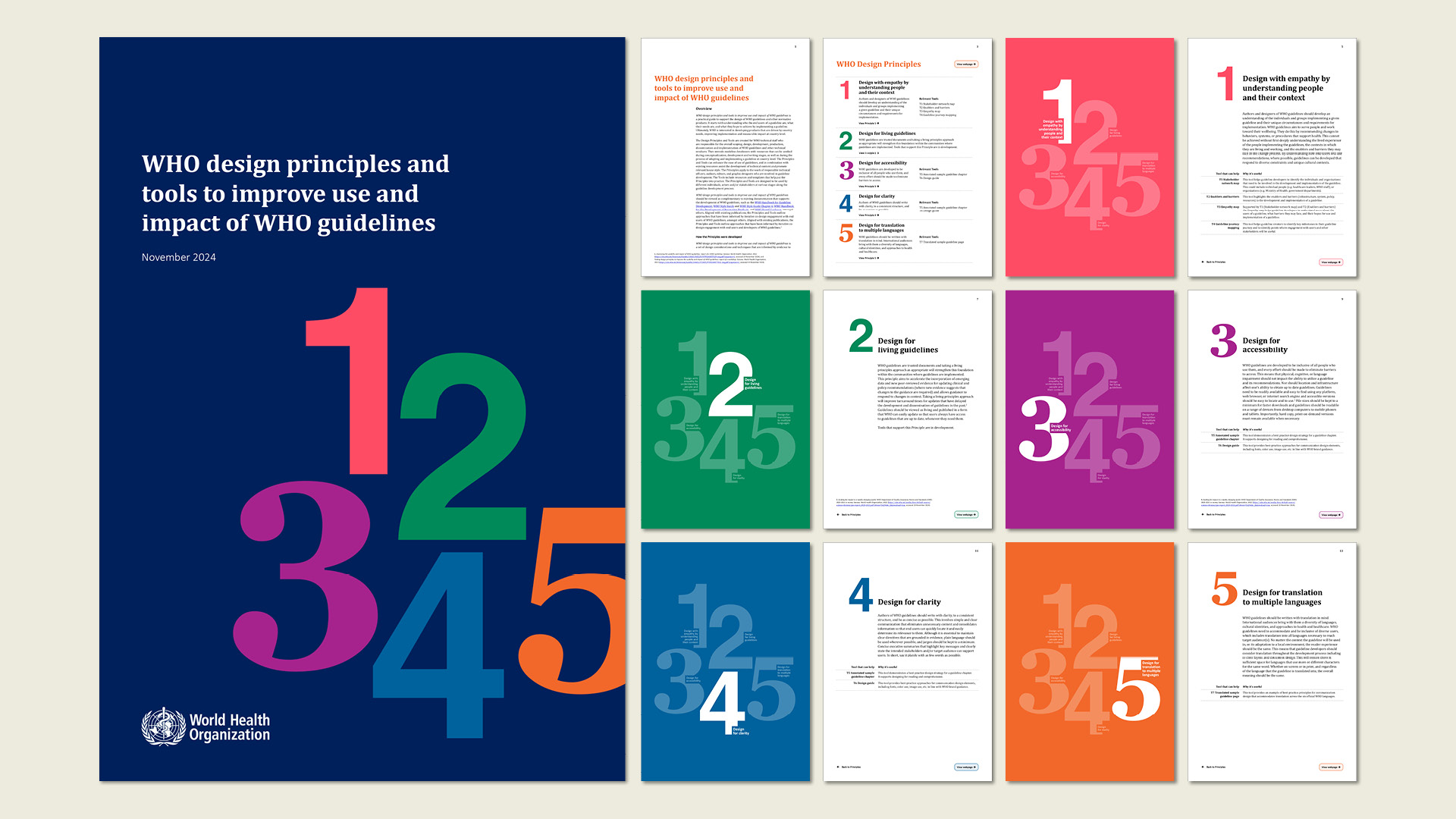
Launched in 2024, the ‘WHO design principles and tools to improve use and impact of WHO guidelines’ is a practical guide to support the design of WHO guidelines and other normative products. It starts with understanding who the end users of a guideline are, what their needs are, and what they hope to achieve by implementing a guideline. Ultimately, WHO is interested in developing products that are driven by country needs, improving implementation and measurable impact at country level.
WHO Reports
‘Improving the Usability and Impact of WHO Guidelines: Report of a WHO Workshop’
 WHO Personas
Example of a WHO persona used in the first workshop. These personas are fictional characters representing the lived experience of those trying to access, use and implement WHO guidelines in developing contexts.
 Design Tools
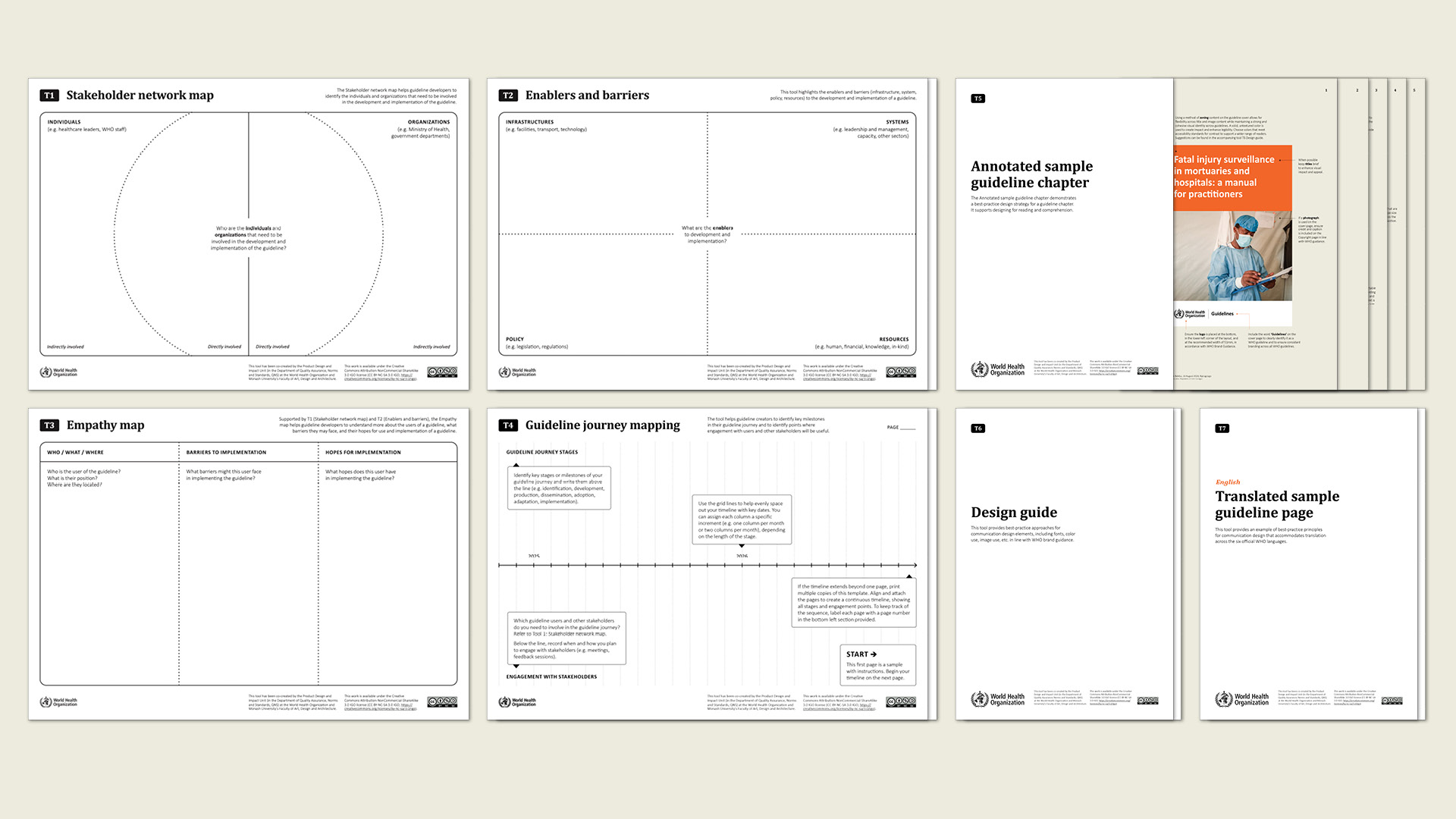
Seven co-designed tools were developed that include resources and templates that will help authors, editors, and designers to put the Design Principles into practice.
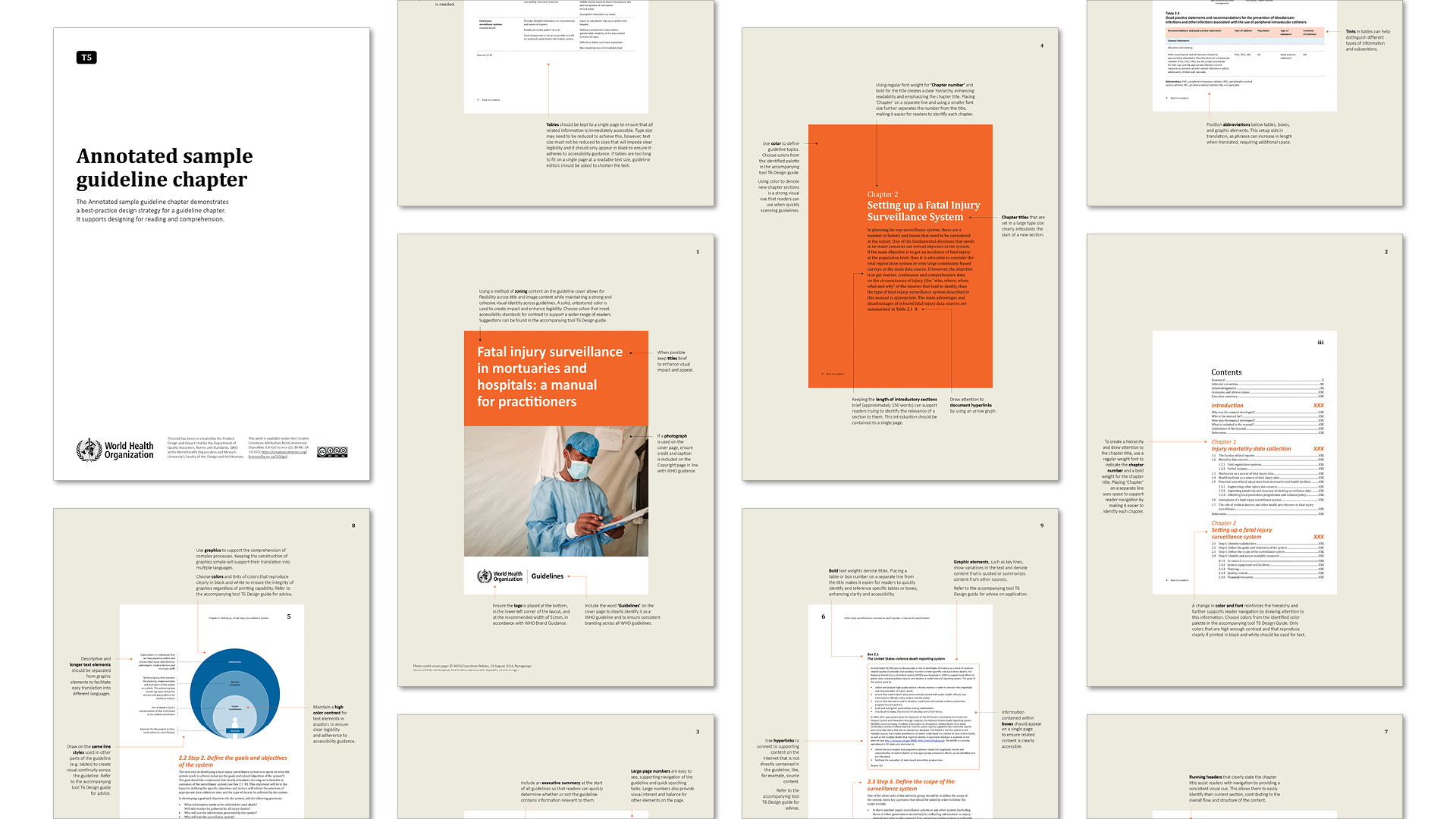 Tool T5: Annotated Sample Guideline Chapter
An annotated prototype of a WHO guideline that had been redesigned by the Monash design team.
 WHO Reports
‘Improving the Usability and Impact of WHO Guidelines: Report of a WHO Workshop’
‘Testing design principles to improve the usability and impact of WHO guidelines: Report of a WHO workshop.’
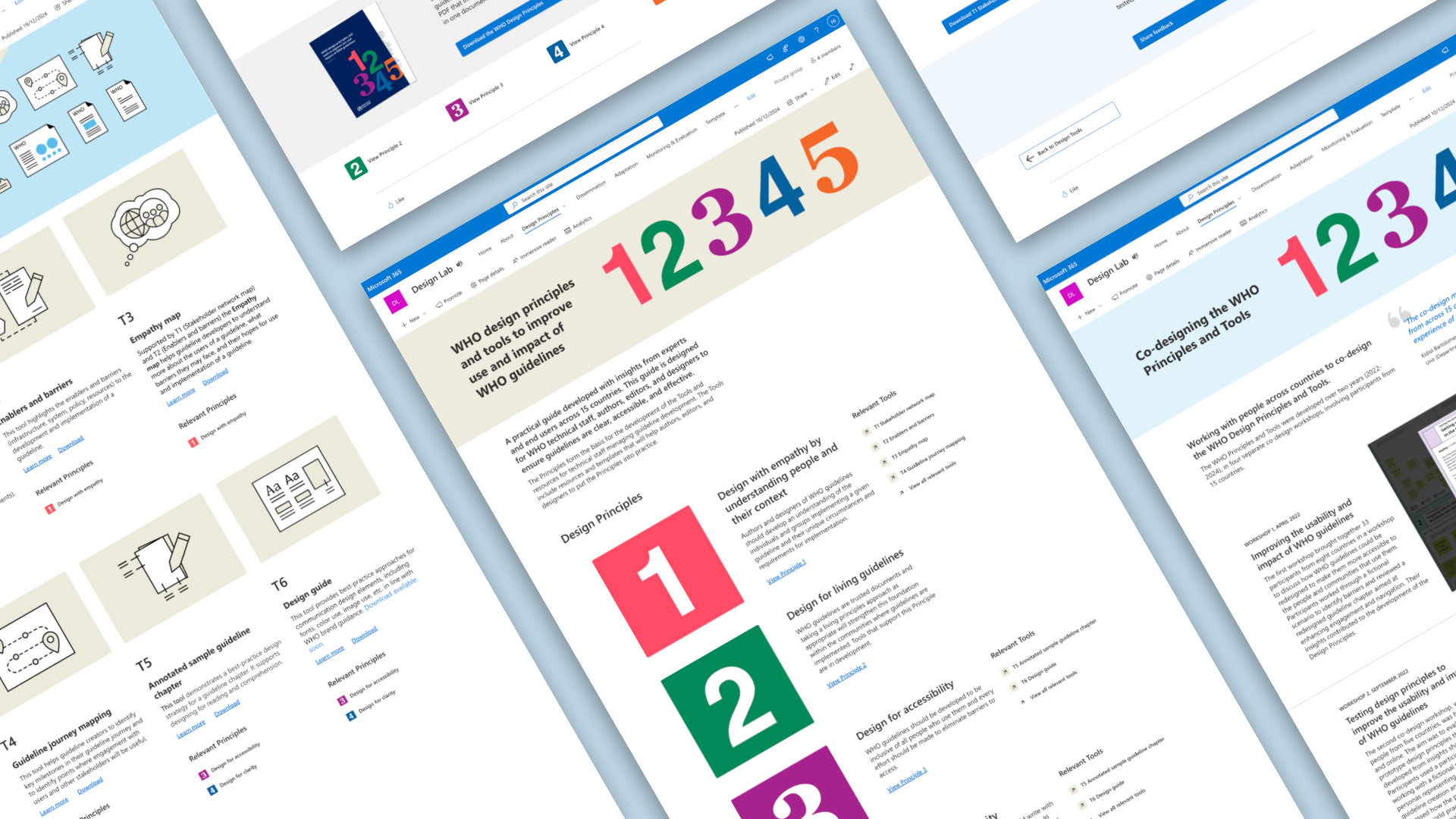 WHO Design Principles and Tools Site