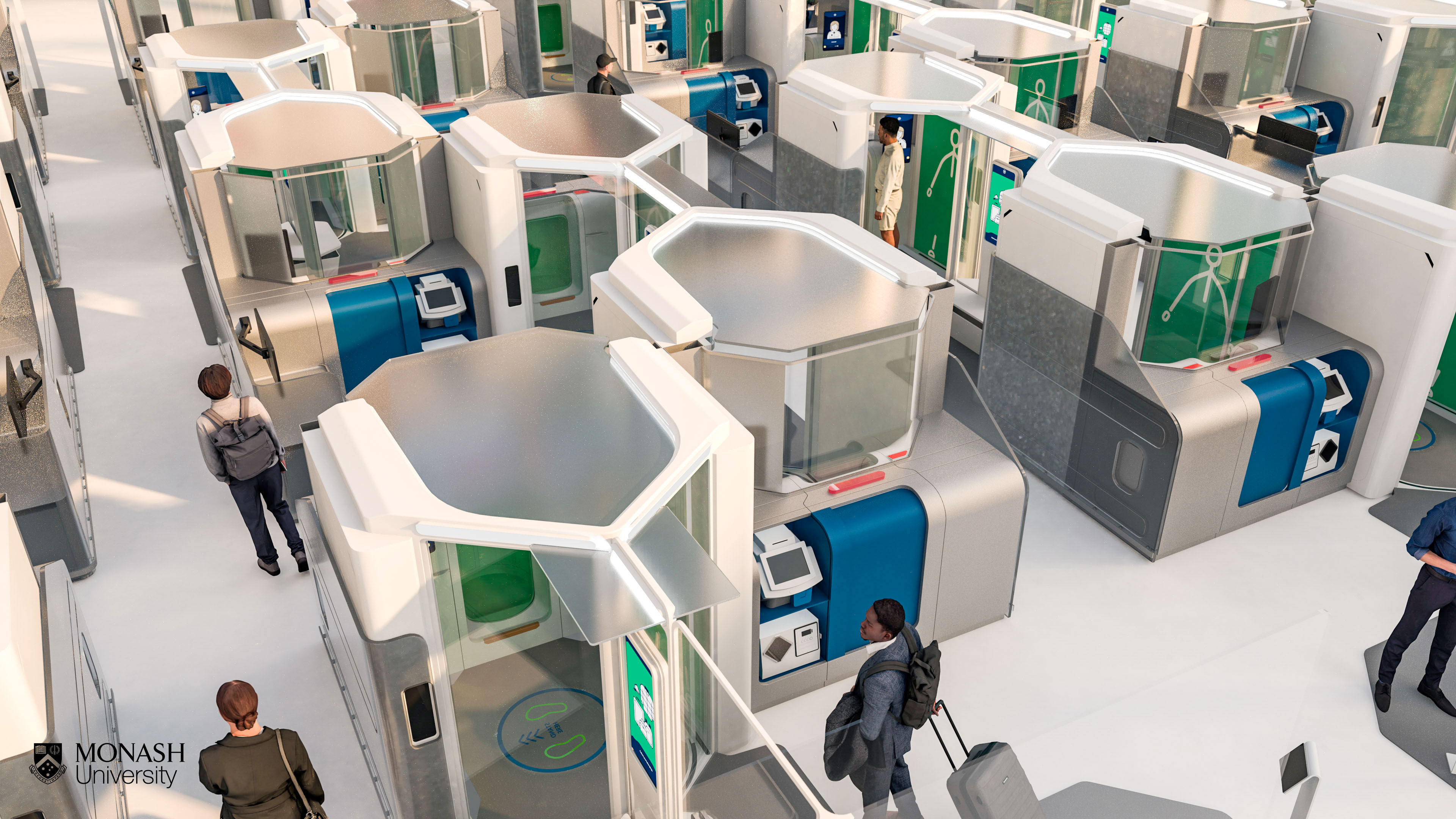
Passenger Self-Screening Airport Security Checkpoint
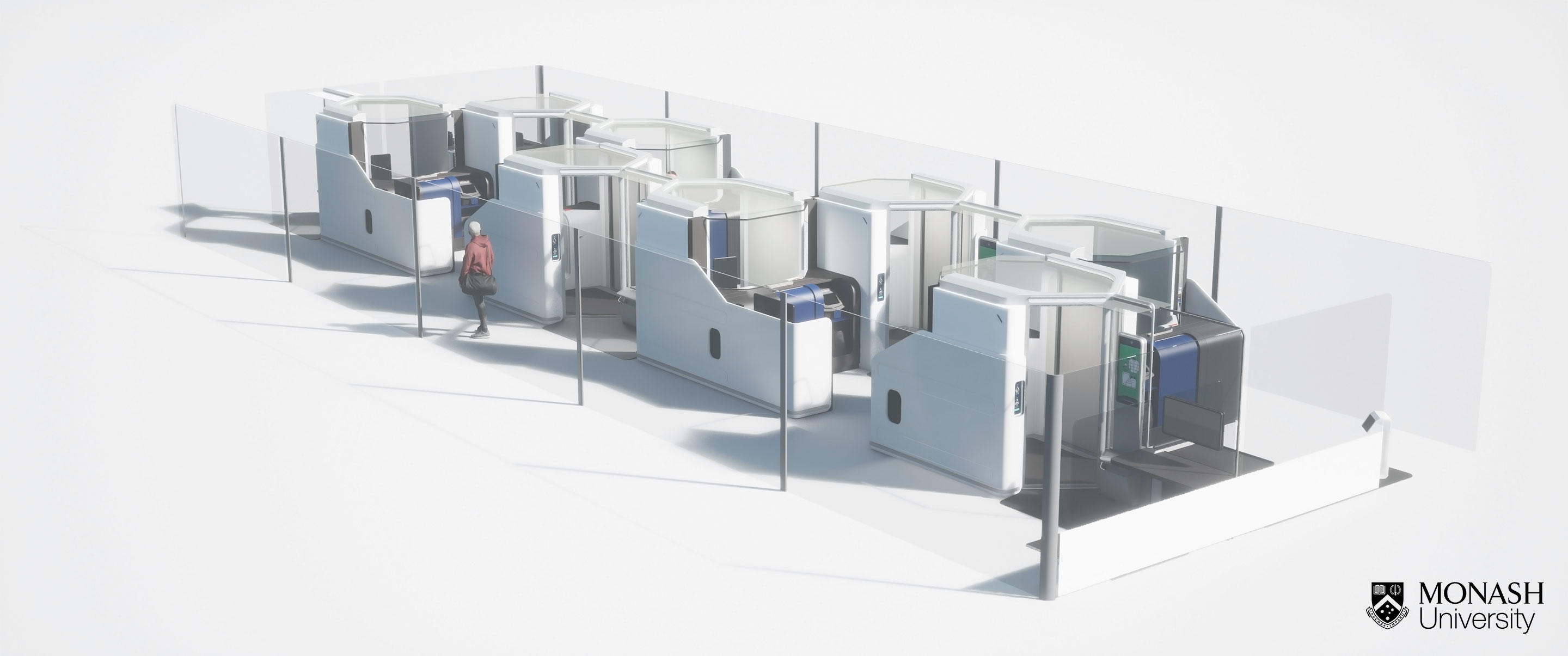
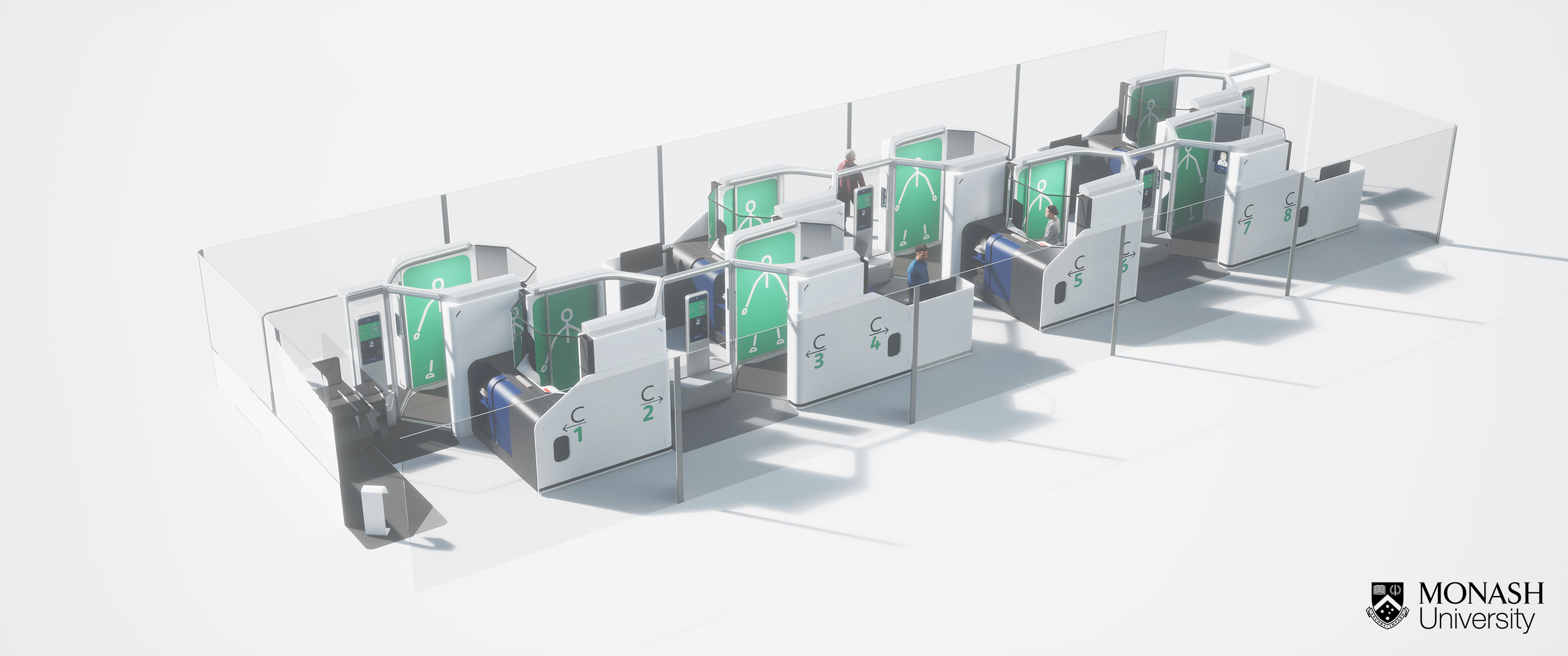
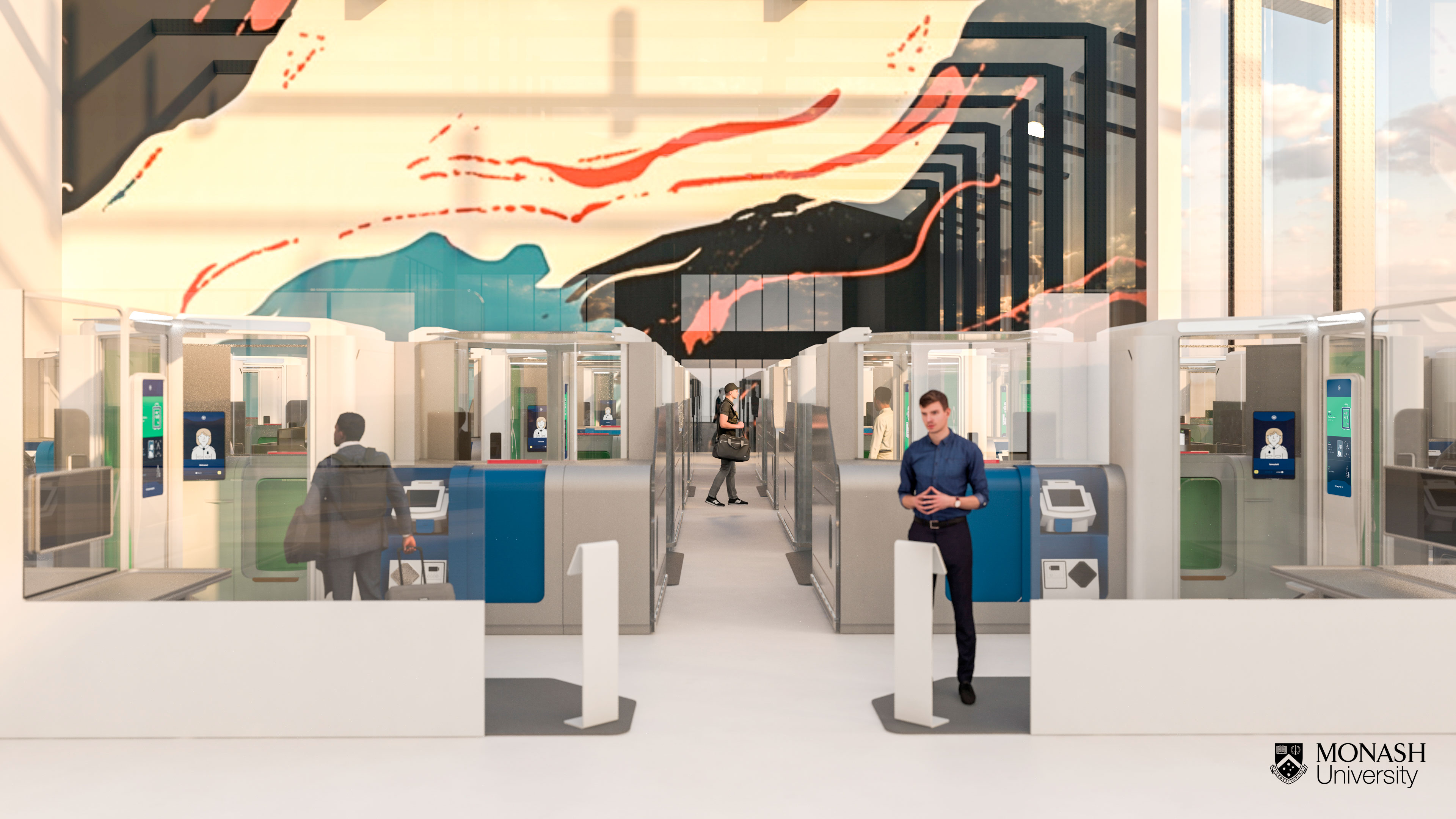
Monash University’s Design Health Collab team is working with partners to deliver a self-screening security portal for the US Department of Homeland Security.
Investigators
- Professor Daphne Flynn
- Dr Nyein Aung
- Murray Camens
- Richard Morfuni
- Dr Myra Thiessen
- Dr Indae Hwang
- Professor Nicole Kalms
- Associate Professor Selby Coxon Monash Art, Design and Architecture
Co-investigators
- Maryke Laubscher
- Tom Millward
- Jonlee Luzuriaga
- Isabella Webb
- Hinhis Ma
- Belle Lertruangamorn
- Sherry Lu
- Ying Ma Monash Art, Design and Architecture
Partner organisation
- Micro-X Ltd
Funded by
- Micro-X Ltd
Undertaken within
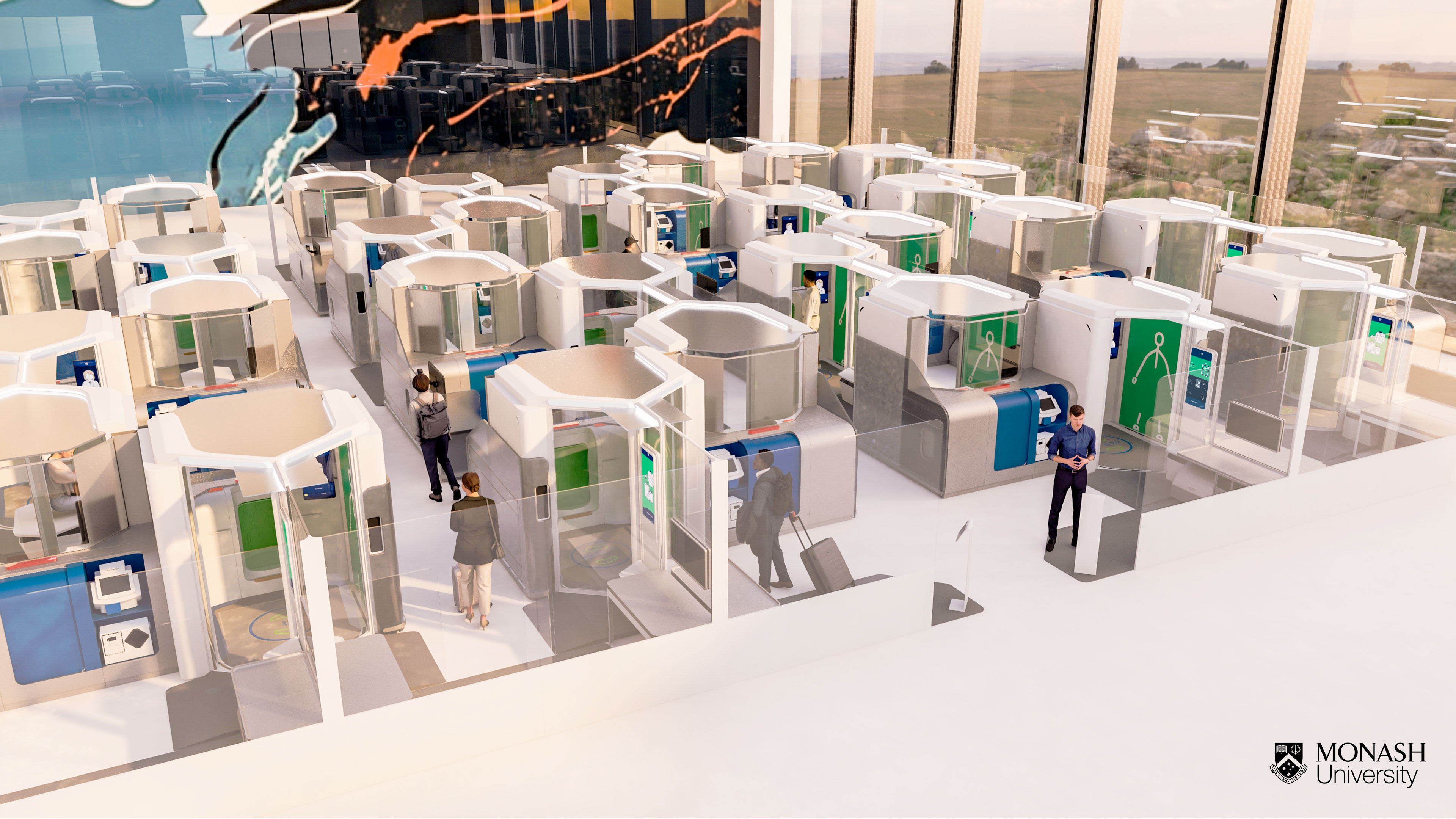
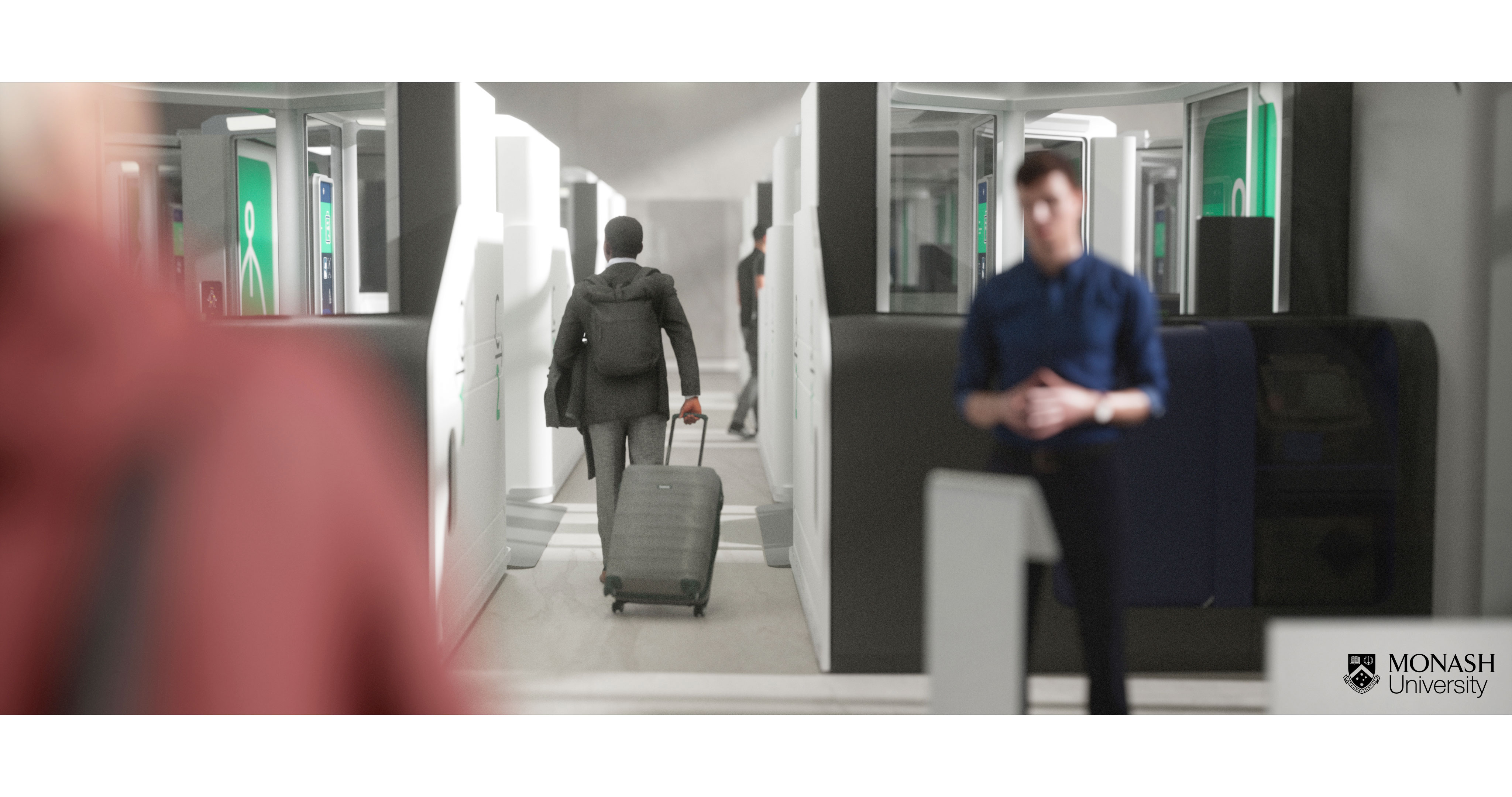
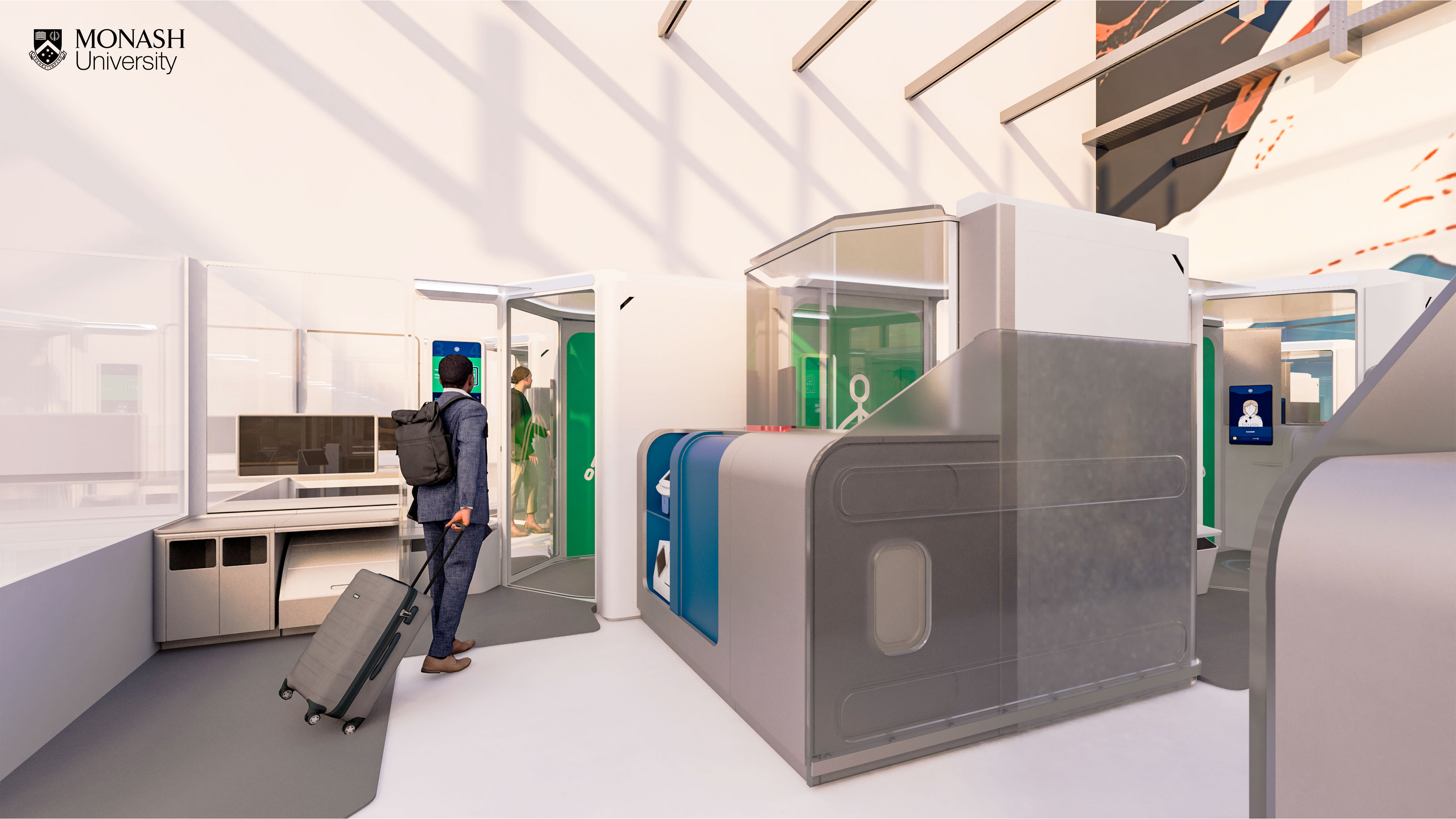
The multi-million dollar project, led by ASX-listed Micro-X, will transform the way passengers are screened at airports and enable touchless, automated screening to reduce bottlenecks and mitigate COVID and other infectious disease transmission.
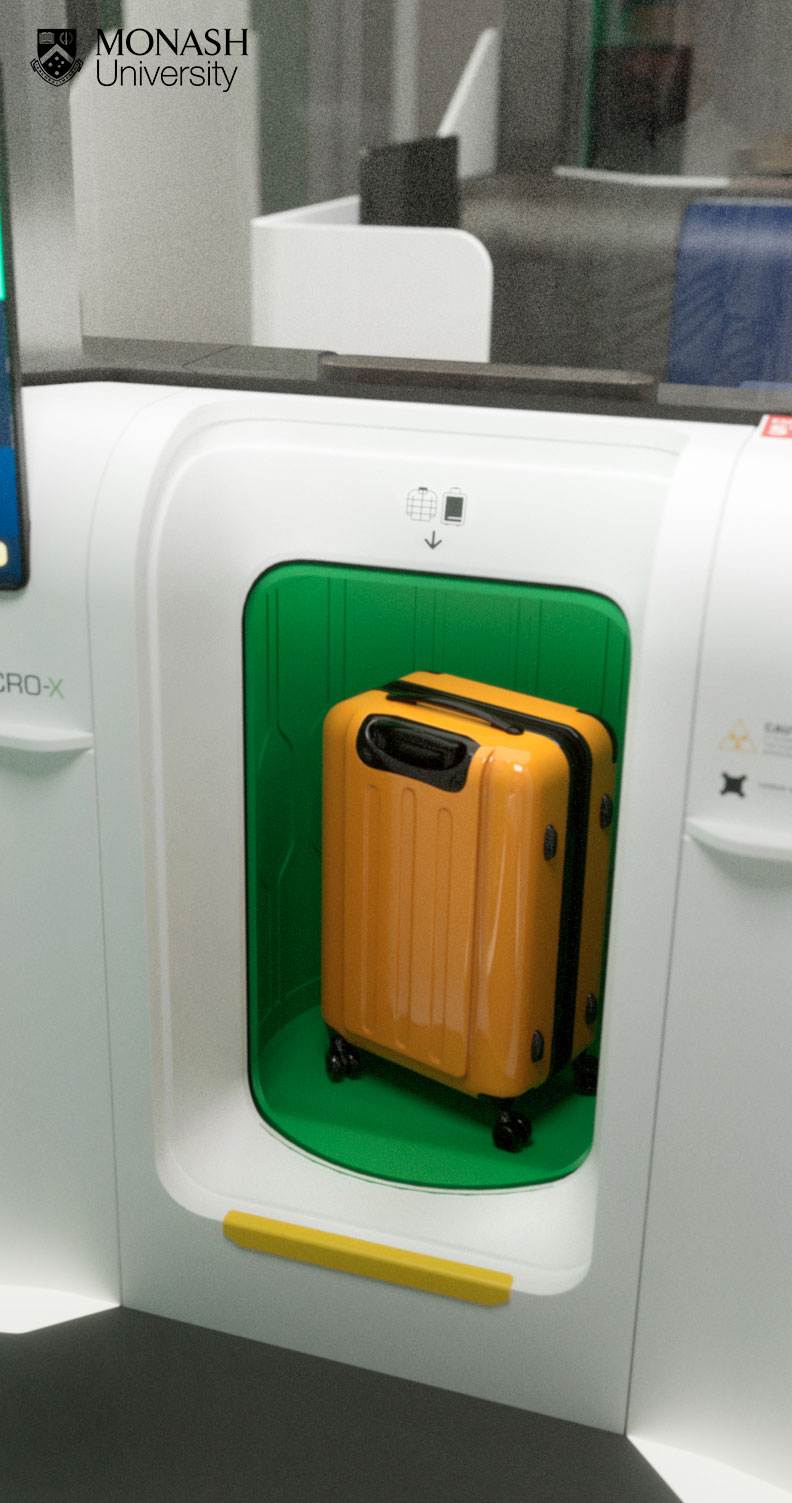
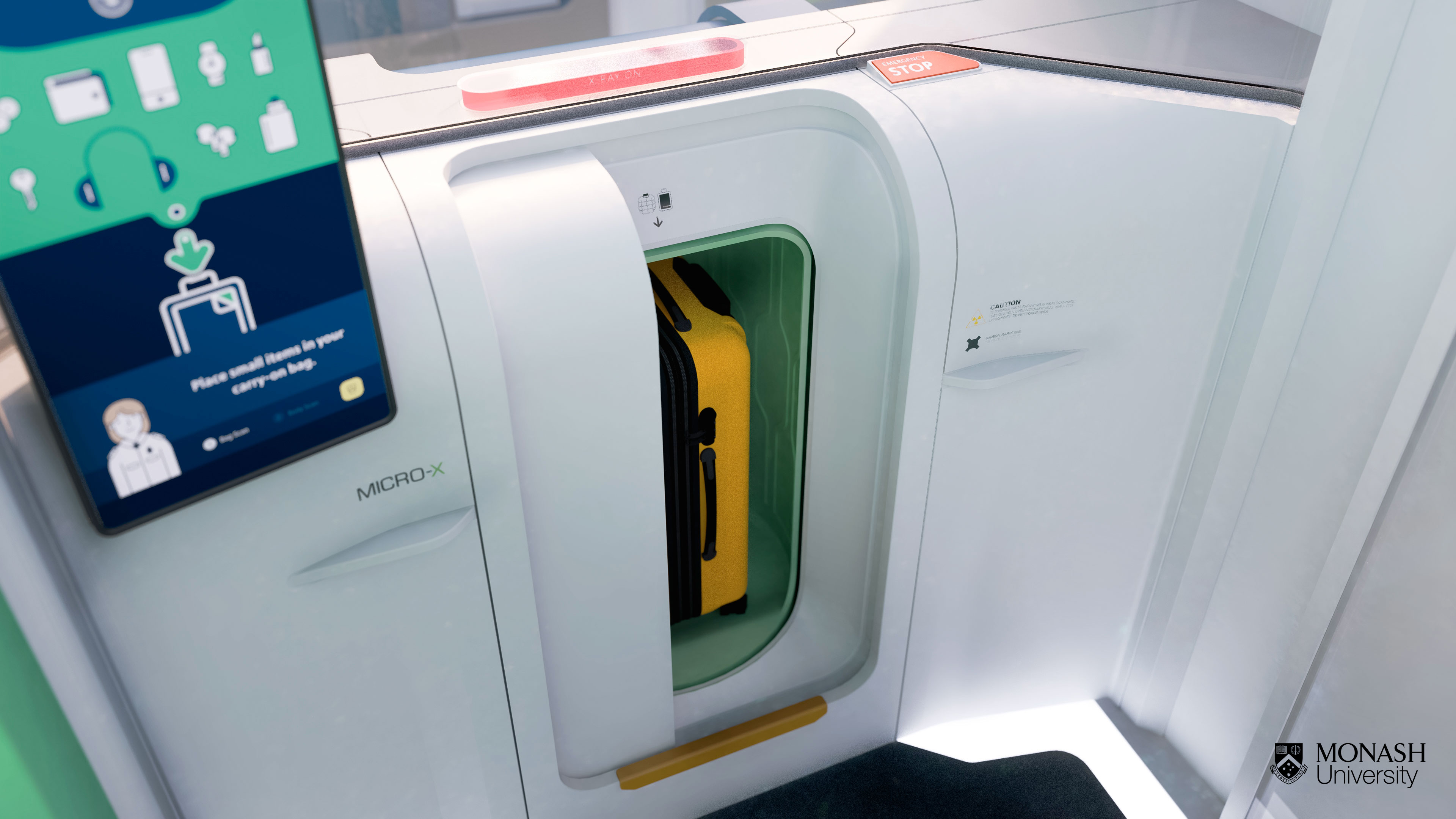
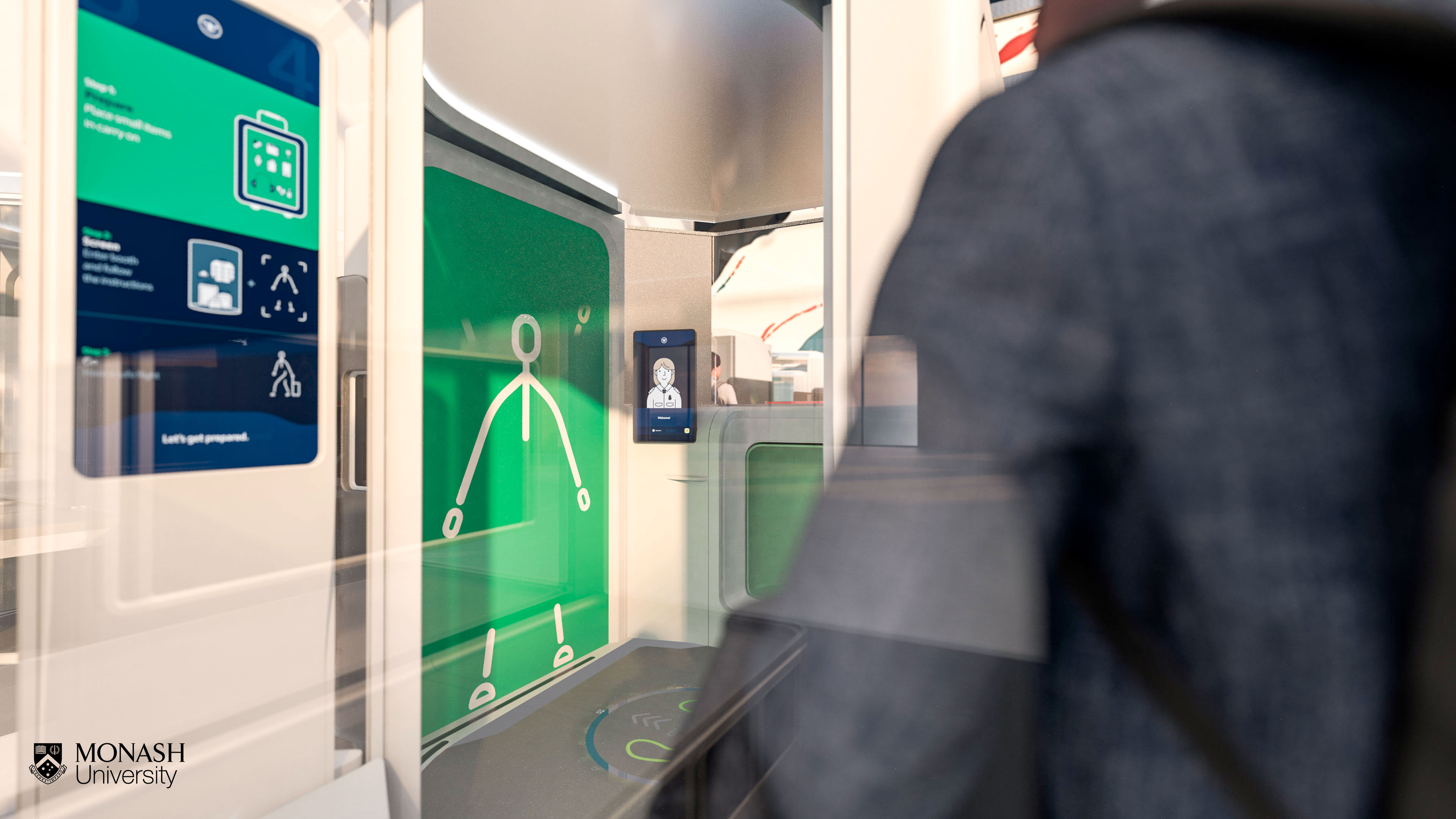
The integrated portal will bring together passenger verification, health screening, security, baggage and other readings, to improve user experience and efficiency in domestic airport settings globally.
Design Health Collab defined the design direction for the Passenger Self-Screening Airport Security Checkpoint, with a focus on enhancing security measures and improving the passenger experience while restoring human dignity during the airport experience.
In collaboration with other research labs in Monash Art, Design and Architecture, including XYX Lab around gender sensitive design and the Mobility Design Lab who provided expertise in passenger flow and transportation.
The collaboration between Design Health Collab and Micro-X has yielded advanced concepts in airport security and passenger experience. The culmination of this work has the potential to significantly transform the airport security screening process, offering an efficient and customer-centric approach.
Looking ahead, an extended phase of work is proposed to refine further, build, and test the prototypes in real-world airport environments. The plan outlines the phases for the development and trial of prototypes with each phase including specific objectives, tasks, and responsibilities. Success metrics are defined to measure the effectiveness of the design solutions and their impact on passenger experience and security.
Media