
Designing Intergenerational Commons: Reimagining Community Facilities for Super-Diverse Casey
Reimagining community spaces for a diverse future
Investigators
- Dr Suzanne Barker
- Associate Professor Matthew Bird
- Professor Carl Grodach Monash Art, Design and Architecture
Co-Investigator
- Dr Maria Daels Monash Art, Design and Architecture
Funded by
- City of Casey
Partner Organisations
- City of Casey
Undertaken within
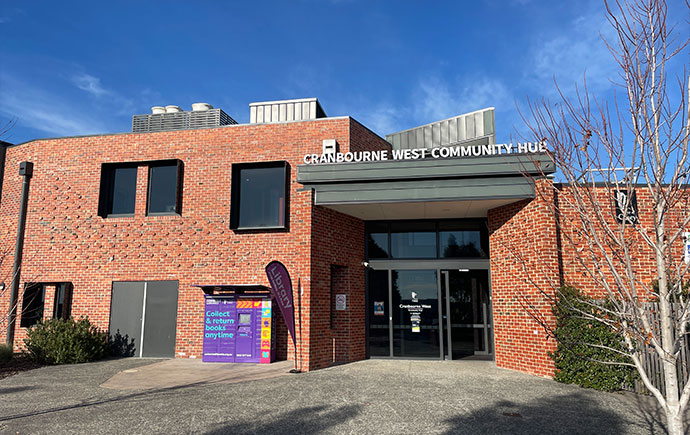
We want to look beyond standard community facility designs to prototype vibrant, shared spaces built specifically to bring diverse cultures and generations together.
Dr Suzanne Barker
The Designing Intergenerational Commons project reimagines council-owned community infrastructure to better meet the needs of rapidly growing, outer-suburban areas. While traditional integrated community hubs provide essential services, they are often oriented toward narrow use types, such as early years and families, leaving limited spatial or programming scope for broader intercultural and intergenerational connection. Using the City of Casey—one of Australia's most super-diverse municipalities—as a critical case study, this research addresses the growing risks of social isolation and loneliness by investigating how local public architecture can actively cultivate meaningful everyday encounters across more than 150 intersecting nationalities, faiths, and life stages. To bridge the gap between urban planning theory and real-world local government delivery, the project proceeds through an integrated, multi-phase research and design methodology. The team will conduct facility mapping, community leader and City of Casey staff interviews, and precedent analyses to understand how diverse groups experience existing community infrastructure. These lived-experience insights will feed into "Enquiry by Design" co-design workshops with community leaders, planners, and architects to prototype alternative, highly adaptable facility typologies. Ultimately, the project aims to translate these spatial innovations into evidence-based design and policy principles that can be scaled across local government facility pipelines, establishing a new generation of inclusive, durable, and convivial community spaces.