
30UNDER30 Spotlight: Dinel Meyepa
30UNDER30 Spotlight: Dinel Meyepa
Recently shortlisted for Australian Design Review's 30UNDER30, Monash University Master of Architecture alum Dinel Meyepa reflects on his journey into global architecture and offers advice for future architects.
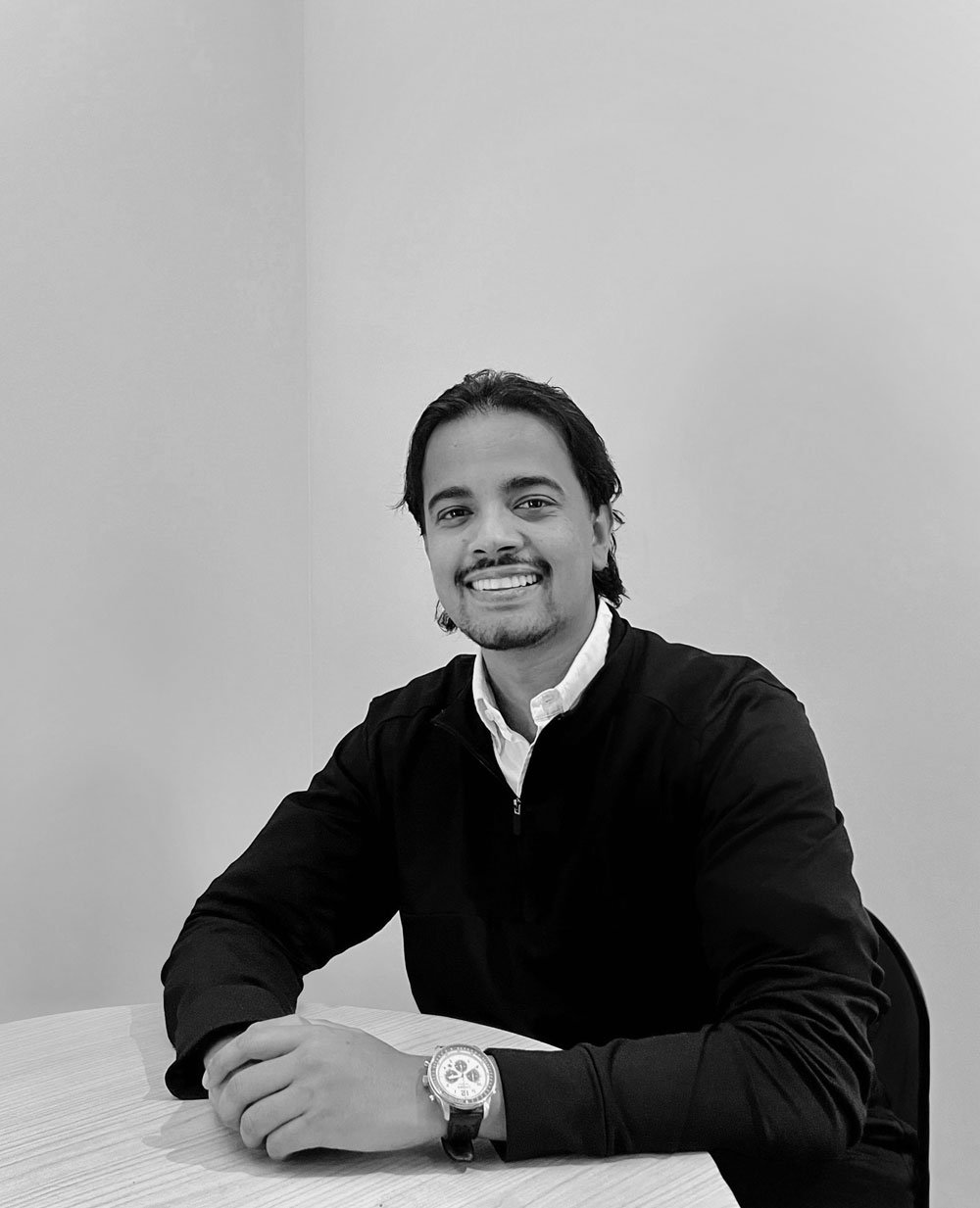
Where has your career taken you since graduating from Monash University?
I graduated in 2017 with a Master of Architecture and spent my final year studying while working part-time at Genton, an intense but rewarding experience that strongly shaped my transition into practice. I joined the studio during a national competition for Frankston Station, which we were fortunate to win and which opened up further opportunities in the rail and public sectors.
I remained at Genton for another five years during a busy period of growth, working across major rail and public projects including Reservoir and Pakenham Stations, as well as mixed-use community developments such as East Village, Sunbury. Despite challenges, particularly during COVID, the work offered fast-paced design exploration and early leadership opportunities.
What was a key turning point in your career?
A trip to Europe and visits to London’s iconic stadiums sparked my decision to move overseas and seek new challenges. As a lifelong football fan, I was drawn to Populous and the opportunity to combine sport and architecture at a global scale.
After returning to Australia, I decided to apply for just one role and take the outcome as a sign. While the exact position I imagined wasn’t available, a role in Populous’ urban design team aligned closely with my skills and experience. My background at Monash and Genton had grounded me in urban design, with its strong focus on human experience and context, an approach that translated naturally to stadium-scale projects.
Following a late-night interview from Melbourne, I received the offer and, with the support of family and friends, made the move to London.
What is it like working at Populous?
Working at Populous has been highly rewarding. I contributed to major masterplans for Asian Cup and World Cup stadiums, Olympic projects, and mixed-use developments across the EMEA (Europe, the Middle East, and Africa) region. While stadium design was new to me, the work was creatively rigorous and collaborative, bringing together diverse teams and disciplines.
I particularly valued Populous’ urban design approach, with its focus on strong principles, bold ideas, and human experience. A career highlight was being part of the winning team for the international competition for Stade Hassan II in Casablanca. In my second year, my role was elevated, with opportunities to lead masterplans and coordinate multidisciplinary inputs into cohesive designs.
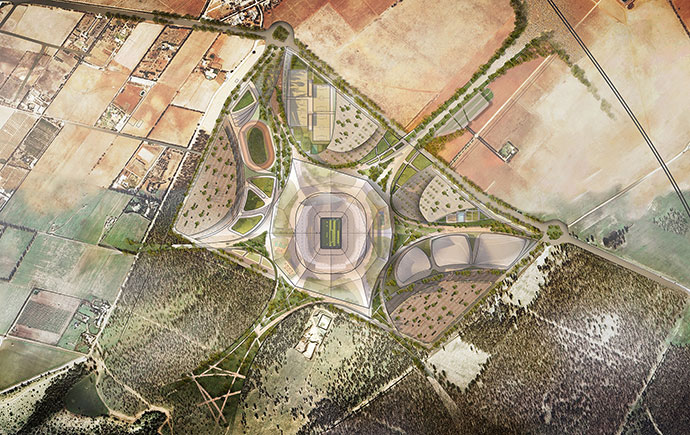
Image: Stade Hassan II, designed by Populous
What have you learned along the way?
Moving abroad can be challenging, but it’s a valuable experience if the opportunity arises, especially in areas of practice not readily available in Australia. Stepping outside your comfort zone can broaden your perspective, build confidence, and support both professional and personal growth, while remembering you can always return home.
I never expected to work on global sports projects overseas, yet this experience has been invaluable as major events and stadium-led precincts become increasingly important in Australia. With milestones like the Brisbane 2032 Olympic and Paralympic Games ahead, overseas experience can help you stand out, opening unexpected opportunities and shaping your career beyond day-to-day practice.
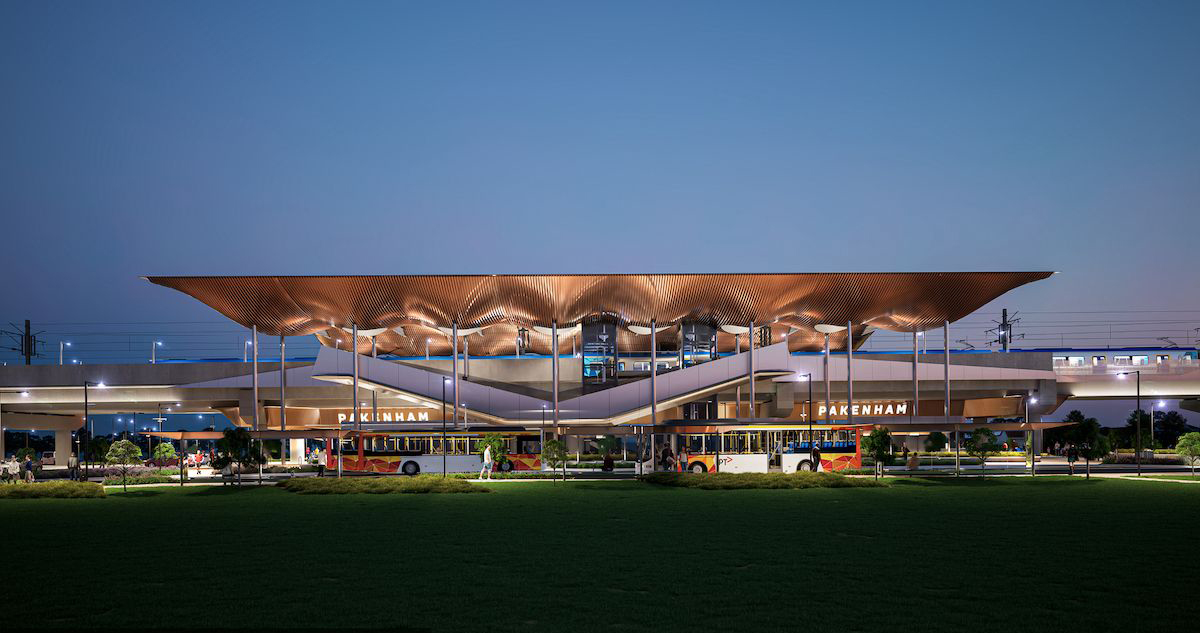
Image: Pakenham Station, designed by Genton Studio
How has Monash Art Design and Architecture (MADA) influenced your design approach?
My early studies at MADA emphasised a simplified approach to design that helped me understand scale, beginning with hands-on projects like 1:1 models and small, human-centred buildings. The wide range of studio projects, from cabins to large civic and sports buildings, built a strong foundation for tackling complexity.
Clear design principles and the ability to communicate ideas effectively were strongly reinforced, particularly through feedback that focused on simplifying proposals and clearly showing their evolution. Monash’s balance of conceptual thinking, research, and technical resolution has continued to shape my approach to real-world and competition projects.
What do you enjoy most about architecture?
I enjoy the sense of focus and motivation the work brings. I noticed that when I was working on projects, time didn’t feel slow because I genuinely enjoyed what I was doing. I think that enjoyment shows in the quality of my work. Seeing projects I’ve contributed to be built and used by friends, family, and the wider community is especially rewarding, giving me a strong sense of purpose and impact.
How do you think AI will impact the future of Architecture?
I see AI as a tool that could really enhance the way we work, helping us test ideas and refine proposals more efficiently without taking over the creative decisions. On complex projects, it could help us analyse different scenarios, see potential issues earlier, and improve the speed of production without affecting quality. For me, the exciting part is that it frees up more time to focus on more important aspects that make architecture enjoyable for us.
What opportunities will shape the future of the profession in the coming years?
The profession is evolving rapidly, creating new opportunities beyond traditional practice. Emerging areas such as computational design, urban analysis, and experience design are enabling architects to respond more creatively to complex challenges. Advances in technology are also driving more engaging and interactive buildings, shifting the focus from designing objects to creating meaningful, high-quality spaces for people.
What advice would you give to aspiring architects beginning their journey?
I think the architecture industry is going through a lot of change. It’s expanding but also branching into emerging sectors, with more unique roles within firms than ever before. This creates real opportunities for aspiring architects to take initiative, carve out their own path, and become experts in areas that are still relatively unexplored. I’d encourage anyone starting out to explore different avenues while staying true to the core of the profession. Branching into less conventional pathways can be especially rewarding and help build a unique identity that sets you apart in the industry.