
Designing their futures: Su Wutt and Hajar’s immersive experience at Grimshaw
Designing their futures: Su Wutt and Hajar’s immersive experience at Grimshaw
Image: Su Wutt Yee’s Eco V-Park as part of studio Mixology.
Two Monash University Master of Architecture students have recently completed transformative Work Integrated Learning (WIL) internships at renowned global architecture practice Grimshaw, showcasing the strength of industry partnerships in preparing the next generation of architects.
Su Wutt Yee, an international student from Myanmar, and Hajar El-Hennawi, a domestic student, both brought unique perspectives and enthusiasm to their placements at Grimshaw's Melbourne office.
Su Wutt Yee’s path to Melbourne

Image: Su Wutt Yee
Su’s journey to Monash began in Myanmar, where she found the university’s supportive pathway program ideal. She sums up studying architecture at Monash as offering freedom within the discipline.
“I love the creative side. We can push projects as far as possible, focus on our own interests, and explore many different streams,” she says.
Monash mentors also played a pivotal role. “The main one was Thomas Linschoten from Woods Bagot, who led Mixology, a mixed-use studio. He brought so much insight and supported us in preparing for our presentation. He inspired me to pursue a career in these types of designs,” she says.
Hajar’s Architectural awakening
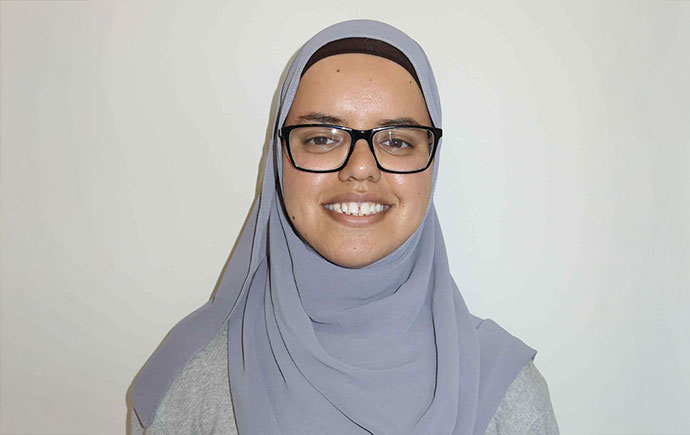
Image: Hajar El-Hennawi
Hajar’s journey began unexpectedly through the Access Monash Mentoring Outreach program at Minaret College. “I initially wanted to study Engineering or Science, but the Monash students introduced me to Architecture and I was drawn to the creative side,” she recalls.
A highlight of her master's was the Riverscape Habitation Studio in South Korea which was inspired by the International Design Competition for the Banpo-Hangang River Connection Park. Hajar joined Professor Hae Won Shin, founder of the award-winning practice LokalDesign, collaborating with Korean students. Under Professor Shin’s guidance, she designed a bridge to reconnect two areas divided by a highway and was inspired by the challenge of balancing ecological values, cultural perspectives, and everyday community use in a rapidly transforming urban landscape.
Su Wutt’s Grimshaw experience
The highlight of Su’s Master’s experience was the five-week placement at Grimshaw, where she contributed to the ‘Good Shed’ project in Docklands, a heritage building renovation focused on bringing more natural light into the space.
“Working with Nicholas Lee, Joshua Stellini, and Alan Tier was a great experience. We created 3D models of the whole building, produced detailed renders, and conducted thermal analysis,” she describes.
“I was impressed by the expertise of the Grimshaw team, and learning REVIT was really beneficial. They gave me access to training, and I was able to apply that knowledge hands-on for the project,” she adds.
Su also learned the difference between study and practice: “It’s very different from university life. I learned to focus my efforts within set timeframes and realised how important it is to keep learning a wide range of skills to succeed in professional practice.”


Images: Su’s work on the ‘Good Shed’ project.
Hajar’s Grimshaw experience
During her Grimshaw internship, Hajar learned about a variety of projects.
“Taryn Loughnan was a fantastic supervisor—she set up ‘Project Insight’ sessions, introduced me to different teams, and gave me the chance to learn from real projects that really inspired me.”
Hajar also assisted with housing planning and prepared presentations for St Michael’s Grammar. Her main project was the Grimshaw Entry Experience where she designed interventions to improve how users navigate the new Lonsdale Street office, contributing to displays, lighting, wayfinding, and a trajectory panel highlighting key projects.
“I learned that the concept is one thing, but the presentation is critical, what matters is being able to communicate ideas effectively with clients regardless of platform,” she reflects.
Career impact and future pathways
The internships provided both students with valuable career experience. Su Wutt appreciates the prestige of the Grimshaw name, the supportive learning environment and the design approach that she experienced there. “Grimshaw is a great place to work and there’s a strong focus on innovation and sustainability.”
Hajar found the internship invaluable for understanding how a practice operates, from design to collaboration. Observing professional standards and connecting with colleagues shaped her outlook and interest in sustainable community-focused design. Additional hours on the “The Peaks Project” will allow her to further develop her skills in universally designed housing.
A partnership built to last
Thihoa Gill, People Lead (APAC) at Grimshaw, emphasises the mutual benefits of the partnership.
“Monash University offers a strong Architecture program enabling students to work in-studio and we wanted to support this,” she explains.
“At Grimshaw, we’re committed to helping the next generation of architects understand how the industry functions.”
Grimshaw values what Monash students bring to their practice. “We look for architecture graduates who are keen to embrace every opportunity. In big organisations there are lots of different projects and you need to be flexible, resilient and adaptable with a good dose of curiosity,” Gill notes.
Recognising their drive and adaptability, Grimshaw offered both students an additional 100 hours each to further develop their skills and experience.
Preparing for tomorrow’s architects
Gill is particularly excited about Monash’s new combined Architectural Studies degrees.
“Architecture careers aren’t linear. Life and jobs are so complex. It’s important that graduate architects have a broad range of skills to complement their technical skills.”
For Su and Hajar, their Grimshaw experience has provided key learning opportunities and given them insight into how projects work in an industry setting.
The partnership between Monash and Grimshaw continues to evolve. Plans for more WIL placements are underway, ensuring future architecture students will have similar opportunities to learn, grow, and contribute to the built environment.