
Bridging cultures through craft: Richard Monger’s journey to Japan with the Hill and Hawtin Scholarship
Bridging cultures through craft: Richard Monger’s journey to Japan with the Hill and Hawtin Scholarship
For Bachelor of Fine Art (Honours) graduate Richard Monger, being awarded the Tess Hill and Bill Hawtin Fine Art Scholarship was more than financial support—it was a chance to grow as an artist, connect internationally, and test the direction of his practice. The scholarship, which helps students pursue creative opportunities beyond the classroom, enabled Richard to embark on a transformative trip to Japan.
Applying with confidence
Richard admits the application process initially felt daunting.
“Approaching the application I was quite anxious. It takes a lot of self-confidence to begin the process mentally,” he says. With encouragement from his family, and past mentors, he found the process energising. “Having a plan and pre-scheduled itinerary helped guide and clarify my answers.”
When he received the award, Richard felt affirmed in his path. “Being told I was accepted felt like a great honour and a deep sense of appreciation,” he says. “I came to Monash with the belief that my ideas and passion would be welcomed, encouraged and supported, and receiving this scholarship affirmed that.”
Why Japan?
Richard’s choice of Japan reflected both his sculptural and culinary background. As a chef and artist, he’s long admired Japan’s attention to form and presentation. “I chose Japan for its rich history in pottery, its time-honoured techniques, and deeply rooted traditional processes,” he explains.
Even Japanese cuisine shaped his research interests. The Firefly Squid of Toyama Bay, famous for its glowing bioluminescence, became a metaphor for his exploration of porcelain, glass, and light—materials he continues to push in unexpected directions.
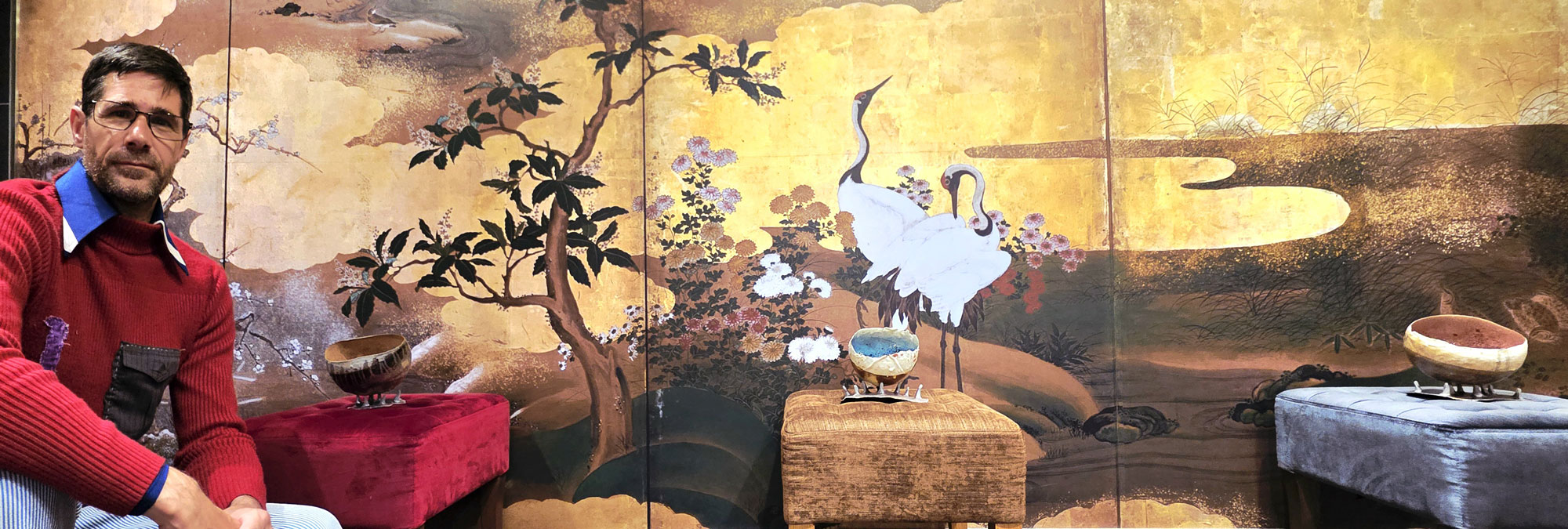
Image: Richard with his ceramic works in Kyoto
Immersed in tradition and exchange
Travelling across prefectures, Richard joined workshops, observed artisans, and exchanged stories with local makers. “Meeting local artists and sharing stories was incredibly enriching,” he says.
Highlights included learning Wagasa (crafting traditional umbrellas) and Shibori (silk dyeing). Both taught him new ways of thinking about structure and detail. At the Toyama Glass Studio, Richard began exploring how porcelain and glass could be fused—an experiment that earned him an invitation to return as a guest resident artist.
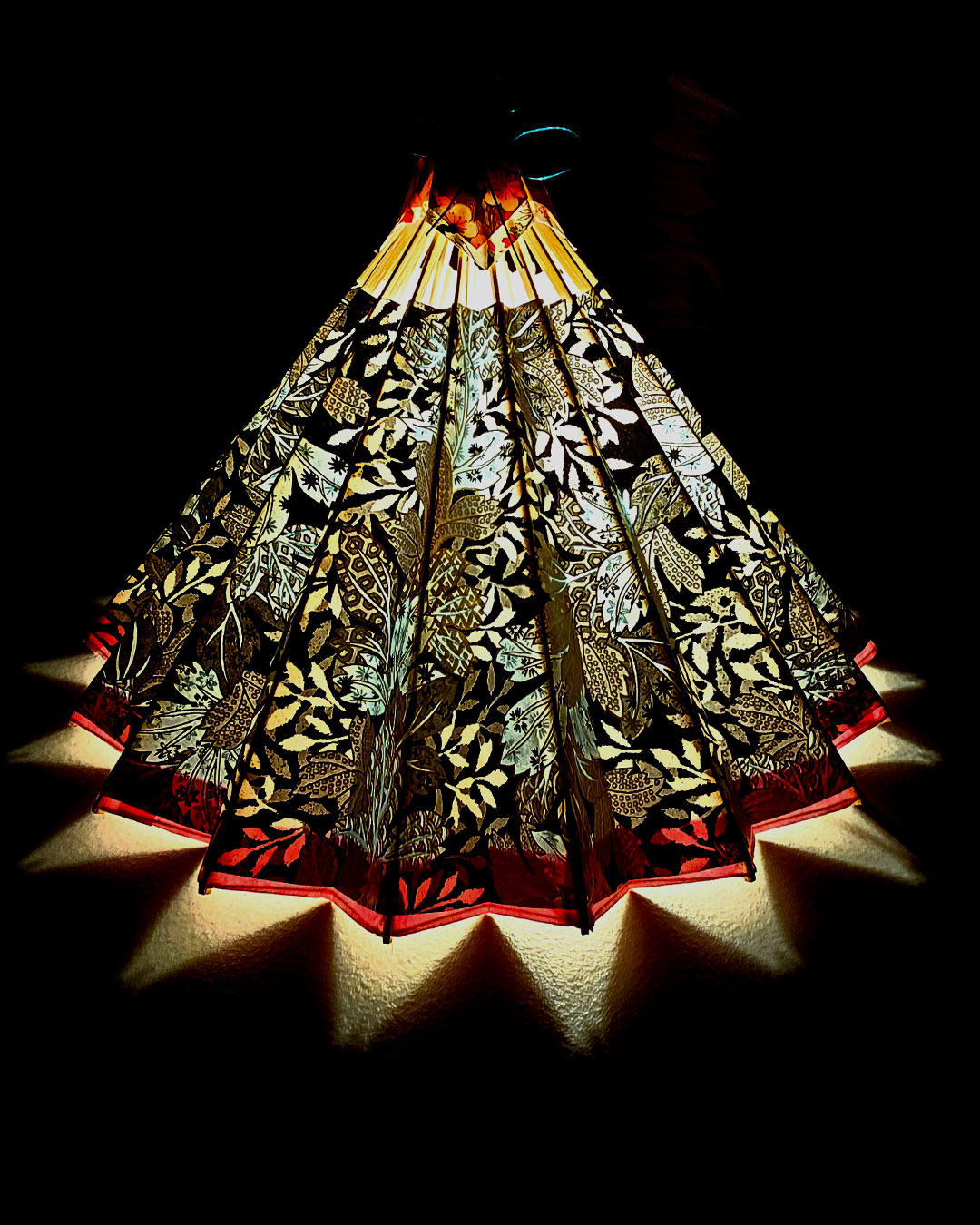
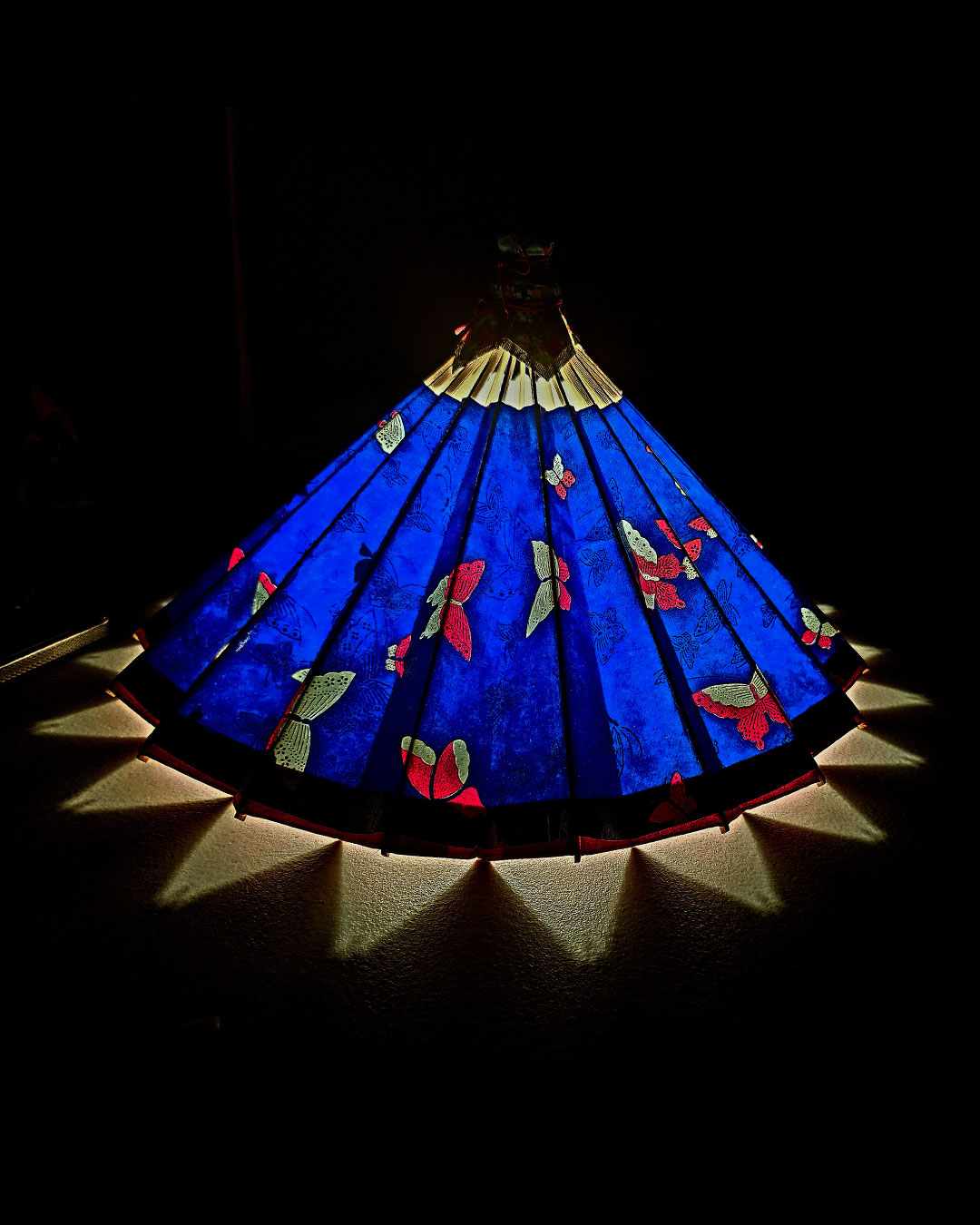
Richard explains that these experiences fed directly into his material-led practice.
“Learning ancient techniques gave me fresh insights into structure, application, and aesthetic detail,” he says. “Working with glass especially made me think differently about translucency, fragility and light.” These qualities are becoming central to his research-based practice, which he describes as “grounded in clay, glass, and the language of light.”
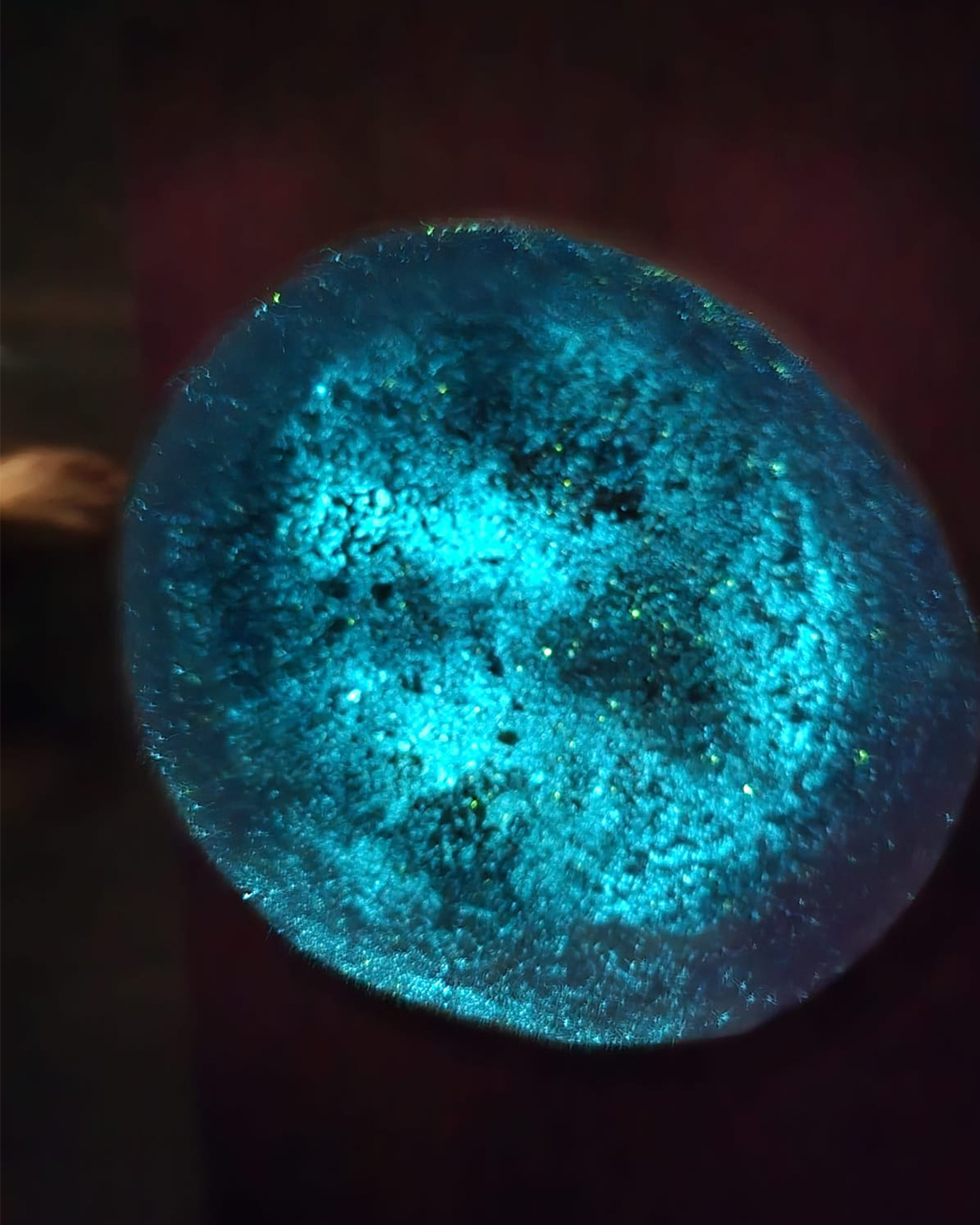
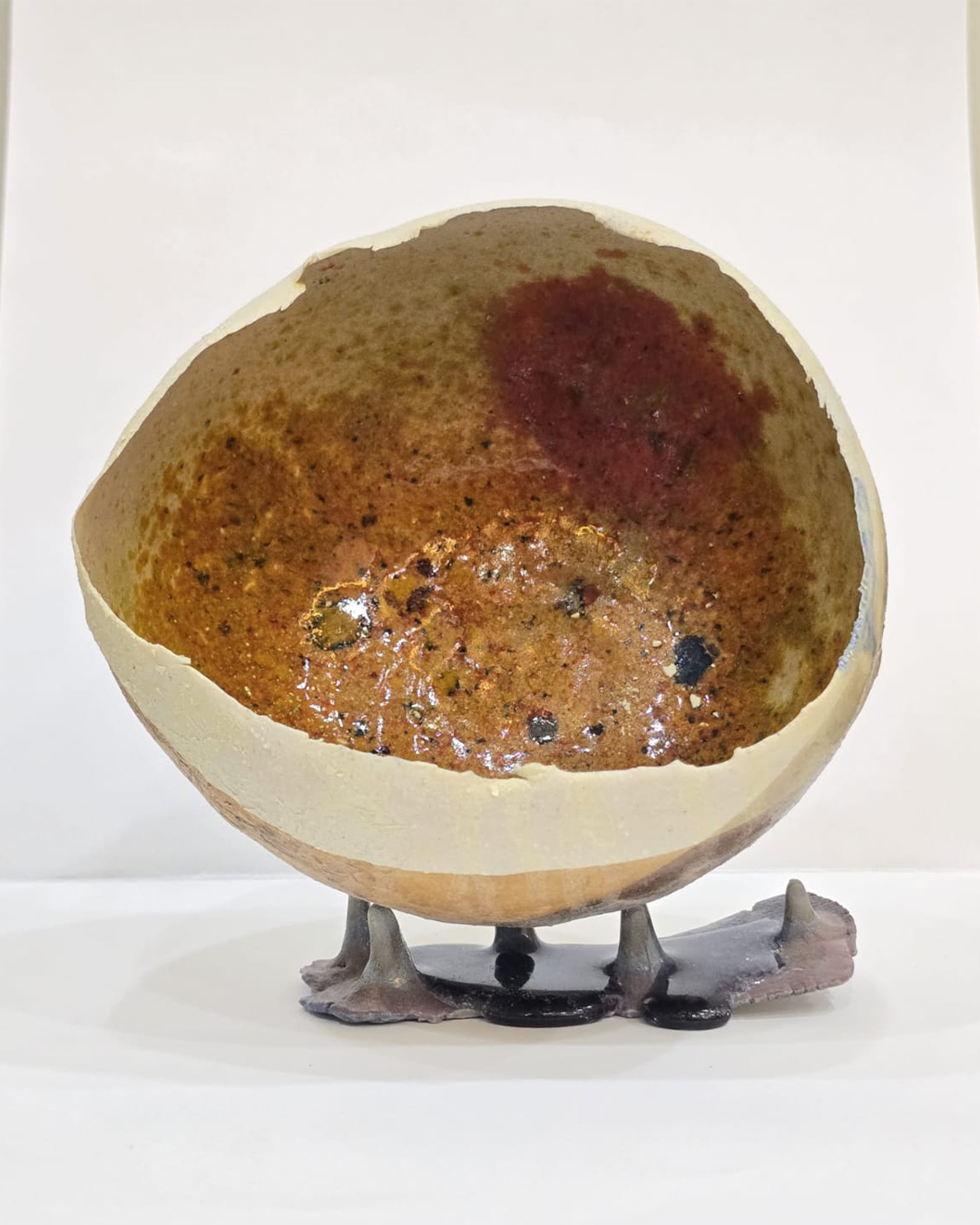
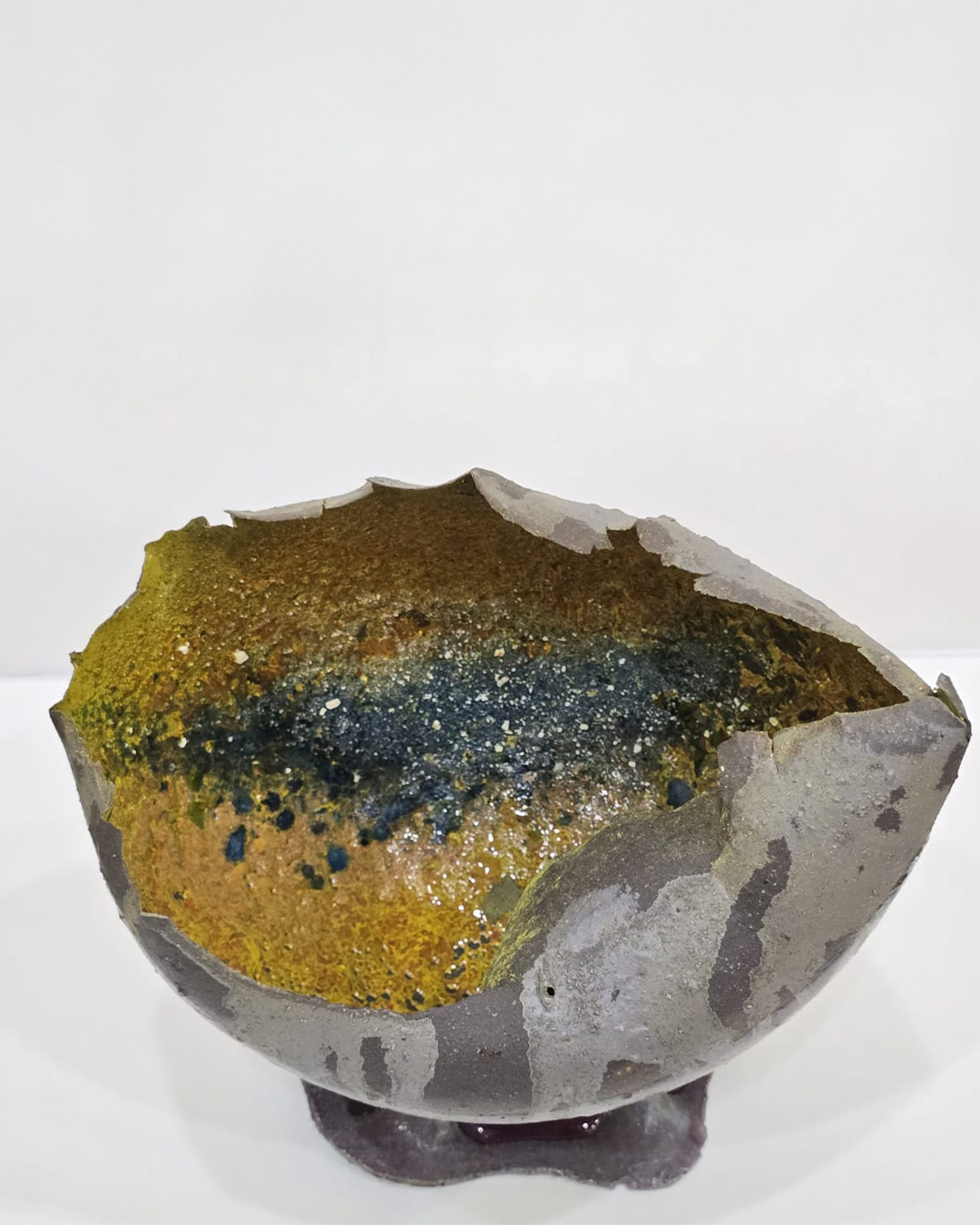
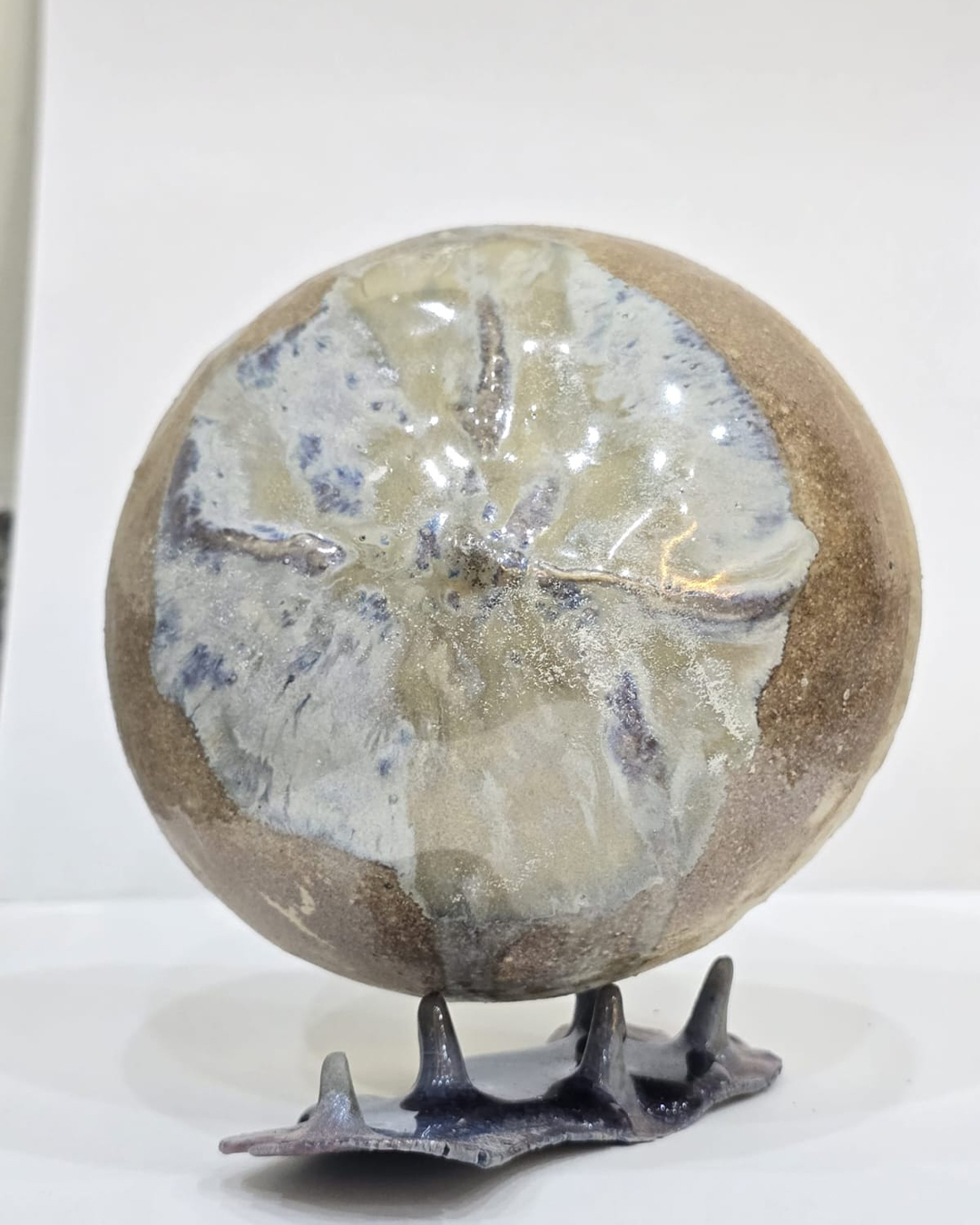
Images: Works completed by Richard on his trip.
Unexpected collaborations
Richard also returned to Malaysia, where he had studied with master ceramicist Cheah Yew Seng previously. Reconnecting with his mentor, he refined firing and glazing processes before carrying completed works to Japan.
Another highlight for Richard and his wife Ching² was collaborating with TinToy Chuo, founder of Fusion Wayang Kulit, on visuals for their performance at Star Wars Celebration 2025 in Tokyo. “As someone who grew up inspired by the universe, designing for a live show within it was both surreal and energising,” Richard says.
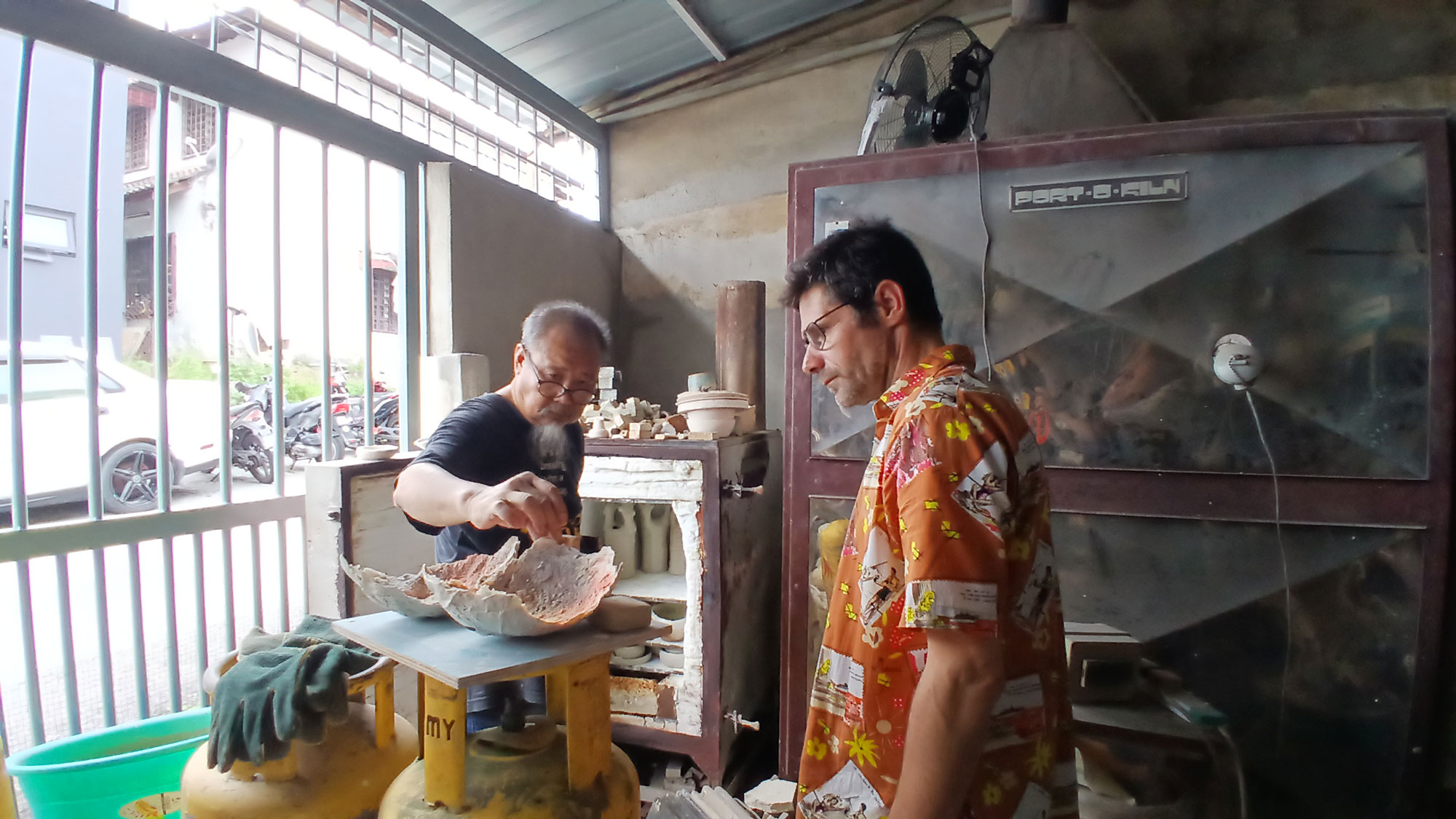
Image: Richard with Cheah Yew Seng
Looking ahead
Now preparing for a Master of Fine Art in 2027, Richard hopes to return to Malaysia and Japan, continuing collaborations and expanding his skills in porcelain, glass and bioluminescence. His aim is to push the boundaries of sculptural practice by blending traditional methods with experimental technologies.
“This trip wasn’t just a chapter in my development—it was a bridge,” he reflects. “It has given me fresh momentum as I prepare for postgraduate study and continue developing my material-led, research-based art practice.”
Advice for future applicants
For students thinking about applying, Richard encourages planning and persistence. “Having a clear idea of what you want to do really helps,” he says. He also emphasises confidence: “It’s natural to feel anxious, but don’t let that stop you.”
The Hill and Hawtin Scholarship provided Richard with an opportunity to bring together his love of clay, glass, food and light into a practice that is increasingly global in outlook, but deeply personal in its inspiration.
“This scholarship not only funded my trip—it has expanded my practice, connected me with international communities, and helped clarify my artistic direction.”