
Designing for impact: Master of Design students create an award-winning healthcare project
Designing for impact: Master of Design students create an award-winning healthcare project
When Master of Design students Yujie (Tristan) Chen, Hafsa Ali Mohamed, Poorva Chaudhary and Subinuer (Sabrina) Tuerhong first crossed paths at Monash University, they didn’t know they would soon collaborate on Onco — an ambitious design project that reimagines how cancer patients and healthcare professionals communicate.
What began as a classroom brief grew into an award-winning project that earned them the Best Group Project – Interaction Design award at the 2025 Master of Design Graduate Show. Along the way, the team discovered not only how their complementary skills could create something innovative, but also how their Monash experience would shape the kind of designers they become.
Four different paths to Monash
Each of the four came to Monash with a unique background and motivation.
International student Tristan, sought breadth and flexibility after completing a double degree in Digital Media Arts and Game Design in China. “The Master of Design program at Monash is flexible and forward-looking, with an emphasis on design thinking. I wanted to be a multidisciplinary designer who can embrace diverse fields.”
Hafsa, a Melbourne-born designer, wanted to rebuild her university experience after completing her bachelor’s degree at RMIT during the pandemic. “Monash’s focus on user-centred and experience design, along with its hands-on projects, felt like the perfect environment to push my skills further.”
Poorva transitioned from software engineering in India, looking for a career that blended technology with creativity. “From the beginning, I was looking for a course that gave me hands-on experience, not just theory. Monash delivered that in such an amazing way.”
For international student Sabrina, the move into design was about combining creativity with her business degree background. “I’m passionate about design as a versatile skill that can help others remotely and provide stable employment. I genuinely enjoy the design process and want fulfilling work that creates value for others.”
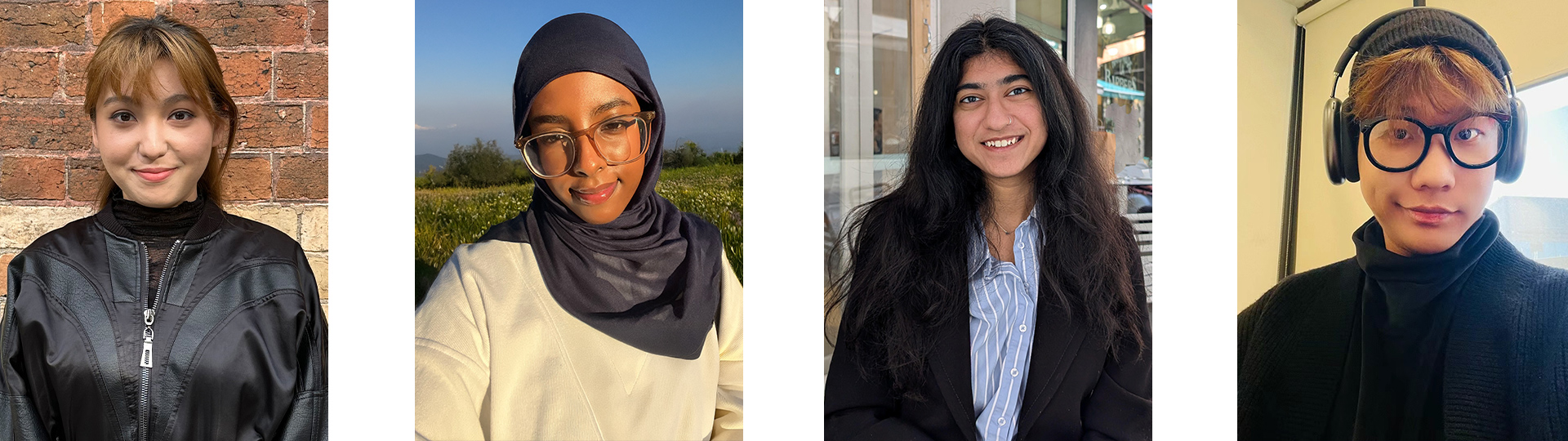
Image: Onco team, L-R: Sabrina, Hafsa, Poorva, Tristan
Collaboration in Action
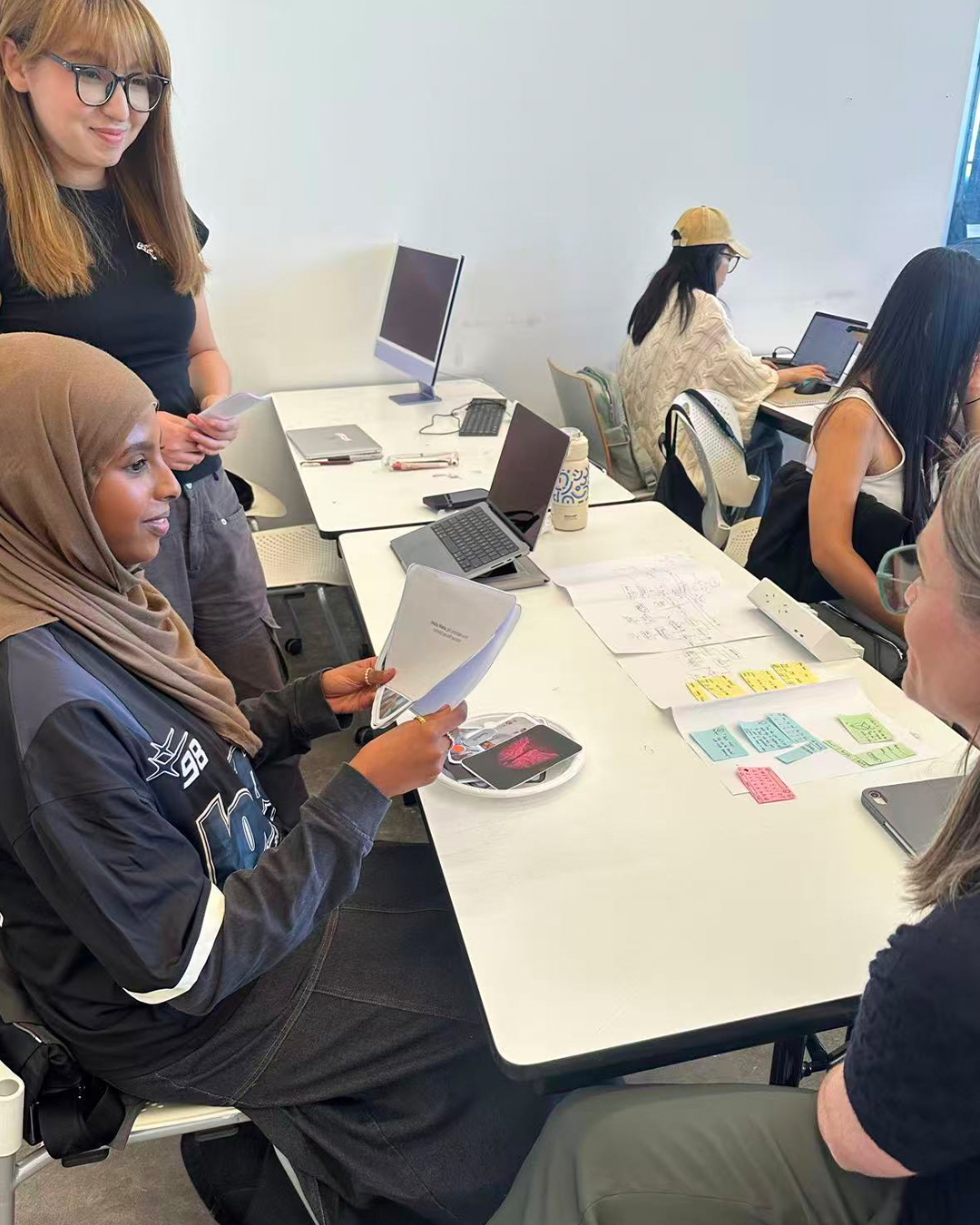
The four were not assigned as teammates; they chose each other. That decision shaped the dynamics of Onco.
Through early conversations, they discovered complementary strengths: Hafsa excelled at idea generation, Tristan at 3D modelling, Poorva at communication, and Sabrina at user journey mapping and UI design. Together, they became a well-balanced group.
“We backed each other up and combined our strengths,” Poorva reflected.
Sabrina agreed: “I admired Hafsa’s, Poorva’s, and Tristan’s design styles — working with them helped me grow significantly.”
Designing with empathy and technology
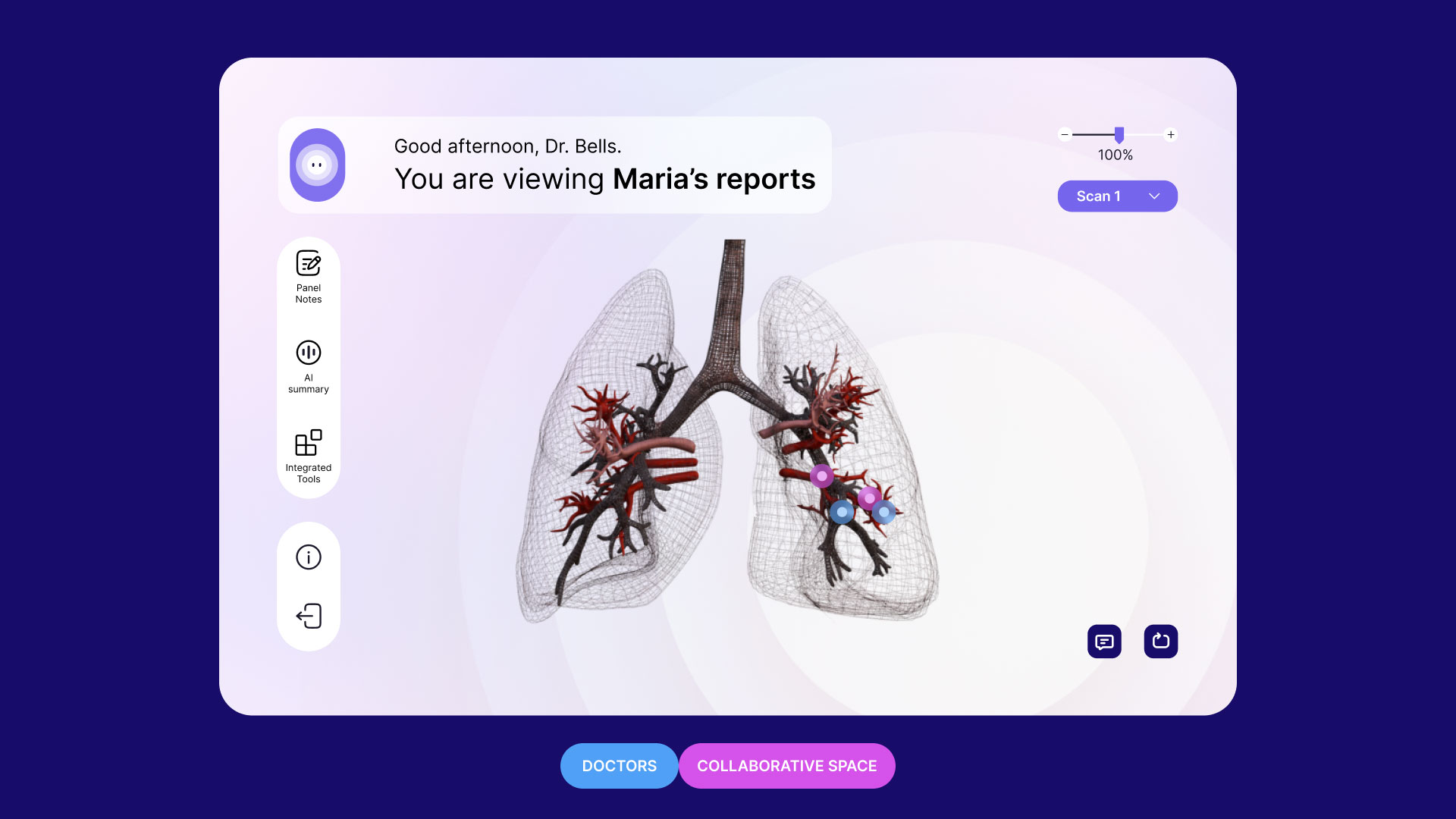
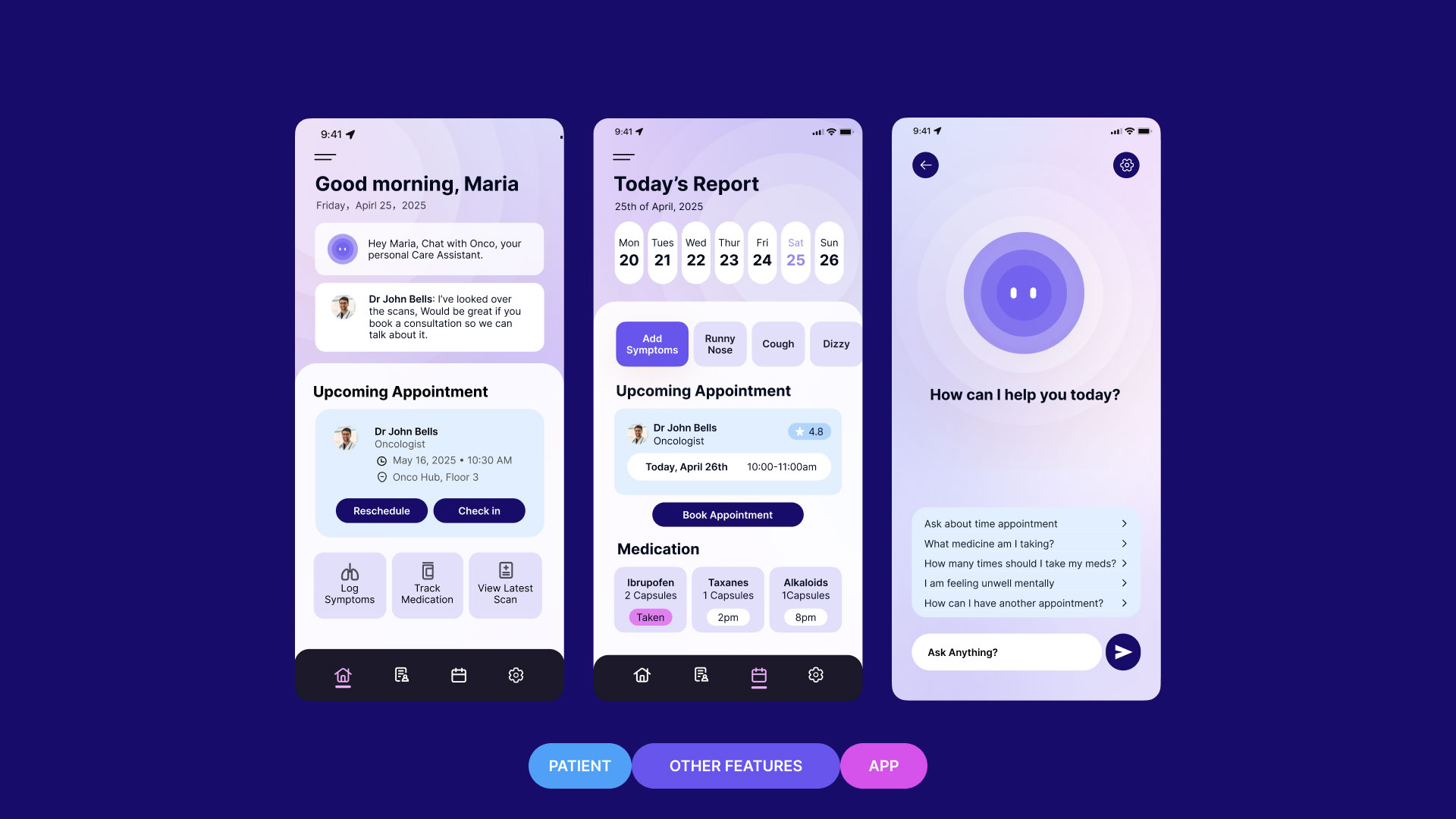
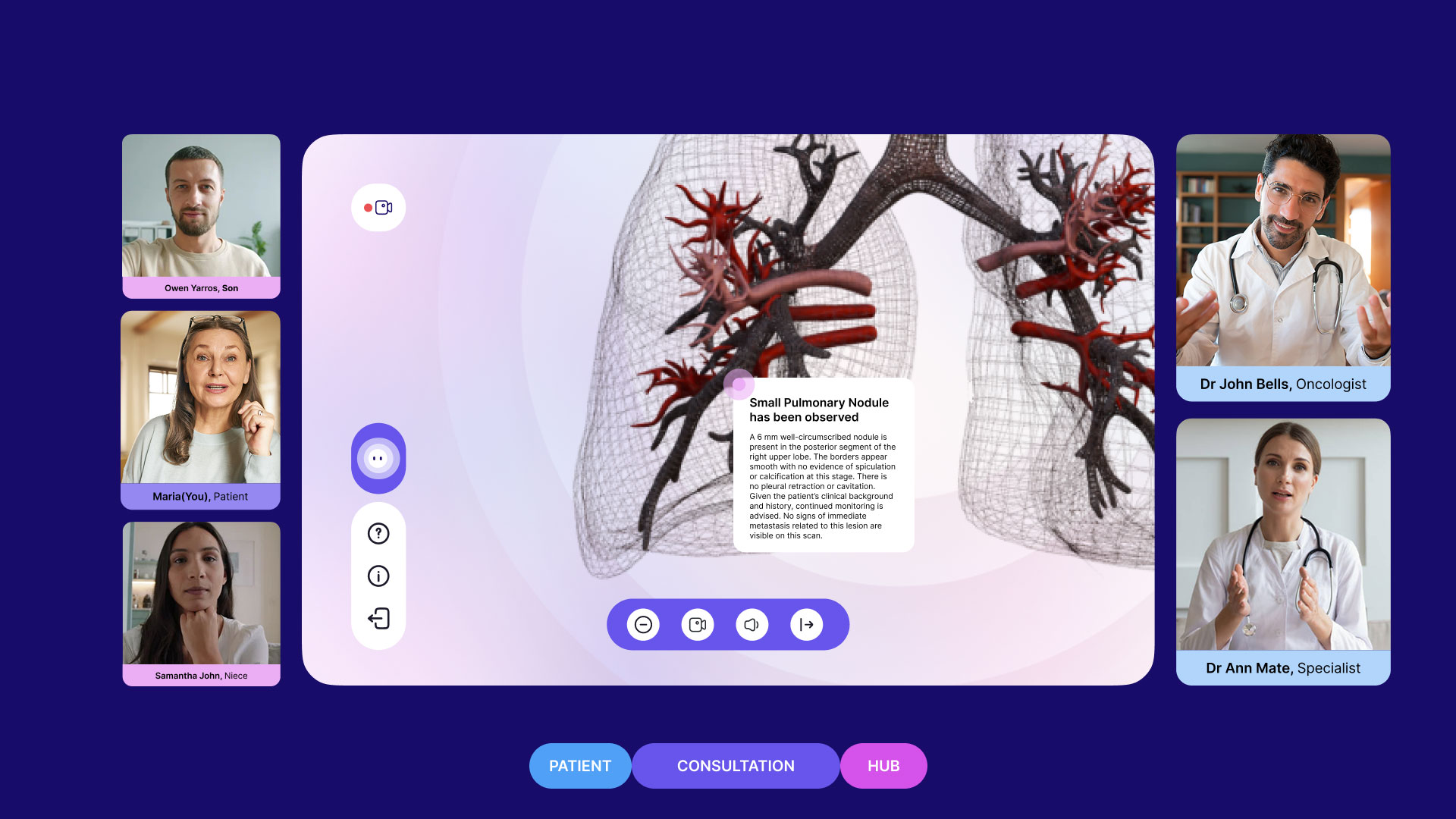
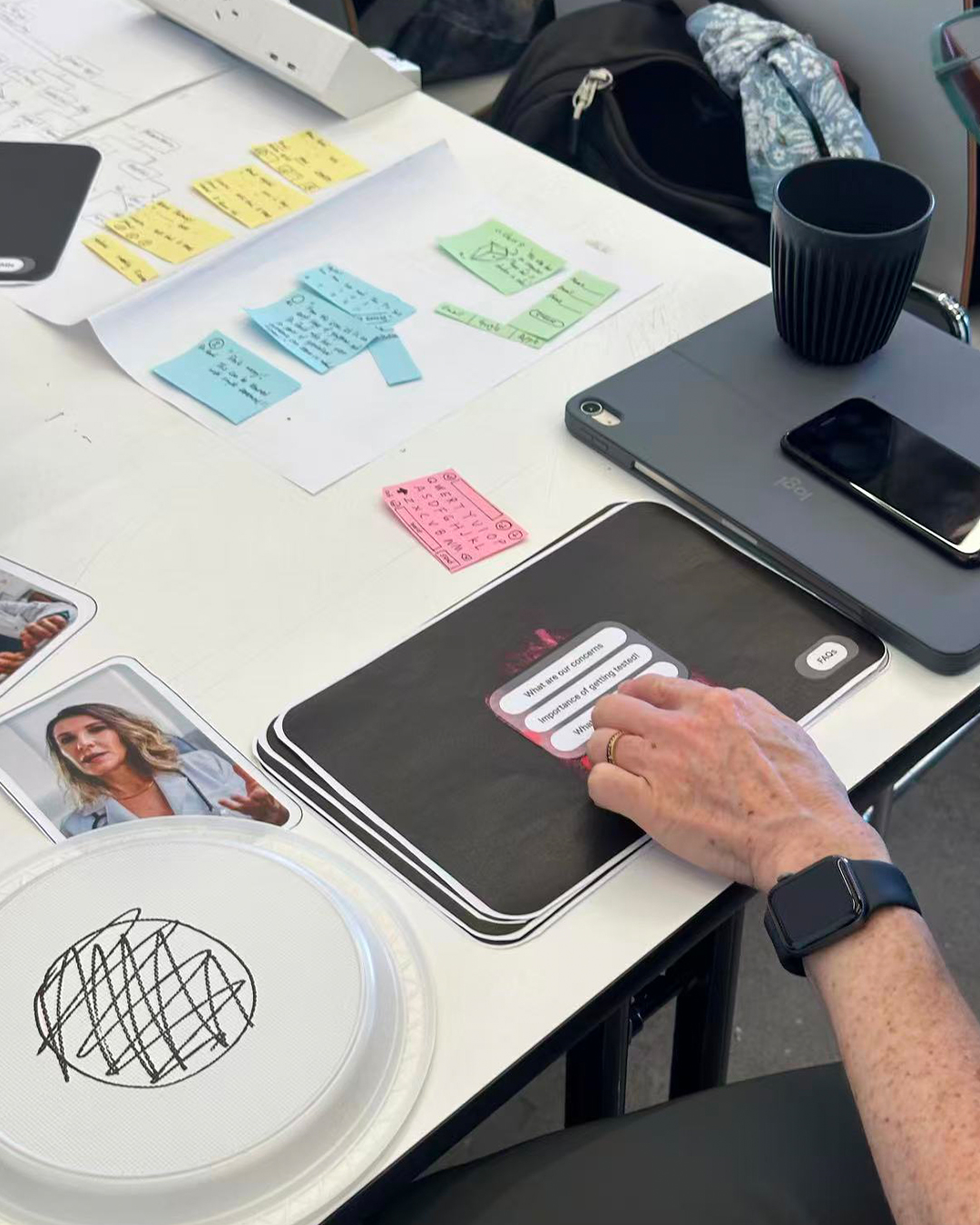
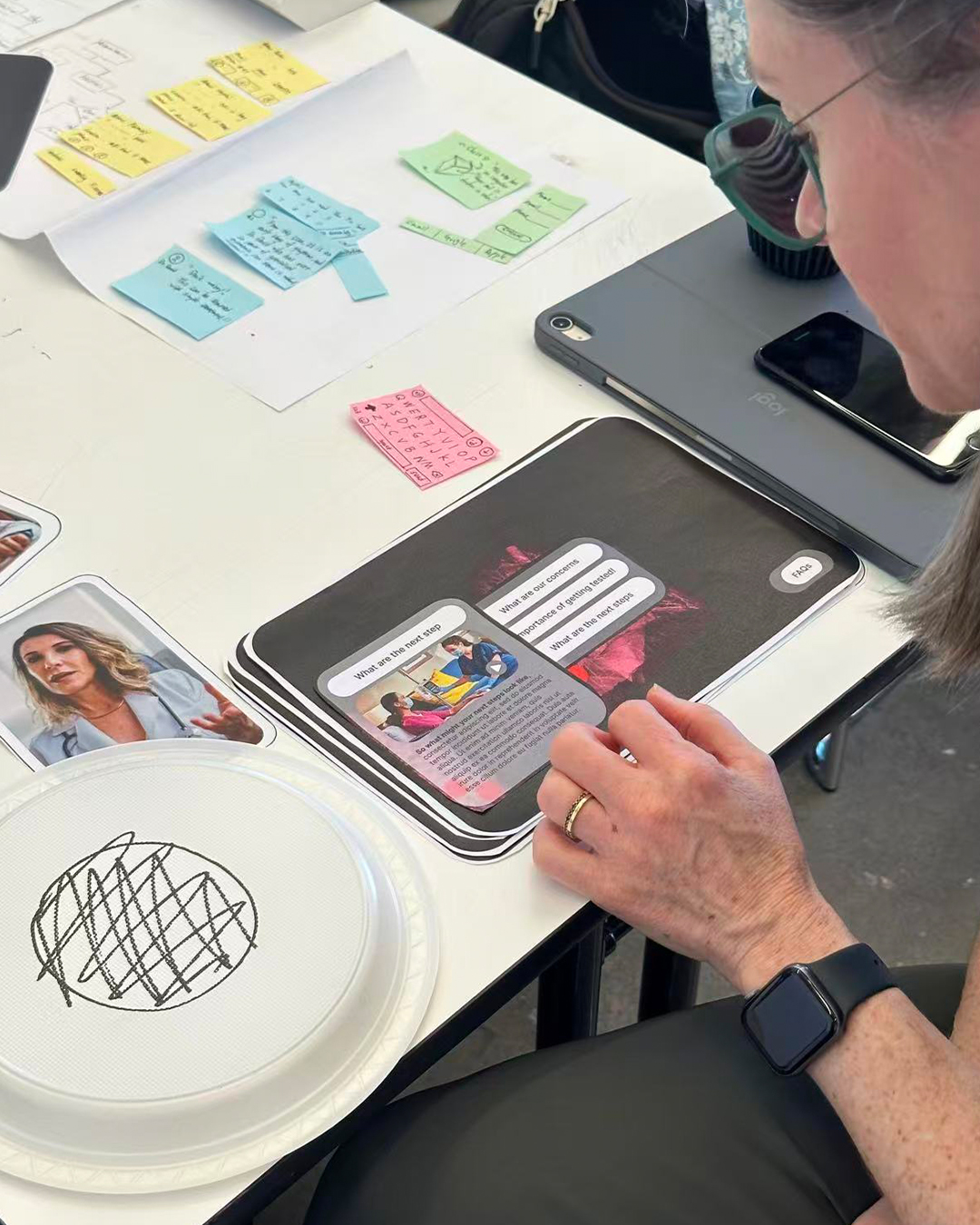
Onco began as a speculative design project set in 2035, exploring how AI and nanotechnology could transform cancer care. At its core, however, the project focused on empathy, creating tools to help patients and healthcare providers communicate with clarity and compassion.
Hafsa focused on the interface and UI design, using patient stories to ground the project in empathy and shaping interfaces that communicated complex medical data clearly and sensitively. She translated ideas about AI and nanotechnology in cancer care into designs that felt both futuristic and human-centred.
“I wanted to make sure the patient’s voice was always at the centre,” she explained.
Tristan translated these insights into form, leading 3D modelling and prototyping to visualise devices and interfaces that were futuristic yet approachable. “My focus was making the technology feel human, not intimidating,” he said.
Poorva designed communication flows, crafting scripts, and scenarios to help patients, doctors, and carers interact meaningfully with the system. “Cancer journeys are emotionally difficult, and patients often lack the tools to fully understand what’s happening,” she noted.
Sabrina mapped the overall user journey and shaped the interface’s look and feel, ensuring clarity and accessibility. “The healthcare industry was completely new to me, but the fusion of technology and humanistic care felt incredibly meaningful,” she reflected.
Together, the team fused speculative technology with human-centred design, creating a project that balanced imagination with empathy while genuinely supporting users through complex healthcare experiences.
Mentorship that matters
The team credits their Monash mentors for shaping both the project and their career outlook.
Tristan recalled how lecturers Dr Indae Hwang and Dr Jiyoon Lee offered crucial guidance. “When I faced difficulties, they gave me advice on project direction, research methods, and even career pathways. Their insights continuously sharpened my design principles.”
For Hafsa, their influence was transformative. “Jiyoon encouraged us to dig deeper and guided us through meaningful conversations, while Indae shifted my perspective on interface design — showing me how clarity can build on aesthetics.”
Sabrina highlighted the humour and energy of Dr Wil-kie Tan’s classes whilst Poorva added that Monash gave her the ability to communicate her design work with confidence.
Lessons for the Future
All four students say the Master of Design left them with principles that will guide their careers long after graduation.
For Tristan, it was a shift in mindset: “It’s not just about technical skills. It’s about critical thinking, questioning problems at their root, and designing solutions that create sustainable value.”
Hafsa emphasised the need to design technology that genuinely supports people whilst Sabrina said the biggest growth was in teamwork: “Learning how to combine different design approaches into something cohesive and impactful.”
For Poorva, the course was transformative: “The program exposed me to diverse design perspectives and approaches, which broadened my creative thinking. It prepared me well for an international design career.”
Designing a better tomorrow
For all four, Onco was not just a project but a proving ground. It demonstrated how design can bridge empathy and innovation, technology and humanity, personal ambition and collective responsibility.
As Hafsa put it, “What I value most is how design can connect people. Whether it’s in healthcare or another field, that human connection is what gives design its purpose.”
And for Sabrina, the project underscored why she pursued design in the first place: “It showed me how design can create real value for people — combining compassion with innovation.”
For Tristan, the experience confirmed why he chose Monash in the first place: “Design has the power to create sustainable value in society. That’s the kind of designer I want to be.”