
Designing for People: Evi Janse de Jonge on Active Transport and the Future of Urban Planning
Designing for People: Evi Janse de Jonge on Active Transport and the Future of Urban Planning
Every day, Evi Janse de Jonge works to make Melbourne’s streets safer, greener and more accessible—especially for people walking or riding bikes. As an Active Transport Officer at Merri-bek City Council, she is focused exclusively on improving the experience of cyclists and pedestrians, and her role is as varied as the streets she helps shape.
“One day I’m working with consultants to ensure bike lane designs align with our strategies. Next, I’m out on site observing school drop-offs or speaking with residents about safer routes,” she explains. "At the start of each project, we engage with the community to understand their needs and the challenges they face on the streets. Once a project is completed, we collect feedback and use those insights to inform and improve future planning."
Originally from the Netherlands, a country known for its world-leading active transport infrastructure, Evi was already passionate about sustainable transport. But after moving to Melbourne, she saw how much potential there was to improve local conditions for cyclists and pedestrians. “I wanted to be part of that change,” she says.
To understand the local planning context and build a career in Australia, Evi enrolled in the Master of Urban Planning and Design at Monash University.
“I was about to begin a similar course back home, but once we moved to Melbourne, I researched options and found that Monash offered a unique combination of planning and design,” she says.
“I liked that it was taught within the architecture faculty, and the smaller cohort size meant better engagement with teachers.”
The course gave Evi both the knowledge and confidence to transition into the local industry. “It helped me understand how planning works in Victoria—from statutory frameworks to how things operate in growth corridors like Clyde North. We had a lot of site visits and heard directly from council planners and local communities, which was really valuable,” she says.
The skills Evi learned continue to shape her work. “I use GIS daily and we worked with ABS data, which helps with evidence-based decision making. The course also emphasised critical thinking, presentation skills and verbal communication—all essential when you're working with communities and across teams.”
Beyond the classroom, Monash helped Evi take her first steps into the industry.
“Dr Liz Taylor connected me with people for a summer internship. I ended up with two job offers, and that led to my first graduate role,” she says. “The Monash lecturers really understand how to blend academic theory with practical learning and they encourage you to follow your own interests.”
After several years in consultancy, Evi moved into local government where she’s now helping to deliver tangible, long-term change. One of her most rewarding moments was seeing a bike lane she helped design come to life.
“During COVID, we trialled new materials, recycled plastic kerbs and coloured paint made from crushed glass, to create safer spaces for cyclists. Seeing something you’ve drawn on a screen become part of the street is really fulfilling.”
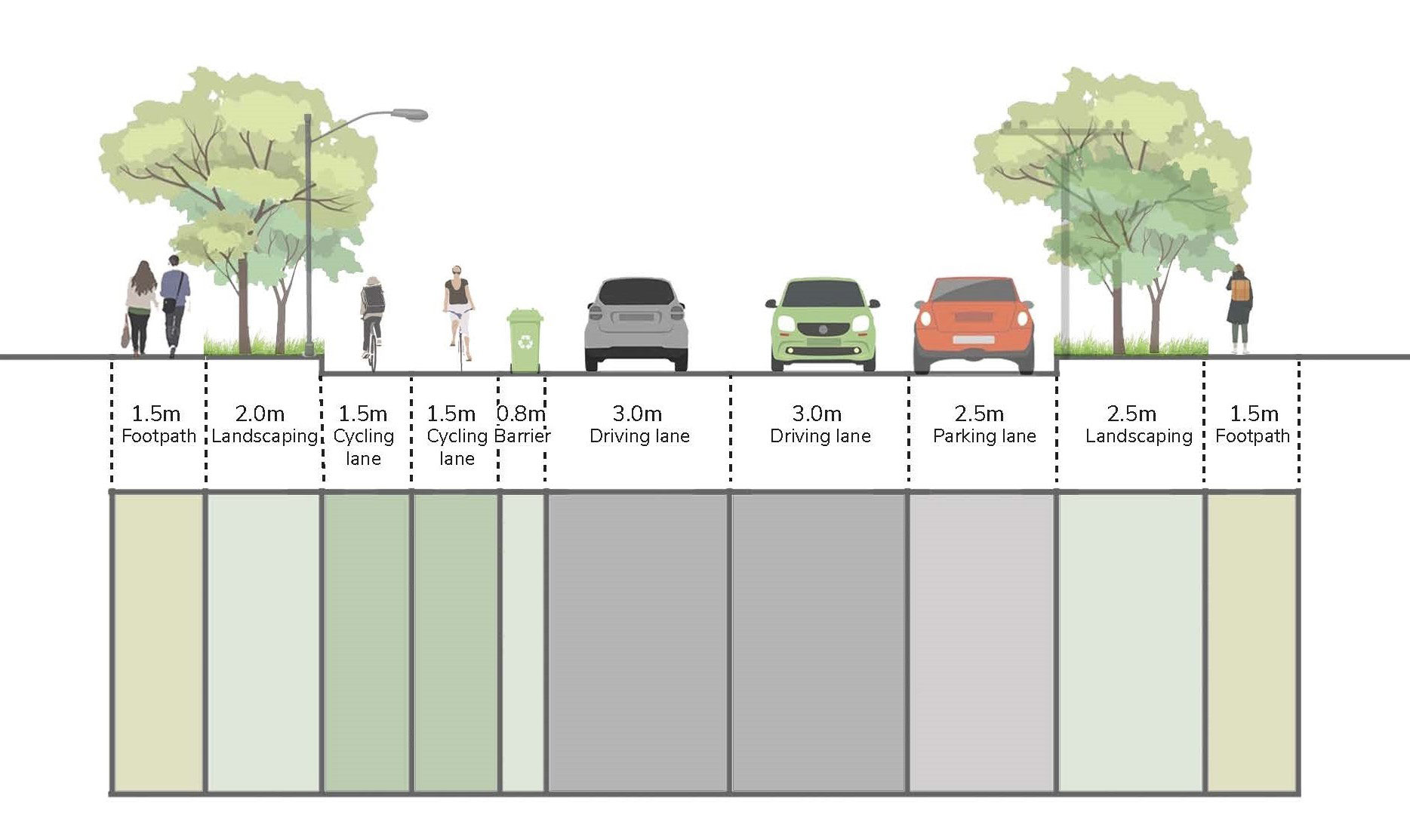
Image: O'Hea Street bike lane upgrade
For anyone considering a career in transport planning, Evi says it’s about more than just technical skills.
“You need to be willing to listen—to parents, shift workers, commuters and people with disabilities—and understand their needs. Our streets have long been designed for cars, but that’s changing. We need to think creatively, challenge outdated ideas, and design for everyone.”
With Melbourne’s population expected to reach eight million by 2051, Evi believes the need for urban planners and transport specialists will only grow.
“Urban planning is key to addressing global issues like climate change, housing and social equity. Whether in transport, sustainability, housing or policy, there’s so much scope to specialise and shape cities that work better for people.”
Her advice to future planners? “Step out of your comfort zone. Visit different neighbourhoods, connect with people in the industry, and take every opportunity to learn. The future of our cities depends on it.”