
Lisa’s journey to designing sustainable futures through innovation and research
Lisa’s journey to designing sustainable futures through innovation and research
Dr Lisa Fu’s journey through Monash Art, Design and Architecture (MADA) is a powerful example of how deep research can pave the way for industry leadership. While her career began with a passion for creative design in the Bachelor of Industrial Design, it was her PhD in Industrial and Product Service System that truly transformed her practice, equipping her with the complex design strategy and critical framework skills required to navigate today’s innovation landscape. Now an Associate Innovation Director at AKQA, Lisa applies the systemic problem-solving she mastered during her doctoral research to lead projects at the intersection of design, technology and sustainability.
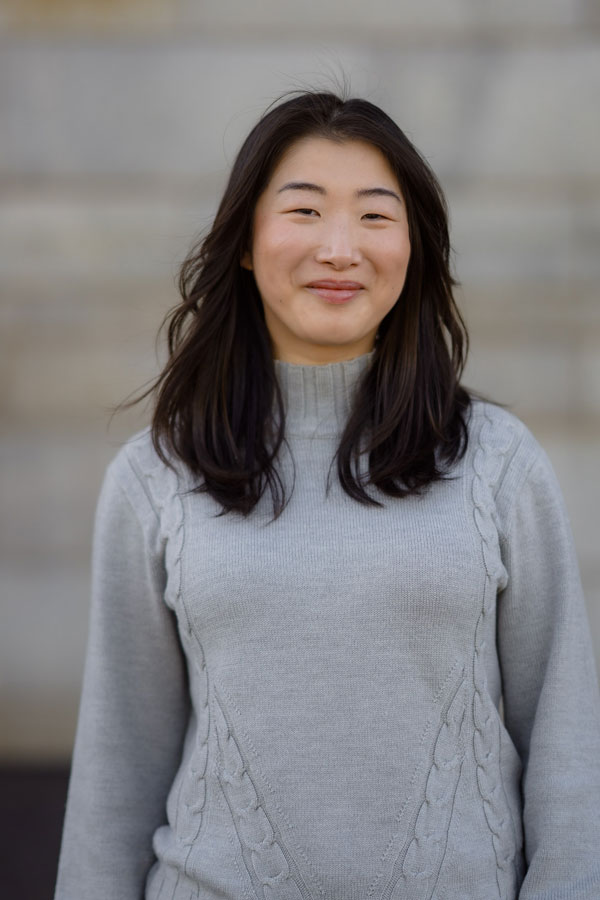
Image: Lisa Fu
The foundation of a creative mindset
Lisa’s journey began with a pull toward creativity.
“I love the craft of design, making something beautiful and well thought out embodied in an object or experience” she explains.
During her undergraduate studies, she discovered that design was more than just making; it was a way of thinking.
Lisa credits the design studio class model and her art theory classes with developing the critical thinking skills that define her practice today.
"Art history is a great way to develop an opinion about things," she explains. "It helps you think critically." This foundation allowed her to move beyond the aesthetic and interrogate the "why" behind the "what," focusing on the functionality and clarity of thought that drives the front end of design.
Researching for impact: the path to a PhD
A turning point in Lisa’s career came during her Honours year, where she fell in love with design research. Encouraged by mentors Dr Robbie Napper and Associate Professor Selby Coxon, she embarked on a practice-based PhD titled ‘Getting on board: designing the user experience of bicycles on Melbourne’s future metro trains.’
Motivated by the urgent need for climate action, Lisa’s research explored systemic design interventions to make combined cycling and train travel more viable in Melbourne. Her work looked to global examples in San Francisco, Copenhagen and Germany to find ways to urban sprawl through sustainable transport.

Image: Render from Lisa's PhD.
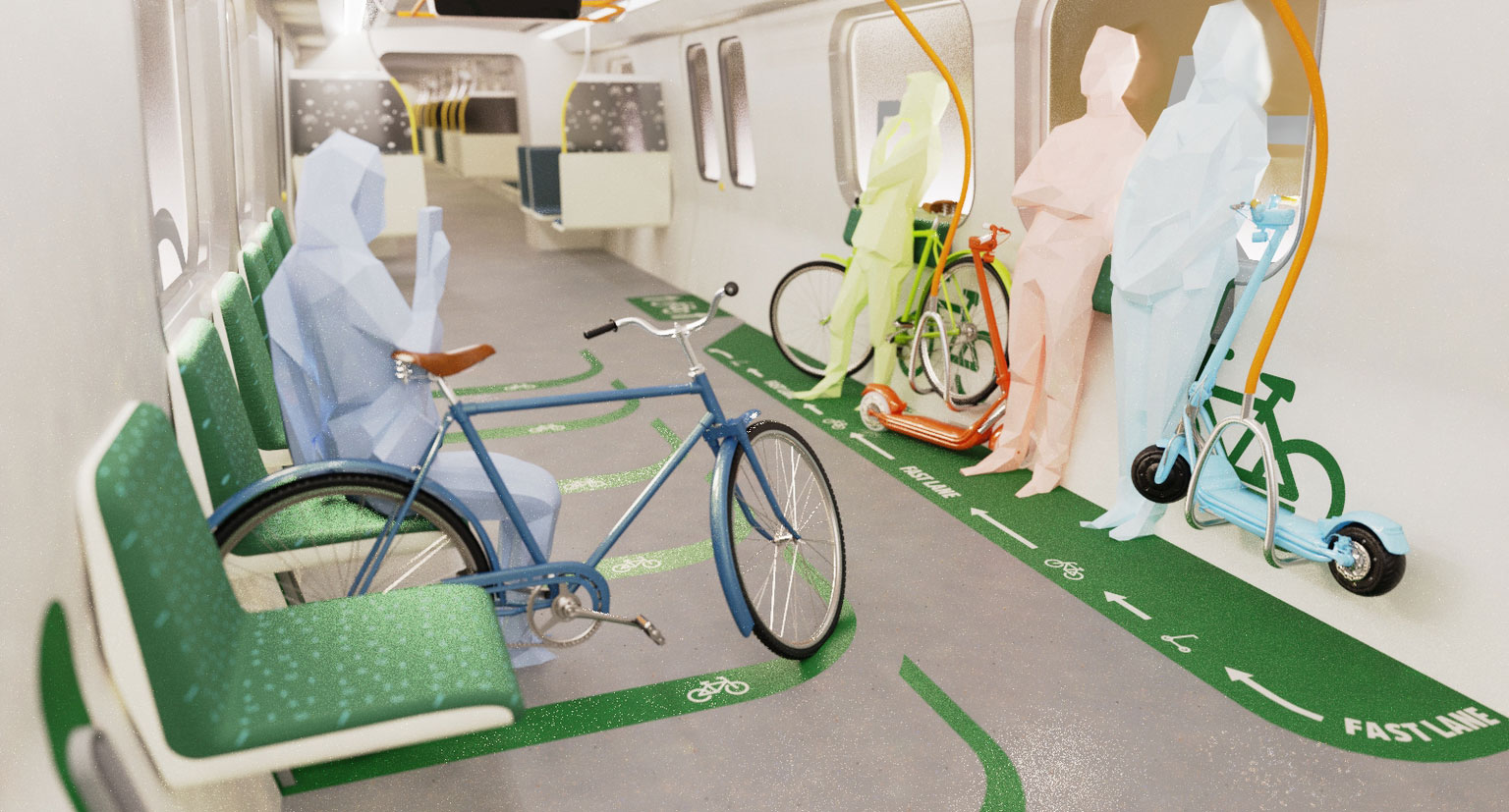
Image: Render from Lisa's PhD.
This research gained national recognition when Lisa won a Good Design Award in 2022 in the Next Gen Category. Her findings demonstrated that sustainable travel in cities with urban sprawl like Melbourne is possible, if services and infrastructure can be designed to support the combining of bicycles and rail is a viable alternative to car-dependent mobility. Beyond reducing congestion, Lisa’s work highlighted that if we are to hit our emission targets, integrating bicycles on board is a key part of a holistic set of future sustainable mobility strategies.
Bridging academia and industry
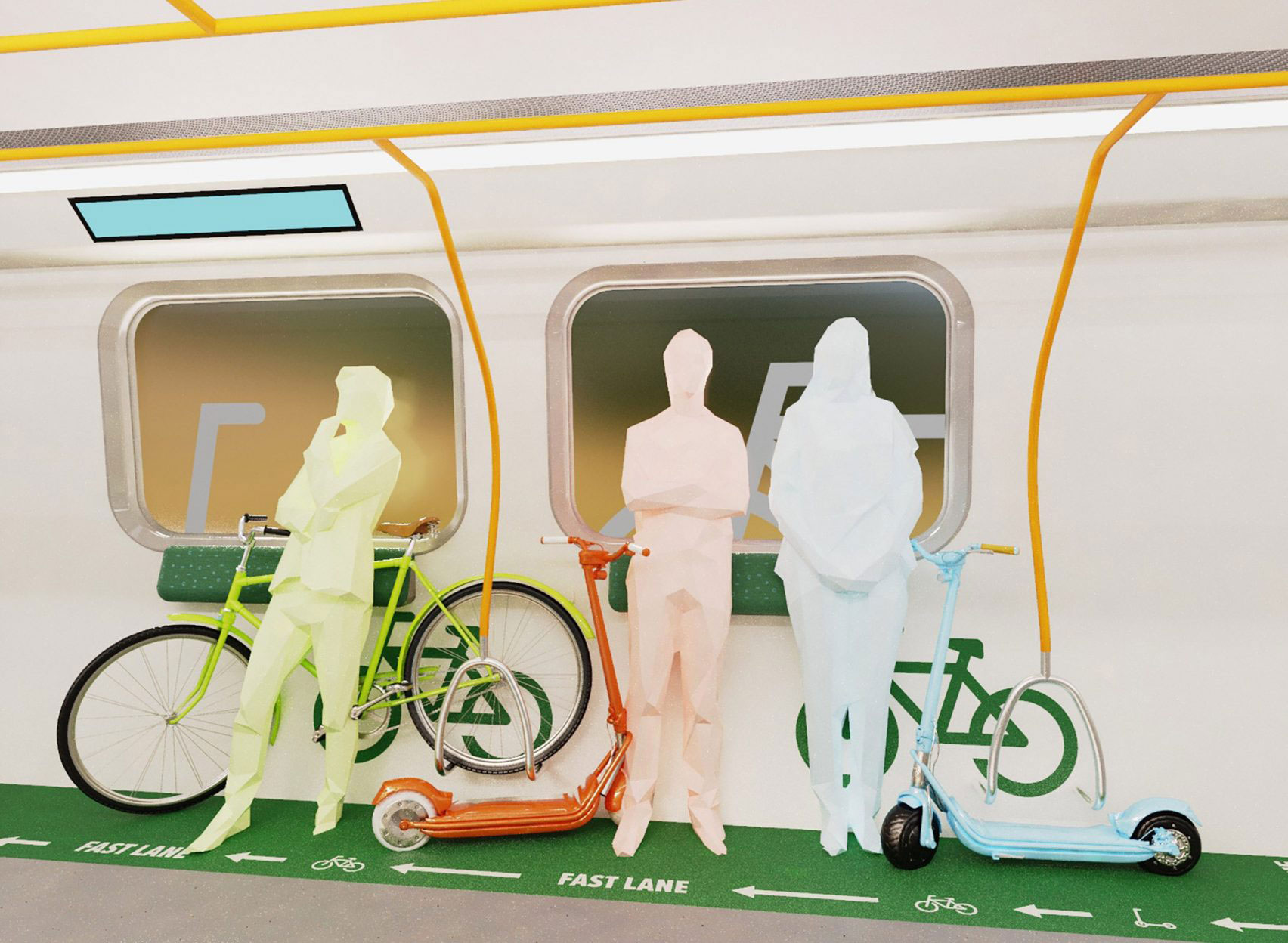
Image: Render from Lisa's PhD.
After completing her PhD in 2021, Lisa spent a couple of years teaching at MADA before making the transition to industry, joining the global innovation, design and technology agency AKQA. She found that the skills honed at MADA, particularly design thinking, presentation, and research frameworks, were highly transferable to her initial role as an experience strategist.
One of the highlights of her career so far has been working on Open Methane, a digital tool developed in partnership with thinktank The Superpower Institute. As an experience strategist, Lisa worked with researchers to help translate complex satellite data and mathematical models into an understandable map for public understanding. This tool provides a neutral, evidence-based way to drive critical climate discussions and policy to address environmental impact.
Leading innovation at AKQA
In her current role as Associate Innovation Director, Lisa can often be found leading short three-week innovation sprints. These projects often involve defining briefs or coming up with creative solutions for emerging technologies.
A significant portion of her day is dedicated to continuous learning, collaborative discussion, and market scanning. Lisa and her team constantly survey what major and emerging companies are doing to understand where technology is heading and decide exactly when to converge on an idea.
"We often start a sprint not knowing what we will end up with," Lisa says. "Our role is to provide an opinion grounded in evidence." Her team frequently collaborates with a pool of experts, from sports scientists, first nations regenerative farmers to HR researchers, ensuring their solutions are both innovative and human-centered.
Advice for the next generation
“Monash gave me the core principles of design and connected me to some amazing mentors who have championed my growth throughout my journey in research and learning” Lisa reflects.
For prospective students looking to enter the field, Lisa emphasises the importance of mindset over technical tools. While skills like 3D modelling or presentation design are important, she believes a designer’s true value lies in their ability to develop and communicate conceptual choices as well as work collaboratively, skills she learned during her Monash studies.
"There is something to be said for reading broadly to develop your opinion, have a sensibility about design, and be able to explain your choices at a conceptual level," Lisa advises. "Those are the skills for someone who ends up being a senior designer or design strategist."