
Rachael De Iongh on design, education, and architecture that matters
Rachael De Iongh on design, education, and architecture that matters
Rachael always had a unique blend of interests—maths, design, physics, and art—and architecture emerged as the perfect intersection. “I was drawn to how architecture allowed me to combine creativity with technical thinking.”
Her journey led her to the Bachelor of Architectural Design at Monash University. “The course stood out for its connection to industry—the tutors were all practising architects, and I found that grounding incredibly valuable.”
After a break between her undergraduate and master's degree, Rachael returned to Monash for her Master of Architecture. Her final studio, focused on Net Zero Plus in collaboration with Grimshaw Architects, explored adaptive reuse and sustainability on the Monash Clayton campus.
Rachael’s career at Hayball

Today, Rachael is a Graduate Architect at award-winning practice Hayball, one of Monash Art, Design and Architecture (MADA)’s key industry partners. She works primarily in the education sector with her role spanning the design and delivery of projects for primary schools, secondary schools, and universities.
“Every educational project is different. I enjoy working closely with clients to create innovative spaces that serve the next generation,” says Rachael.
The Yarra Valley Grammar Performing Arts and Media Centre has been a standout project in Rachael’s career at Hayball.
“Not only due to its complexity and scale, but also because of the creative and collaborative opportunities it offered” Rachael explains. “Being involved from the very beginning through to near completion allowed me to deeply engage with both the design intent and technical delivery. One of the most rewarding aspects was working closely with users during briefing sessions, then translating their needs into tangible design solutions.”
David Tweedie, Principal at Hayball acknowledges that Rachael has played a key role in a broad spectrum of education projects, contributing strong 3D visualisation skills and a collaborative, proactive approach.
“She’s engaged across all project phases—from master planning to detailed design—and supports both team and client outcomes. Rachael’s strong learning mindset has enabled her to quickly develop technical knowledge and insight early in her career.” he explains.
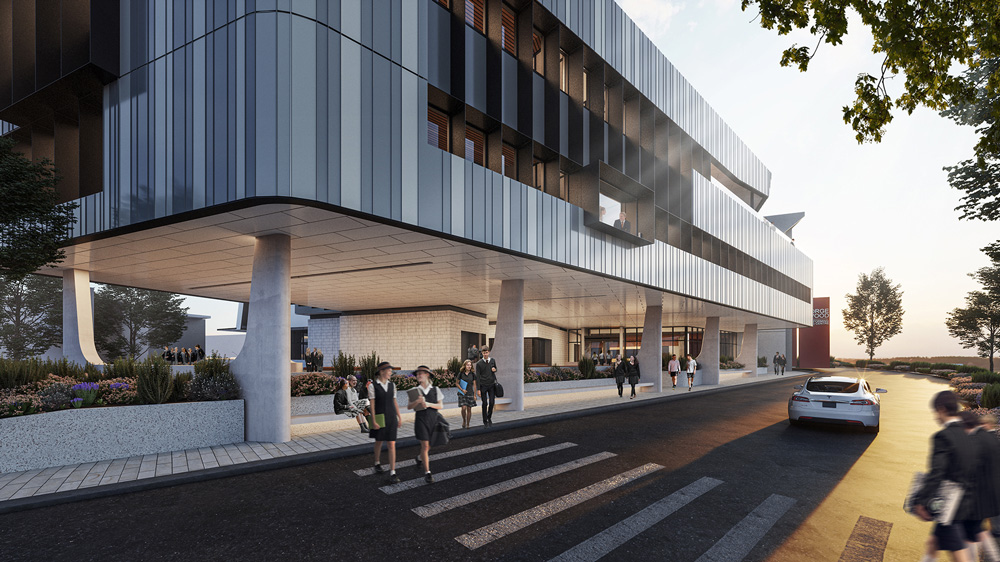
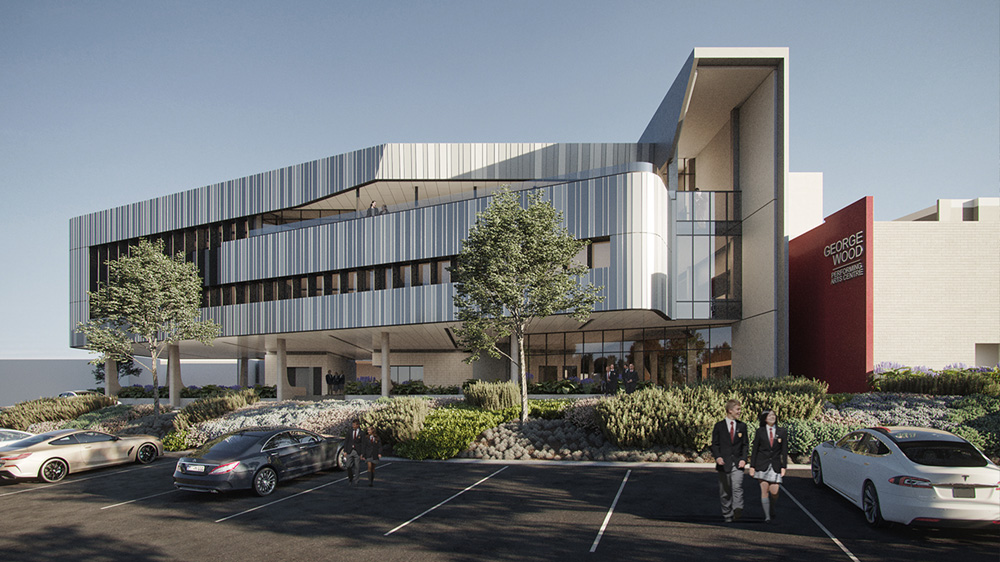
Images: Yarra Valley Grammar Performing Arts and Media Centre
Learning through community
Hayball’s culture of mentorship and learning has supported Rachael’s professional growth. She’s participated in the firm’s peer mentoring program and values the insight she’s gained into the business side of architecture.
“The people I work with at Hayball are talented and incredibly generous with their time and knowledge. There’s a shared commitment to creating designs that have a lasting, positive impact on communities.” says Rachael.
Her involvement with the 2025 AIA (Australian Institute of Architects) Small Projects Jury also marked a professional milestone. “It was a great learning experience,” she says. “It gave me insight into how architects evaluate design excellence—and it reinforced the importance of human-centred, sustainable design in shaping the future of our built environment.”
For Rachael, no two days at Hayball are alike. “Whether it's progressing drawings, developing renders and content for presentations, or coordinating details with consultants, there’s so much variety to my job.”
Looking Ahead
“Hayball has a strong focus on culture, community and learning and I feel incredibly lucky to be working in an environment that echoes these values.”
Rachael sees herself continuing to grow at Hayball with her particular interest in the intersection of architecture and interior design—especially in educational settings.
“I truly believe you can’t design one without the other,” she says. “My goal is to lead projects that are socially responsive, sustainably designed and grounded in place.”
Rachael credits her Monash education with laying the groundwork for this trajectory.
“So much of what I learned at Monash was about the iterative nature of design, receiving feedback, and understanding your own approach as a designer. Developing critical thinking and the ability to communicate ideas effectively was also a fundamental part of my education.”
“I wouldn’t be where I am today without my Monash education—it gave me the skills, confidence, and industry connections that have been key to my career.”
Ann Lau, Principal at Hayball supports this.
“Over our long partnership with Monash, we’ve valued the nuanced programming of both undergraduate and postgraduate courses, which thoughtfully extend the conventional remit of architecture—encouraging students to look beyond buildings and consider the broader ecological and social impacts of their work.”
To students aspiring to enter the profession, Rachael’s advice is clear:
“Stay curious, stay resilient, and trust the process. And don’t underestimate the importance of building relationships—your peers and tutors are part of a network that will support and challenge you long after graduation.”
As architecture faces new challenges, Principal at Hayball, David Tweedie emphasises that
“our focus should be on architecture that responds to existential threats by prioritising human-centred design that heals, connects, and strengthens community resilience. It must preserve and adapt rather than consume–valuing land, context, and a deeper understanding of place.”
Rachael’s thoughts align with this and she remains focused on design that matters.
“One of the most rewarding aspects of being an architect is seeing people engage with and inhabit a space you’ve helped bring to life. Architecture is about creating spaces that serve people and enrich communities. That’s what makes the work so meaningful.”