
Retno Palupi’s journey into regenerative urban futures
Retno Palupi’s journey into regenerative urban futures
Image: Swimmable Birraung by Regen Melbourne
Master of Urban Planning and Design student Retno Palupi’s decision to study at Monash University was driven by a desire to combine urban planning with design, all within a hands-on studio learning environment.
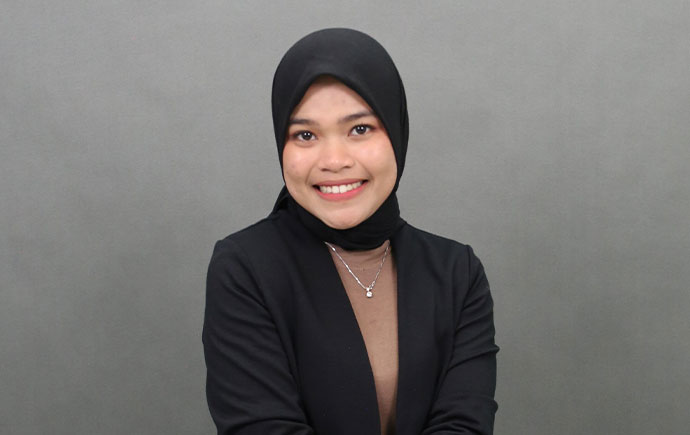
After completing a Bachelor of Urban and Regional Planning in Indonesia, Retno received a scholarship from the Indonesia Endowment Fund for Education Agency to pursue postgraduate study in Melbourne. “I wanted a program that integrated planning and design with studio projects, and also offered internship opportunities,” she explains.
Since arriving in Melbourne, Retno has embraced the challenges of studying abroad.
“This was my first time overseas, and I was nervous at first,” she reflects. “But people were really friendly and welcoming, and I found support not only from my lecturers but also from other international students in the program.”
While navigating Australian regulations and policies was initially daunting, she found that her Indonesian perspective gave her fresh insights into Melbourne’s planning challenges.
The studio program has been the highlight of her coursework. Retno points to projects like ‘Transforming City’ in Castlemaine with lecturer James Whitten, where she explored a community engagement approach to building networked ecologies at the precinct scale, and ‘Inclusive City’ in the Tottenham station area with Professor Carl Grodach, where she worked with economic and social data to analyse inclusive growth and industrial transitions.
“These studios showed how non-spatial data—like social and environmental information—can be applied to real planning problems in practical ways.”
A defining moment of Retno’s Monash journey came through the Work Integrated Learning (WIL) internship program. She was matched with Regen Melbourne, a collaborative platform that brings together universities, businesses, community organisations, and government partners to reimagine Melbourne as a regenerative city.
“It’s a non-for-profit that connects people and organisations to tackle big challenges,” Retno says.
At Regen, Retno joined the Swimmable Birrarung initiative, which aims to regenerate the Birrarung | Yarra River, so that it is healthy, thriving and swimmable, from source to sea. Over the course of a month-long internship, she worked three days a week conducting research on stormwater inflows and water quality. Her tasks included mapping creeks and stormwater sources against land use, reviewing global case studies like the Seine and Parramatta rivers, and contributing to a directory of experts.
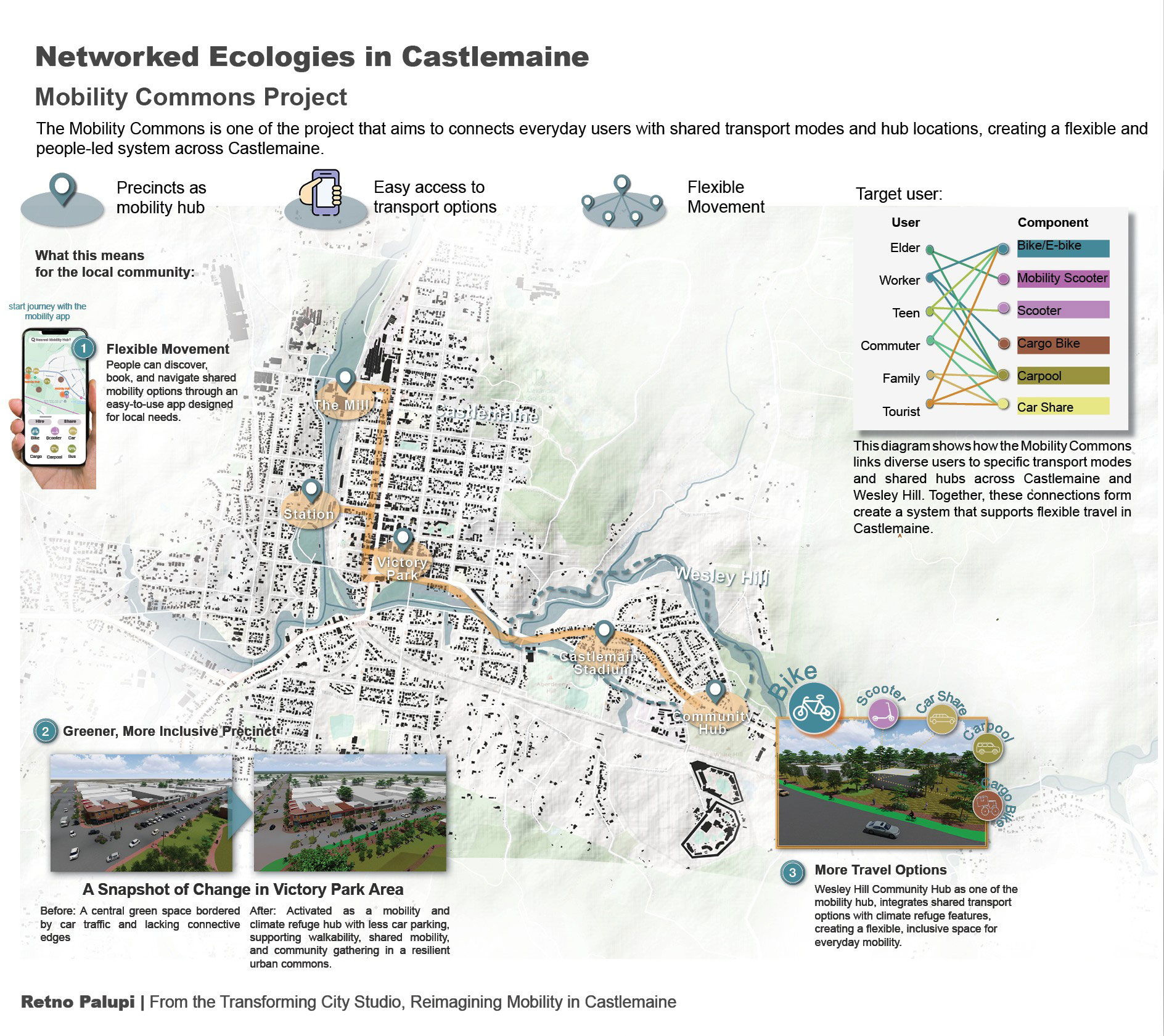
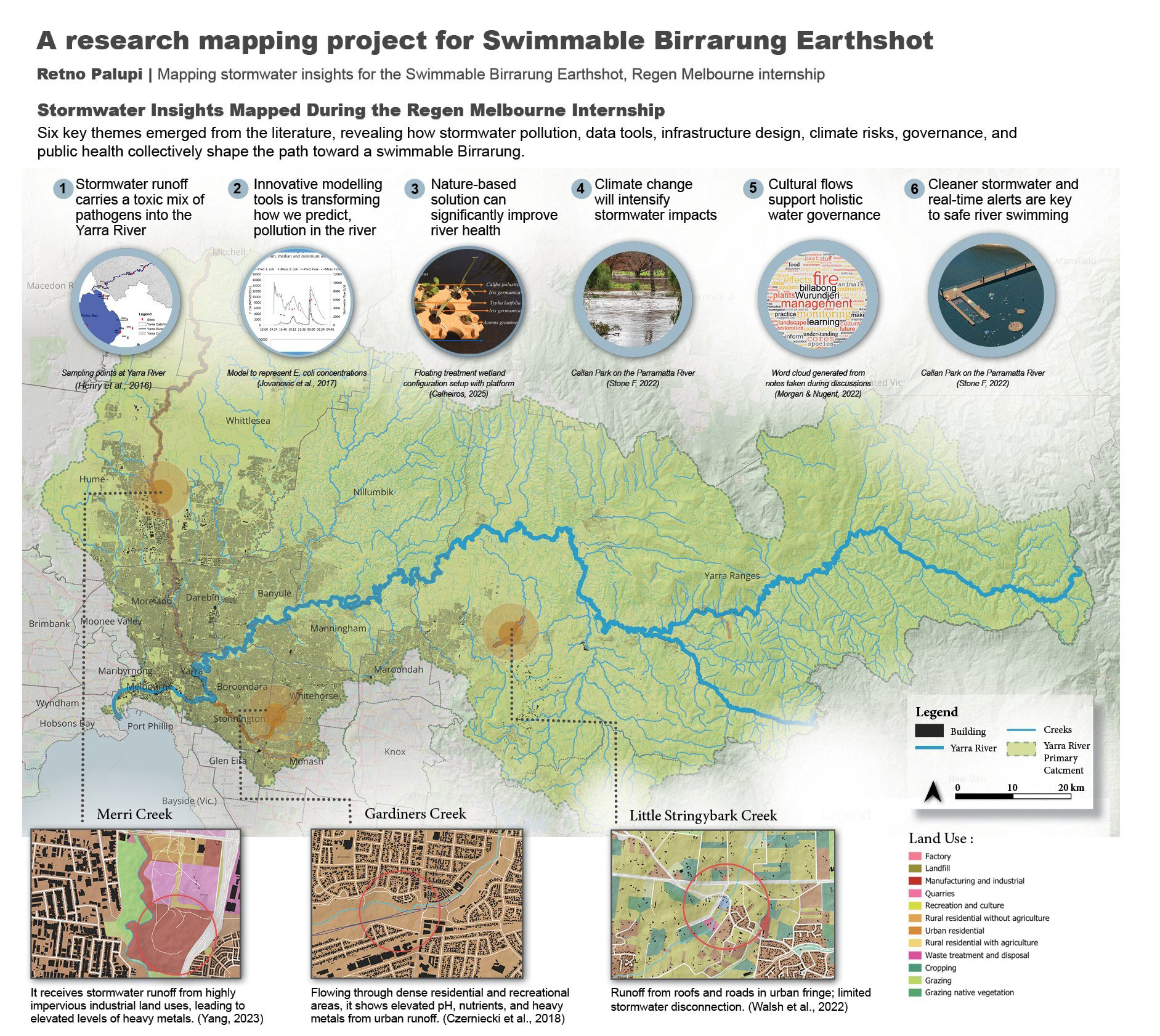
Image: Swimmable Birraung project by Retno Palupi
“It was my first time doing a literature review and research of this scale,” Retno explains. “It was inspiring and humbling to contribute to something so important. I learned that while much research focuses on the creeks, we also need to pay attention to the main body of the river, because that’s where people will actually swim.”
This experience expanded Retno's professional horizons. In Indonesia, her work as an urban planner had largely centred on regulatory processes. At Regen, she gained exposure to climate adaptation, regenerative design, and water-sensitive urban planning.
“I strengthened my GIS and spatial analysis skills, learned how to structure research, and improved my ability to communicate findings clearly. Most importantly, I gained confidence as a planner by seeing my work connect to a region’s next steps.”
Her supervisor at Regen, Research Activation Lead Yasmina Dkhissi, says Retno’s contribution was invaluable:
“Having Retno as part of the team – even for just a few weeks – was immensely valuable. She brilliantly applied her analytical and geospatial data planning skills to reviewing stormwater publications, mapping stormwater sources along the Birrarung, and creating a clearer picture of where knowledge gaps remain and where opportunities lie.”
Retno hopes to return to Indonesia with expertise in regenerative and water-sensitive planning.
“This experience motivates me to think about how Melbourne’s approaches can be adapted in my home country,” she says. Her advice to future students is simple:
“Be open to challenges. Step outside the classroom. Explore everything that interests you. The studios come alive when theory meets practice.”