
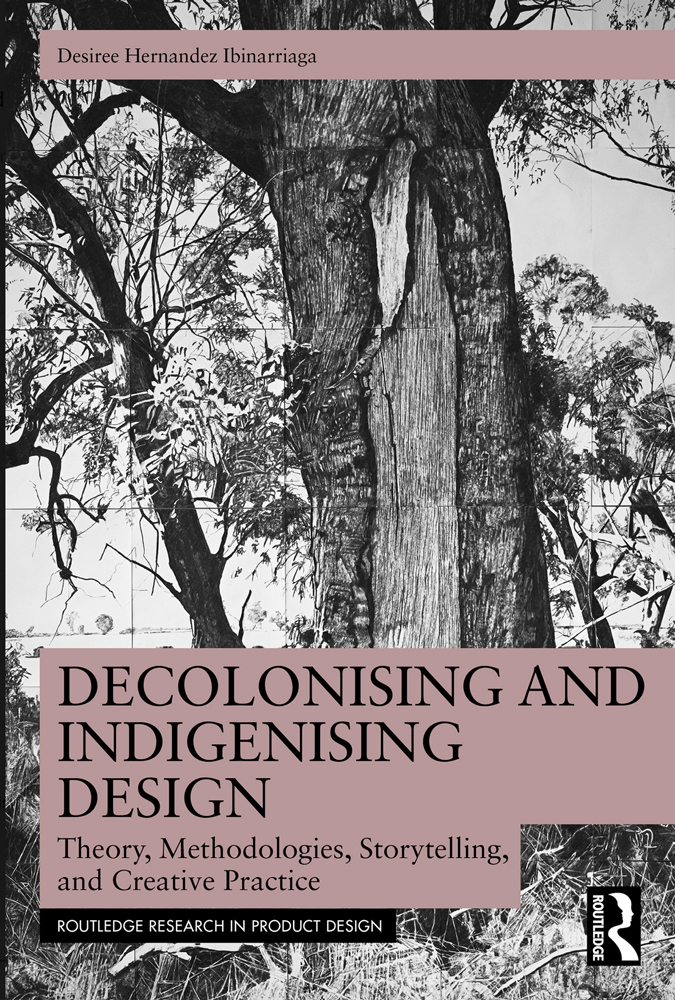
Decolonising and Indigenising Design: Theory, Methodologies, Storytelling, and Creative Practice
This book introduces a transformative approach to design theory and practice, grounded in Indigenous knowledges, methodologies, and methods. It interweaves decolonising and Indigenous design concepts through theory, storytelling, and practical examples.
While design fields have long debated sustainability and innovation, they have rarely centered Indigenous ways of being, knowing, and doing, perspectives crucial for meaningful transformation. Addressing this gap, the book guides practitioners in decolonising education, research, and design by dismantling colonised paradigms. It advocates for relationality between people, land, and the immaterial, giving agency to Mother Earth.
Investigators
- Dr Desiree Ibinarriaga Monash Art, Design and Architecture
“Decolonising is about them understanding their own cultural identities and how to create space for Indigenous people”
“Indigenising is for us.”
Desiree Ibinarriaga
This book offers a new approach to design theory and practice that draws on Indigenous knowledges, methodologies and methods, presenting concepts of decolonising and Indigenous design that are interweaved as theory, storytelling, and practices.
The arena of design sustainability, social design, and innovation has been a site of debate since the 1960s. Yet, the ways in which design has redefined this complex realm has not directly addressed Indigenous ways of being, knowing, and doing, which could be of paramount importance to the transformation of the design field and beyond in creative practices. In response, this book offers valuable insights into how design practitioners can incorporate Indigenous practices to decolonise education, research, and design, and dismantle colonised paradigms, ways of thinking and practice in design. This approach is presented through storytelling, theory, methodology, methods, and practical examples to enlighten the reader. The book proposes a transformation in the role designers play, through understanding relationality between people, land, and the immaterial, while giving voice and agency to the land and waters, Our Mother Earth. Design is considered as a way to harness opportunities through the deep connection between people and Place, and the book critically promotes a more contextual and dynamic understanding of decolonising and Indigenising design practices and spaces through relational design.
This book will be useful for students and scholars studying in the fields of design, art, architecture, culture, decolonising methodologies, biocultural diversity, and design beyond human and materiality.