
Improving eye care for people living with dementia
Improving eye care for people living with dementia
The challenge
Having visual impairment alongside dementia can have quite an impact. It can compound the difficulties people living with dementia face, and unfortunately many are missing out on eye care for things such as regular eye tests, receiving sight-saving injections for eye diseases, having cataract surgery, or just replacing their glasses when they are broken or lost. This means there’s a strong role for optometry services in residential aged care to prevent sight loss, and to pick up eye conditions early that can threaten sight, and to organise prompt treatment.
Project impact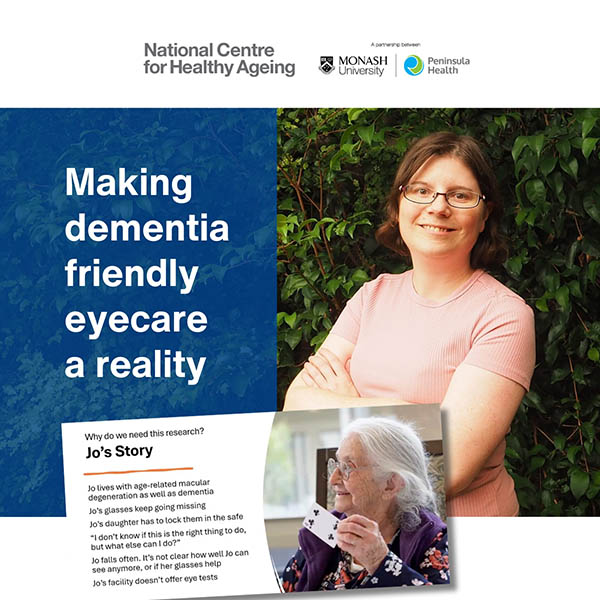
As the recipient of Dementia Australia's Henry Brodaty Mid-Career Research Fellowship worth $400,000 and with support from key organisations such as Brotherhood of St Laurence Aged Care, Optometry Australia, Australian College of Optometry, ACOD - Australasian College of Optical Dispensing, and Optical Dispensers Australia, the success of Marianne’s project will be far-reaching:
- Creating a dementia eyecare pathway for residential aged care that’s fit for purpose and easy to use
- Ensuring that eyecare needs for people living with dementia are seen, understood and met by everyone involved in care
- Supporting the eyecare workforce to upskill in dementia-friendly eyecare through upgraded training for optometrists and new training for optical dispensers
- Spreading dementia-friendly eyecare to other countries by sharing resources
Project lead
This project is being led by NCHA researcher Dr Marianne Coleman as the recipient of Dementia Australia's Henry Brodaty Mid-Career Research Fellowship worth $400,000. Marianne also received the Dementia Advocate’s Award for this project, recognising the potential of Marianne’s work to greatly benefit people with dementia and their families.
-
Project resources & knowledge
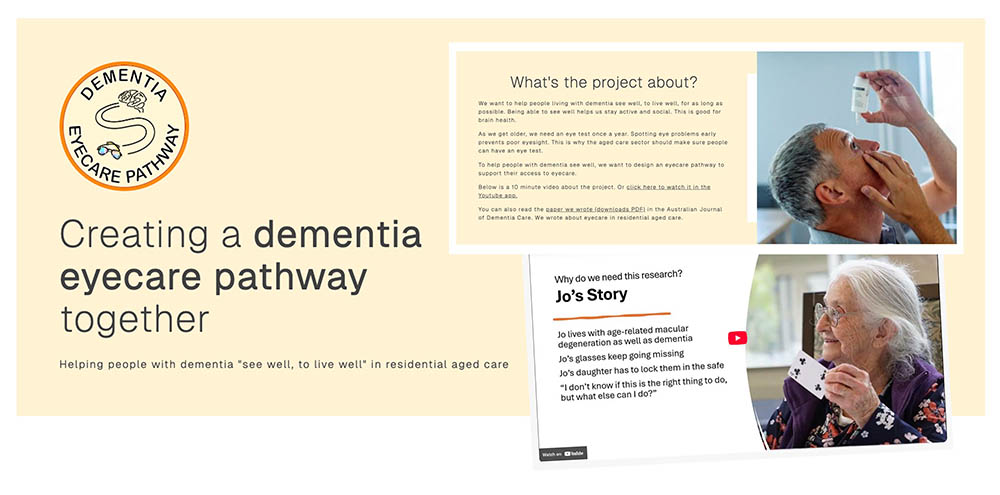
Project website – Dementia Eyecare Pathway
View

Conference and speaking presentations
View
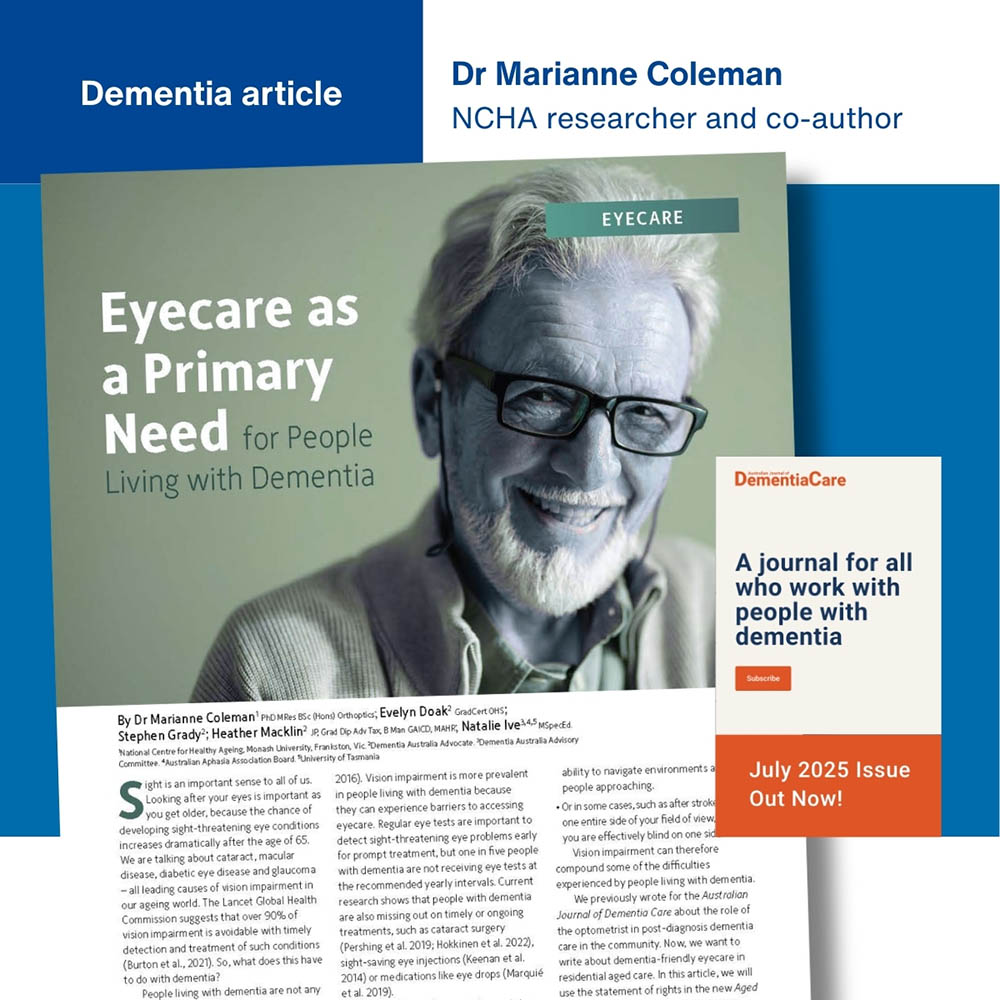
Project media and articles
View
Other activities
View
-
-
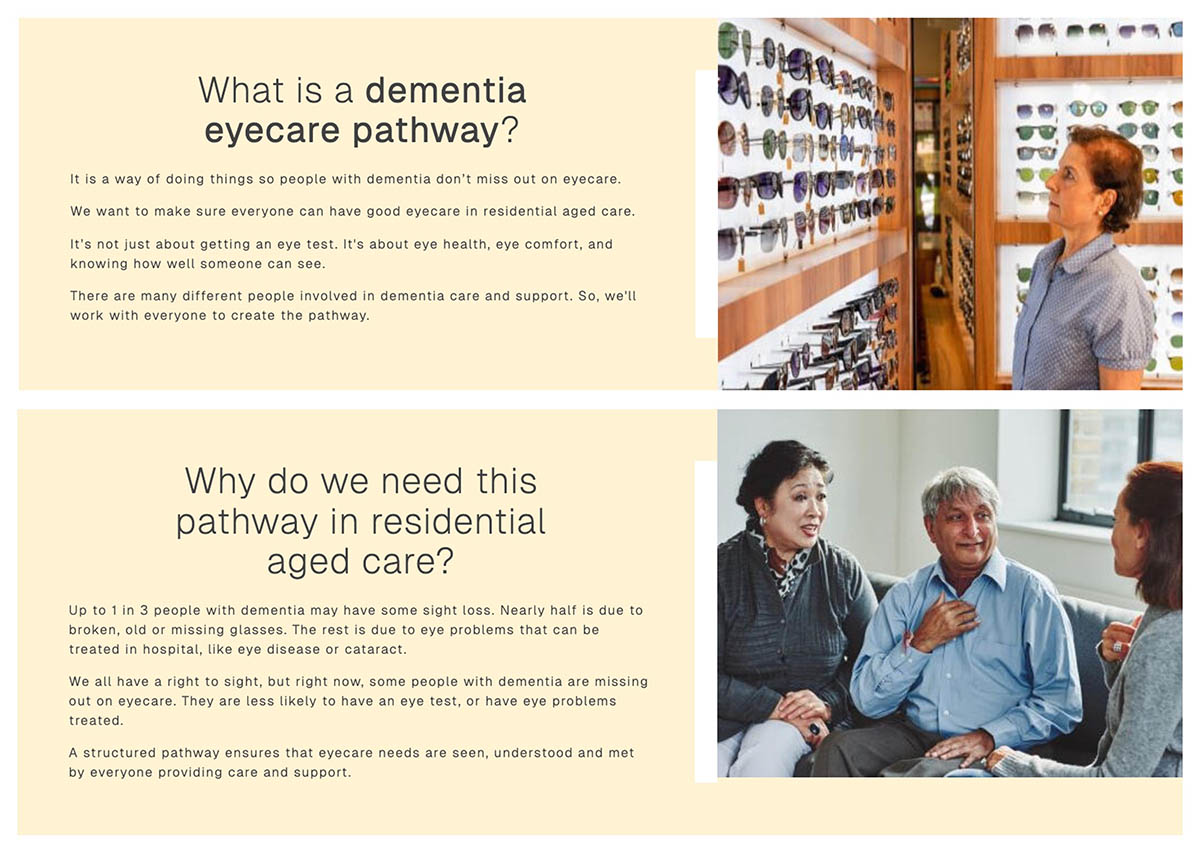
Visit the project website Creating a dementia eyecare pathway together to find out more.
Key project information
-
For further information please contact Dr Marianne Coleman: marianne.coleman@monash.edu
-