
News and Events
Congratulations to Professors Steve Webb and Julie Simpson on their NHMRC Investigator Grant Success
Professors Steve Webb from Monash University and Julie Simpson from the University of Melbourne have recently been awarded prestigious NHMRC Investigator Grants. These grants recognise their outstanding contributions to medical research and provide significant support for their ongoing and future projects.
Adaptive Platform Trials: Expanding impact
Professor Steve Webb, a leading figure in critical care research, has been acknowledged for his work in improving outcomes for critically ill patients. His research has had a profound impact on the management of severe infections and critical care practices. This grant will support his continued work on adaptive platform trials, such as REMAP-CAP and ATTACC-CAP.
Innovative Approaches to Optimising Existing and New Antimalarial Therapies
Professor Julie Simpson, an expert in biostatistics and epidemiology, has been recognised for her innovative approaches to tackling infectious diseases and improving public health outcomes. Her work has been instrumental in shaping treatment policies and advancing statistical methodologies in health research, most notably in the area of malaria.
These grants will enable both professors to continue their ground-breaking research and contribute to advancements in their respective fields. Congratulations to Professors Steve Webb and Julie Simpson on this well-deserved recognition!
AusTriM Seed funding for methodology research 2025
Five of our early-mid career researchers were successful in their application to our seed funding scheme this year, and are now leading innovative research projects across a variety of clinical trial methodology areas.
We look forward to hearing more about these projects at our monthly “Work in Progress” meetings as they continue to develop and refine new approaches to complex problems.
The recipients for this round are:
Anais Charles-Nelson: Confidence intervals for the cumulative incidence ratio at a designated time point
Ding Ma: SAFTEP: Semiparametric Accelerated Failure Time Evaluation Project
Melissa Middleton: Handling of missing data in adaptive trials
Thao Le: Comparing validation metrics for individualised treatment effect prediction models
Thomas Sullivan: Accounting for Blocked Randomisation in Sample Size Calculations for Partially Clustered Trials
Andrew Forbes Ideas Grant success
Congratulations to Andrew who has been awarded $900,000 in the NHMRC Ideas Grants for his project “Advancing cluster randomised trials to the next generation: Development of multi-domain platform cluster trial designs and machine learning methods for estimating personalised treatment effects”.
The project will explore complex cluster randomisation approaches in already complex adaptive multidomain platform trials. Currently, the existing underlying statistical framework for these trial designs only allows for randomisation of individuals, not of clusters, and a novel statistical framework is needed.
Andrew’s team, the “cluster cluster”, will develop a new set of clinical trial designs that enable multiple different trials to be conducted simultaneously in the same set of individuals, even when some trials involve cluster randomisation and others individual randomisation. Machine learning methods will be developed so that the characteristics of individuals who benefit most from the treatments are determined. This work will enable treatment policies to be efficiently assessed, thereby enabling better healthcare.
Congratulations Andrew on this success, and we look forward to seeing the outputs at one of our meetings soon!
AusTriM Seed funding for methodology research 2024
Three of our early-mid career researchers have been awarded seed funding for their innovative projects, which aim to pave the way for larger-scale studies in the future.
Hannah Johns has developed a clinician-accessible tool for sample size estimation and analysis under the generalised pairwise comparisons framework titled COMPARE WINS. This tool is designed to simplify statistical processes for clinicians involved in clinical trials.
Success of this project has secured additional funding (Stroke Trials CRE) to expand tool to include a preference designer module in addition to performing statistical analysis tasks. Future research will include the development of preference designer module to assist clinicians in determining rules for developing preference and continued enhancement of software in response to clinician feedback.
The R code is available at: github.com/HannahJohns/compare-wins
Lisa Yelland has been recognised for her work on accounting for partial clustering in meta-analyses of perinatal trials involving multiple births. Her research addresses important methodological challenges in perinatal studies.
This project found that persistent problems remain with the design and analysis of multicentre trials of premature infants due to ignoring the complexity that comes with the inclusion of multiple births, despite methods available to address this. Trialists should consider the impact of multiple births in their trial design and analysis. Readers of neonatal trials should be aware of these issues, particularly those who peer review papers.
You can read more here: We should do better in accounting for multiple births in neonatal randomised trials: a methodological systematic review
Liz Ryan was awarded for her analysis of response-adaptive randomization for Bayesian MAMS designs with time-to-event outcomes. Her work evaluates the effectiveness of this approach, providing insights for future trial designs.
The use of Response-Adaptive Randomisation (RAR) is becoming increasingly popular in clinical trials. However, while adaptive designs may provide more efficient designs in certain situations, they may not always provide gains in efficiency or even be practicable in some circumstances.
However, there has been little discussion on the efficiency and feasibility of RAR for time-to-event (TTE) outcomes, which are typically long-term outcomes such as overall survival or progression-free survival. The aim of this work is to explore the use and feasibility of RAR for TTE outcomes and provide some recommendations for when RAR may be efficient for these outcomes and how it may be implemented. The results of the simulation studies will allow us to translate these innovative trial methods into real-world Bayesian adaptive trials.
These awards highlight the potential of these projects to contribute significantly to the field of clinical research. Congratulations to Hannah, Lisa, and Liz on their promising work.
2024 Clinical Trialist Collaboration Scheme
If you have a proposal for an impactful and innovative trial but need assistance in the statistical design, or if you have existing data requiring innovative analysis, AusTriM can help.
We’re offering two weeks of biostatistics support from a leading investigator to kick off your project.
Applications close Friday 8 December 2023.
Maria Makrides awarded SA Scientist of the Year
South Australia’s leading Science, Technology, Engineering, Mathematics and Medicine (STEMM) professionals were recognised at last night’s SA Science Excellence and Innovation Awards. The prestigious Scientist of the Year award was taken out by SAHMRI’s Professor Maria Makrides who leads a team working to improve the lives of pregnant women and young children through clinical trials of nutritional interventions.
“I’m really shocked and humbled to be recognised like this. It’s a reflection of the great work my team has done and continues to do,” Prof Makrides said.
“I credit the more than 20,000 families who’ve participated in our trials over so many years to be able to produce these results.”
Prof Makrides team has recently implemented a world-first omega-3 pregnancy screening program in collaboration with SA Pathology, to prevent preterm birth.
Women with single pregnancies can now opt-in to have their omega-3 levels tested via routine antenatal blood test. This serves to inform whether omega-3 supplementation is needed or if the individual is taking too much, potentially putting the child at risk.
“Recent studies have shown that having an optimal omega-3 status in pregnancy will increase the chances of having a full-term pregnancy and therefore reduce the risk of prematurity,” Prof Makrides said.
Prof Makrides team is aiming to double the current uptake of local women opting in for the omega-3 test, believing it’ll result in a 14% state-wide reduction in preterm birth.
Congratulations Maria on this very well-deserved award, recognising the huge impact your trials have on health outcomes.
Jessica Kasza awarded the Monash University Vice Chancellor's Excellence award for Diversity and Inclusion
Congratulations to Jess who has been announced as the recipient of the Monash University Vice Chancellor's Excellence award for Diversity and Inclusion.
Jess has been developing and implementing approaches for improving the representation of women in the Australian statistical community for many years. Women are under-represented in this field, and her work with the Statistical Society of Australia (SSA) has led to changes that have made this field more welcoming for women and other under-represented groups. Particular achievements include the development of recommendations for the SSA to prevent and respond to harassment, developing a Code of Conduct for SSA conferences, and establishing and chairing SSA’s Equity, Diversity and Inclusivity Committee. Her work has helped to ensure that the SSA welcomes all.
She had previously won the 2022 Faculty of Medicine, Nursing and Health Sciences award for this work, and the AusTriM committee were thrilled to see her overcome some intense competition from multiple faculties to win this award at the University level. Congratulations Jess!
Conferences return for valuable in-person networking
As we turn our attention to planning our next Trials Methodology Conference in 2023, it is clear in-person meetings are back on the agenda, with AusTriM members taking off to the UK to represent the network and present their recent work, some for the first time since the inception of the AusTriM network in late 2019.
Sabine Braat and Anurika De Silva recently attended the International Clinical Trials Methodology Conference (ICTMC) in Harrogate, London from 3-6 October.
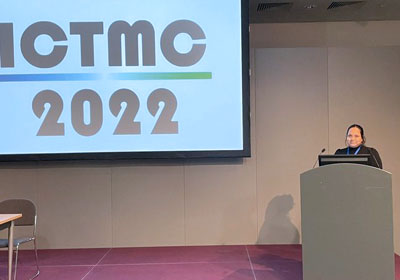
Anurika De Silva presenting "Performance of interim analyses in a two-by-two factorial design with a time-to-event outcome: a simulation study of the VAPOR-C trial"
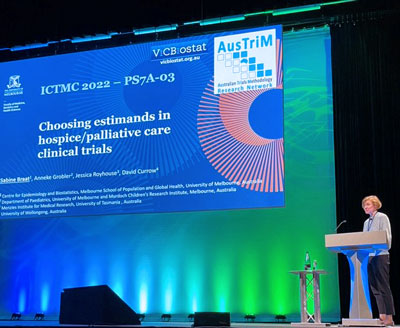
Sabine Braat presenting "Choosing estimands in hospice/palliative care clinical trials"
Both Sabine and Anurika noted how valuable it was to be back in person and networking with a variety of presenters. "It allowed us to really focus on talks rather than being distracted by emails, go up to speakers after their talk for a chat, and talk directly to poster presenters."
We congratulate the MRC-NIHR Trials Methodology Research Partnership network Conference Organising Committee (in particular Paula Williamson and James Wason) on bringing together such a wonderful event!
Following on from this, the Current Developments in Cluster Randomised Trials and Stepped Wedge Designs annual conference took place in London (November 14-15, 2022). This meeting gathers together the top researchers worldwide in cluster randomised trials and stepped wedge designs. Talks at this year's event were both in-person and online. The "Cluster Cluster" was well represented, with Rhys Bowden, Andrew Forbes, Kelsey Grantham, Jessica Kasza and Ehsan Rezaei all presenting full-length talks.
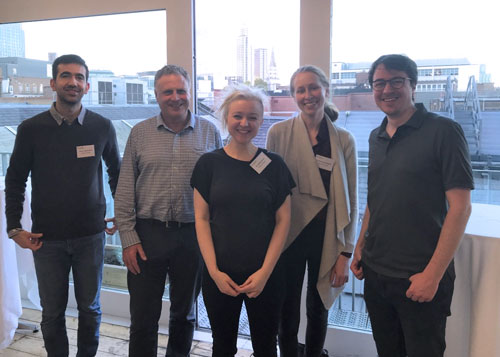
L-R: Ehsan Rezaei, Andrew Forbes, Jessica Kasza, Kelsey Grantham, Rhys Bowden
Andrew kicked the conference off with a talk about multifactorial cross-over designs that allow for multiple interventions to be assessed simultaneously, with high power to detect (some of the) interactions between these interventions. Jess soon followed with a talk about how decaying intracluster correlation parameters can be extracted from estimated aggregate intracluster correlations. Ehsan spoke about how efficient and powerful incomplete stepped wedge designs can be found through iterative removal of observations that don't contribute a lot of information. Kelsey presented her work on the staircase design – a promising new set of incomplete stepped wedge designs. Rhys closed the live talks of the conference with a discussion of how intracluster correlations for binary data can be well-estimated using linear mixed models and associated approaches.
The Cluster Cluster had the opportunity to meet and network with colleagues from around the world. We were reminded of the value of meeting with collaborators in-person!
Anurika De Silva announced as a Superstar of STEM
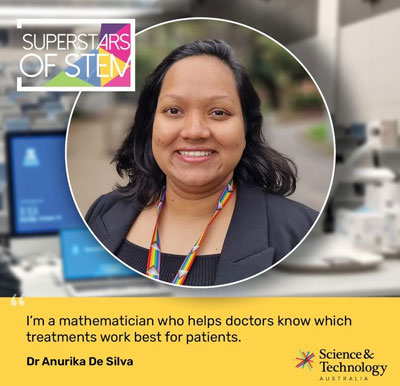 Congratulations to Anurika De Silva on being announced as one of the newest Australian Superstars of STEM.
Anurika is one of 60 diverse brilliant scientists, technologists, engineers and mathematicians selected to enter the program, as officially announced today by the Minister for Industry and Science, Ed Husic MP. The program aims to equip Superstars to become highly visible media and public role models, become confident communicators across a range of settings, and encourage the next generation to study and stay in STEM.
We are excited to see how Anurika uses this position to encourage more people to consider training and career opportunities as biostatisticians, or, as Anurika puts it, "a mathematician who helps doctors know which treatments work best for patients".
Superstars of STEM is an initiative of Science & Technology Australia funded by the Australian Government’s Department of Industry, Science and Resources. The next 60 Superstars of STEM will join the program in 2023 and 2024. Through a highly competitive selection process, the program selects 60 women and non-binary STEM experts and gives them the training, confidence, networks and experience to become sought-after media commentators as experts in their fields.
AusTriM Seed funding for methodology research – grant recipients announced
Congratulations to Alan Herschtal, Kelsey Grantham and Rhys Bowden who were all successful in our 2022/23 seed funding grant round. These grants provide our Early-Mid Career Researchers the opportunity to lead novel methodological research projects over a one-year period, supported by our senior researchers. We’re very much looking forward to hearing about the progress of these projects throughout 2023 at our regular network meetings:
Alan Herschtal (Rory Wolfe, Stephane Heritier): Flexible Modelling of Count Outcomes in Clinical Trials
Kelsey Grantham (Andrew Forbes, Jessica Kasza): Decaying intracluster correlation structures for longitudinal cluster randomised trials: implications of misspecification
Rhys Bowden (Jessica Kasza, Andrew Forbes): Design and analysis of longitudinal cluster randomised trials with multiple different types of clusters
NHMRC Investigator Grant success
Congratulations to Katherine Lee and Maria Makrides on the announcement of their recent funding success in the NHMRC Investigator Grant round.
Kate was awarded a Leadership 1 grant with a total of $2,219,468 funding to support "A program of substantive and methodological research and capacity building in biostatistics".
This will support methodological research that Kate is conducting in the area of adaptive platform trials, which are revolutionising how clinical trials are conducted. The proposed program of biostatistical and substantive research and capacity building in these study designs will not only lead to advances in statistical methodology and child health, but will ensure that Australia has the biostatistical skills and understanding to support cutting-edge clinical and public health research into the future.
Maria was awarded a Leadership 3 grant with a total of $3,525,097 funding to further investigate Omega-3 precision nutrition, preventing prematurity and enhancing cognitive development of very preterm children. Maria noted “My work is designed to overcome omega-3 deficiency in Australian pregnant women to prevent some of those early births. For babies born more than 11 weeks before their due date, my research aims to maximise developmental benefits by feeding extra omega-3 fats in the neonatal unit to match what would have been received in the womb.”
We look forward to sharing the outputs of this work in the future.
MRFF grant to support REMAP-CAP and ASCOT platform trial coordination
A $4 million grant from the MRFF will support the integration of existing platform trials Randomised, Embedded, Multi-factorial, Adaptive Platform Trial for Community-Acquired Pneumonia (REMAP-CAP) and the Australasian COVID-19 Trial (ASCOT) to more rapidly identify treatments for patients hospitalised for COVID-19.
REMAP-CAP and ASCOT utilise similar methodologies, presenting an opportunity to integrate back-end components of both trials, saving time and money. They’ll share a common protocol and data management system, with increased statistical power to detect treatment effects as soon as possible.
The interventions that will be evaluated under the shared structure are:
- comparative effectiveness of remdesivir and nirmatrelvir/ritonavir (ASCOT)
- comparative effectiveness of different doses of dexamethasone (both platforms)
- comparative effectiveness of immune modulators known to be effective, tocilizumab and baricitinib, but which have not previously had a head-to-head comparison (both platforms)
- effectiveness of convalescent plasma in patients with pre-existing immune suppression (both platforms)
We look forward to hearing more on the platform expansion, federation and disease/condition extension from Steve Webb at our upcoming meetings.
Innovative Methods in Trials – Design & Analysis Collaboration Opportunity
AusTriM are offering clinical trialists the opportunity to answer important clinical questions using innovative methods through collaboration with one of our Investigators. The successful applicant will receive direct support from the Investigator to either design a new clinical trial or (re)analyse existing trial data.
Applications close 23 September 2022. Please see full details here.
REMAP-CAP & PADDI Trials recognised at 2022 ACTA Trial of the Year Awards
Congratulations to AusTriM Investigators Andrew Forbes and Steve Webb who were recognised for the 2nd year in a row at the ACTA Trial of the Year Awards, celebrating International Clinical Trials Day on May 20th. The awards were presented by Prof Anne Kelso AO, CEO, NHMRC and The Hon Brad Hazzard MP, NSW Minister for Health.
REMAP-CAP
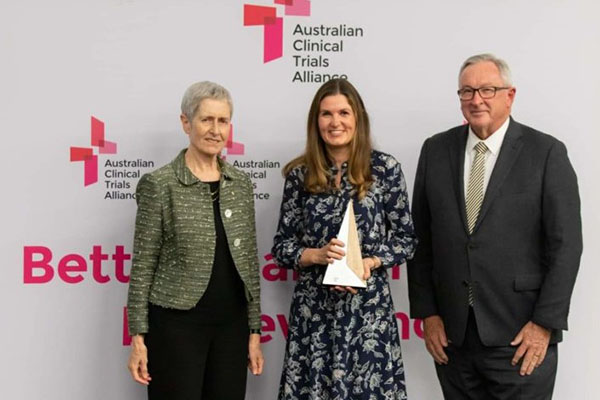 The Randomised, Embedded, Multifactorial Adaptive Platform trial for Community-Acquired Pneumonia trial received the ACTA Trial of the Year Award, with Lisa Higgins accepting the award on behalf of the study team.
Lisa acknowledged Chief Investigator of REMAP-CAP Prof Steve Webb for his ongoing leadership of the trial, which employed a novel design to simultaneously evaluate potential treatments for the care of patients hospitalised in the ICU with COVID-19.
During 2021, the platform reached conclusions regarding a number of interventions including:
- convalescent plasma was unlikely to be of benefit for patients with COVID-19 who require organ support in an intensive care unit
- therapeutic dose of anticoagulation was of benefit for hospitalised patients with COVID-19 who do not require organ support
- immune modulating drugs tocilizumab and sarilumab reduce mortality by 8.5% as well as improving the time to discharge from ICU by about a week; and subsequently, both drugs are equally effective
These results were published and adopted in to clinical guidelines while the platform continues to collect evidence regarding other interventions.
As part of his involvement in the AusTriM network, Steve chairs a network of clinician investigators and biostatisticians working on platform trials across Australia and New Zealand, sharing learnings from existing trials such as REMAP-CAP and providing guidance for investigators on new and establishing trials. He also leads the Adaptive Platform Trials Research stream within the network.
The PADDI Trial
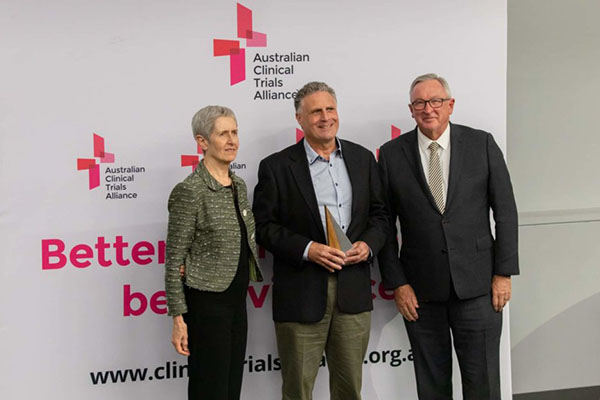 The ACTA-STInG (Statistics in Trials Interest Group) Excellence in Trial Statistics Award is adjudicated by a panel of senior statisticians for the trial that demonstrates exemplary statistical aspects across the life stages of the trial, from trial design and planning, to analysis, reporting and interpretation. This year, the prize was awarded to The Perioperative ADministration of Dexamethasone and Infection (PADDI) trial, with the Trial Statistician, Prof Andrew Forbes, accepting the award on behalf of the PADDI trial group. This marks the second consecutive year that Prof Forbes's work has won this award.
The PADDI trial was a pragmatic randomised non-inferiority trial assessing the safety of 8mg dexamethasone versus placebo in terms of surgical site infection in 8880 patients undergoing non-urgent non-cardiac surgery across 55 centres in 4 countries. The results of the trial were published in the New England Journal of Medicine in 2021.
Andrew Forbes remarked that “Although superficially PADDI was a straightforward stratified individually randomised trial, in practice the non-inferiority design posed many challenges for the design and monitoring of the trial. First, the non-inferiority margin needed to be determined and agreed upon by the large investigator group, because the eventual trial results would ultimately be interpreted with respect to this margin. There were also challenges with respect to determining the asymmetric interim monitoring procedure in which more liberal boundaries were chosen for harm than for non-inferiority. Finally, with the trial likely to be of high clinical interest, the statistical analysis plan needed to be completely comprehensive and replete with sensitivity analyses in order to ensure the methods were transparent and results robust.”
Andrew also acknowledged the clinical leadership of Chief Investigator Prof Tomás Corcoran and the wider Australian and New Zealand College of Anaesthetists (ANZCA) Clinical Trials Network.
Find out about the other award winners from this year’s event on the ACTA website.
AusTriM Clinical Trialist Collaboration Scheme 2021/22 Awardee announced
AusTriM is delighted to be supporting A/Prof Trisha Peel in the design of her research project which will investigate two interventions aimed at reducing postoperative surgical site infections.
In her application, Trisha noted that “surgical site infections (SSIs) are a devastating complication of surgery, leading to significant patient suffering and substantial healthcare costs. It is estimated that over half of all SSIs are preventable. Of concern, infection prevention recommendations are largely informed by low-quality, eminence-based recommendations”.
By using an innovative adaptive design, the study design will simultaneously assess two interventions: i. preoperative bathing with antiseptic cloths versus non-antiseptic cloths and ii. operative surgical site skin preparation with chlorhexidine-alcohol versus iodophor-alcohol.
Adaptive trials have a number of benefits over “standard” randomised clinical trials. They evaluate multiple treatment options; both concurrently, and sequentially by introducing new questions as previous ones are answered. To guide such trials, frequent analyses are performed using Bayesian statistical methods. Extensive pre-trial numerical simulations are undertaken and are updated during the course of the trial as data accumulates, in order to guide the trial’s progress through implementation of stopping rules for benefit, harm, or futility for each treatment.
This requires specialist knowledge of the methodology for planning and implementing such trials and customised development for the specific trial. The complex statistical modelling to support the initial design of this adaptive trial will be overseen by AusTriM Chief Investigator Tom Snelling with work undertaken by Mark Jones, Senior Biostatistician at The University of Sydney.
We congratulate Trisha, second investigator Prof Paul Myles and the wider project team on this new project and look forward to hearing updates throughout 2022.
AusTriM Research Methodology Grant Scheme 2021/22 Recipients announced
Now in its’ second year, AusTriM is again supporting Early-Mid Career Researchers (EMCRs) in developing novel methodologies for the design and analysis of clinical trials. The funded recipients, their coinvestigators, and project titles are:
Dr Robert Mahar, A/Prof Brett Manley, Dr Clare Whitehead and Prof Katherine Lee: Using Bayesian proportional odds to model longitudinal maternal and neonatal outcomes in an adaptive platform trial.
Ms Sabine Braat, Dr Rebecca Harding, Dr Robert Mahar and Prof Julie Simpson: Re-design of intravenous iron program for anaemia in pregnancy in low- and middle-income countries
Dr Anurika De Silva, Ms Sabine Braat, Prof Katherine Lee and Prof Julie Simpson: Novel methods for missing data in trials affected by COVID-19
We look forward to hearing updates on these projects throughout 2022 at our monthly Work in Progress meetings, and Trial Analysis and Platform Trials special interest group seminars.
Three PhD Conferrals – Congratulations Drs McLeod, Jachno and Grantham!
We are delighted to announce PhD conferrals for three of our students.
Kim M Jachno, PhD
Analysis Of Treatment Effects And Event Rates That Change Over Time In Clinical Trials
Main Supervisor: Prof Rory Wolfe
Kim will continue to be involved in the AusTriM network, based at Monash University School of Public Health and Preventive Medicine.
Charlie McLeod, PhD
Improving the Methodology for PAtient-Centred Trials in Cystic Fibrosis (IMPACT CF)
Main Supervisor: Prof Tom Snelling
Charlie will continue to be involved with the AusTriM network, and shortly commence her postdoctoral role at Telethon Kids Institute, WA.
Kelsey Grantham, PhD
Statistical Methods For The Design And Analysis Of Longitudinal Cluster Randomized Trials
Main Supervisor: Prof. Andrew Forbes
Kelsey will continue her research in the area of cluster randomised trials and shortly commence her postdoctoral role at Monash University SPHPM, supervised by AusTriM Associate Investigator Jess Kasza.
Innovative Methods in Trials – Design & Analysis Collaboration Opportunity
AusTriM is offering clinical trialists the opportunity to receive advice and support to answer important clinical questions using innovative methods. The successful applicant / team can expect us to collaborate with them to either i. design a new clinical trial (Stream A) or ii. analyse existing trial data (Stream B).
What's on offer:
STREAM A: TRIAL DESIGN
Do you have a clinical question and wish to design a trial using innovative methodologies to answer it?
STREAM B: DATA ANALYSIS
Do you have existing trial data to be (re)analysed using innovative approaches?
Our Investigator team can collaborate with you to utilise methodologies such as the following:
- Adaptive platform trials
- Multi-arm multi-stage (MAMS) designs
- Cluster randomised crossover trials
- Stepped wedge trials (e.g. with time-to-event endpoints)
- Partially clustered trials
- Compliance-adjusted analysis in randomised trials
- Methods for missing data
- Composite endpoints
- Treatment mechanisms and surrogate outcomes
Please click here (PDF) for further details and how to apply.
PEPTIC Trial wins ACTA-STInG Excellence in Trial Statistics award, REMAP-CAP Corticosteroid Domain commended
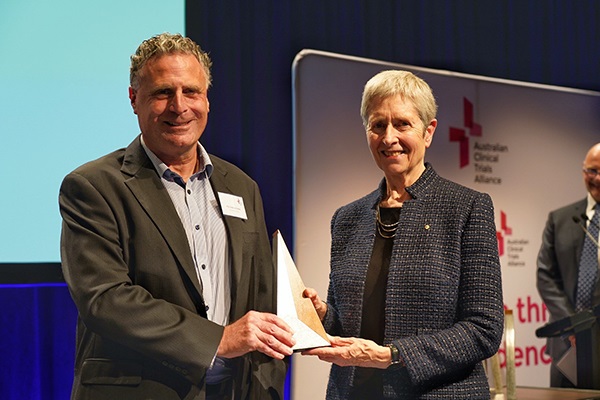 The Australian Clinical Trials Alliance (ACTA) marked International Clinical Trials Day with their National Tribute and Award Ceremony. AusTriM Chief Investigators Prof Andrew Forbes and Prof Steve Webb were recognised for their involvement in the PEPTIC and REMAP-CAP trials, respectively.
PEPTIC Trial
The Proton pump inhibitor vs. histamine-2 rEceptor blockers for ulcer Prophylaxis Therapy in the Intensive Care unit (PEPTIC) Trial received the ACTA-STInG (Statistics in Trials Interest Group) Excellence in Trial Statistics award, with the Trial Statistician, Prof Andrew Forbes, accepting the award on behalf of the PEPTIC trial group. The trial was also recognised as a finalist in the Trial of the Year category.
The trial used an innovative cluster crossover methodology to compare two strategies for stress ulcer prophylaxis in critically ill patients admitted to ICU. Utilising registry and other routinely collected data, the trial randomised 26,982 patients from a total of 50 ICUs across Australia, Canada, New Zealand, Ireland and the United Kingdom. It was the largest clinical trial to ever be conducted in the intensive care setting, yet at a budget of only $500,000 USD, or 1/10th of a typical large critical care trial; largely because of the efficiency of the design. The trial results were published in JAMA in January 2020.
Prof Forbes developed theoretical results and simulation work for the cluster crossover design of this trial. The unique methodology has the potential to address clinical questions that were previously considered logistically or financially infeasible, and has provided the impetus for current and future research in this area of innovative trial design.
Andrew said: “In PEPTIC, it turned out that the careful stratification of sites into regional and temporal batches resulted in the trial having almost the same precision as a 27,000 patient individually randomised trial. This in itself is quite remarkable, and indicates the value of careful planning, together of course with a healthy dose of good luck.”
Through the AusTriM network, Prof Forbes and collaborators are now developing a suite of the most efficient ‘incomplete factorial’ cluster randomised crossover designs and their sample size requirements, together with associated tutorials and software tools developed in R and Stata. AusTriM aims to disseminate these findings through close collaboration with clinical trialists, statisticians, clinical trial networks and ACTA. For more detail on our current projects please refer to our Research and Publications pages.
REMAP-CAP
The Randomised, Embedded, Multifactorial Adaptive Platform trial for Community-Acquired Pneumonia (REMAP-CAP) trial – Corticosteroid Domain received commendations in both the Excellence in Trial Statistics and Trial of the Year Award categories.
REMAP-CAP is an ongoing Australian-led ongoing international adaptive platform trial which aims to improve outcomes for critically ill patients admitted to the ICU with pneumonia. With the coronavirus pandemic, this platform has been adapted to find the best treatment strategies for COVID-19 patients receiving intensive care in hospitals worldwide. The corticosteroid domain of the platform was one of the first to be incorporated early in 2020.
The scale and design of the trial allow it to assess the effectiveness of a range of treatments already routinely used in clinical practice, as well as the flexibility to quickly incorporate new treatments as they demonstrate promise and “drop” treatments that either fail to perform, or when there is a loss of equipoise, as happened with the corticosteroid domain.
When data released from the RECOVERY Trial demonstrated a benefit of corticosteroid therapy, recruitment of patients to the REMAP-CAP corticosteroid domain was halted the very next day. REMAP-CAP subsequently demonstrated a 93% and 80% probability of benefit on the primary outcome of organ support-free days at day 21 for the fixed-duration and the shock-dependent course, respectively, when compared with no assigned corticosteroids. The results of this were published in JAMA in September 2020.
AusTriM Methodology Research Seed Funding Grant Scheme
As part of our mission to support early/mid-career researchers (E/MCRs) within the network, we have launched a scheme to provide seed funding for research projects aimed at either: (a) developing new design and analysis methods for clinical trials; or (b) implementation of innovative methods into clinical trials.
Applications were judged by a panel of senior researchers according to criteria based on those used by the NHMRC (significance, innovativeness, alignment, feasibility and track record/career).
Congratulations to the awardees – we look forward to progress updates on your work throughout 2021:
- Dr Thao Le, Prof Rory Wolfe, Prof Stephane Heritier, A/Prof Ronald Geskus – Handling missing disease information due to death in trial endpoints that need two visits to diagnose
- Dr Julie Marsh, Prof Kate Lee, Dr Kaushala Jayawardana, Mr Michael Dymock – BRACE Trial redesign project
- Dr Rhys Bowden, Prof Andrew Forbes, Dr Jessica Kasza – Guiding the choice of within-cluster correlation structure for cluster randomised crossover and stepped wedge trials: a comprehensive simulation study
- Dr Robert Mahar, Prof Julie Simpson – A SMART design with Bayesian adaptive randomisation: optimising multi-stage prophylaxis and treatment regimens for immunocompromised patients
- Dr Lisa Yelland, Dr Thomas Sullivan, Prof Andrew Forbes, Prof Katherine Lee – Comparison of Analysis Methods for Addressing Imperfect Stratification
Steve Webb recognised with nomination for The Australian newspaper's Australian of the Year Award
Prof Steve Webb, AusTriM lead investigator, was nominated for his leadership of the Randomised, Embedded, Multi-factorial, Adaptive Platform Trial for Community-Acquired Pneumonia (REMAP-CAP).
REMAP-CAP is an Australian-led ongoing international adaptive platform trial which aims to improve outcomes for critically ill patients admitted to the ICU with pneumonia. With the coronavirus pandemic, this platform has been adapted to find the best treatment strategies for COVID-19 patients receiving intensive care in hospitals worldwide.
Prof Webb leads the global consortium of nearly 100 international investigators which is active at almost 300 hospitals and is rapidly approaching 10,000 randomisations in 5,000 patients with suspected or proven COVID infections. The international team, under Prof Webb's chairmanship, has discovered that using two existing arthritis treatments can save one in 12 seriously ill patients (noting that this finding is still under peer-review). The platform has also reported the effectiveness of corticosteroids as well as made announcements relating to the treatment effect of antiviral agents, anticoagulation, and convalescent plasma. The platform continues to evaluate the effect of antiplatelet agents, vitamin C, statin therapy, and additional immune modulators.
This is a massive accolade and important recognition of his coordinated efforts and leadership to uncover some of the best intensive care treatments for COVID-19, potentially saving hundreds of thousands of lives.
ARC Discovery Project
Congratulations to Dr Jessica Kasza and Professor Andrew Forbes who were awarded an ARC Discovery grant (2021-25) totalling $420,000 for their project "Increasing the efficiency and interpretability of stepped wedge cluster randomised trials".
Their collaborators for this project are Professor Richard Hooper, Queen Mary University of London, Professor James Hughes (University of Washington), and Dr Schadrac Agbla (University of Liverpool).
Andrew Forbes elected as a Fellow of AAHMS
Professor Andrew Forbes has been elected as a Fellow of the Australian Academy of Health and Medical Sciences (AAHMS).
In welcoming the newly elected Fellows at the 2020 Scientific Meeting on 14 October, the Academy’s President, Professor Ingrid Scheffer, acknowledged that "Fellowship is granted in recognition of a significant and sustained contribution to health and medical research, demonstrating leadership on both the Australian and international stage".
Andrew was recognised for his leadership in biostatistics, reflected in his development of innovative statistical methods to solve practical issues in health and medical research studies, as well as collaboration on major practice-changing research in substantive clinical and public health areas.
Andrew is recognised as an international expert in the design of cluster crossover trials. More information on his research can be found on his profile.
 AusTriM featured in Research Australia's INSPIRE magazine
Innovative trials including REMAP-CAP, ASCOT and CLARITY are being used to examine the efficacy of potential treatments for COVID-19.
NHMRC Investigator grant
Congratulations to Associate Investigator Professor Julie Simpson who was awarded a NHMRC Investigator grant (2021-25) totalling $2,163,220 for her research "Optimising treatment and prevention strategies to accelerate malaria elimination".
AusTriM working to develop critical COVID-19 trials
Researchers within our network are playing a crucial part in national and international trials to protect the healthcare workforce; evaluate treatment options for patients and build real-time clinical decision support in to health systems. Read more about these trials below.
BCG vaccination to Reduce the impact of COVID-19 in Australian healthcare workers following Coronavirus Exposure (BRACE) Trial
Professor Kate Lee, Trial Statistician
Healthcare workers are at increased risk of contracting COVID-19, which has significant implications for the health care system during a pandemic. The BCG vaccine, generally used to protect against tuberculosis, also boosts immunity to other infections. The purpose of the BRACE trial is to determine if BCG vaccination reduces the incidence and severity of COVID-19 in Australian healthcare workers during the 2020 pandemic. This Phase 3, two-group, multicentre, open-label, randomized, controlled trial aims to recruit 4,170 health care workers in Australian hospitals. Primary results are expected in October 2020, and full study results are expected in March 2022.
For more information see the trial website: mcri.edu.au/BRACE
Randomized, Embedded, Multifactorial Adaptive Platform trial for Community-Acquired Pneumonia (REMAP-CAP) adds COVID-19 domains
Professor Steve Webb, Intensive Care Physician and Principal Investigator
REMAP-CAP is an ongoing international adaptive platform trial which aims to improve outcomes for critically ill patients admitted to the ICU with pneumonia. The novel design of the REMAP-CAP trial enables it to adapt in the event of a pandemic to evaluate the most relevant treatment options. In early 2020, three additional domains were added to the trial protocol to treat COVID-19 patients, with over 300 patients randomised to date.
You can read more about REMAP-CAP and listen to an interview with Steve here: remapcap.org/media
ASCOT (Australasian COVID-19 Trial) rolls out across hospitals in Australia and New Zealand
Professor Tom Snelling, Infectious Disease Physician and Investigator
ASCOT will utilise response adaptive randomisation to allocate COVID-19 patients being treated in hospital to a range of supportive therapies. Current treatments being investigated are standard care (no intervention), kaletra and hydroxychloroquine. By utilising Bayesian statistical methods, additional treatment arms may be added as new treatments become available, just as existing arms may be dropped if they are shown to not be effective.
NHMRC Ideas Grant
Congratulations to Chief Investigator Professor Andrew Forbes who was awarded a 2019 NHMRC Ideas Grant totalling $480,350 for his project ‘Pragmatic cluster randomised trials: Bridging the gap between theory and practice’.
Best Paper and Publication Prize
Congratulations to AusTriM Associate Investigator Dr Jessica Kasza who has been awarded the 2019 Alfred Research Alliance EMCR Public Health and Clinical Research Best Paper Award and the 2019 John McNeil Early Career Researcher Publication Prize for Public Health Research for her paper jointly authored with Professor Andrew Forbes:
Kasza J, Forbes AB. Inference for the treatment effect in multiple-period cluster randomised trials when random effect correlation structure is misspecified. Statistical Methods in Medical Research. 2019: 28(10–11), 3112–3122. doi: 10.1177/0962280218797151

Australian Trials Methodology Conference 2025
20 November 2025
Crown Promenade Melbourne and online
Registration is now open! This year we will continue to offer in person and online-only attendance options. Early bird prices are available until September 26.
PAST EVENTS
AusTriM AUSTRALIAN TRIALS METHODOLOGY CONFERENCE 2023
17–18 OCTOBER 2023, MELBOURNE AND ONLINE
Our second conference brought together over 200 delegates and speakers from across Australia and internationally. We were pleased to be able to host this event in person as well as retaining a highly engaging online option. Sessions included adaptive platform trials, innovative analysis methodologies, cluster trials, health economics of trials, Bayesian trial design, survival analysis and causal inference. The full program is available here.
WORKSHOP: PLATFORM TRIALS AND MASTER PROTOCOLS
16 OCTOBER 2023, MELBOURNE AND ONLINE
Presented by our visiting international guests Thomas Jaki and James Wason, this course provided an overview of statistical approaches to the design and analysis of Master protocols in a mixture of lectures and practical sessions.
AusTriM AUSTRALIAN TRIALS METHODOLOGY CONFERENCE 2021
6–7 DECEMBER 2021, ONLINE
The inaugural Australian Trials Methodology Conference showcased cutting-edge trial design and analysis approaches in a thought-provoking yet still accessible way to biostatisticians, methodologists and trialists (across any clinical discipline). The program of speakers included Marcel Wolbers (Roche, Switzerland), Stephen Senn (Consultant Statistician, UK), Susan Murphy (Harvard University, USA), Elaine Pascoe (University of Queensland), Tom Snelling (University of Sydney), Dimitris Rizopoulos (Erasmus Medical Center, The Netherlands), Suzie Cro (Imperial College London, UK), Ian White (University College London, UK), Phillip Westgate (University of Kentucky, USA), Charles Weijer (Western University, Canada) and Fan Li (Yale University, USA).
WORKSHOP: MODERN CONCEPTS IN CLINICAL TRIALS
22–25 FEBRUARY 2021, HALF-DAY ONLINE WORKSHOPS
Led by investigators Katherine Lee and Julie Marsh, this series of 'hands-on' workshops covered adaptive designs and the estimand framework.
DATA AND SAFETY MONITORING BOARDS (DSMB) – STATISTICAL PRINCIPLES
24 NOVEMBER 2020, WEBINAR
Professor Ian Marschner
DATA AND SAFETY MONITORING BOARDS (DSMB) – HOW TO PLAN WELL AND BE PREPARED FOR THE UNEXPECTED
10 NOVEMBER 2020, WEBINAR
Professor Carmel Hawley
ADAPTIVE PLATFORM TRIALS – AVOIDING REGRET IN TRIAL DESIGN
11 NOVEMBER 2020, WEBINAR
Professor Steve Webb
TRIAL DESIGNS FOR REGISTRY-BASED TRIALS
19 MAY 2020, WEBINAR
Professor Andrew Forbes
BAYESIAN ADAPTIVE RANDOMISED CLINICAL TRIALS WORKSHOP
27–28 FEBRUARY 2020, MELBOURNE | 5–6 MARCH 2020, SYDNEY
Dr Lorenzo Trippa and Dr Steffen Ventz
CURRENT DEVELOPMENTS IN CLUSTER-RANDOMISED TRIALS AND STEPPED WEDGE DESIGNS
21–22 NOVEMBER 2019, MELBOURNE
Professor Andrew Forbes, Professor Karla Hemming, Associate Professor Monica Taljaard
Congratulations to Professors Steve Webb and Julie Simpson on their NHMRC Investigator Grant Success
Professors Steve Webb from Monash University and Julie Simpson from the University of Melbourne have recently been awarded prestigious NHMRC Investigator Grants. These grants recognise their outstanding contributions to medical research and provide significant support for their ongoing and future projects.
Adaptive Platform Trials: Expanding impact
Professor Steve Webb, a leading figure in critical care research, has been acknowledged for his work in improving outcomes for critically ill patients. His research has had a profound impact on the management of severe infections and critical care practices. This grant will support his continued work on adaptive platform trials, such as REMAP-CAP and ATTACC-CAP.
Innovative Approaches to Optimising Existing and New Antimalarial Therapies
Professor Julie Simpson, an expert in biostatistics and epidemiology, has been recognised for her innovative approaches to tackling infectious diseases and improving public health outcomes. Her work has been instrumental in shaping treatment policies and advancing statistical methodologies in health research, most notably in the area of malaria.
These grants will enable both professors to continue their ground-breaking research and contribute to advancements in their respective fields. Congratulations to Professors Steve Webb and Julie Simpson on this well-deserved recognition!
AusTriM Seed funding for methodology research 2025
Five of our early-mid career researchers were successful in their application to our seed funding scheme this year, and are now leading innovative research projects across a variety of clinical trial methodology areas.
We look forward to hearing more about these projects at our monthly “Work in Progress” meetings as they continue to develop and refine new approaches to complex problems.
The recipients for this round are:
Anais Charles-Nelson: Confidence intervals for the cumulative incidence ratio at a designated time point
Ding Ma: SAFTEP: Semiparametric Accelerated Failure Time Evaluation Project
Melissa Middleton: Handling of missing data in adaptive trials
Thao Le: Comparing validation metrics for individualised treatment effect prediction models
Thomas Sullivan: Accounting for Blocked Randomisation in Sample Size Calculations for Partially Clustered Trials
Andrew Forbes Ideas Grant success
Congratulations to Andrew who has been awarded $900,000 in the NHMRC Ideas Grants for his project “Advancing cluster randomised trials to the next generation: Development of multi-domain platform cluster trial designs and machine learning methods for estimating personalised treatment effects”.
The project will explore complex cluster randomisation approaches in already complex adaptive multidomain platform trials. Currently, the existing underlying statistical framework for these trial designs only allows for randomisation of individuals, not of clusters, and a novel statistical framework is needed.
Andrew’s team, the “cluster cluster”, will develop a new set of clinical trial designs that enable multiple different trials to be conducted simultaneously in the same set of individuals, even when some trials involve cluster randomisation and others individual randomisation. Machine learning methods will be developed so that the characteristics of individuals who benefit most from the treatments are determined. This work will enable treatment policies to be efficiently assessed, thereby enabling better healthcare.
Congratulations Andrew on this success, and we look forward to seeing the outputs at one of our meetings soon!
AusTriM Seed funding for methodology research 2024
Three of our early-mid career researchers have been awarded seed funding for their innovative projects, which aim to pave the way for larger-scale studies in the future.
Hannah Johns has developed a clinician-accessible tool for sample size estimation and analysis under the generalised pairwise comparisons framework titled COMPARE WINS. This tool is designed to simplify statistical processes for clinicians involved in clinical trials.
Success of this project has secured additional funding (Stroke Trials CRE) to expand tool to include a preference designer module in addition to performing statistical analysis tasks. Future research will include the development of preference designer module to assist clinicians in determining rules for developing preference and continued enhancement of software in response to clinician feedback.
The R code is available at: github.com/HannahJohns/compare-wins
Lisa Yelland has been recognised for her work on accounting for partial clustering in meta-analyses of perinatal trials involving multiple births. Her research addresses important methodological challenges in perinatal studies.
This project found that persistent problems remain with the design and analysis of multicentre trials of premature infants due to ignoring the complexity that comes with the inclusion of multiple births, despite methods available to address this. Trialists should consider the impact of multiple births in their trial design and analysis. Readers of neonatal trials should be aware of these issues, particularly those who peer review papers.
You can read more here: We should do better in accounting for multiple births in neonatal randomised trials: a methodological systematic review
Liz Ryan was awarded for her analysis of response-adaptive randomization for Bayesian MAMS designs with time-to-event outcomes. Her work evaluates the effectiveness of this approach, providing insights for future trial designs.
The use of Response-Adaptive Randomisation (RAR) is becoming increasingly popular in clinical trials. However, while adaptive designs may provide more efficient designs in certain situations, they may not always provide gains in efficiency or even be practicable in some circumstances.
However, there has been little discussion on the efficiency and feasibility of RAR for time-to-event (TTE) outcomes, which are typically long-term outcomes such as overall survival or progression-free survival. The aim of this work is to explore the use and feasibility of RAR for TTE outcomes and provide some recommendations for when RAR may be efficient for these outcomes and how it may be implemented. The results of the simulation studies will allow us to translate these innovative trial methods into real-world Bayesian adaptive trials.
These awards highlight the potential of these projects to contribute significantly to the field of clinical research. Congratulations to Hannah, Lisa, and Liz on their promising work.
2024 Clinical Trialist Collaboration Scheme
If you have a proposal for an impactful and innovative trial but need assistance in the statistical design, or if you have existing data requiring innovative analysis, AusTriM can help.
We’re offering two weeks of biostatistics support from a leading investigator to kick off your project.
Applications close Friday 8 December 2023.
Maria Makrides awarded SA Scientist of the Year
South Australia’s leading Science, Technology, Engineering, Mathematics and Medicine (STEMM) professionals were recognised at last night’s SA Science Excellence and Innovation Awards. The prestigious Scientist of the Year award was taken out by SAHMRI’s Professor Maria Makrides who leads a team working to improve the lives of pregnant women and young children through clinical trials of nutritional interventions.
“I’m really shocked and humbled to be recognised like this. It’s a reflection of the great work my team has done and continues to do,” Prof Makrides said.
“I credit the more than 20,000 families who’ve participated in our trials over so many years to be able to produce these results.”
Prof Makrides team has recently implemented a world-first omega-3 pregnancy screening program in collaboration with SA Pathology, to prevent preterm birth.
Women with single pregnancies can now opt-in to have their omega-3 levels tested via routine antenatal blood test. This serves to inform whether omega-3 supplementation is needed or if the individual is taking too much, potentially putting the child at risk.
“Recent studies have shown that having an optimal omega-3 status in pregnancy will increase the chances of having a full-term pregnancy and therefore reduce the risk of prematurity,” Prof Makrides said.
Prof Makrides team is aiming to double the current uptake of local women opting in for the omega-3 test, believing it’ll result in a 14% state-wide reduction in preterm birth.
Congratulations Maria on this very well-deserved award, recognising the huge impact your trials have on health outcomes.
Jessica Kasza awarded the Monash University Vice Chancellor's Excellence award for Diversity and Inclusion
Congratulations to Jess who has been announced as the recipient of the Monash University Vice Chancellor's Excellence award for Diversity and Inclusion.
Jess has been developing and implementing approaches for improving the representation of women in the Australian statistical community for many years. Women are under-represented in this field, and her work with the Statistical Society of Australia (SSA) has led to changes that have made this field more welcoming for women and other under-represented groups. Particular achievements include the development of recommendations for the SSA to prevent and respond to harassment, developing a Code of Conduct for SSA conferences, and establishing and chairing SSA’s Equity, Diversity and Inclusivity Committee. Her work has helped to ensure that the SSA welcomes all.
She had previously won the 2022 Faculty of Medicine, Nursing and Health Sciences award for this work, and the AusTriM committee were thrilled to see her overcome some intense competition from multiple faculties to win this award at the University level. Congratulations Jess!
Conferences return for valuable in-person networking
As we turn our attention to planning our next Trials Methodology Conference in 2023, it is clear in-person meetings are back on the agenda, with AusTriM members taking off to the UK to represent the network and present their recent work, some for the first time since the inception of the AusTriM network in late 2019.
Sabine Braat and Anurika De Silva recently attended the International Clinical Trials Methodology Conference (ICTMC) in Harrogate, London from 3-6 October.
Anurika De Silva presenting "Performance of interim analyses in a two-by-two factorial design with a time-to-event outcome: a simulation study of the VAPOR-C trial"
Sabine Braat presenting "Choosing estimands in hospice/palliative care clinical trials"
Both Sabine and Anurika noted how valuable it was to be back in person and networking with a variety of presenters. "It allowed us to really focus on talks rather than being distracted by emails, go up to speakers after their talk for a chat, and talk directly to poster presenters."
We congratulate the MRC-NIHR Trials Methodology Research Partnership network Conference Organising Committee (in particular Paula Williamson and James Wason) on bringing together such a wonderful event!
Following on from this, the Current Developments in Cluster Randomised Trials and Stepped Wedge Designs annual conference took place in London (November 14-15, 2022). This meeting gathers together the top researchers worldwide in cluster randomised trials and stepped wedge designs. Talks at this year's event were both in-person and online. The "Cluster Cluster" was well represented, with Rhys Bowden, Andrew Forbes, Kelsey Grantham, Jessica Kasza and Ehsan Rezaei all presenting full-length talks.
L-R: Ehsan Rezaei, Andrew Forbes, Jessica Kasza, Kelsey Grantham, Rhys Bowden
Andrew kicked the conference off with a talk about multifactorial cross-over designs that allow for multiple interventions to be assessed simultaneously, with high power to detect (some of the) interactions between these interventions. Jess soon followed with a talk about how decaying intracluster correlation parameters can be extracted from estimated aggregate intracluster correlations. Ehsan spoke about how efficient and powerful incomplete stepped wedge designs can be found through iterative removal of observations that don't contribute a lot of information. Kelsey presented her work on the staircase design – a promising new set of incomplete stepped wedge designs. Rhys closed the live talks of the conference with a discussion of how intracluster correlations for binary data can be well-estimated using linear mixed models and associated approaches.
The Cluster Cluster had the opportunity to meet and network with colleagues from around the world. We were reminded of the value of meeting with collaborators in-person!
Anurika De Silva announced as a Superstar of STEM
Congratulations to Anurika De Silva on being announced as one of the newest Australian Superstars of STEM.
Anurika is one of 60 diverse brilliant scientists, technologists, engineers and mathematicians selected to enter the program, as officially announced today by the Minister for Industry and Science, Ed Husic MP. The program aims to equip Superstars to become highly visible media and public role models, become confident communicators across a range of settings, and encourage the next generation to study and stay in STEM.
We are excited to see how Anurika uses this position to encourage more people to consider training and career opportunities as biostatisticians, or, as Anurika puts it, "a mathematician who helps doctors know which treatments work best for patients".
Superstars of STEM is an initiative of Science & Technology Australia funded by the Australian Government’s Department of Industry, Science and Resources. The next 60 Superstars of STEM will join the program in 2023 and 2024. Through a highly competitive selection process, the program selects 60 women and non-binary STEM experts and gives them the training, confidence, networks and experience to become sought-after media commentators as experts in their fields.
AusTriM Seed funding for methodology research – grant recipients announced
Congratulations to Alan Herschtal, Kelsey Grantham and Rhys Bowden who were all successful in our 2022/23 seed funding grant round. These grants provide our Early-Mid Career Researchers the opportunity to lead novel methodological research projects over a one-year period, supported by our senior researchers. We’re very much looking forward to hearing about the progress of these projects throughout 2023 at our regular network meetings:
Alan Herschtal (Rory Wolfe, Stephane Heritier): Flexible Modelling of Count Outcomes in Clinical Trials
Kelsey Grantham (Andrew Forbes, Jessica Kasza): Decaying intracluster correlation structures for longitudinal cluster randomised trials: implications of misspecification
Rhys Bowden (Jessica Kasza, Andrew Forbes): Design and analysis of longitudinal cluster randomised trials with multiple different types of clusters
NHMRC Investigator Grant success
Congratulations to Katherine Lee and Maria Makrides on the announcement of their recent funding success in the NHMRC Investigator Grant round.
Kate was awarded a Leadership 1 grant with a total of $2,219,468 funding to support "A program of substantive and methodological research and capacity building in biostatistics".
This will support methodological research that Kate is conducting in the area of adaptive platform trials, which are revolutionising how clinical trials are conducted. The proposed program of biostatistical and substantive research and capacity building in these study designs will not only lead to advances in statistical methodology and child health, but will ensure that Australia has the biostatistical skills and understanding to support cutting-edge clinical and public health research into the future.
Maria was awarded a Leadership 3 grant with a total of $3,525,097 funding to further investigate Omega-3 precision nutrition, preventing prematurity and enhancing cognitive development of very preterm children. Maria noted “My work is designed to overcome omega-3 deficiency in Australian pregnant women to prevent some of those early births. For babies born more than 11 weeks before their due date, my research aims to maximise developmental benefits by feeding extra omega-3 fats in the neonatal unit to match what would have been received in the womb.”
We look forward to sharing the outputs of this work in the future.
MRFF grant to support REMAP-CAP and ASCOT platform trial coordination
A $4 million grant from the MRFF will support the integration of existing platform trials Randomised, Embedded, Multi-factorial, Adaptive Platform Trial for Community-Acquired Pneumonia (REMAP-CAP) and the Australasian COVID-19 Trial (ASCOT) to more rapidly identify treatments for patients hospitalised for COVID-19.
REMAP-CAP and ASCOT utilise similar methodologies, presenting an opportunity to integrate back-end components of both trials, saving time and money. They’ll share a common protocol and data management system, with increased statistical power to detect treatment effects as soon as possible.
The interventions that will be evaluated under the shared structure are:
- comparative effectiveness of remdesivir and nirmatrelvir/ritonavir (ASCOT)
- comparative effectiveness of different doses of dexamethasone (both platforms)
- comparative effectiveness of immune modulators known to be effective, tocilizumab and baricitinib, but which have not previously had a head-to-head comparison (both platforms)
- effectiveness of convalescent plasma in patients with pre-existing immune suppression (both platforms)
We look forward to hearing more on the platform expansion, federation and disease/condition extension from Steve Webb at our upcoming meetings.
Innovative Methods in Trials – Design & Analysis Collaboration Opportunity
AusTriM are offering clinical trialists the opportunity to answer important clinical questions using innovative methods through collaboration with one of our Investigators. The successful applicant will receive direct support from the Investigator to either design a new clinical trial or (re)analyse existing trial data.
Applications close 23 September 2022. Please see full details here.
REMAP-CAP & PADDI Trials recognised at 2022 ACTA Trial of the Year Awards
Congratulations to AusTriM Investigators Andrew Forbes and Steve Webb who were recognised for the 2nd year in a row at the ACTA Trial of the Year Awards, celebrating International Clinical Trials Day on May 20th. The awards were presented by Prof Anne Kelso AO, CEO, NHMRC and The Hon Brad Hazzard MP, NSW Minister for Health.
REMAP-CAP
The Randomised, Embedded, Multifactorial Adaptive Platform trial for Community-Acquired Pneumonia trial received the ACTA Trial of the Year Award, with Lisa Higgins accepting the award on behalf of the study team.
Lisa acknowledged Chief Investigator of REMAP-CAP Prof Steve Webb for his ongoing leadership of the trial, which employed a novel design to simultaneously evaluate potential treatments for the care of patients hospitalised in the ICU with COVID-19.
During 2021, the platform reached conclusions regarding a number of interventions including:
- convalescent plasma was unlikely to be of benefit for patients with COVID-19 who require organ support in an intensive care unit
- therapeutic dose of anticoagulation was of benefit for hospitalised patients with COVID-19 who do not require organ support
- immune modulating drugs tocilizumab and sarilumab reduce mortality by 8.5% as well as improving the time to discharge from ICU by about a week; and subsequently, both drugs are equally effective
These results were published and adopted in to clinical guidelines while the platform continues to collect evidence regarding other interventions.
As part of his involvement in the AusTriM network, Steve chairs a network of clinician investigators and biostatisticians working on platform trials across Australia and New Zealand, sharing learnings from existing trials such as REMAP-CAP and providing guidance for investigators on new and establishing trials. He also leads the Adaptive Platform Trials Research stream within the network.
The PADDI Trial
The ACTA-STInG (Statistics in Trials Interest Group) Excellence in Trial Statistics Award is adjudicated by a panel of senior statisticians for the trial that demonstrates exemplary statistical aspects across the life stages of the trial, from trial design and planning, to analysis, reporting and interpretation. This year, the prize was awarded to The Perioperative ADministration of Dexamethasone and Infection (PADDI) trial, with the Trial Statistician, Prof Andrew Forbes, accepting the award on behalf of the PADDI trial group. This marks the second consecutive year that Prof Forbes's work has won this award.
The PADDI trial was a pragmatic randomised non-inferiority trial assessing the safety of 8mg dexamethasone versus placebo in terms of surgical site infection in 8880 patients undergoing non-urgent non-cardiac surgery across 55 centres in 4 countries. The results of the trial were published in the New England Journal of Medicine in 2021.
Andrew Forbes remarked that “Although superficially PADDI was a straightforward stratified individually randomised trial, in practice the non-inferiority design posed many challenges for the design and monitoring of the trial. First, the non-inferiority margin needed to be determined and agreed upon by the large investigator group, because the eventual trial results would ultimately be interpreted with respect to this margin. There were also challenges with respect to determining the asymmetric interim monitoring procedure in which more liberal boundaries were chosen for harm than for non-inferiority. Finally, with the trial likely to be of high clinical interest, the statistical analysis plan needed to be completely comprehensive and replete with sensitivity analyses in order to ensure the methods were transparent and results robust.”
Andrew also acknowledged the clinical leadership of Chief Investigator Prof Tomás Corcoran and the wider Australian and New Zealand College of Anaesthetists (ANZCA) Clinical Trials Network.
Find out about the other award winners from this year’s event on the ACTA website.
AusTriM Clinical Trialist Collaboration Scheme 2021/22 Awardee announced
AusTriM is delighted to be supporting A/Prof Trisha Peel in the design of her research project which will investigate two interventions aimed at reducing postoperative surgical site infections.
In her application, Trisha noted that “surgical site infections (SSIs) are a devastating complication of surgery, leading to significant patient suffering and substantial healthcare costs. It is estimated that over half of all SSIs are preventable. Of concern, infection prevention recommendations are largely informed by low-quality, eminence-based recommendations”.
By using an innovative adaptive design, the study design will simultaneously assess two interventions: i. preoperative bathing with antiseptic cloths versus non-antiseptic cloths and ii. operative surgical site skin preparation with chlorhexidine-alcohol versus iodophor-alcohol.
Adaptive trials have a number of benefits over “standard” randomised clinical trials. They evaluate multiple treatment options; both concurrently, and sequentially by introducing new questions as previous ones are answered. To guide such trials, frequent analyses are performed using Bayesian statistical methods. Extensive pre-trial numerical simulations are undertaken and are updated during the course of the trial as data accumulates, in order to guide the trial’s progress through implementation of stopping rules for benefit, harm, or futility for each treatment.
This requires specialist knowledge of the methodology for planning and implementing such trials and customised development for the specific trial. The complex statistical modelling to support the initial design of this adaptive trial will be overseen by AusTriM Chief Investigator Tom Snelling with work undertaken by Mark Jones, Senior Biostatistician at The University of Sydney.
We congratulate Trisha, second investigator Prof Paul Myles and the wider project team on this new project and look forward to hearing updates throughout 2022.
AusTriM Research Methodology Grant Scheme 2021/22 Recipients announced
Now in its’ second year, AusTriM is again supporting Early-Mid Career Researchers (EMCRs) in developing novel methodologies for the design and analysis of clinical trials. The funded recipients, their coinvestigators, and project titles are:
Dr Robert Mahar, A/Prof Brett Manley, Dr Clare Whitehead and Prof Katherine Lee: Using Bayesian proportional odds to model longitudinal maternal and neonatal outcomes in an adaptive platform trial.
Ms Sabine Braat, Dr Rebecca Harding, Dr Robert Mahar and Prof Julie Simpson: Re-design of intravenous iron program for anaemia in pregnancy in low- and middle-income countries
Dr Anurika De Silva, Ms Sabine Braat, Prof Katherine Lee and Prof Julie Simpson: Novel methods for missing data in trials affected by COVID-19
We look forward to hearing updates on these projects throughout 2022 at our monthly Work in Progress meetings, and Trial Analysis and Platform Trials special interest group seminars.
Three PhD Conferrals – Congratulations Drs McLeod, Jachno and Grantham!
We are delighted to announce PhD conferrals for three of our students.
Kim M Jachno, PhD
Analysis Of Treatment Effects And Event Rates That Change Over Time In Clinical Trials
Main Supervisor: Prof Rory Wolfe
Kim will continue to be involved in the AusTriM network, based at Monash University School of Public Health and Preventive Medicine.
Charlie McLeod, PhD
Improving the Methodology for PAtient-Centred Trials in Cystic Fibrosis (IMPACT CF)
Main Supervisor: Prof Tom Snelling
Charlie will continue to be involved with the AusTriM network, and shortly commence her postdoctoral role at Telethon Kids Institute, WA.
Kelsey Grantham, PhD
Statistical Methods For The Design And Analysis Of Longitudinal Cluster Randomized Trials
Main Supervisor: Prof. Andrew Forbes
Kelsey will continue her research in the area of cluster randomised trials and shortly commence her postdoctoral role at Monash University SPHPM, supervised by AusTriM Associate Investigator Jess Kasza.
Innovative Methods in Trials – Design & Analysis Collaboration Opportunity
AusTriM is offering clinical trialists the opportunity to receive advice and support to answer important clinical questions using innovative methods. The successful applicant / team can expect us to collaborate with them to either i. design a new clinical trial (Stream A) or ii. analyse existing trial data (Stream B).
What's on offer:
STREAM A: TRIAL DESIGN
Do you have a clinical question and wish to design a trial using innovative methodologies to answer it?
STREAM B: DATA ANALYSIS
Do you have existing trial data to be (re)analysed using innovative approaches?
Our Investigator team can collaborate with you to utilise methodologies such as the following:
- Adaptive platform trials
- Multi-arm multi-stage (MAMS) designs
- Cluster randomised crossover trials
- Stepped wedge trials (e.g. with time-to-event endpoints)
- Partially clustered trials
- Compliance-adjusted analysis in randomised trials
- Methods for missing data
- Composite endpoints
- Treatment mechanisms and surrogate outcomes
Please click here (PDF) for further details and how to apply.
PEPTIC Trial wins ACTA-STInG Excellence in Trial Statistics award, REMAP-CAP Corticosteroid Domain commended
The Australian Clinical Trials Alliance (ACTA) marked International Clinical Trials Day with their National Tribute and Award Ceremony. AusTriM Chief Investigators Prof Andrew Forbes and Prof Steve Webb were recognised for their involvement in the PEPTIC and REMAP-CAP trials, respectively.
PEPTIC Trial
The Proton pump inhibitor vs. histamine-2 rEceptor blockers for ulcer Prophylaxis Therapy in the Intensive Care unit (PEPTIC) Trial received the ACTA-STInG (Statistics in Trials Interest Group) Excellence in Trial Statistics award, with the Trial Statistician, Prof Andrew Forbes, accepting the award on behalf of the PEPTIC trial group. The trial was also recognised as a finalist in the Trial of the Year category.
The trial used an innovative cluster crossover methodology to compare two strategies for stress ulcer prophylaxis in critically ill patients admitted to ICU. Utilising registry and other routinely collected data, the trial randomised 26,982 patients from a total of 50 ICUs across Australia, Canada, New Zealand, Ireland and the United Kingdom. It was the largest clinical trial to ever be conducted in the intensive care setting, yet at a budget of only $500,000 USD, or 1/10th of a typical large critical care trial; largely because of the efficiency of the design. The trial results were published in JAMA in January 2020.
Prof Forbes developed theoretical results and simulation work for the cluster crossover design of this trial. The unique methodology has the potential to address clinical questions that were previously considered logistically or financially infeasible, and has provided the impetus for current and future research in this area of innovative trial design.
Andrew said: “In PEPTIC, it turned out that the careful stratification of sites into regional and temporal batches resulted in the trial having almost the same precision as a 27,000 patient individually randomised trial. This in itself is quite remarkable, and indicates the value of careful planning, together of course with a healthy dose of good luck.”
Through the AusTriM network, Prof Forbes and collaborators are now developing a suite of the most efficient ‘incomplete factorial’ cluster randomised crossover designs and their sample size requirements, together with associated tutorials and software tools developed in R and Stata. AusTriM aims to disseminate these findings through close collaboration with clinical trialists, statisticians, clinical trial networks and ACTA. For more detail on our current projects please refer to our Research and Publications pages.
REMAP-CAP
The Randomised, Embedded, Multifactorial Adaptive Platform trial for Community-Acquired Pneumonia (REMAP-CAP) trial – Corticosteroid Domain received commendations in both the Excellence in Trial Statistics and Trial of the Year Award categories.
REMAP-CAP is an ongoing Australian-led ongoing international adaptive platform trial which aims to improve outcomes for critically ill patients admitted to the ICU with pneumonia. With the coronavirus pandemic, this platform has been adapted to find the best treatment strategies for COVID-19 patients receiving intensive care in hospitals worldwide. The corticosteroid domain of the platform was one of the first to be incorporated early in 2020.
The scale and design of the trial allow it to assess the effectiveness of a range of treatments already routinely used in clinical practice, as well as the flexibility to quickly incorporate new treatments as they demonstrate promise and “drop” treatments that either fail to perform, or when there is a loss of equipoise, as happened with the corticosteroid domain.
When data released from the RECOVERY Trial demonstrated a benefit of corticosteroid therapy, recruitment of patients to the REMAP-CAP corticosteroid domain was halted the very next day. REMAP-CAP subsequently demonstrated a 93% and 80% probability of benefit on the primary outcome of organ support-free days at day 21 for the fixed-duration and the shock-dependent course, respectively, when compared with no assigned corticosteroids. The results of this were published in JAMA in September 2020.
AusTriM Methodology Research Seed Funding Grant Scheme
As part of our mission to support early/mid-career researchers (E/MCRs) within the network, we have launched a scheme to provide seed funding for research projects aimed at either: (a) developing new design and analysis methods for clinical trials; or (b) implementation of innovative methods into clinical trials.
Applications were judged by a panel of senior researchers according to criteria based on those used by the NHMRC (significance, innovativeness, alignment, feasibility and track record/career).
Congratulations to the awardees – we look forward to progress updates on your work throughout 2021:
- Dr Thao Le, Prof Rory Wolfe, Prof Stephane Heritier, A/Prof Ronald Geskus – Handling missing disease information due to death in trial endpoints that need two visits to diagnose
- Dr Julie Marsh, Prof Kate Lee, Dr Kaushala Jayawardana, Mr Michael Dymock – BRACE Trial redesign project
- Dr Rhys Bowden, Prof Andrew Forbes, Dr Jessica Kasza – Guiding the choice of within-cluster correlation structure for cluster randomised crossover and stepped wedge trials: a comprehensive simulation study
- Dr Robert Mahar, Prof Julie Simpson – A SMART design with Bayesian adaptive randomisation: optimising multi-stage prophylaxis and treatment regimens for immunocompromised patients
- Dr Lisa Yelland, Dr Thomas Sullivan, Prof Andrew Forbes, Prof Katherine Lee – Comparison of Analysis Methods for Addressing Imperfect Stratification
Steve Webb recognised with nomination for The Australian newspaper's Australian of the Year Award
Prof Steve Webb, AusTriM lead investigator, was nominated for his leadership of the Randomised, Embedded, Multi-factorial, Adaptive Platform Trial for Community-Acquired Pneumonia (REMAP-CAP).
REMAP-CAP is an Australian-led ongoing international adaptive platform trial which aims to improve outcomes for critically ill patients admitted to the ICU with pneumonia. With the coronavirus pandemic, this platform has been adapted to find the best treatment strategies for COVID-19 patients receiving intensive care in hospitals worldwide.
Prof Webb leads the global consortium of nearly 100 international investigators which is active at almost 300 hospitals and is rapidly approaching 10,000 randomisations in 5,000 patients with suspected or proven COVID infections. The international team, under Prof Webb's chairmanship, has discovered that using two existing arthritis treatments can save one in 12 seriously ill patients (noting that this finding is still under peer-review). The platform has also reported the effectiveness of corticosteroids as well as made announcements relating to the treatment effect of antiviral agents, anticoagulation, and convalescent plasma. The platform continues to evaluate the effect of antiplatelet agents, vitamin C, statin therapy, and additional immune modulators.
This is a massive accolade and important recognition of his coordinated efforts and leadership to uncover some of the best intensive care treatments for COVID-19, potentially saving hundreds of thousands of lives.
ARC Discovery Project
Congratulations to Dr Jessica Kasza and Professor Andrew Forbes who were awarded an ARC Discovery grant (2021-25) totalling $420,000 for their project "Increasing the efficiency and interpretability of stepped wedge cluster randomised trials".
Their collaborators for this project are Professor Richard Hooper, Queen Mary University of London, Professor James Hughes (University of Washington), and Dr Schadrac Agbla (University of Liverpool).
Andrew Forbes elected as a Fellow of AAHMS
Professor Andrew Forbes has been elected as a Fellow of the Australian Academy of Health and Medical Sciences (AAHMS).
In welcoming the newly elected Fellows at the 2020 Scientific Meeting on 14 October, the Academy’s President, Professor Ingrid Scheffer, acknowledged that "Fellowship is granted in recognition of a significant and sustained contribution to health and medical research, demonstrating leadership on both the Australian and international stage".
Andrew was recognised for his leadership in biostatistics, reflected in his development of innovative statistical methods to solve practical issues in health and medical research studies, as well as collaboration on major practice-changing research in substantive clinical and public health areas.
Andrew is recognised as an international expert in the design of cluster crossover trials. More information on his research can be found on his profile.
AusTriM featured in Research Australia's INSPIRE magazine
Innovative trials including REMAP-CAP, ASCOT and CLARITY are being used to examine the efficacy of potential treatments for COVID-19.
NHMRC Investigator grant
Congratulations to Associate Investigator Professor Julie Simpson who was awarded a NHMRC Investigator grant (2021-25) totalling $2,163,220 for her research "Optimising treatment and prevention strategies to accelerate malaria elimination".
AusTriM working to develop critical COVID-19 trials
Researchers within our network are playing a crucial part in national and international trials to protect the healthcare workforce; evaluate treatment options for patients and build real-time clinical decision support in to health systems. Read more about these trials below.
BCG vaccination to Reduce the impact of COVID-19 in Australian healthcare workers following Coronavirus Exposure (BRACE) Trial
Professor Kate Lee, Trial Statistician
Healthcare workers are at increased risk of contracting COVID-19, which has significant implications for the health care system during a pandemic. The BCG vaccine, generally used to protect against tuberculosis, also boosts immunity to other infections. The purpose of the BRACE trial is to determine if BCG vaccination reduces the incidence and severity of COVID-19 in Australian healthcare workers during the 2020 pandemic. This Phase 3, two-group, multicentre, open-label, randomized, controlled trial aims to recruit 4,170 health care workers in Australian hospitals. Primary results are expected in October 2020, and full study results are expected in March 2022.
For more information see the trial website: mcri.edu.au/BRACE
Randomized, Embedded, Multifactorial Adaptive Platform trial for Community-Acquired Pneumonia (REMAP-CAP) adds COVID-19 domains
Professor Steve Webb, Intensive Care Physician and Principal Investigator
REMAP-CAP is an ongoing international adaptive platform trial which aims to improve outcomes for critically ill patients admitted to the ICU with pneumonia. The novel design of the REMAP-CAP trial enables it to adapt in the event of a pandemic to evaluate the most relevant treatment options. In early 2020, three additional domains were added to the trial protocol to treat COVID-19 patients, with over 300 patients randomised to date.
You can read more about REMAP-CAP and listen to an interview with Steve here: remapcap.org/media
ASCOT (Australasian COVID-19 Trial) rolls out across hospitals in Australia and New Zealand
Professor Tom Snelling, Infectious Disease Physician and Investigator
ASCOT will utilise response adaptive randomisation to allocate COVID-19 patients being treated in hospital to a range of supportive therapies. Current treatments being investigated are standard care (no intervention), kaletra and hydroxychloroquine. By utilising Bayesian statistical methods, additional treatment arms may be added as new treatments become available, just as existing arms may be dropped if they are shown to not be effective.
NHMRC Ideas Grant
Congratulations to Chief Investigator Professor Andrew Forbes who was awarded a 2019 NHMRC Ideas Grant totalling $480,350 for his project ‘Pragmatic cluster randomised trials: Bridging the gap between theory and practice’.
Best Paper and Publication Prize
Congratulations to AusTriM Associate Investigator Dr Jessica Kasza who has been awarded the 2019 Alfred Research Alliance EMCR Public Health and Clinical Research Best Paper Award and the 2019 John McNeil Early Career Researcher Publication Prize for Public Health Research for her paper jointly authored with Professor Andrew Forbes:
Kasza J, Forbes AB. Inference for the treatment effect in multiple-period cluster randomised trials when random effect correlation structure is misspecified. Statistical Methods in Medical Research. 2019: 28(10–11), 3112–3122. doi: 10.1177/0962280218797151
Call for PhD applicants
Students interested in undertaking a PhD in trials methodology are encouraged to contact austrim@monash.edu to register their interest. Please see our research page for further information on our areas of study.
Students within the AusTriM network will benefit from ongoing training and mentorship, paid professional development opportunities, peer networking across Australia and may be eligible to receive a top-up scholarship of up to $6,000 per annum.
Students may be based at one of our activity nodes at Monash University, Murdoch Children’s Research Institute, Telethon Kids Institute and Adaptive Health Intelligence, University of Western Australia, South Australian Health and Medical Research Institute, the NHMRC Clinical Trials Centre (CTC) at the University of Sydney, University of Queensland and the University of Melbourne.
Expressions of interest should be forwarded to austrim@monash.edu and include a copy of your:
i. CV
ii. Academic Transcript