Capabilities and Services
For more expertise on proteomics and metabolomics capabilities please refer to MPMP

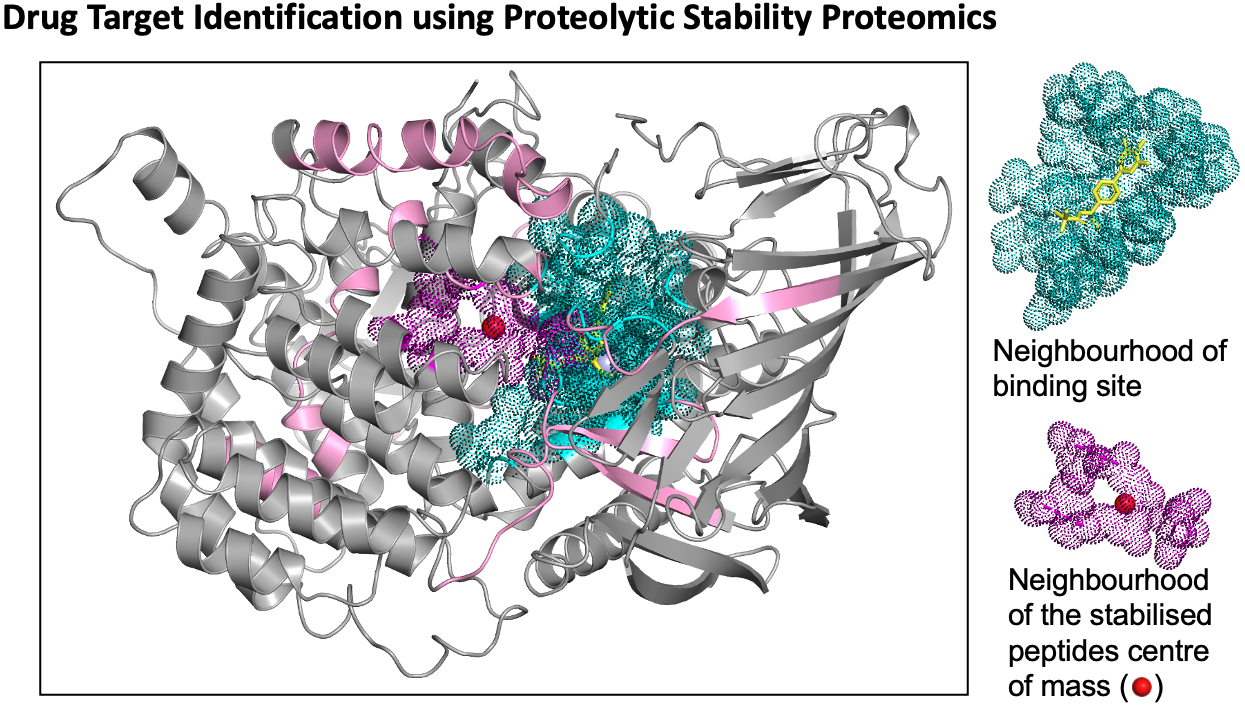
We provide a range of proteomics-based approaches to identify protein target/s of active small molecules in an unbiased manner. This includes: pulldown of small molecule protein target/s using click chemistry or biotin-tagged compounds. Solvent proteome profiling, which is capable of establishing target engagement through analysis of solvent-induced precipitation of proteins. Limited proteolysis-coupled mass spectrometry, which enables the identification of protein structural changes as a result of engagement with its ligand on a proteome-wide scale.
We welcome collaborations to explore a range of new proteomics-based approaches in development for drug target identification. This includes: Proteolysis Targeting Chimeras (PROTACs), which are bifunctional molecules with two heads connected by a linker. One ‘head’ selectively binds the protein target and a second ‘head’ of the molecule recruits an E3 ubiquitin ligase. This enables degradation of the target proteins by hijacking the ubiquitin-proteasome system. Proximity-based compound-binding protein identification (PROCID) combines proximity-labelled proteins with the HaloTag system to efficiently identify the dynamic proteomic landscape of drug-binding proteins. Stability of Proteins from Rates of Oxidation (SPROX) is where drug-induced stability changes are assessed by characterising the chemical denaturation properties of the protein target(s).

Proteins and their associated post-translational modifications (PTMs) can be identified in a sample without prior knowledge. Relative quantitative information can also be obtained for the identified proteins, for example, analysis of perturbation caused to the proteome following drug treatment. Our new Astral Orbitrap provides unprecedented coverage of the sample proteome, allowing comprehensive comparative analysis of proteins with greater sensitivity than previous approaches.
A range of approaches are available for studying protein interactions, these include immuno-purification (IP), proximity-dependent biotinylation identification (BioID and TurboID), cross-linking mass spectrometry (XLMS) and co-fractionation coupled to mass spectrometry.
Proteins and protein-ligand complexes are analysed in a ‘native-like’ state. Information relating to protein-ligand interactions including binding stoichiometry, affinity and selectivity, can be obtained. Multiplexed analysis of protein and/or ligand mixtures is also possible.

Unbiased screening of polar metabolites in a biological sample. Our high-resolution, semi-targeted methods allow detection and comparison of thousands of metabolic features, alongside identification of up to 500 metabolites based on our in-house standards library. This allows rapid discovery of biomarkers or metabolic mechanisms associated with interventions such as drug treatment.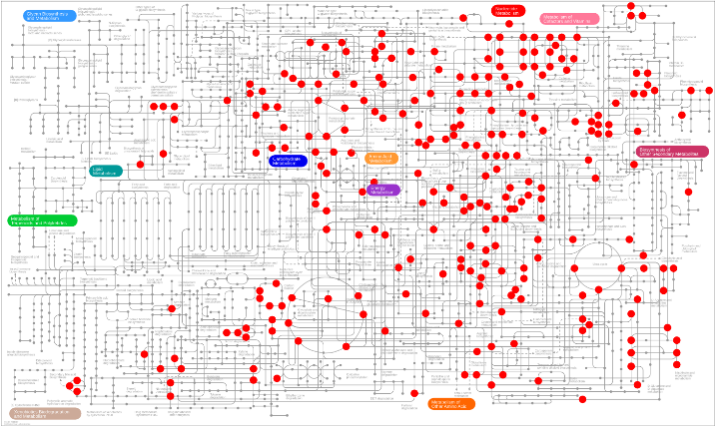
Our in-house metabolite library allows confident identification of 500+ metabolites from key metabolic pathways, greatly enhancing our interpretation of untargeted metabolomics studies.
Unbiased screening of lipids in a biological sample. Our high-resolution approach allows detection and comparison of thousands of detected lipids, with identification of up to 1500 common lipids including phospholipids, sphingolipids, neutral lipids and fatty acids. This screen is useful for biomarker discovery or describing metabolic mechanisms associated with drug treatment or other interventions.
Endogenous molecules that require bespoke workflows for reliable detection and relative quantification
Expanding portfolio of validated assays that provide accurate measured amounts of analytes in a given sample
Stable isotope (e.g. 13C) incorporation can be tracked to reveal metabolic flux in a biological system, allowing confident identification of perturbed pathways following drug treatment.
For more expertise on proteomics and metabolomics capabilities please refer to MPMP