
Alumnus Sam Drummond: Talent and determination in spades
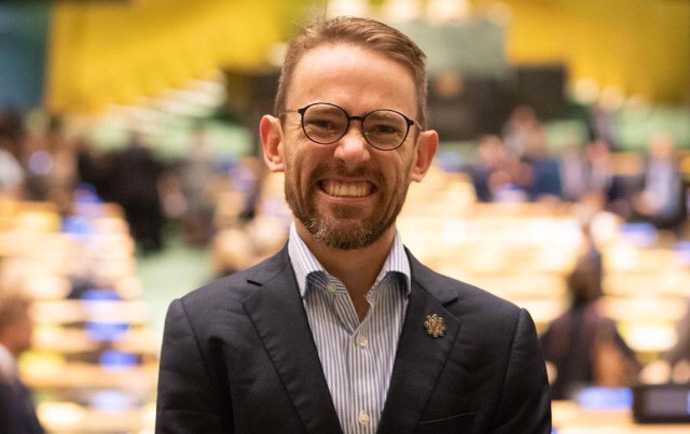
Meet acclaimed globetrotting author, Sam Drummond. We caught up with him recently to hear about his Monash study experience and learn more about the journey that led him to pen his captivating memoir, Broke.
1. Why did you choose to study Law and Arts?
It’s easy to slip into hindsight with these sorts of questions. I would love to say that Monash’s offer of a strong, progressive human rights focus enticed me. But here’s probably something closer to what was going through my 18-year-old mind when I put Arts and Law as my number one preference…
First and foremost, I needed to set a goal that would allow me to escape from my small country town.
Coming from a public school, I didn’t feel comfortable with what I perceived as the haughty culture of the other universities. Monash promised to do away with the traditions that saw families like mine on the outer.
I could have aimed for a course that required a lower score but, having had limited mentors in my life who’d had meaningful careers, I looked to the top of the page. As a person with a disability, I’d never had great experiences with doctors. So law it was.
Plus, I’d studied first year philosophy through Monash during high school. I enjoyed it but the clincher was that Monash was the only uni that would accept the study credits, and only if I studied arts.
Perhaps this is not the typical path of someone choosing to study law, or even arts. But that’s exactly why we need to be facilitating people from different socio-economic backgrounds to study at our universities.
I should also say that I’ve come to love country Victoria and go back to my hometown regularly.
2. How did your time at Monash University impact your career?
I didn’t directly use my degrees until about a decade into my working life, having worked first in media and politics. But the rounded nature of my degrees shaped the way that I approached those careers. I leaned into lessons from the likes of Prof Melissa Castan and Dr Nick Economou about how the world operated and how it could operate.
Before uni, the idea of travelling outside of Australia had been completely, well, foreign. Monash allowed me two semesters studying overseas, which shaped my view of a connected world in which we can all learn from each other.
When I eventually did practice law, my degrees gave me the tools I needed to come at the law with my client’s best interests in mind. They also provided me with an awareness of my strengths that I could lean into and my weaknesses that I could work hard on.
3. Tell us more about your new book, Broke.
Broke is a journey that takes in a lot of the above.
I was diagnosed with a form of dwarfism when I was a toddler. I had regular surgeries in which doctors broke my bones to straighten them.
My parents divorced when I was four and my brother was 6 months old. Our broken family quickly learned the brutal realities of not fitting into society’s norm. For one thing, with mum suddenly taking on the impossible dual roles of caregiver and breadwinner, we were very quickly broke.
Broke is about casualised work, housing insecurity, the regional-city divide and public systems that can’t cope – lessons that hopefully ring true in today’s world.
Ultimately, it is about a broken system that is failing to prioritise those who need support the most.
4. What is your favourite memory from your time at Monash University?
I loved studying at the Prato campus. I can’t say I learnt a lot of law but I learnt a lot about life.
During swot vac, a friend and I decided we had to get away from the distractions of Florence to focus on the coming exams. We picked a spot on the map, jumped on a train and travelled through the Tuscan mountains to a tiny town where very few locals spoke English.
It turned out to be the week of the annual beer festival, which wasn’t ideal for studying. But the whole experience was unforgettable.
On our return to Florence, we were shocked to find out that Australia had a new Prime Minister. It was endlessly satisfying that we had disconnected so much from the outside world that news hadn’t reached us.
5. What’s one piece of advice you’d give to alumni?
There was no golden era of uni. Those starting off their university journey now are doing it their own way and they’re doing a great job of it. We can support them by making sure the doors to our institutions don’t become narrower for future generations.