AI ethics feature
How to live (well) with AI
When it comes to human-AI relations, should we be concerned as much about our behaviour as theirs?
Featured experts
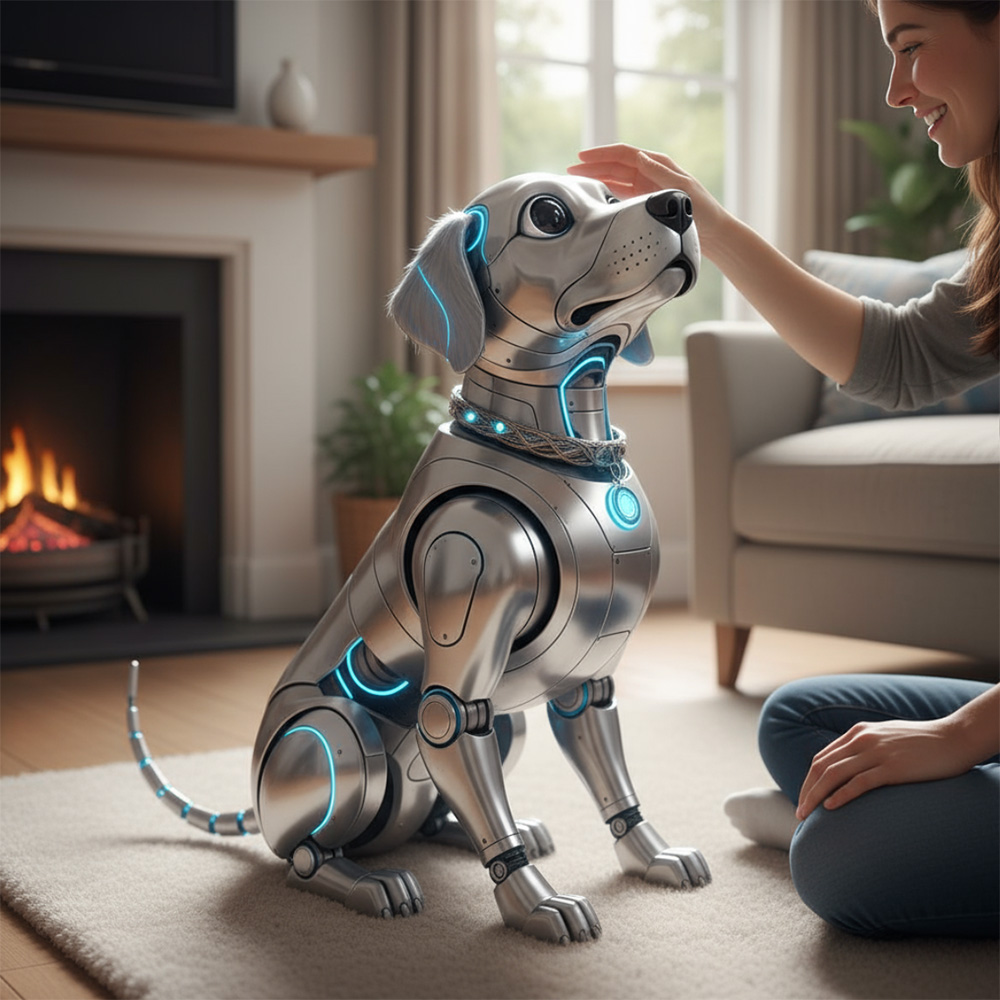 He’s looking up at you with his big black eyes. What a good boy he is! A dog that never barks, whines, runs off after rabbits or messes on the floor. The perfect dog, in fact.
Except that… he’s actually a robot dog. But you’d have to have a heart of stone not to love him, or to treat him badly. Right? Not necessarily. Fido might be very cute, but it doesn’t think or feel anything: no robot does.
Yet as humans begin the journey of living alongside more (and increasingly sophisticated) robots – and AIs for that matter – we need to talk seriously about what it means to kick a robot dog. Or shout at an Alexa. Or confide your darkest secrets to your trusted friend, ChatGPT.
“I think it’s important that when we think about how we treat robots and AI, we think about what the way we treat them says about us,” says Professor Robert Sparrow, Professor of Philosophy at Monash.
“And while the ethics of how we treat robots is really about how we relate to each other, it’s also true that in the future, people will spend more time relating to machines. And some may well form relationships which they think of as being meaningful.”
So, to the question of the robot dog. There’s an asymmetry to our potential reactions, says Sparrow. Being nice to the inert metal thing doesn’t make you a nice person. “My intuition – although I haven’t investigated this empirically – is that patting a robot dog is a waste of time and not morally admirable,” he says.
But being nasty to it might make you a nasty person. “If I found a person kicking and torturing a robot dog, that would tell me something about that person – that they were cruel and couldn’t control their emotions.”
Humanoid helpers
The potential extension of this line of thinking is that mistreating a robot indicates a person who is more likely to mistreat humans. “Even thinking of wanting to do something bad to a humanlike robot indicates there’s something sinister within that human,” says Professor Raphaël Phan, a specialist in security, cryptography and malicious AI at Monash University Malaysia. “It’s just that maybe they haven’t crossed that line yet, because when they do that to another human being, they have to face consequences.”
He believes that we should be comfortable with a future in which we will be surrounded by humanoid helpers doing all kinds of tasks – after all, will they be so very different from our reliance on our mobile phones today?
“Humans should still realise that these are not humans. They just help us. They don’t have feelings. It’s OK for them to do mundane, repetitive things that are not equivalent to humans. If we keep this in mind, then we will be able to have them coexist with us in our daily lives.”
The ethics of AI
But what if that robot looks human – or responds in a ‘human’ way? Right now, there is little danger of anyone mistaking a robot for a human but, as Professor Yolande Strengers, ARC Future Fellow at the Department of Human Centred Computing, points out, it’s becoming harder – and in some cases, impossible – to distinguish between AI and humans, particularly online.
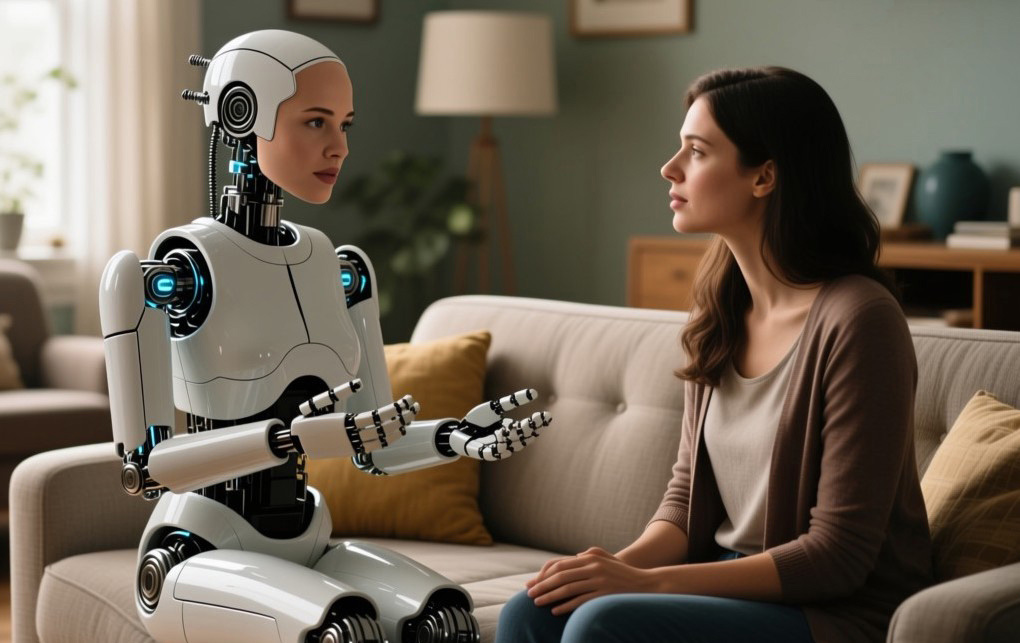
“To me, it seems that the aim of tech companies and AI developers is for the tech to be ubiquitous in our lives – to blend in as any other person would,” she says. “If an AI is designed to behave like a human, then there are ethical questions around how we treat them and how they treat us – and how that flows through into human relationships, given that they are presenting as humans to us.
“I don’t think there’s anything inherently wrong with getting frustrated with them or yelling at them. Where it becomes problematic is if they continue to respond positively or even apologise for what is essentially inappropriate behaviour.”
For example, she says, ChatGPT is incredibly enthusiastic about its responses – far more so than an interaction that you might have with a human. “It’s a particular brand of service-orientated, compliant, positive outlook that doesn’t match the diversity of ways we might relate in real life. That makes it vulnerable to tolerating stuff a human wouldn’t tolerate – and which perhaps it should not be programmed to tolerate.”
After all, robots already tend to be horribly stereotypical in ways that we need to be conscious of – and resist, says Sparrow. “There is a race politics of robots. It’s hard to find images of black robots: they’re always these gleaming, white, shining creatures. Nursing robots are always women, and humanoid military robots are always men with hulking great shoulders. Sex robots tend to have huge lips and enormous breasts. How will it shape our behaviour if the robot who does our vacuuming is always female and the robot who fixes our roof is male?”
But do they care
Strengers has seen gendered stereotyping of technology first-hand: her book The Smart Wife (co-authored with Dr Jenny Kennedy) is a deep dive into the problematic nature of feminised digital assistants – friendly, docile and permanently available.
She sees a new trend: the physical manifestation of these devices is now a ‘cute’ rather than gendered aesthetic. But both serve a similar purpose: “To endear us towards robots and make us comfortable with their presence in our lives,” she says. “So that we don’t worry about what they might be doing behind the scenes or what data they might be sharing. I think it’s a very deliberate strategy.”
And it’s working. It might feel like your AI therapist cares for you, says Strengers. “But it doesn’t: it’s simply regurgitating caring things that other people have said on the internet at some point. It’s not there to serve your interests. It’s collecting data that will be used to serve a company’s own agendas and aims.
“We still don’t fully know what those are yet. That, to me, is the big risk. We have a huge corpus of material that’s being mined to generate more income for big tech companies. So what are the ramifications of that going to be – for society, but also, potentially, individuals?”
Too much trust?
So perhaps we need to worry less about whether we are nasty to our robots – and far more about whether we are already trusting them with too much. After all, the more compelling these entities are, the more they could be abused to shape behaviour and opinions – to advertise products or change people’s political opinions, for example.
“Say I’m talking to my AI therapist,” says Sparrow, “and it says: ‘Rob, you look really down; maybe you’d enjoy a nice cold can of this well-known fizzy drink? Wouldn’t you feel better if you had one?’”
That should lead us, again, to think more about the people behind the robots and what their intentions are, rather than the robots themselves. “I don’t see robots as a threat, because after all, it’s just technology,” says Phan.
“Technology is designed for the very purpose of helping humans. I don’t think that robots will one day surpass humans because humans design the robots, right? We are their creators. We should be more afraid of malicious humans who misuse these technologies against other humans.”
Links
‘What Happens Next?’: Can We Create a Better Reality?
‘What Happens Next?’: Is AI a Little Too Human?
‘What Happens Next?’: How Do We Teach Machines to Think Responsibly?